
How Couples Therapy Near Me That Takes Insurance Can Help You
Dr. Elizabeth Barlow, LCSW-S · 6/9/2026

How to Find Couples Therapy Near You That Takes Insurance
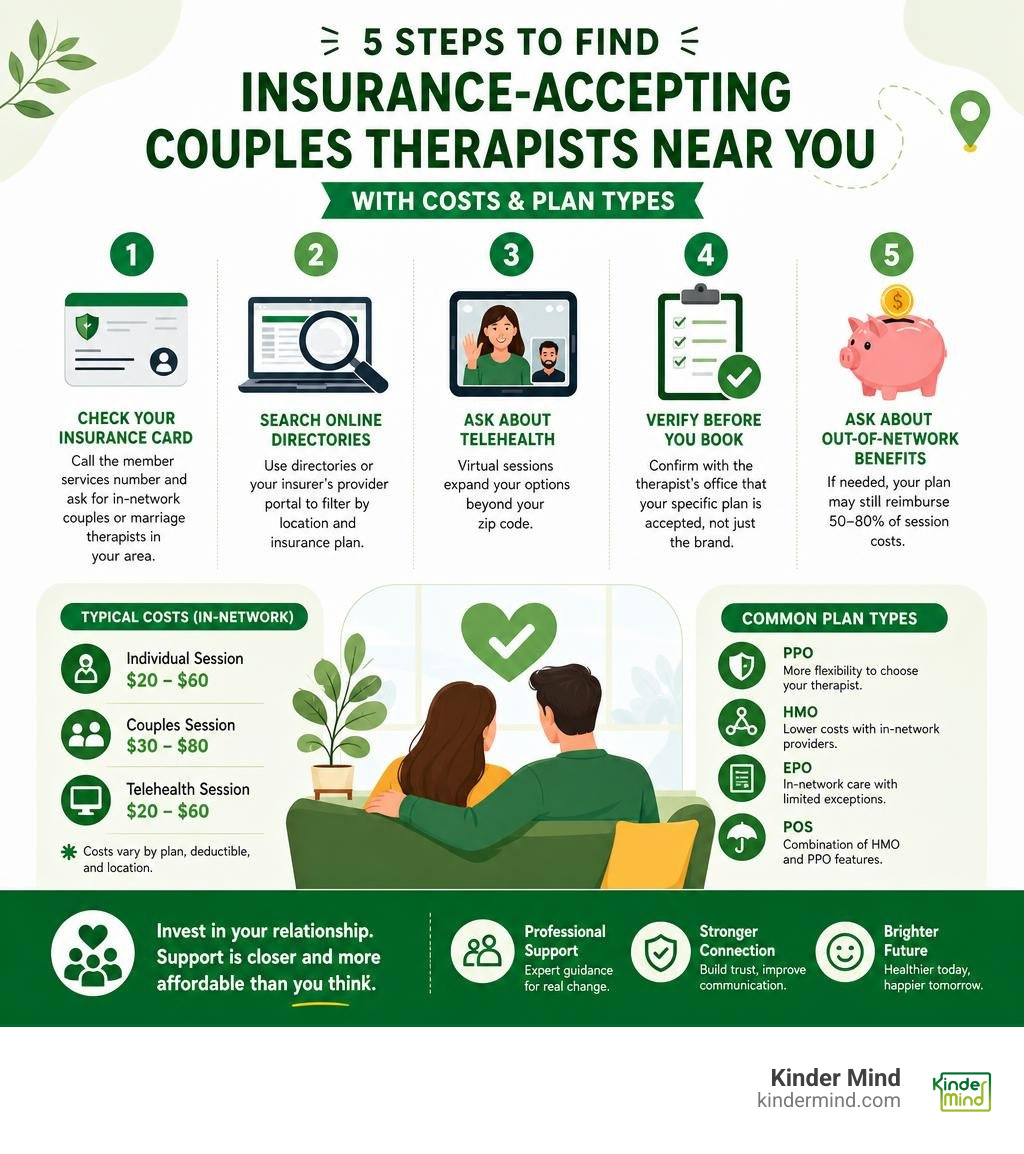
If you’re looking for couples therapy near me that take insurance, here’s a quick-start guide:
- Check your insurance card — call the member services number and ask for in-network couples or marriage therapists in your area.
- Search online directories — platforms like Psychology Today, Zencare, or your insurer’s own provider portal let you filter by location and insurance plan.
- Ask about telehealth — many licensed therapists offer virtual sessions, which expands your options well beyond your zip code.
- Verify before you book — always confirm directly with the therapist’s office that your specific plan is accepted, not just the insurance brand.
- Ask about out-of-network benefits — if you can’t find an in-network provider, your plan may still reimburse 50–80% of session costs.
Relationships take real effort. And when things feel stuck — whether it’s communication breaking down, trust eroding, or the same argument on repeat — professional support can make a measurable difference.
Research shows that 70–75% of couples who work with a trained therapist report meaningful improvement in relationship satisfaction. That’s a strong outcome for something that many people put off, often because they assume it’ll be too expensive or too hard to find.
The good news? More therapists than ever accept major insurance plans. And with telehealth now widely available, finding a qualified couples therapist who fits your schedule, location, and budget is genuinely achievable in 2026.
The tricky part is knowing where to look and what to ask. That’s exactly what this guide is for.
Simple guide to couples therapy near me that take insurance terms:
What is Couples Therapy and How Does It Work?
At its core, Couples Therapy is a specialized form of psychotherapy designed to help partners understand their relationship dynamics, resolve conflicts, and improve overall relationship satisfaction. Unlike individual therapy, where the client is a single person, the “client” in couples therapy is the relationship itself.
A licensed therapist acts as an objective, compassionate third party. They do not take sides or play the referee. Instead, they help both partners identify destructive cycles, express their emotional needs safely, and learn practical communication tools. Whether a couple is navigating the early stages of commitment, preparing for marriage, or working through Marriage and Divorce Counseling, therapy offers a dedicated, neutral space to process complex emotions.
Why Do Couples Seek Therapy? Common Issues Addressed
Every relationship has its unique hurdles, but couples generally seek professional support for several common reasons:
- Communication Breakdowns: Feeling like every conversation turns into an argument, or conversely, experiencing a painful “silent treatment” dynamic.
- Trust and Infidelity Recovery: Rebuilding a foundation after emotional or physical betrayal. Interestingly, clinical insights show that 60% to 70% of couples choose to stay together and work through their relationship after an affair when guided by structured therapy.
- Emotional Distance: Shifting into a “roommate” dynamic where intimacy has faded, and partners feel disconnected.
- Major Life Transitions: Navigating parenthood, career shifts, grief and loss, or empty nest syndrome.
- Premarital Preparation: Proactively building healthy conflict-resolution skills before tying the knot.
Many couples delay starting therapy because they believe their problems “aren’t bad enough yet.” However, treating therapy as proactive relationship maintenance rather than emergency crisis intervention yields the best long-term outcomes.

Understanding Insurance Coverage for Couples Therapy
Understanding how health insurance covers couples counseling is one of the most crucial steps in making care affordable. Many people assume that mental health benefits automatically cover couples sessions, but the reality is slightly more nuanced.
The “Identified Patient” and Code 90847
In the United States, health insurance operates on a medical model, meaning it requires a diagnosed mental health condition to justify coverage. When billing insurance for couples therapy, providers typically use billing code 90847 (family psychotherapy with the patient present).
To cover this, one partner must be designated as the “identified patient” with a clinical diagnosis (such as anxiety or depression), and the couples therapy must be deemed medically necessary to support that individual’s treatment plan.
In-Network vs. Out-of-Network Benefits
If your therapist is in-network with your insurance provider, you will likely only be responsible for a standard copay, which often ranges from $0 to $75 per session depending on your plan.
If you choose an out-of-network therapist, you can pay out of pocket and request a “superbill” to submit to your insurer. Many plans reimburse 50% to 80% of out-of-network session fees once your deductible is met. Understanding your Insurance Coverage and checking details on Payment Plan Insurance can prevent unexpected billing surprises.
For more detailed guidance, read through these Questions to Ask Your Insurance Provider About Therapy to clarify your outpatient mental health benefits.
In-Person vs. Virtual Couples Therapy: Which is Right for You?
With the rise of telehealth, couples now have two highly effective ways to attend therapy. Both formats offer distinct advantages, and choosing the right one depends on your lifestyle, preferences, and location.
Virtual Couples Therapy
Virtual Therapy for Couples has become incredibly popular for its convenience. It allows partners to log in from the comfort of their own home, eliminating commute times and childcare hurdles. Secure, HIPAA-compliant video platforms ensure that sessions remain entirely private.
Virtual therapy is also highly beneficial for partners who travel frequently or live in different locations. If you are exploring this route, you can look for Online Therapy That Takes Insurance to keep care accessible. For a broader overview of virtual care, check out this guide on Finding the Best Virtual Marriage Counseling Across the Country.
In-Person Couples Therapy
For some couples, sitting in a physical therapy office provides a vital boundary between their daily home life and their relationship work. In-person sessions allow therapists to read subtle body language and physical cues more easily. If you prefer face-to-face connection, reading about how to find Better Together: How to Find the Best In-Person Marriage Counseling Near Me can help you locate local providers.
Popular Evidence-Based Methods: Gottman and EFT
When searching for a therapist, you will likely encounter specific therapeutic modalities. The two most widely researched and respected frameworks are the Gottman Method and Emotionally Focused Therapy (EFT).
The Gottman Method
Developed by Drs. John and Julie Gottman, this approach is based on over 40 years of research observing thousands of couples. It focuses on identifying negative behavioral patterns — famously called the “Four Horsemen”: criticism, contempt, defensiveness, and stonewalling. Therapists trained in the Gottman Method teach couples practical, concrete tools to replace these behaviors with constructive communication, rebuild their “Sound Relationship House,” and deepen their emotional friendship.
Emotionally Focused Therapy (EFT)
Based on attachment theory, EFT views relationship distress through the lens of emotional safety and connection. EFT helps partners understand the underlying attachment fears (such as fear of abandonment or rejection) that drive surface-level conflicts. By identifying these deeper emotional patterns, couples learn to express their vulnerabilities, creating a secure emotional bond and reducing long-term relationship anxiety.
How to Choose the Right Couples Therapist
Finding a therapist who is a good fit for both partners is essential for therapy to be successful. Here are key factors to consider during your search:
- Specialized Training: Ensure the therapist has specific training in couples dynamics (such as Gottman, EFT, or family systems), rather than only individual counseling experience.
- Neutrality and Rapport: Both partners should feel heard, respected, and non-judged during the initial sessions. If either partner feels the therapist is taking sides, it is okay to discuss this or look for a different provider.
- Inclusivity: If applicable, seek out specialists who are experienced in supporting LGBTQ+ relationships, neurodiverse couples, or non-traditional relationship structures.
What to Expect: Session Length, Frequency, and Duration
Entering couples therapy can feel intimidating, but knowing what to expect can ease your anxiety.
Session Length and Frequency
While standard individual therapy sessions typically last 50 minutes, many couples therapists recommend longer sessions — such as 75 to 90 minutes — especially in the early stages. This allows both partners enough time to share their perspectives, de-escalate arguments, and practice new skills without feeling rushed. However, because insurance companies typically limit coverage to 50-minute sessions under code 90847, couples should clarify whether they will need to pay out-of-pocket for any extended session time.
How Long Does Therapy Last?
Couples therapy is generally designed to be short-term and goal-oriented. A typical course of short-term couples therapy lasts between 12 to 24 sessions (roughly 6 to 9 months of weekly or biweekly meetings). As patterns shift and communication improves, sessions are typically tapered off, allowing couples to practice their new tools independently.
Steps to Verify Your Insurance Benefits Before Booking
To avoid surprise medical bills, take these actionable steps to verify your coverage before your first appointment:
- Call the number on your insurance card: Speak directly with a customer service representative.
- Ask about outpatient mental health benefits: Ask specifically if billing code 90847 is covered under your plan.
- Inquire about your deductible: Confirm whether you must meet a deductible before your insurance starts covering therapy sessions.
- Confirm your copay or coinsurance: Find out exactly what your out-of-pocket cost will be per session.
- Explore alternative payment options: If your insurance coverage is limited, ask your provider about a sliding scale or review A Comprehensive Guide to Therapy Payment Plans for alternative options.
Additionally, major insurers like Blue Shield of CA offer robust online directories and mental health resource hubs to help members find local, in-network care.
Finding Insured Couples Therapy Near You
Accessing affordable mental health care shouldn’t feel like an uphill battle. Vetted directories, national mental health databases, and regional health networks exist to connect you with licensed professionals across the country.
When searching for local, specialized clinics that accept major insurance, you can utilize online directories like Psychology Today or your insurance provider’s own member portal. These platforms allow you to filter specifically by your location, the type of therapy you need (such as couples or marriage counseling), and your specific insurance plan.
For couples seeking structured care, many regional health centers and group practices offer dedicated relationship healing. Many of these networks provide localized couples services across multiple states, offering both in-person and online couples counseling with broad insurance acceptance. By utilizing these comprehensive directories and verifying your benefits beforehand, you can find a qualified therapist who meets your relationship needs and fits your budget.
Ready to Strengthen Your Relationship?
Investing in your relationship is one of the most meaningful decisions you can make. If you are ready to take the next step, explore our licensed, insurance-friendly providers at Kinder Mind Couples Therapy to find a therapist who fits your life, your budget, and your relationship goals.
