
Your Guide to Marriage Counseling: Finding the Right Professional to Help
Kinder Mind · 12/31/2025

Why Marriage and Divorce Counseling Matters When Your Relationship Is at a Crossroads
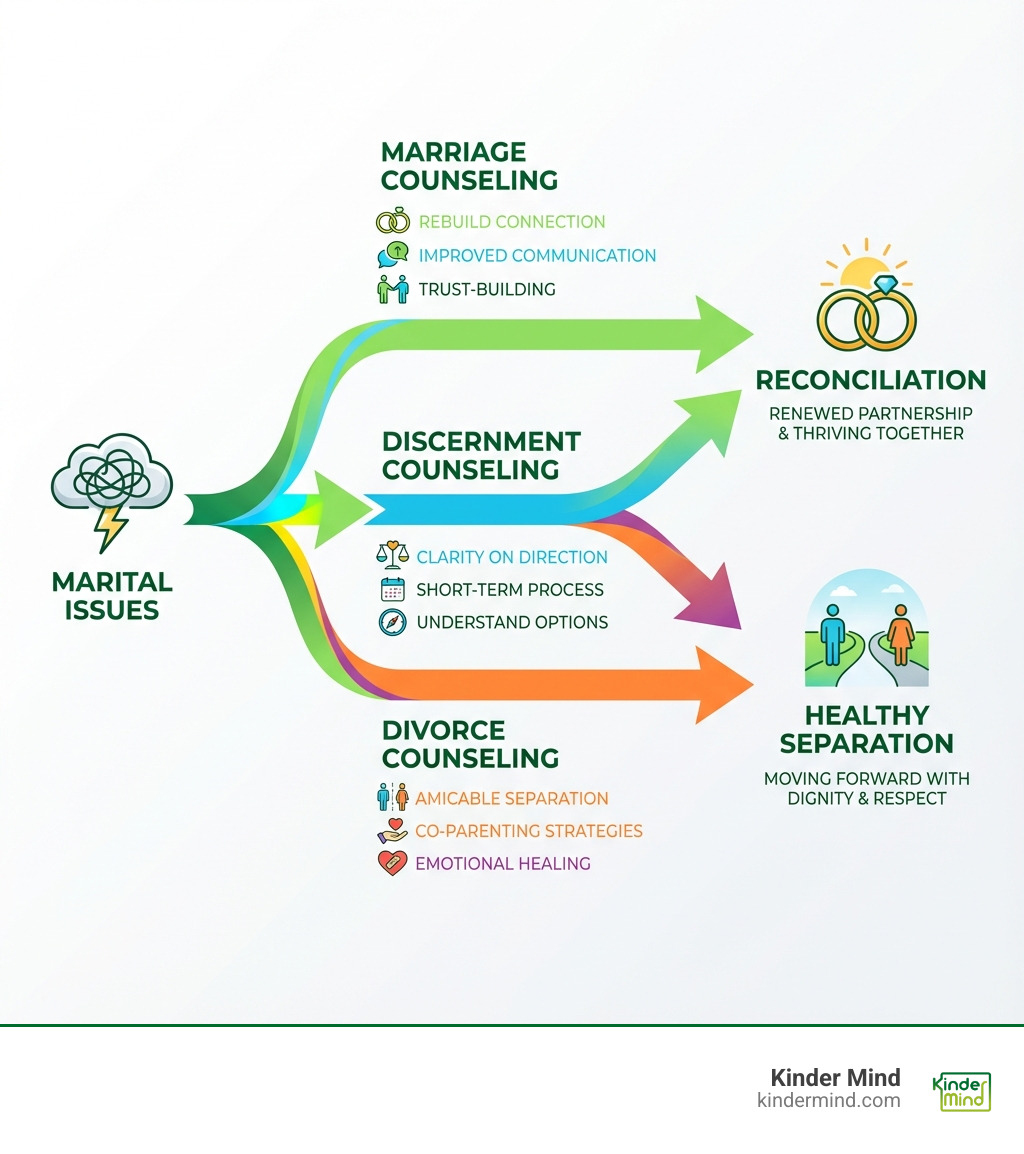
Marriage and divorce counseling offers professional support when your relationship is at a crossroads. Whether you want to save your marriage, are considering divorce, or need help navigating a separation, counseling provides tools to move forward with more clarity and less conflict.
Here’s what you need to know:
- Marriage counseling focuses on rebuilding connection through better communication and trust.
- Discernment counseling is a short-term option (1-5 sessions) for couples where one partner is leaning towards divorce and the other wants to save the marriage.
- Divorce counseling supports amicable separation, co-parenting, and emotional healing.
When a marriage struggles, the emotional, mental, and financial toll can be immense, especially when children are involved. However, seeking help is a sign of hope. Research shows that nearly half of married couples in the U.S. attend therapy, with 70% finding it effective long-term.
Professional counseling helps people thrive, whether that means rebuilding a marriage or separating with dignity. This guide will help you understand when to seek help, what counseling offers, and how to find the right therapist. You deserve support, and asking for it is a sign of strength.
When to Seek Help: Recognizing the Signs Your Relationship Is in Trouble
All relationships have ups and downs, but certain red flags signal serious trouble. Recognizing these signs is the first step toward getting the right help, whether to mend the relationship or to manage a healthy separation.
One of the most corrosive signs is contempt, which is active disrespect shown through insults, sarcasm, or mocking. When partners are trapped in a cycle of blame, it’s a strong predictor of divorce. Another major warning sign is apathy or emotional disconnection. This occurs when partners become psychologically disengaged, and the relationship grows cold because neither person cares enough to fight anymore.
Constant arguments without resolution also indicate a breakdown in communication. If every discussion escalates, or you rehash the same issues, it’s a problem. Infidelity, for instance, is a common factor in divorce, and research confirms it is a major contributor. Navigating its aftermath often requires professional guidance. You can learn more about healing from infidelity through specialized resources.
A lack of intimacy, both physical and emotional, is another red flag. When partners live parallel lives, the marriage can feel more like a business arrangement. Finally, replaying past hurts prevents healing. If you’re stuck on old grievances, it’s impossible to move forward, whether toward reconciliation or a peaceful separation.
Common Emotional Challenges
Navigating a troubled relationship or divorce is an emotional journey. It’s common to face overwhelming feelings.

- Grief and Loss: Divorce is the loss of a shared future, and grieving is a natural part of the process.
- Anger: This may be directed at your partner, yourself, or the situation. Unmanaged anger can be destructive.
- Fear of the Unknown: Anxiety about finances, living arrangements, and the future is common and can be paralyzing.
- Anxiety and Depression: The stress of separation can trigger or worsen mental health conditions.
- Shame and Guilt: Feelings of failure or guilt about the impact on others can lead to isolation.
Professional marriage and divorce counseling provides the tools to process these challenges and move forward.
Signs You Might Be Heading Towards Divorce
Beyond general trouble, some specific indicators suggest a couple is moving toward divorce.
- Living like roommates: Interactions become purely transactional, lacking emotional or physical intimacy.
- Avoiding each other: Partners actively minimize time together, signaling a desire to escape the relationship.
- Loss of empathy: When you can no longer see your partner’s perspective or care about their feelings, the bond erodes.
- Fantasizing about a life without your partner: If thoughts of a future without your partner bring relief, it suggests a strong desire for separation.
- Feeling indifferent to conflict: Apathy during arguments is often more destructive than fighting, as it shows a complete lack of investment.
If you recognize these patterns, seeking professional guidance can help you address the issues or steer a healthy transition. For more help with relationship issues, explore specialized resources.
Understanding Marriage and Divorce Counseling Options
When a relationship hits a critical point, understanding the different types of counseling can help you choose the best path. Marriage and divorce counseling is not a one-size-fits-all solution; different approaches serve different goals.
Marriage Counseling to Rebuild Your Connection
Marriage counseling, or couples therapy, is for partners committed to improving their relationship. The goal is to identify underlying issues, improve communication, and rebuild a strong foundation. A therapist helps couples develop healthier interaction patterns, including crucial communication skills and conflict resolution techniques. For relationships impacted by betrayal, rebuilding trust is a key focus. Counseling provides a safe space to process hurts and establish new patterns of reliability, with the aim of increasing intimacy. For those looking to strengthen their bond, exploring couples therapy services and improving couples communication skills can be beneficial.
Discernment Counseling: For Couples on the Brink
Discernment Counseling is for “mixed-agenda” couples, where one partner leans toward divorce while the other hopes to save the marriage. The goal is to gain clarity and confidence about the relationship’s future, not to fix it immediately. It is a short-term process, typically one to five sessions. Couples explore three paths:
- Maintaining the status quo.
- Beginning the process of separation.
- Committing to a six-month period of intensive couples therapy, with divorce off the table.
Discernment counseling helps partners understand their contributions to the problems and what each path might look like. Research shows it helps couples make thoughtful decisions, leading to more confident outcomes. This specialized form of marriage and divorce counseling ensures that any decision is made with intention.
Divorce Counseling: Navigating Separation and Moving Forward
When a couple decides to divorce, divorce counseling helps manage the transition constructively. The goal is not to save the marriage but to facilitate a healthier ending. A primary aim is an amicable separation, guiding partners through logistical and financial discussions to minimize emotional damage. For parents, developing effective co-parenting strategies is paramount. Counseling provides a space to create a respectful post-divorce foundation that keeps children’s well-being at the center. It also offers essential emotional support to process grief and loss, helping individuals heal and grow. If you are navigating this difficult time, seeking help from a therapist specializing in divorce can provide invaluable support.
Marriage Counseling vs. Discernment Counseling vs. Divorce Counseling
| Feature | Marriage Counseling | Discernment Counseling | Divorce Counseling |
|---|---|---|---|
| Primary Goal | To improve and save the existing marriage | To gain clarity on whether to save or end the marriage | To steer separation and divorce amicably and healthily |
| Ideal Candidate | Couples committed to working on their relationship | Couples “on the brink,” with one or both unsure of the future | Couples who have decided to separate or divorce |
| Typical Duration | Ongoing, often 8-20+ sessions (longer-term) | Short-term (1-5 sessions) | Variable, depending on needs (can be short-term or ongoing) |
| Key Focus Areas | Communication, conflict resolution, intimacy, trust, shared goals | Decision-making, understanding individual contributions, exploring three paths (status quo, divorce, therapy) | Co-parenting, emotional processing, logistical agreements, grief, individual healing, future planning |
The Counseling Process: What to Expect and How It Helps
Starting marriage and divorce counseling can feel daunting, but understanding the process can highlight its benefits. Counseling offers a structured, supportive environment to repair, decide, or move on.

At its core, counseling provides professional support from an unbiased third party. A therapist offers a neutral space to de-escalate conflict and foster understanding. This process helps you gain insight into relationship dynamics and develop self-awareness. Counseling also focuses on gaining new skills, equipping you with practical tools for communication, emotional regulation, and conflict resolution. These life skills help create a foundation for the future, whether that involves a healthier marriage or a respectful co-parenting relationship.
Strategies and Techniques Used in Marriage and Divorce Counseling
Therapists use various evidence-based techniques in marriage and divorce counseling. Common approaches include:
- Emotionally Focused Therapy (EFT): Helps couples understand the underlying emotions driving negative interaction patterns.
- The Gottman Method: Focuses on strengthening friendship, managing conflict, and creating shared meaning.
- Solution-Focused Therapy: Encourages clients to identify strengths and build solutions rather than dwelling on problems.
Therapists also use practical exercises. Forgiveness exercises are vital for letting go of resentment for your own well-being. Communication drills help couples practice new ways of interacting, providing concrete tools for navigating difficult conversations. You can learn more about these and other divorce therapy techniques.
Navigating Counseling When Children Are Involved
When children are involved in a separation, their well-being is a central focus of marriage and divorce counseling. The goal is to minimize disruption and provide stability.
Counseling helps parents develop effective co-parenting plans, establish consistent rules, and create respectful communication strategies. Therapists also guide parents on how to tell the children about the divorce in an age-appropriate way that reassures them they are loved and not to blame. It is crucial for parents to show a united front and avoid speaking negatively about each other. All decisions should be child-centric, putting their emotional and physical needs first to foster resilience. For support with blended family issues or family conflict, specialized resources are available.
The Role of Forgiveness in the Divorce Process
In marriage and divorce counseling, forgiveness is crucial for healing. It is not about condoning a partner’s actions but about letting go of resentment, anger, and bitterness for your own well-being. This act is primarily for yourself, allowing you to reclaim emotional freedom and move forward.
Where co-parenting is necessary, a degree of forgiveness can help build trust for a functional, respectful relationship. Self-forgiveness is also vital. Learning to offer yourself compassion for your role in the divorce is essential for rebuilding self-esteem. By letting go of old resentments, you clear the path for a more fulfilling future. Healing relationship trauma is a profound journey, and forgiveness is a powerful tool within it.
