
Mending Bonds Virtually: The Best Online Couples Therapy Services
Kinder Mind · 1/2/2026

Why Virtual Therapy for Couples Is Changing Relationships
Virtual therapy for couples has become a game-changer for partners seeking to strengthen their relationships without the traditional barriers of in-person counseling. Research shows that over 97% of couples who participate in therapy believe they received the help they needed, and online platforms now make this support more accessible than ever.
Quick Answer: What You Need to Know About Virtual Therapy for Couples
- It works: Studies confirm online couples therapy is just as effective as in-person sessions
- It’s convenient: Join from home, work, or even separate locations
- It’s accessible: No commute, easier scheduling, and broader therapist selection
- It’s flexible: Choose between live video sessions, phone calls, or secure messaging
- It addresses real issues: Communication problems, trust, intimacy, conflict resolution, and major life transitions
Modern relationships face unique pressures, and traditional therapy can add logistical stress with commutes and scheduling conflicts. Virtual therapy removes these obstacles. Partners can attend sessions from home, separate offices, or even different cities, making it ideal for long-distance relationships. The comfort of a familiar environment and the reduced stigma of online help often make it easier for couples to open up and take that first step.
The COVID-19 pandemic accelerated the adoption of telemental health, with studies showing that couples experience decreased depression, anxiety, and stress, along with significant improvements in relationship satisfaction. Whether you’re navigating a rough patch or strengthening a good relationship, virtual therapy offers professional guidance without the logistical headaches.
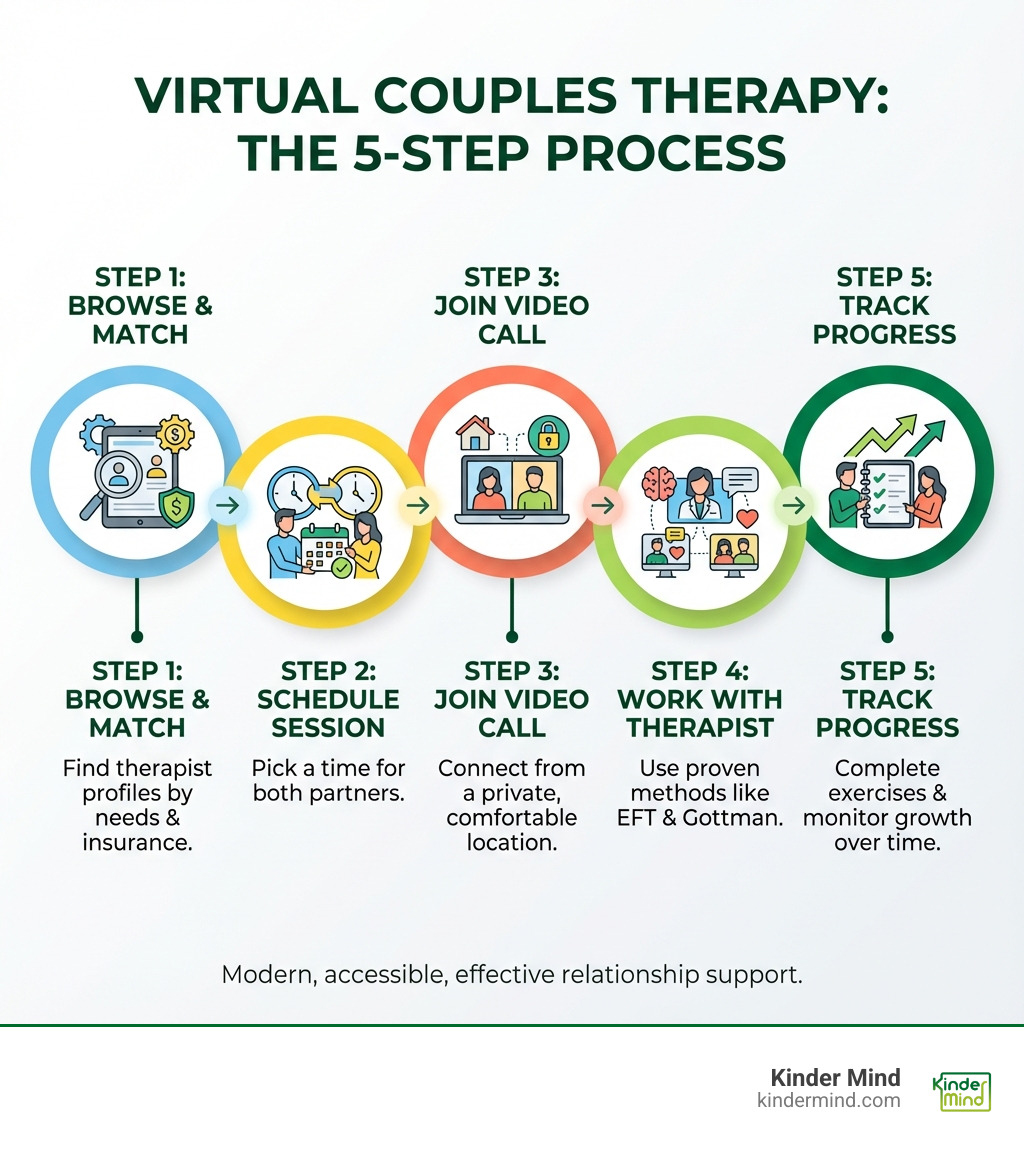
Why Choose Virtual Therapy for Couples?
Choosing virtual therapy for couples is a compelling alternative to in-person sessions, offering advantages that fit modern life. Virtual therapy eliminates logistical problems like travel and parking. You and your partner can connect with a therapist from home, during a lunch break, or even from separate locations—a major benefit for long-distance couples or those with frequent travel. Many people also find it easier to discuss sensitive topics from the comfort of their own space, which can reduce the initial apprehension and perceived stigma of seeking help.
To illustrate these benefits, let’s look at a comparison between virtual and in-person couples therapy:
| Feature | Virtual Couples Therapy | In-Person Couples Therapy |
|---|---|---|
| Convenience | Schedule sessions around your life; no travel time; attend from anywhere with internet access. | Requires travel to a physical office; adherence to fixed office hours; potential parking or commute stress. |
| Cost | Often more affordable due to lower overhead for providers; potential for flexible payment plans. | Generally higher session fees; additional costs for travel and parking. |
| Accessibility | Broader access to a diverse pool of specialists regardless of geography; ideal for rural areas or specific needs. | Limited to therapists within a commutable distance; less choice in specialized areas. |
| Comfort | Sessions in your own familiar, private space can reduce anxiety and encourage openness. | Can be intimidating for some; requires adjusting to a new environment. |
| Flexibility | Can accommodate partners in different locations; easier to reschedule; options for video, audio, or text communication. | Requires both partners to be physically present in the same room; less flexible for last-minute changes. |
This adaptability makes virtual therapy for couples an excellent solution for anyone looking to nurture their relationship without adding unnecessary stress to their lives. For more insights into how technology is reshaping mental health support, explore the benefits of Teletherapy.
The Proven Effectiveness of Online Counseling
A common question is whether virtual therapy for couples is as effective as in-person sessions. Research consistently shows that it is, with comparable or even superior outcomes. Studies confirm that therapy via videoconferencing builds strong therapeutic relationships and leads to significant reductions in depression, anxiety, and stress, along with increased relationship happiness.
Evidence from the American Association of Marriage and Family (AAMFT) is also compelling: over 97% of individuals felt they received the help they needed from couples therapy. This high satisfaction extends to virtual formats. Core therapeutic principles translate seamlessly to the online environment, as therapists adapt their techniques to ensure high-quality care. For a deeper dive into the broader landscape of virtual mental health support, consider reading about Virtual Mental Health Services.
Key Benefits for Modern Couples
Virtual therapy for couples offers practical benefits that directly address the challenges of modern life.

- Scheduling Ease: Fit sessions into lunch breaks or after kids are in bed without coordinating travel. This flexibility leads to more consistent progress.
- No Commute: Save hours each month by eliminating travel, freeing up time for your relationship, hobbies, or relaxation.
- Access to Specialists: Online platforms connect you to a wide network of licensed professionals, so you’re not limited by geography when finding the right expert.
- Improved Privacy: Engage in therapy from a private space of your choice, which can make it easier to discuss personal issues.
- Location Flexibility: Partners can join from different locations, ensuring therapy continues even with travel or conflicting schedules.
To learn more about how online platforms are revolutionizing mental health care, explore Online Counseling.
Common Issues and Types of Virtual Couples Therapy
When challenges arise in a relationship, virtual therapy for couples provides a structured environment for partners to find their way back to connection. Some of the most frequent issues that bring couples to therapy include:
- Communication Breakdown: Many couples struggle with active listening and expressing needs. Therapy teaches tools to foster empathy and reduce conflict.
- Infidelity and Trust Issues: Professional guidance can help couples rebuild trust after a breach like an affair or financial deceit.
- Financial Stress: Therapists help couples steer disagreements over money and work toward shared financial goals.
- Parenting Disagreements: Therapy provides a space to align on parenting styles and work together as a team.
- Intimacy and Sex Therapy: Specialized therapy can address concerns like declining intimacy, differing libidos, or sexual dissatisfaction.
- Life Transitions: Therapy offers support in adapting to the stress of major changes like moving, job loss, or childbirth.
- Conflict Resolution: Couples learn strategies to de-escalate arguments and resolve disputes more constructively.
For couples looking to specifically improve how they interact, focusing on foundational elements of connection, delving into Couples Communication Skills can be incredibly beneficial.
Specialized Counseling for Every Stage
Just as relationships evolve, so too do the types of support available. Virtual therapy for couples offers specialized counseling custom to every stage of a relationship’s journey.
- Marriage Counseling: Designed for married couples, this focuses on identifying and overcoming marital issues to foster a healthy, enduring bond.
- Premarital Counseling: A proactive step for engaged couples to discuss key topics like finances and communication, building a strong foundation for marriage.
- Discernment Counseling: A short-term process for couples on the brink of separation to gain clarity on whether to repair the relationship or part ways.
- Sex Therapy: Provides a safe space to explore sexual concerns, desires, and challenges to improve physical and emotional connection.
- LGBTQ+ Affirming Therapy: Offers a supportive environment with therapists who understand the unique challenges LGBTQ+ couples face, such as societal bias and discrimination.
Whether you’re exploring options for your own relationship or seeking professional guidance, understanding the different types of support available is crucial. You can find more information on local resources and specialized counselors by looking into Marriage & Family Counselor Near Me. For those contemplating the difficult path of separation, insights from Divorce Therapy can also be helpful.
What to Expect in Your First Session
Understanding what to expect in your first virtual therapy for couples session can ease any apprehension. This foundational meeting is about building rapport and setting the stage for your journey.
The process usually starts with an initial consultation where you’ll share your reasons for seeking therapy and your goals. The first full session often involves a deeper dive into your relationship history, from how you met to current challenges. The therapist will ask about communication patterns to get a comprehensive picture of your dynamic.
A key part of this session is establishing a safe, non-judgmental space where both partners feel heard. The therapist will help you refine broad ideas like “better communication” into specific, achievable goals. The first session is also for you to assess if the therapist’s style is a good fit for you both. This initial step into Virtual Therapy is about laying the groundwork for positive change.
How to Choose the Best Virtual Therapy for Couples
Selecting the right virtual therapy for couples is a pivotal decision. With a growing number of options, knowing how to steer your search is key.

When starting your search, consider what matters to you and your partner. Are you looking for a specific therapeutic approach, scheduling flexibility, or a free consultation? Many platforms offer detailed therapist profiles, client reviews, and a matching process based on a questionnaire about your goals and preferences. This can save you time compared to sifting through countless websites. It’s also beneficial to look for platforms that are transparent about their services and therapist credentials. Research into emerging developments in couple therapy can help you understand the cutting edge of relationship support.
Evaluating Therapist Qualifications and Approach
The effectiveness of virtual therapy for couples depends on your therapist’s expertise. Prioritize their qualifications, specializations, and therapeutic approach.
Look for licensed professionals like a Licensed Marriage and Family Therapist (LMFT), Licensed Professional Counselor (LPC), or Licensed Clinical Social Worker (LCSW). These credentials guarantee they meet rigorous standards. You can verify their license with your state’s board.
Therapists often specialize in specific, effective modalities:
- Emotionally Focused Therapy (EFT): Focuses on breaking negative emotional cycles to foster deeper connection and security. Research shows high success rates.
- Gottman Method: A research-based approach that helps couples strengthen their friendship, manage conflict, and create shared meaning.
- Relational Life Therapy (RLT): Emphasizes individual accountability and assertive communication to address power imbalances.
When reviewing bios, note their experience and training. Finding a therapist who is a good fit for both partners is crucial, as a strong therapeutic alliance predicts positive outcomes. Trust your gut during initial consultations. To explore qualified professionals, consider browsing through Our Therapists.
Understanding Costs and Insurance Coverage
Understanding the costs of virtual therapy for couples is key to accessing care. Pricing varies, with options like per-session fees or subscriptions, but virtual therapy is often more cost-effective than in-person sessions.
Insurance coverage for couples therapy can be nuanced. While many plans cover mental health, they may not cover couples counseling unless one partner has a mental health diagnosis. In that case, therapy might be billed under that individual.
Always contact your insurance provider directly to clarify your benefits fo