
The Power of CBT: An Effective Treatment for Anxiety
Why Anxiety Treatment Cognitive Behavioral Therapy Matters

Anxiety treatment cognitive behavioral therapy is a proven, first-line approach to managing anxiety disorders that affects nearly 1 in 3 people at some point in their lives. If you're searching for effective anxiety relief, here's what you need to know:
Quick Answer: What is CBT for Anxiety?
- A structured talk therapy that changes how you think and act to reduce anxiety
- Evidence-based treatment shown effective in as few as 8 sessions
- Teaches practical skills to break the cycle of anxious thoughts and avoidance behaviors
- Focuses on the present rather than past causes of anxiety
- Goal-oriented approach where you learn to become your own therapist
Walking into therapy for the first time can feel intimidating, especially when anxiety is already overwhelming. Mainstream media often portrays therapy as lying on a couch and revealing deep secrets. The reality of CBT is much more practical.
CBT is like working with a personal trainer for your mental health. You learn specific skills, practice them between sessions, and gradually build the strength to manage anxiety on your own. Research shows that CBT can significantly reduce anxiety symptoms, with 71% of participants reporting reduced worry and anxiety in published clinical studies.
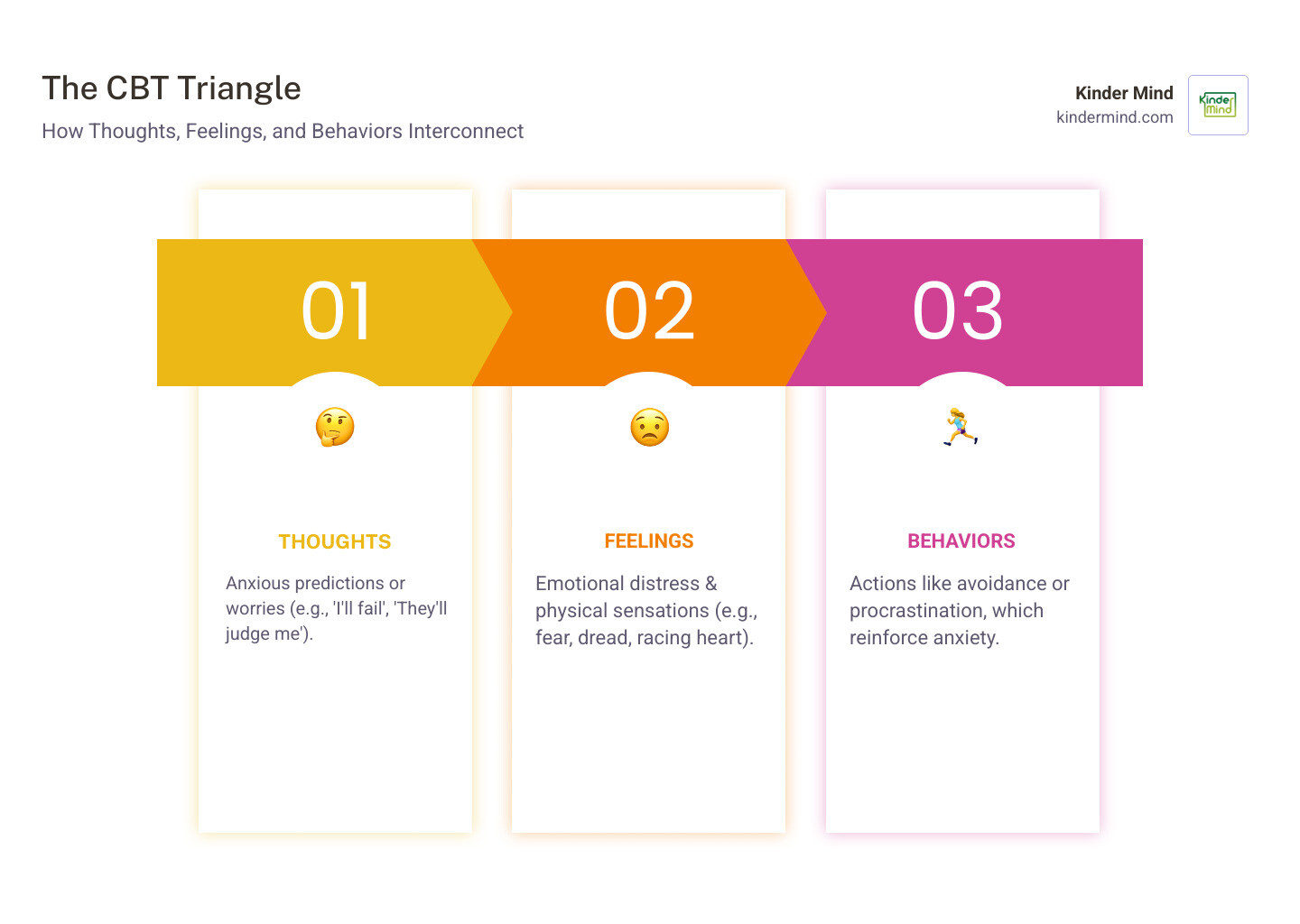
The beauty of CBT lies in its simplicity. It's based on one core idea: your thoughts, feelings, and behaviors are connected. When you have anxious thoughts, they trigger uncomfortable feelings, which lead to avoidance behaviors. This creates a vicious cycle that keeps anxiety alive. CBT helps you recognize these patterns and gives you tools to break free.
Unlike some treatments that require years of sessions or daily medication, CBT is typically time-limited. Most people see meaningful improvement within 12-20 sessions, though some notice changes even sooner.
Understanding Cognitive Behavioral Therapy (CBT) for Anxiety
Cognitive Behavioral Therapy (CBT) is a highly structured, goal-oriented form of talk therapy that stands as a first-line, empirically supported intervention for anxiety disorders. Decades of research recommend anxiety treatment cognitive behavioral therapy as a leading approach. It's a family of techniques designed to target maladaptive thoughts and behaviors that maintain anxiety, promoting more adaptive ways of thinking and acting.
At its heart, CBT operates on the understanding that our thoughts, feelings, and actions are interconnected. When someone experiences anxiety, this connection often forms a "vicious cycle." For example, an anxious thought like "I'm going to fail" can lead to feelings of dread, which might lead to avoidance. This avoidance, while offering temporary relief, reinforces the anxiety over time. CBT helps individuals recognize and break these unhelpful patterns. You can learn more about how therapy helps in general by visiting our guide on Therapy for Anxiety.
How CBT Works to Treat Anxiety
Anxiety treatment cognitive behavioral therapy works by identifying how an individual's thoughts and behaviors create and maintain anxiety. Therapists guide clients to understand how negative thought patterns influence their feelings and actions, intervening at both the cognitive and behavioral levels.
A crucial first step is identifying triggers—the specific situations or thoughts that set off anxiety. Individuals also learn to understand their body's unique anxiety response (e.g., racing heart, muscle tension). Understanding this mind-body connection is vital, as explored further in Anxiety and Your Body: The Connection.
CBT includes psychoeducation, where you learn about anxiety to see it as manageable. The therapist provides a safe environment, teaches specific skills, and guides you through practical exercises to help you respond more effectively to stress.
The Core Principles of CBT
The effectiveness of CBT for anxiety stems from several core principles:
- Focus on the Present: CBT primarily addresses current symptoms and present-day coping strategies, rather than digging deeply into the past.
- Skill-Based and Structured: Sessions are structured with a clear agenda to learn and practice concrete skills. Homework between sessions is crucial for applying these skills in real life.
- Time-Limited: CBT is short-term, typically ranging from 5 to 20 sessions, aiming to equip you with tools quickly.
- Goal of Self-Management: The ultimate aim is for you to become your own therapist, able to identify, challenge, and modify anxious thoughts and behaviors independently.
The Core Skills You'll Learn in CBT
CBT provides a robust toolkit of practical skills that empower individuals to manage their anxiety effectively. These skills are practiced both during sessions and through homework assignments, helping to integrate them into daily life.

Key skills learned in anxiety treatment cognitive behavioral therapy include:
- Self-monitoring: Learning to observe and track your own thoughts, feelings, and behaviors to identify patterns and triggers.
- Cognitive Restructuring: Identifying and challenging unhelpful thought patterns.
- Exposure: Gradually confronting feared situations to reduce avoidance.
- Mindfulness and Relaxation: Practicing techniques to calm the body and mind.
- Problem-solving skills: Developing a systematic approach to resolve problems that contribute to anxiety.
For a deeper dive into these techniques, explore our resource on Cognitive Behavioral Therapy (CBT).
How Cognitive Interventions Work in Anxiety Treatment Cognitive Behavioral Therapy
Cognitive interventions focus on changing how you think. The core technique is cognitive restructuring, which involves identifying and challenging dysfunctional thinking patterns, or "cognitive distortions." Examples include:
- Black-and-white thinking: Seeing things in extremes ("If I don't get an A, I'm a complete failure").
- Catastrophizing: Expecting the worst possible outcome ("If I feel a headache, it must be a brain tumor").
- Mind-reading: Assuming you know what others are thinking negatively about you.
Therapists help you challenge these thoughts using Socratic questioning, asking things like, "What's the evidence for this thought?" or "What's an alternative explanation?" This helps you learn to see thoughts as hypotheses, not facts. The goal is to develop balanced, realistic thoughts. A common tool is a thought record, where you document a situation, your automatic thoughts, and then work to create a more balanced perspective.
How Behavioral Interventions like Exposure Therapy Work
Behavioral interventions focus on changing actions, especially avoidance. The central strategy for anxiety is exposure therapy. By gradually confronting feared situations without engaging in safety behaviors, you learn that your feared outcomes rarely occur or that you can cope with the discomfort.
Exposure therapy uses systematic desensitization, starting with a fear hierarchy—a ranked list of feared situations. You gradually work your way up the list, starting with what's least frightening. Key types of exposure include:
- In-vivo exposure: Directly confronting feared situations in real life.
- Interoceptive exposure: For conditions like Panic Attacks, this involves safely inducing physical panic sensations (like dizziness) to learn they aren't dangerous.
- Exposure and Response Prevention (ERP): The gold standard for OCD, this involves exposure to obsessional triggers while preventing compulsive rituals. Learn more about ERP.
The Role of Mindfulness and Relaxation
Mindfulness and relaxation techniques help manage the physical and emotional sides of anxiety.
Mindfulness involves cultivating a non-judgmental awareness of the present moment. It helps you observe thoughts and feelings without getting caught up in them, which is effective for stepping back from anxious rumination.
Relaxation techniques directly address the physical symptoms of anxiety:
- Deep breathing exercises: Slow, deep breaths using the diaphragm to activate the body's calming response.
- Progressive muscle relaxation (PMR): Tensing and relaxing muscle groups to release physical tension. Research shows the Effectiveness of Progressive Muscle Relaxation.
- Grounding techniques: Simple exercises to re-orient to the present moment, such as the 5-4-3-2-1 method (naming things you can see, feel, hear, etc.).
Your CBT Journey: What to Expect from Anxiety Treatment Cognitive Behavioral Therapy
Starting on anxiety treatment cognitive behavioral therapy is a collaborative and structured journey. Your therapist acts as a guide, teaching you skills and supporting you as you apply them.

Your journey begins with an assessment to discuss your concerns and set clear goals. A typical CBT session involves checking in, reviewing homework, setting an agenda for the session, learning and practicing new skills, and planning new homework.
The typical duration of CBT for anxiety is 5 to 20 sessions. The exact length depends on your specific condition and progress. The goal is to equip you with lasting skills. Understanding the nuances of various Anxiety Disorders helps tailor the treatment plan.
CBT for Specific Anxiety Disorders
While the core principles of CBT remain consistent, the techniques are adapted for different anxiety disorders.
| Anxiety Disorder | Primary CBT Interventions |
|---|---|
| Generalized Anxiety Disorder (GAD) | Challenging excessive worry. Using mindfulness to target worry and imaginal exposure to confront worst-case scenarios. |
| Social Anxiety Disorder | Gradual exposure to feared social situations. Challenging negative beliefs about social judgment. |
| Panic Disorder | Challenging catastrophic interpretations of physical sensations. Using interoceptive and in-vivo exposure to learn that panic is not dangerous. |
| Obsessive-Compulsive Disorder (OCD) | ERP Therapy (Exposure and Response Prevention): Facing feared circumstances (obsessions) while resisting compulsive rituals. |
| Post-Traumatic Stress Disorder (PTSD) | Addressing negative beliefs about the trauma. Systematically confronting upsetting memories and situations. |
How Do You Know if You're Making Progress?
Progress in CBT isn't always linear, but clear indicators show you're moving in the right direction by gaining skills and changing your relationship with anxiety.
Common signs of progress include:
- Reduced avoidance: Engaging in activities you previously avoided.
- Handling stress better: Stressful situations feel more manageable.
- Feeling empowered: Feeling more in control of your reactions.
- Symptom-tracking scales: Many therapists use questionnaires to track symptom severity over time.
- Improved daily functioning: Better sleep, concentration, and social interactions.
Progress often happens between sessions as you practice skills. For more insights, visit Seeking Therapy for Anxiety.
Risks and Benefits of CBT
CBT comes with both benefits and potential considerations.
Benefits of CBT:
- Long-lasting skills: Equips you with tools you can use long after therapy ends.
- Evidence-based: One of the most researched and effective treatments for anxiety.
- No medication side effects: Avoids the side effects associated with anxiety medications.
- Improved quality of life: Leads to greater self-awareness and coping skills.
Risks and Considerations of CBT:
- Temporary discomfort: CBT, especially exposure therapy, can be challenging and may temporarily increase anxiety. Your therapist will guide you safely.
- Requires commitment: CBT is an active treatment. Its effectiveness depends on your commitment to homework and practicing skills.
- Finding the right therapist fit: The therapeutic relationship is key to success. It's important to find a qualified therapist you feel comfortable with.
Accessing Quality CBT and Modern Treatment Options
Despite its effectiveness, many people face barriers to accessing CBT, such as cost, stigma, location, and scheduling.
Kinder Mind is dedicated to overcoming these barriers by providing accessible mental health therapy services. We offer both in-person and virtual options, making it easier for individuals across many states to receive care. Our approach aims to destigmatize mental health and increase access to effective treatments like CBT. For those interested in virtual support, explore Online Therapy for Anxiety.
How to Find a Qualified CBT Therapist
Finding the right therapist is a crucial step. Here's what to look for:
- Credentials: Ensure the therapist is state-certified and licensed, with specific training or certification in CBT.
- Professional associations: Organizations like the Anxiety & Depression Association of America (ADAA) or the Association for Behavioral and Cognitive Therapies (ABCT) provide directories of qualified therapists.
- Asking the right questions: During an initial consultation, ask about their experience with anxiety, their CBT approach, and session structure.
- Therapeutic relationship: Research shows the "fit" between client and therapist is a strong predictor of success. You should feel comfortable, respected, and understood.
CBT and Other Treatment Options: Making the Right Choice
Anxiety treatment cognitive behavioral therapy can be highly effective alone. However, for some, a combination approach may be recommended.
- CBT as a standalone treatment: For mild to moderate anxiety, or for those who prefer a non-pharmacological approach, CBT alone is often sufficient.
- When CBT may be combined with other approaches: For severe anxiety or co-occurring conditions, a provider might recommend combining CBT with medication. A meta-analytic review suggested this may offer short-term benefits for some. However, some medications can interfere with exposure therapy, so a careful discussion with your provider and therapist is essential.
Making an informed decision should always be done in collaboration with your healthcare provider.
Innovative Delivery Methods for CBT
The landscape of mental health care is evolving, making anxiety treatment cognitive behavioral therapy more accessible than ever.
- Internet-delivered CBT (iCBT): This involves receiving CBT through online platforms. iCBT can be self-guided or therapist-assisted via live video sessions. Studies show it is an effective alternative to in-person treatment. Kinder Mind offers virtual therapy services, including iCBT, to provide flexible access to care. Explore Virtual Anxiety Treatment for more information.
- Digital therapeutics: These are evidence-based software programs, like apps, that incorporate CBT techniques to help individuals manage symptoms and build coping skills.
- Transdiagnostic approaches: Innovative treatments like the Unified Protocol (UP) target common underlying mechanisms shared across various anxiety disorders, offering a streamlined and effective treatment.
Frequently Asked Questions about CBT for Anxiety
Is CBT a "cure" for anxiety?
It's common to hope for a "cure," but anxiety treatment cognitive behavioral therapy is best understood as providing powerful tools for management, not a magic bullet. Anxiety is a normal human emotion, and some level of it can even be helpful (think of the Yerkes-Dodson Law, where moderate anxiety can improve performance). CBT teaches you to differentiate between helpful and unhelpful anxiety and gives you the tools to manage the latter.
The ultimate goal of CBT is for you to become your own therapist. You learn to identify anxious thoughts and behaviors, challenge them, and apply coping strategies independently. This skill set significantly reduces symptoms and is crucial for relapse prevention.
Is CBT only for severe anxiety disorders?
Absolutely not. While anxiety treatment cognitive behavioral therapy is highly effective for severe anxiety disorders, its skills are beneficial for almost everyone. CBT can help you:
- Manage everyday stress from work, relationships, or life changes.
- Address worry and nervousness before they escalate.
- Build resilience against future stressors.
- Break unhelpful habits like negative thinking or avoidance.
Everyone can fall into patterns of negative thinking, and CBT provides a powerful mechanism to form new, healthier habits, regardless of anxiety severity.
What other conditions can CBT treat?
The versatility of anxiety treatment cognitive behavioral therapy extends far beyond anxiety. Its principles are effective for a wide array of conditions, including:
- Mood disorders like Depression and Bipolar Disorder (often alongside medication).
- Post-Traumatic Stress Disorder (PTSD), Obsessive-Compulsive Disorder (OCD), and specific Phobias.
- Eating disorders, substance use disorders, and insomnia.
- Managing chronic pain, Attention-Deficit/Hyperactivity Disorder (ADHD), and everyday challenges like relationship issues and stress.
Take Control of Your Anxiety Today
Anxiety treatment cognitive behavioral therapy offers a powerful, evidence-based path to understanding and managing anxiety. It's not just about temporary relief; it's about building a robust skill set that empowers you to steer life's challenges with greater confidence and calm. By learning to identify and restructure unhelpful thoughts, confront fears safely, and practice effective relaxation techniques, you gain control over your anxiety rather than letting it control you.
The journey of healing starts with a single step, and finding the right support can make all the difference. Kinder Mind is committed to providing accessible, in-person, and virtual mental health therapy services, making quality care like CBT available to individuals across many states. Our approach focuses on empowering you with the tools you need to thrive.
If you're ready to take control of your anxiety and start on a path toward lasting well-being, we invite you to explore our services. Start your journey with individual therapy today.
