
How Therapy Can Help with Anxiety: A Complete Guide
Kinder Mind · 7/31/2024


How Therapy Can Help with Anxiety: A Complete Guide
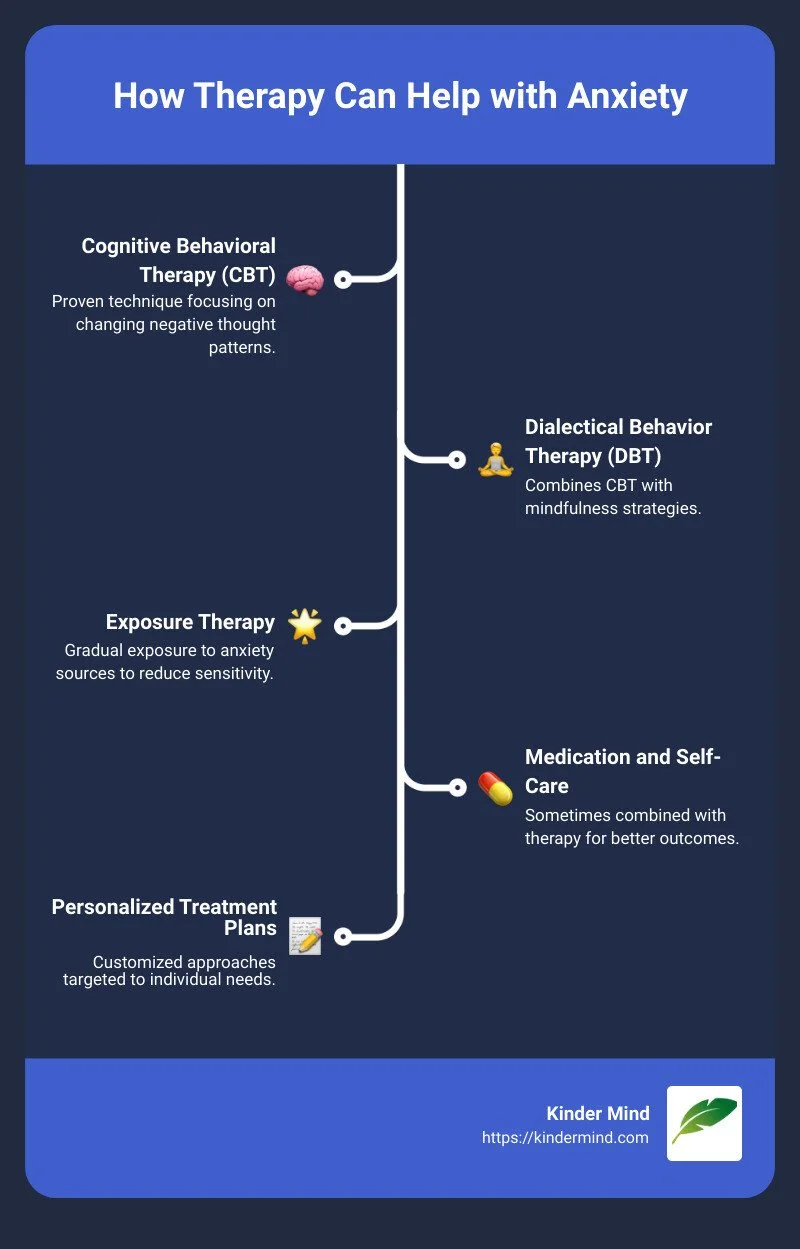
Therapy for anxiety involves different approaches to tackle excessive fear, worry, and apprehension that may disrupt daily life. Here are some quick answers about therapy for anxiety:
-
Cognitive Behavioral Therapy (CBT): Proven technique focusing on changing negative thought patterns.
-
Dialectical Behavior Therapy (DBT): Combines CBT with mindfulness strategies.
-
Exposure Therapy: Gradual exposure to anxiety sources to reduce sensitivity.
-
Medication and Self-Care: Sometimes combined with therapy for better outcomes.
Nearly 19% of adults in the United States are affected by anxiety disorders, according to the National Institute of Mental Health (NIMH). These conditions go beyond normal feelings of nervousness, leading to persistent and overwhelming anxiety that can interfere with daily activities.
Fortunately, anxiety disorders are highly treatable. Psychotherapy, or talk therapy, offers a range of effective treatment options that can significantly improve your quality of life.
My name is Dr. Elizabeth Barlow, Licensed Clinical Social Worker and founder of Kinder Mind, a virtual mental health therapy group. With years of experience in therapy for anxiety, I have seen how the right treatment can transform lives. Let’s explore the best approaches together.
Understanding Anxiety Disorders
Anxiety disorders are mental health conditions that cause excessive fear, worry, and apprehension. They can interfere with daily activities and affect your quality of life. Here’s a look at the most common types:
Generalized Anxiety Disorder (GAD)
People with GAD experience chronic anxiety, worry, and nervousness, even when there’s little or nothing to provoke it. They often worry about everyday things like health, work, or social interactions. According to the NIMH, GAD affects about 6.8 million adults in the U.S.
Social Anxiety Disorder (Social Phobia)
This disorder involves intense fear of social situations where one might be judged, embarrassed, or scrutinized. It can lead to avoidance of social interactions and severely impact daily life. For some, it may be limited to specific situations, like public speaking, while for others, it affects all social interactions.
Panic Disorder
Panic disorder is characterized by sudden and repeated panic attacks—intense periods of fear that come on quickly and peak within minutes. Symptoms include heart palpitations, sweating, shaking, and feelings of impending doom. The fear of having another panic attack can be debilitating.
Phobias
Phobias are intense, irrational fears of specific objects or situations, such as heights, flying, or spiders. These fears can lead to avoidance behaviors that interfere with daily life. For example, agoraphobia is the fear of situations where escape might be difficult, leading to avoidance of places like crowded areas.
Obsessive-Compulsive Disorder (OCD)
OCD involves unwanted, recurring thoughts (obsessions) and repetitive behaviors (compulsions). For example, a person might repeatedly wash their hands to cope with fears of contamination. These behaviors can take up significant time and interfere with daily activities.
Posttraumatic Stress Disorder (PTSD)
PTSD can develop after experiencing or witnessing a traumatic event, such as a natural disaster, accident, or assault. Symptoms include flashbacks, nightmares, severe anxiety, and uncontrollable thoughts about the event. It’s common among veterans and survivors of abuse.
Separation Anxiety Disorder
This disorder involves excessive fear or anxiety about being separated from home or loved ones. It’s common in children but can also affect adults. Symptoms include excessive worry about losing loved ones, reluctance to be alone, and nightmares about separation.
Symptoms of Anxiety
Anxiety manifests in both psychological and physical symptoms, including:
-
Psychological Symptoms:
-
Excessive worry
-
Low self-esteem
-
Difficulty concentrating
-
Irritability
-
-
Physical Symptoms:
-
Rapid heart rate
-
Muscle tension
-
Headaches
-
Digestive problems like nausea
-
DSM-5 Diagnostic Criteria
To be diagnosed with an anxiety disorder, a clinician will use criteria from the Diagnostic and Statistical Manual of Mental Disorders (DSM-5). Key criteria include:
-
Excessive anxiety and worry occurring more days than not for at least six months.
-
Difficulty controlling the worry, with symptoms like restlessness, fatigue, and sleep disturbances.
-
Significant distress or impairment in social, occupational, or other important areas of functioning.
Understanding these disorders and their symptoms is the first step toward seeking help. If you think you might have an anxiety disorder, consult a mental health professional for an accurate diagnosis and effective treatment plan.

My name is Dr. Elizabeth Barlow, Licensed Clinical Social Worker and founder of Kinder Mind, a virtual mental health therapy group. With years of experience in therapy for anxiety, I have seen how the right treatment can transform lives. Let’s explore the best approaches together.
Types of Therapy for Anxiety
Cognitive-Behavioral Therapy (CBT)
Cognitive-Behavioral Therapy (CBT) is a highly effective method for treating anxiety. It focuses on identifying and changing negative thought patterns and behaviors.
Key Techniques:
-
Cognitive Restructuring: This involves challenging and reframing distorted thoughts. For example, if you think, “I’ll embarrass myself at the meeting,” CBT helps you replace that with, “I can handle this meeting and do my best.”
-
Behavior Therapy: Encourages you to face anxiety-provoking activities. Over time, you learn that your feared outcomes are unlikely.
-
Systematic Desensitization: Gradually exposes you to anxiety triggers while practicing relaxation techniques such as deep breathing and progressive muscle relaxation.
Quote: “CBT can help you address your current problem and learn new skills for coping with life stressors in the future.”
Dialectical Behavior Therapy (DBT)
Dialectical Behavior Therapy (DBT) is a type of CBT that focuses on accepting your anxiety while working to change your thoughts and behaviors.
Key Skills:
-
Mindfulness: Being present in the moment.
-
Distress Tolerance: Managing distressing situations without making them worse.
-
Interpersonal Effectiveness: Building healthy relationships.
-
Emotional Regulation: Managing intense emotions.
DBT is especially useful for those who struggle to accept their anxiety and need strategies to manage it.
Exposure Therapy
Exposure Therapy helps you face your fears in a controlled environment, reducing anxiety over time.
Types of Exposure:
-
Imaginal Exposure: Visualizing the feared situation.
-
In Vivo Exposure: Facing the fear in real life.
-
Virtual Reality Exposure: Using technology to simulate the feared situation.
Systematic Desensitization: This step-by-step approach involves exposing you to the fear gradually while using relaxation techniques.
Fact: A 2001 clinical trial found that virtual reality exposure therapy is particularly effective for treating PTSD.
Psychodynamic Therapy
Psychodynamic Therapy explores the past to understand present problems. It aims to uncover and resolve past conflicts.
Focus Areas:
-
Exploring the Past: Identifying childhood issues linked to adult anxiety.
-
Patient-Therapist Relationship: Building a supportive relationship to facilitate healing.
-
Supportive Therapy: Offering emotional support throughout the process.
A recent study showed that psychodynamic therapy has similar remission rates to CBT for social anxiety, demonstrating its effectiveness.
Interpersonal Therapy (IPT)
Interpersonal Therapy (IPT) focuses on improving interpersonal relationships and social roles.
Key Focuses:
-
Interpersonal Issues: Identifying and resolving conflicts with loved ones.
-
Avoidance: Addressing avoidance behaviors.
-
Communication Problems: Learning healthy ways to express emotions and communicate.
Originally developed for depression, IPT is effective for anxiety related to social interactions and relationships.
Acceptance and Commitment Therapy (ACT)
Acceptance and Commitment Therapy (ACT) helps you accept your anxious feelings and commit to actions that align with your values.
Core Elements:
-
Life Values: Identifying what truly matters to you.
-
Emotional Strategies: Learning to live with anxiety without letting it control you.
Fact: Researchers have found that internet-based ACT treatment is effective for various anxiety disorders.
Eye Movement Desensitization and Reprocessing (EMDR)
Eye Movement Desensitization and Reprocessing (EMDR) is designed to alleviate the stress associated with traumatic experiences.
Techniques:
-
External Stimuli: Using eye movements, hand-tapping, or audio stimulation to process trauma.
-
Traumatic Experiences: Helping to start the healing process and prevent relapse.
Fact: EMDR is particularly effective for individuals with PTSD, according to numerous research studies.
By understanding these various types of therapy for anxiety, you can work with your therapist to find the most suitable approach for your needs. Each method offers unique tools and strategies to help you manage and reduce your anxiety symptoms effectively.
Medication for Anxiety
Medication can play a crucial role in managing anxiety symptoms. While therapy often provides long-term strategies, medication can offer immediate relief, especially during severe episodes. Here are some common medications used to treat anxiety:
Benzodiazepines
Benzodiazepines are often prescribed for short-term relief of severe anxiety. They work by promoting muscle relaxation and calming the mind.
Examples:
-
Lorazepam (Ativan)
-
Diazepam (Valium)
-
Clonazepam (Klonopin)
Note: Benzodiazepines can be addictive and are generally not recommended for long-term use.
Buspirone
Buspirone is used for both short-term and long-term anxiety treatment. It alters chemicals in the brain that regulate mood, helping to reduce anxiety.
Advantages:
-
Non-addictive
-
Fewer side effects compared to benzodiazepines
Selective Serotonin Reuptake Inhibitors (SSRIs)
SSRIs are a type of antidepressant that increases serotonin levels in the brain. They are commonly prescribed for anxiety and have fewer side effects compared to older antidepressants.
Examples:
-
Sertraline (Zoloft)
-
Paroxetine (Paxil)
-
Fluoxetine (Prozac)
Tricyclic Antidepressants
Tricyclic antidepressants work similarly to SSRIs but are generally used when SSRIs are ineffective. They are prescribed at low doses init