
The Complete Guide to Understanding Mental Health vs Mental Illness
Kinder Mind · 8/1/2024


Understanding the Difference: Mental Health vs Mental Illness
When it comes to mental health vs illness, understand the key differences.
-
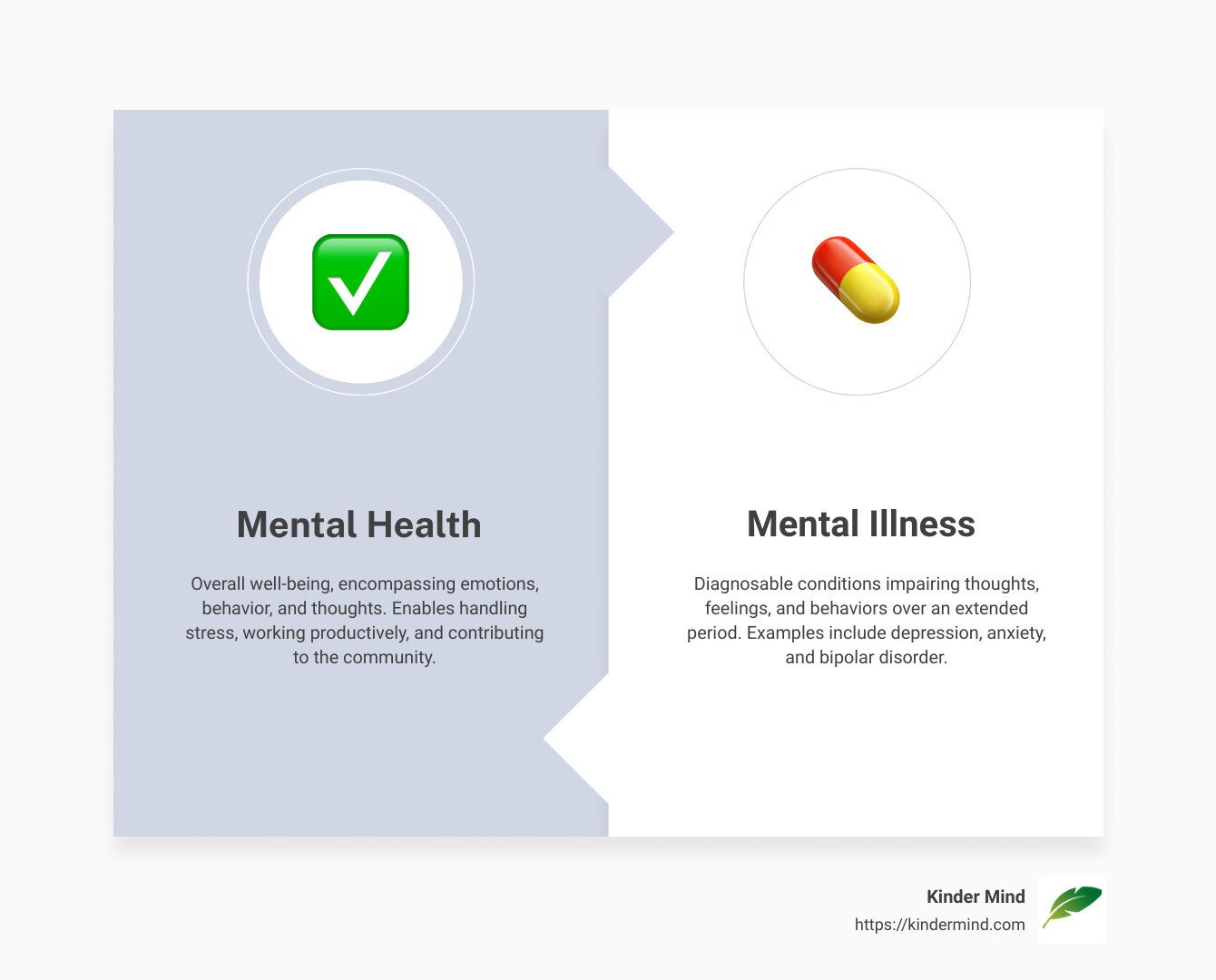
Mental Health: Refers to overall well-being, encompassing emotions, behavior, and thoughts. It enables you to handle stress, work productively, and contribute to your community.
-
Mental Illness: Consists of diagnosable conditions that impair a person’s thinking, feeling, and behaviors over an extended period, like depression, anxiety, and bipolar disorder.
Talking about mental health vs illness can lessen the stigma and encourage open dialogue. This helps people feel comfortable seeking help and supporting others.
I’m Dr. Elizabeth Barlow, Licensed Clinical Social Worker and President of Kinder Mind. With years of experience, I’ve witnessed how understanding mental health vs illness can empower individuals to achieve better well-being.
What Is Mental Health?
Mental health is about how we think, feel, and behave. It affects our day-to-day living, relationships, and even our physical health. Just like physical health, mental health is crucial for overall well-being.
State of Well-Being
Mental health is more than the absence of mental illness. It’s a state of well-being where you can:
-
Realize your own abilities
-
Cope with normal stresses of life
-
Work productively
-
Contribute to your community
Emotional Well-Being
Emotional well-being means feeling good about yourself and your life. It includes:
-
Positive self-esteem
-
Healthy relationships
-
The ability to manage your emotions
Coping with Stress
Life is full of ups and downs. Resilience is the inner strength that helps you bounce back from stressful situations. Building resilience can help you handle life’s challenges more effectively. Techniques like relaxation exercises, mindfulness, and seeking support can boost your resilience.
Contributing to Community
Being mentally healthy also means feeling connected to your community. This can involve:
-
Volunteering
-
Participating in social activities
-
Helping others
These activities can improve your sense of belonging and purpose.
WHO Definition
The World Health Organization (WHO) defines mental health as:
“A state of well-being in which an individual realizes their own abilities, can cope with the normal stresses of life, can work productively, and is able to make a contribution to their community.”
Understanding mental health helps us see that it’s not just about avoiding problems. It’s about thriving and living a fulfilling life.
What Is Mental Illness?
Diagnosable Conditions
Mental illness refers to a range of diagnosable conditions that affect a person’s mood, thinking, and behavior. These conditions are recognized by medical professionals and are often listed in manuals like the Diagnostic and Statistical Manual of Mental Disorders (DSM-5). Mental illnesses can be caused by factors such as genetics, brain chemistry, or trauma.
Affects Thoughts and Behaviors
Mental illnesses can significantly impact the way a person thinks and behaves. They can alter emotions, perception of reality, and how one interacts with the world. For example, someone with depression might experience persistent sadness and social withdrawal, while someone with anxiety may have overwhelming fears and panic attacks.
Common Mental Illnesses
Here are some of the most common mental illnesses:
-
Depression: Persistent low mood, lack of interest in activities, and fatigue.
-
Anxiety: Constant worry, restlessness, and physical symptoms like a racing heart.
-
Bipolar Disorder: Extreme mood swings from high (mania) to low (depression).
-
Obsessive-Compulsive Disorder (OCD): Unwanted repetitive thoughts and actions.
-
Schizophrenia: Distorted thinking, hallucinations, and delusions.
-
Post-Traumatic Stress Disorder (PTSD): Flashbacks and severe anxiety following trauma.
Symptoms
Each mental illness has its unique set of symptoms, but some common signs include:
-
Mood Changes: Frequent mood swings, extreme sadness, or irritability.
-
Anxiety: Persistent worry, fear, or panic attacks.
-
Behavioral Changes: Withdrawal from social activities, changes in eating or sleeping patterns.
-
Cognitive Issues: Trouble concentrating, memory problems, or difficulty making decisions.
Diagnosis Process
Diagnosing a mental illness usually involves several steps:
-
Initial Assessment: A healthcare provider will ask about your symptoms, medical history, and lifestyle.
-
Psychological Testing: Tools like questionnaires or interviews to assess your mental state.
-
Physical Exam: To rule out other medical conditions that might cause symptoms.
-
Diagnosis: Based on criteria listed in the DSM-5, a diagnosis is made.
If you or someone you know is experiencing these symptoms, it’s important to seek help from a mental health professional. Early diagnosis and treatment can make a significant difference.
Next, we will explore the difference between mental health and mental illness.
Mental Health vs Mental Illness
Understanding the difference between mental health and mental illness is crucial for everyone. These terms are often used interchangeably, but they mean different things.
Mental Health Is Not Mental Illness
Mental health refers to your overall mental well-being. It includes your emotional, psychological, and social well-being. Mental health helps you handle stress, relate to others, and make decisions. It’s about thriving, not just surviving.
Mental illness, on the other hand, refers to diagnosable mental health conditions. These are disorders that affect your mood, thinking, and behavior. Examples include depression, anxiety, and schizophrenia.
Mental Illness Under the Mental Health Umbrella
Think of mental health as a big umbrella. Under this umbrella, you have both good mental health and mental illnesses.
-
Good Mental Health: When you have good mental health, you can handle daily stress, work productively, and contribute to your community.
-
Mental Illness: This includes conditions like depression, anxiety disorders, and bipolar disorder. These conditions can affect your ability to function day-to-day.
Differences Between Mental Health and Mental Illness
-
State vs. Condition: Mental health is a state of well-being. Mental illness is a condition diagnosed by a professional.
-
Everyone vs. Some: Everyone has mental health, just like everyone has physical health. Not everyone has a mental illness.
-
Fluctuates vs. Persistent: Your mental health can fluctuate. You might feel stressed or down sometimes. Mental illnesses are more persistent and require treatment.
Examples to Illustrate
-
Mental Health Example: Imagine you’re feeling stressed because of work. You talk to a friend, exercise, and feel better. This is managing your mental health.
-
Mental Illness Example: Now, imagine you’re feeling so low you can’t get out of bed for weeks. You see a doctor and get diagnosed with depression. This is a mental illness, and you might need therapy or medication.
Key Takeaways
Mental health is about overall well-being, while mental illness refers to specific conditions that affect your mental state. Understanding this difference helps us talk about mental health more accurately and compassionately.
Next, we will look at the components of mental well-being.
Components of Mental Well-Being
Understanding mental well-being involves looking at several key components. These elements work together to help you maintain a balanced and fulfilling life. Let’s dive into them.
Physical Health
Physical health plays a big role in mental well-being. Regular exercise, a balanced diet, and good sleep can improve your mood, energy levels, and overall mental state.
-
Exercise: Just 30 minutes of brisk walking three times a week can boost your mood and reduce stress.
-
Diet: Eating more vegetables, fruits, and unprocessed grains helps you think clearly and feel more alert.
-
Sleep: Quality sleep is crucial. It helps you manage stress and keeps your brain sharp.
Social Well-Being
Humans are social creatures. Connecting with others can improve your mental health.
-
Positive Relationships: Spend time with friends and family who uplift you.
-
Community Involvement: Join clubs or groups that share your interests. This can give you a sense of belonging.
-
Support Systems: Knowing you have people to turn to in times of need can reduce feelings of isolation.
Emotional Resilience
Emotional resilience is your ability to bounce back from stress and adversity.
-
Coping Skills: Techniques like deep breathing, meditation, and yoga can help you manage stress.
-
Positive Mindset: Try reframing negative thoughts into positive ones. This can change how you react to challenges.
-
Self-Compassion: Be kind to yourself. Everyone makes mistakes and faces setbacks.
Coping Strategies
Having effective coping strategies can make a big difference in how you handle life’s ups and downs.
-
Journaling: Writing down your thoughts can help you process emotions and find solutions.
-
Mindfulness: Practices like mindfulness and meditation can help you stay present and reduce anxiety.
-
Physical Activity: Moving your body, even just stretching or walking, can relieve stress and improve your mood.
Lifestyle Adjustments
Small lifestyle changes can have a big impact on your mental well-being.
-
Routine: Establishing a daily routine can provide structure and make you feel more in control.
-
Breaks: Take regular breaks to avoid burnout. Even a short nap can refresh you.
-
Nature: Spend time outdoors. Nature has both physical and mental benefits, like reducing stress and improving mood.
By focusing on these components, you can improve your mental well-being and lead a more balanced life.
Next, we will explore common mental illnesses and their symptoms.
Common Mental Illnesses and Their Symptoms
Understanding the symptoms of common mental illnesses can help in recognizing when you or someone you know might need support. Here are some of the most prevalent mental illnesses:
Depression
Major Depressive Disorder affects millions and goes beyond feeling sad. It can cause:
-
Profound sadness or hopelessness
-
Lack of interest in activities once enjoyed
-
Difficulty concentrating
-
Fatigue or lack of energy
-
Changes in sleep patterns (too much or too little)
-
Changes in appetite (overeating or loss of appetite)
-
Thoughts of death or suicide
Example: Jane, a 35-year-old teacher, found herself unable to get out of bed and uninterested in her hobbies. She struggled to concentrate at work and felt constantly exhausted. After seeking help, she was diagnosed with depression and began treatment that helped her regain her energy and focus.