
Mental and Emotional Health vs. Mental Illness: A Comprehensive Guide
Kinder Mind · 7/24/2024


Understanding Mental and Emotional Health vs. Mental Illness
When diving into the topic of mental emotional health vs mental illness, grasp the fundamental differences and connections between these concepts. Mental health and emotional health are closely linked aspects of our overall well-being, but mental illness refers to diagnosable conditions that affect one’s mood, thinking, and behavior. This clear understanding is the first step toward achieving balance and seeking appropriate help when needed.
Quick Overview:
-
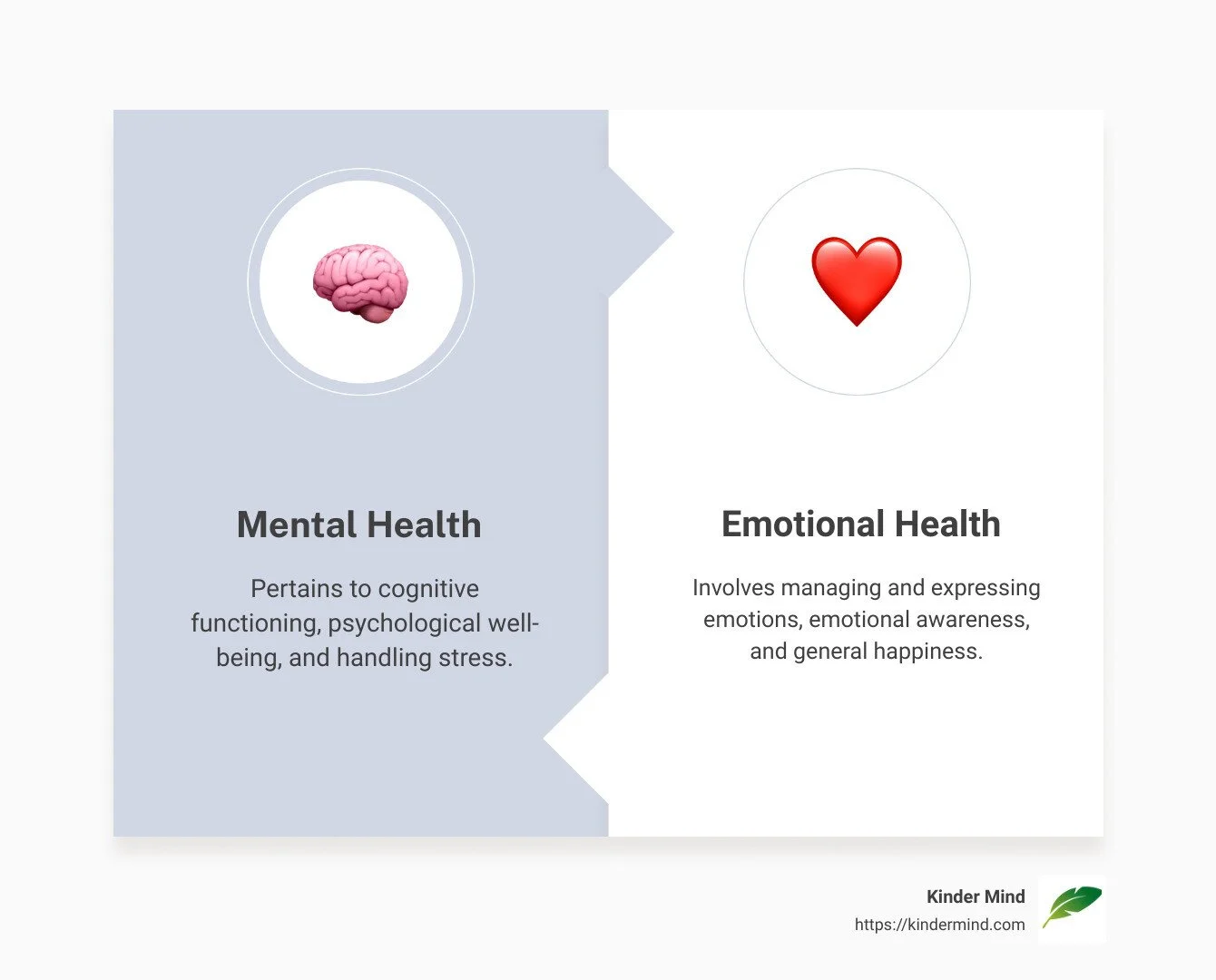
Mental Health: Pertains to cognitive functioning, psychological well-being, and handling stress.
-
Emotional Health: Involves managing and expressing emotions, emotional awareness, and general happiness.
-
Mental Illness: Diagnosable conditions like depression, anxiety, bipolar disorder, which require treatment.
A healthy mental and emotional state can significantly improve your life quality and productivity. Conversely, mental illness can make it challenging to perform daily tasks and enjoy life’s moments. Recognizing and addressing both mental and emotional health, and understanding mental illness, is crucial for holistic well-being.
I am Dr. Elizabeth Barlow, founder of Kinder Mind, and with my experience in virtual mental health services, I aim to make the nuances of mental emotional health vs mental illness accessible to everyone. Together, let’s explore how nurturing both mental and emotional aspects of your health and understanding mental illness can lead to a more fulfilling life.
Understanding Mental and Emotional Health
What is Mental Health?
Mental health is like the engine that powers a car. It involves how we think, feel, and act. Good mental health helps us handle stress, relate to others, and make choices. It’s about more than just the absence of mental disorders; it includes cognitive functioning, psychological well-being, and social well-being.
Cognitive Functioning: This is how well your brain processes information. It includes memory, decision-making, and problem-solving skills. When your cognitive functions are working well, you can think clearly and learn new things.
Psychological Well-Being: This is about how you feel emotionally. It includes your mood, energy levels, and how you handle life’s ups and downs. Good psychological well-being means you’re generally happy and resilient.
Social Well-Being: How you interact with others is crucial. Healthy relationships, social connections, and a sense of community all contribute to your mental health.
Stress Handling: Everyone faces stress, but how you handle it matters. Good mental health helps you manage stress effectively, without it overwhelming you.
Mental Disorders: These are conditions that affect your thinking, feeling, and behavior. Common mental disorders include depression, anxiety, and bipolar disorder. They can disrupt your life but are treatable with professional help.
What is Emotional Health?
Emotional health is like the software that runs on the engine of mental health. It involves your ability to understand and manage your emotions. It’s about feeling good and being satisfied with life.
Emotional State: This is how you feel at any given moment. Are you happy, sad, angry, or calm? Your emotional state can change throughout the day.
Emotional Regulation: This is your ability to manage your emotions. Can you stay calm under pressure? Can you bounce back from setbacks? Good emotional regulation helps you handle life’s challenges without getting overwhelmed.
Happiness and Satisfaction: These are key indicators of emotional health. Do you feel content with your life? Do you find joy in everyday activities? Happiness and satisfaction are signs of good emotional health.
Emotional Awareness: This is about being aware of your emotions and understanding why you feel a certain way. It helps you respond to situations appropriately and build healthy relationships.
Stress Management: Just like with mental health, managing stress is crucial for emotional health. Techniques like mindfulness, meditation, and deep breathing can help you stay calm and focused.
Well-Being: Emotional health contributes to overall well-being. It helps you enjoy life, cope with stress, and maintain positive relationships.
By understanding the differences between mental and emotional health, we can better manage both aspects to lead a balanced and fulfilling life. Next, let’s dive into the differences between mental and emotional health and how they interact.
Differences Between Mental and Emotional Health
Mental Health vs. Emotional Health
Mental health and emotional health are closely related but distinct aspects of our well-being. Think of mental health as the foundation, the hardware of our minds, while emotional health is the software that runs on it.
Mental Health refers to the functioning of your brain. It includes cognitive abilities like decision-making, memory, and problem-solving. Mental health also covers how we handle stress, relate to others, and perceive the world around us.
Emotional Health is about how we manage and express our emotions. It involves emotional regulation, awareness, and acceptance. Emotional health helps us respond to life’s ups and downs in a balanced way.
Cognitive vs. Emotional: Cognitive issues, like trouble concentrating or memory problems, are tied to mental health. Emotional issues, like feeling overwhelmed or having mood swings, are tied to emotional health.
External Factors: Family history, trauma, and brain chemistry can affect mental health. Emotional health is often influenced by relationships, life experiences, and how we process emotions.
Internal Factors: Mental health is linked to brain function and biological factors. Emotional health is about inner feelings and emotional responses.
Professional Assessment: Diagnosing mental health issues often involves medical evaluations, lab tests, and psychological assessments. Emotional health issues are usually assessed through therapy and emotional awareness exercises.
How They Interact
While mental and emotional health are distinct, they are deeply interlinked. Poor mental health can lead to emotional struggles, and vice versa.
Emotional Well-Being: Good mental health supports emotional well-being. When our brain functions well, we can better manage our emotions.
Mental Disorders: Conditions like depression and anxiety affect both mental and emotional health. They disrupt cognitive functions and emotional regulation.
Stress Management: Effective stress management requires both good mental and emotional health. Techniques like mindfulness help calm the mind and regulate emotions.
Psychological Issues: Mental health issues can cause emotional distress, and emotional problems can lead to mental health challenges. For example, chronic stress can affect brain function, leading to cognitive impairments.
Understanding the differences and interactions between mental and emotional health helps us address both areas for a balanced, fulfilling life. Next, we will explore what mental illness is and the different types that exist.
Mental Illness: Definition and Types
Mental illness refers to a range of mental health conditions that affect a person’s mood, thinking, and behavior. These conditions can interfere with daily life, making it difficult to function effectively.
Common Mental Illnesses
Understanding the various types of mental illnesses can help in recognizing symptoms and seeking appropriate treatment. Here are some common mental disorders:
-
Depression: Major depressive disorder, or clinical depression, goes beyond occasional sadness. It includes persistent low mood, fatigue, and a lack of interest in activities. Severe cases can lead to psychotic symptoms like delusions and hallucinations.
-
Anxiety: Anxiety disorders are characterized by relentless worry and fear. Symptoms include unease, exhaustion, irritability, muscle aches, and sleep disturbances. This category also includes phobias and panic disorders.
-
Bipolar Disorder: This disorder involves dramatic mood swings between manic (high energy) and depressive (low energy) episodes. Managing bipolar disorder often requires a combination of medication and therapy.
-
Schizophrenia: Schizophrenia affects how a person thinks, feels, and behaves. Symptoms can include hallucinations, delusions, and disorganized thinking. Treatment usually involves antipsychotic medications and supportive therapies.
-
Eating Disorders: These disorders, such as anorexia nervosa and bulimia nervosa, involve extreme behaviors related to food and body image. Symptoms may include severe food restriction, binge eating, and purging.
Diagnosing Mental Illness
Diagnosing mental illness is a complex process that often involves several steps:
-
Professional Assessment: A healthcare provider, such as a doctor or mental health professional, conducts a thorough evaluation. This includes discussing symptoms, personal history, and family history.
-
Symptoms: Symptoms vary widely depending on the type of mental illness. Common symptoms include mood changes, anxiety, cognitive impairments, and behavioral changes.
-
Cognitive Impairments: Some mental illnesses affect cognitive functions like memory, attention, and decision-making. For example, depression can lead to difficulty concentrating, while schizophrenia can cause disorganized thinking.
-
Neurological Conditions: Sometimes, mental health symptoms can mimic neurological conditions. For instance, hypothyroidism can present symptoms similar to depression.
Treatment
Treatment for mental illnesses often involves a combination of approaches:
-
Medication: Medications can help manage symptoms by balancing brain chemicals. Antidepressants, anti-anxiety medications, and antipsychotics are common.
-
Therapy: Various types of therapy, such as cognitive-behavioral therapy (CBT) and dialectical behavior therapy (DBT), can help individuals understand and manage their conditions.
-
Lifestyle Changes: Regular exercise, a balanced diet, and adequate sleep can support mental health.
-
Support Systems: Building a strong support network of family, friends, and support groups can provide emotional and practical help.
Recognizing and understanding mental illnesses is crucial for seeking timely and effective treatment. Up next, we’ll explore how mental and emotional health impacts behavior and daily life.
Impact on Behavior and Daily Life
How Mental Health Affects Behavior
Mental health issues can significantly impact how we act and feel. When someone struggles with their mental health, it often leads to behavioral changes. For example, they might withdraw from social activities or have trouble completing daily tasks.
Cognitive impairments are also common. This means having difficulty concentrating, remembering things, or making decisions. These impairments can make everyday life feel overwhelming.
The stress response is another key area affected by mental health. People with poor mental health might experience chronic stress, which can lead to anxiety and panic attacks. This constant state of stress can also affect physical health, leading to headaches, stomach problems, and more.
Professional help is crucial when mental health issues become unmanageable. Therapists and counselors can offer strategies to cope with these challenges, such as cognitive-behavioral therapy (CBT) and medication management.
How Emotional Health Affects Behavior
Emotional health focuses on how we manage and express our emotions. Poor emotional health can lead to intense emotional reactions like frequent mood swings or overwhelming sadness.
Emotional regulation is the ability to manage and respond to these emotions in a healthy way. When someone struggles with this, they might react impulsively or have difficulty calming down after getting upset.
Stress management is another crucial aspect of emotional health. Poor emotional health can make it hard to handle stress, leading to feelings of being overwhelmed or anxious. This can affect daily life, making it hard to focus or enjoy activities.
Coping mechanisms are strategies we use to deal with stress and emotional challenges. Healthy coping mechanisms include talking to friends, exercising, or practicing mindfulness. Unhealthy coping mechanisms, like substance abuse or isolation, can make emotional health worse.
Improving emotional health often requires a mix of self-care and professional support. Activities like journaling, meditation, and therapy can help improve emotional regulation and stress management.
Understanding how both mental and emotional health impact behavior is key to improving overall well-being. Now, let’s explore self-care strategies to bolster mental and emotional health.
Improving Mental and Emotional Health
Self-Care Strategies
1. Balanced Diet
Eating well can improve your mood and energy levels. Foods rich in omega-3 fatty acids, like salmon, an