
How to talk to a therapist for free right now
Dr. Elizabeth Barlow, LCSW-S · 4/1/2026

You Can Talk to a Therapist Free — Here’s How to Start Right Now
If you want to talk to a therapist free, here are the fastest ways to get support today:
| Method | How to Access | Available |
|---|---|---|
| Call or text 988 | Dial or text 988 | 24/7, free, confidential |
| Crisis Text Line | Text HOME to 741741 | 24/7, free, anonymous |
| 7 Cups free chat | Visit 7cups.com | 24/7, free listeners online |
| One Stop Talk (Ontario) | Call 1-855-416-8225 | Mon–Sat, free, registered therapists |
| SAMHSA Helpline | Call 1-800-662-4357 | 24/7, free, mental health + substance use |
Getting help for your mental health shouldn’t depend on how much money you have. But for millions of people, cost is the single biggest barrier standing between them and support.
Traditional in-person therapy isn’t cheap. Many people simply can’t afford to go — or they get stuck on a waitlist that stretches for months. In some areas, hospital mental health waitlists can run anywhere from three months to over a year.
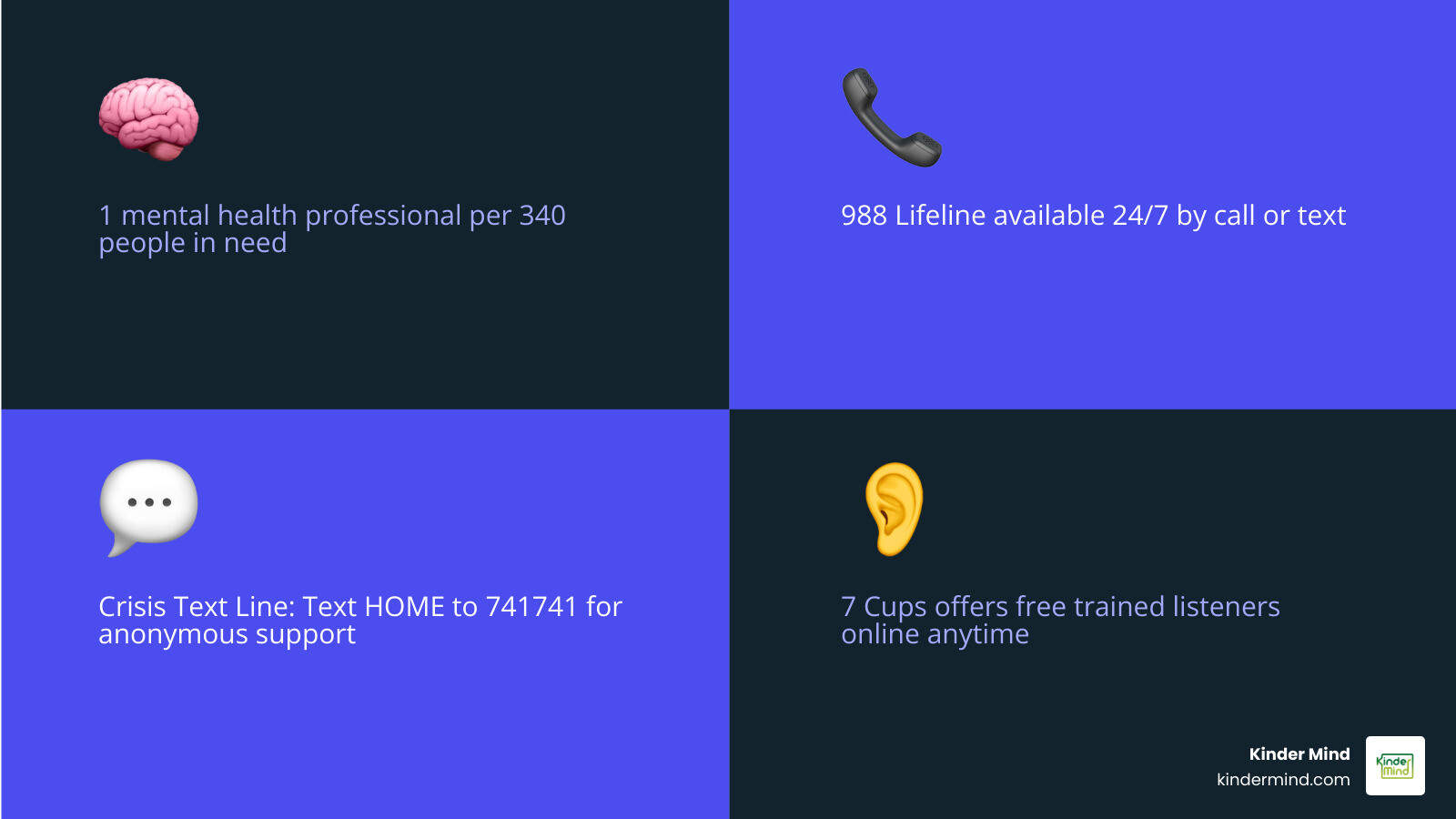
The shortage is real. There is only one mental health professional for every 340 people who need mental health services. That gap leaves a lot of people without the help they need.
The good news? There are more free and low-cost options than most people realize — from 24/7 crisis lines to trained volunteer listeners to free therapy for youth in specific provinces and states. You don’t have to wait, and you don’t have to figure it out alone.
This guide walks you through every major option, what each one actually offers, and how to get started today.
Talk to a therapist free terms made easy:
Understanding Free Online Support vs. Professional Therapy
When you search for ways to talk to a therapist free, you will encounter a wide range of services. It is essential to understand that not all “talk” is clinical therapy. Most free services fall into the category of emotional support or crisis intervention rather than long-term psychotherapy.
Professional therapy is conducted by licensed clinicians—such as psychologists, clinical social workers, or licensed professional counselors—who have years of specialized education and thousands of hours of supervised experience. They can provide diagnoses, create treatment plans, and use evidence-based modalities like Cognitive Behavioral Therapy (CBT).
Free online support, on the other hand, often utilizes “trained listeners” or peer supporters. These are volunteers who have been trained in active listening and empathy but are not licensed professionals. This type of support is excellent for emotional venting, feeling heard during a lonely moment, or de-escalating a stressful situation. However, it has clinical limitations. Peer listeners generally cannot treat complex conditions like PTSD or bipolar disorder, nor can they provide medical advice.
According to scientific research on mental health resources, utilizing these resources can be a vital first step, but they are often intended as a bridge to more robust care. For a deeper dive into these distinctions, you can explore the best free online therapy options on a budget.

Best Ways to Talk to a Therapist Free via Crisis Services
If you are in immediate distress, crisis services are the most reliable way to connect with someone right now. These services are designed for 24/7 availability and offer confidential support at no cost.
The 988 Suicide & Crisis Lifeline is the primary resource in the United States and Canada. By calling or texting 988, you are connected to a network of local crisis centers. The responders are trained to handle suicide prevention, emergency intervention, and extreme emotional distress. They provide a safe space to talk through your feelings and can help you create a safety plan if you are in danger. You can also access immediate crisis support via 988 through their online chat feature.
How to talk to a therapist free using text and chat
For those who prefer typing over talking, the Crisis Text Line offers a discreet way to get help. By texting HOME or HOLA to 741741, you can reach a live volunteer Crisis Counselor. This service is anonymous and typically provides a response within 10 minutes.
While these counselors are volunteers, they undergo extensive training to help users move from a “hot moment” to a “cool calm.” Conversations usually last about an hour, and the goal is to ensure the user is safe and has a plan for the next steps. For those specifically dealing with racing thoughts or panic, free online CBT therapy for anxiety resources can provide additional self-help tools to use alongside these chat services.
Where to talk to a therapist free in Ontario and Quebec
Geography can sometimes work in your favor when looking for free mental health care. In Ontario, the One Stop Talk program provides children and youth (under 18) with immediate access to free, confidential mental health support. Unlike many volunteer lines, this service connects youth with registered therapists via phone, video, or audio chat. It is a “walk-in” style service where you can start a conversation and leave with a personalized plan.
In Quebec, residents have access to various specialized resources. The Association des Medecins Psychiatres du Quebec provides directories for psychiatric information, while the McGill Psychoed Clinic and the Clinique Universitaire de Psychologie (UdeM) offer low-cost services supervised by professionals. For adults in Montreal, La Maison St. Jacques provides free group psychotherapy for those aged 18 to 50. If you are struggling with low mood, checking out free online counseling for depression can also help you find digital tools available regardless of your specific city.
Community-Based and Specialized Free Mental Health Resources
Beyond the major national hotlines, community-based organizations and non-profits fill the gaps for those who need more than just a one-time crisis chat.
University Clinics: Many universities with graduate programs in psychology or counseling operate clinics that are open to the public. These sessions are conducted by advanced students who are closely supervised by licensed faculty members. Fees are often based on a sliding scale, and in some cases, they may be waived entirely for those in financial hardship.
NAMI (National Alliance on Mental Illness): This organization is a powerhouse for peer support. They offer free, nationwide support groups for individuals living with mental health conditions and their families. You can find National Alliance on Mental Illness (NAMI) support in almost every major city. These groups provide a sense of community that individual therapy sometimes lacks.
211 Services: If your mental health is being impacted by basic needs—like housing instability or food insecurity—calling 211 can connect you with essential local services. They often have the most up-to-date lists of non-profit counseling centers in your specific neighborhood.
Specialized support for veterans and new mothers
Certain groups have access to dedicated free resources tailored to their unique experiences.
- Veterans: The Veterans Crisis Line is available by calling 988 and pressing 1, or by texting 838255. This service connects veterans and their loved ones with qualified responders from the Department of Veterans Affairs, many of whom are veterans themselves. Comprehensive U.S. Department of Veterans Affairs resources are also available online to help with transition issues, PTSD, and family support.
- New and Expecting Mothers: Maternal mental health is a critical priority. The National Maternal Mental Health Hotline (1-833-TLC-MAMA) provides free, confidential support 24/7 for pregnant individuals and new moms. Additionally, Postpartum Support International resources offer specialized help for those navigating the emotional changes of parenthood.
- Disaster Survivors: The Disaster Distress Helpline (1-800-985-5990) provides immediate crisis counseling for people experiencing emotional distress related to natural or human-caused disasters.
Limitations of Free Services and When to Seek Professional Help
While it is possible to talk to a therapist free or find a listener through the resources mentioned, it is important to recognize when these services are not enough. Free services are often best used as a “triage” or a temporary support system.
| Feature | Volunteer Listeners / Crisis Lines | Licensed Professional Therapy |
|---|---|---|
| Cost | Completely Free | Fees apply (Insurance/Sliding Scale) |
| Provider | Trained Volunteers / Peers | Licensed Clinicians (PhD, LCSW, LPC) |
| Focus | Immediate crisis / Venting | Long-term healing / Skill building |
| Diagnosis | Cannot provide a diagnosis | Can provide official diagnoses |
| Medication | No medical involvement | Can refer to psychiatrists for meds |
| Best For | Feeling heard in the moment | Treating chronic mental health issues |
You should seek professional, licensed help if you are experiencing:
- Serious Conditions: Diagnoses like PTSD, bipolar disorder, or clinical depression require specialized evidence-based treatment that volunteers are not equipped to provide.
- Substance Use: Overcoming addiction often requires a medical and psychological team.
- Long-term Treatment: If you find yourself calling crisis lines every week, it is a sign that you need a consistent, long-term treatment plan with a dedicated therapist.
- Diagnostic Needs: If you need a formal diagnosis for insurance, school, or work accommodations, only a licensed professional can provide this.
Frequently Asked Questions about Free Therapy
Is free online therapy effective for serious mental health conditions?
Generally, free peer-based support is not considered a substitute for clinical treatment for serious conditions. While it can help alleviate feelings of isolation or acute stress, it lacks the diagnostic depth and continuity of care required to manage complex disorders like schizophrenia or severe PTSD. It is most effective when used as a supplement to professional therapy or as a temporary resource while waiting for a professional appointment.
What qualifications do free online listeners and volunteers have?
Qualifications vary by platform. On services like the Crisis Text Line, volunteers undergo approximately 30 hours of training in crisis intervention and active listening. On peer-support sites like 7 Cups, “listeners” complete an online course in active listening. It is important to remember that these volunteers are typically not licensed therapists, though some may be students or professionals volunteering their time.
How can I find a sliding-scale therapist if I have no insurance?
If you don’t have insurance, look for “sliding scale” providers. These are therapists who adjust their fees based on your income. You can find them by searching directories like Psychology Today or the Open Path Psychotherapy Collective. Additionally, federally qualified health centers often provide mental health services on a sliding fee scale to ensure no one is turned away due to an inability to pay.
Conclusion
Finding a way to talk to a therapist free can be the lifeline you need to get through a difficult night or a stressful season of life. Whether you choose to text a crisis line, join a NAMI support group, or utilize a student clinic, the most important step is simply reaching out.
At Kinder Mind, we believe that high-quality mental health care should be accessible to everyone, regardless of their financial situation. We offer affordable, insurance-based therapy and virtual sessions designed to fit into your life and your budget. By providing various payment options and reduced-rate plans, we aim to remove the barriers that keep people from the support they deserve.
If you are ready for the next step in your mental health journey, professional help is closer than you think. You don’t have to navigate your challenges alone.
