
The Best Free Online Therapy Options on a Budget
Dr. Elizabeth Barlow, LCSW-S · 2/11/2026

Why Access to Mental Health Support Matters More Than Ever
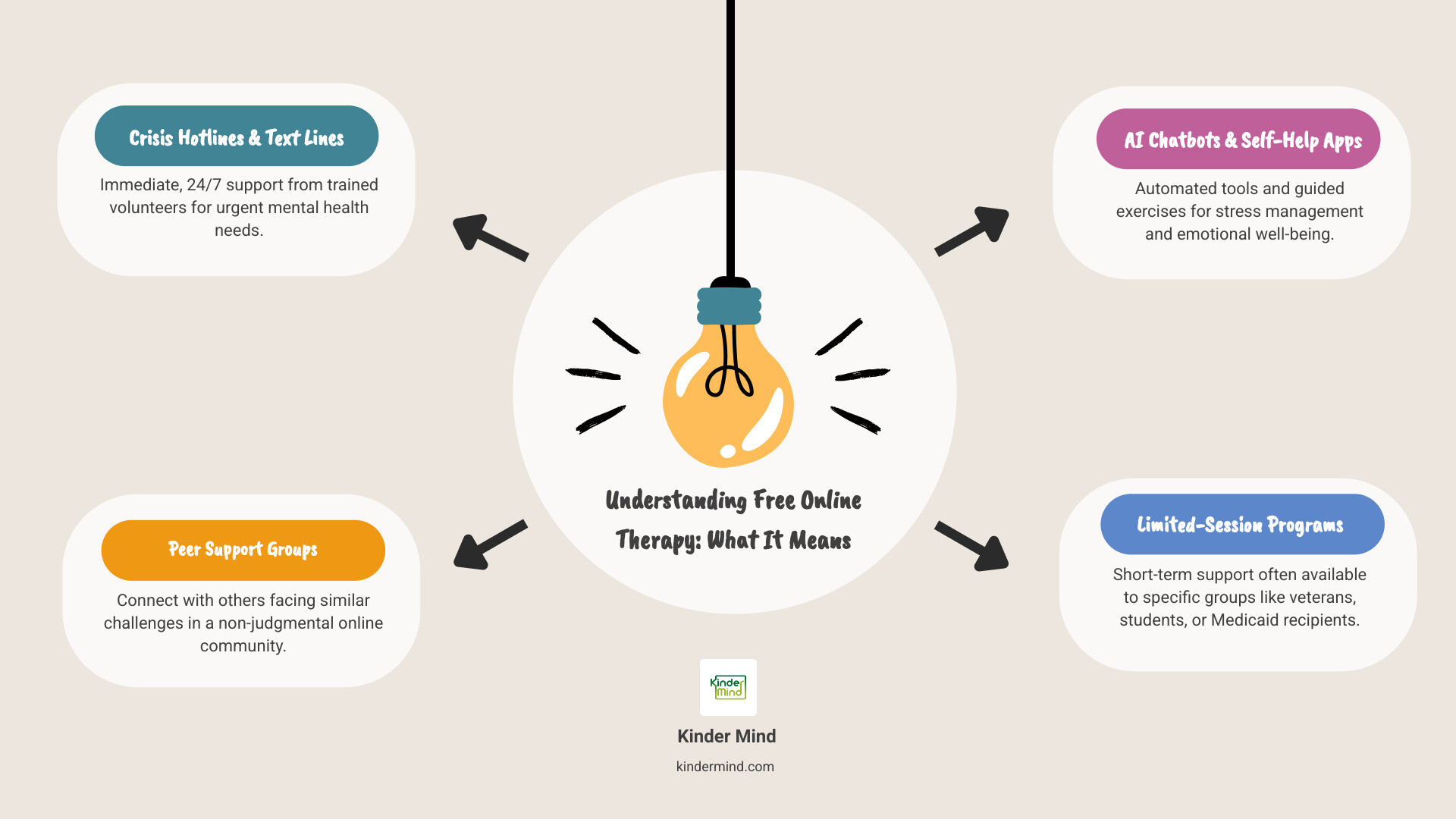
Free online therapy is a term many people search for when they need mental health support but are worried about cost. Here’s what you need to know right away:
What “free online therapy” typically means:
- Crisis hotlines and text lines – Immediate support from trained volunteers, available 24/7
- Peer support groups – Connecting with others who share similar experiences
- AI chatbots and self-help apps – Automated tools for managing stress and emotions
- Limited-session programs – Short-term support for specific populations (veterans, students, Medicaid recipients)
What it usually does not mean:
- Unlimited sessions with a licensed therapist at no cost
- Long-term professional psychotherapy
- Diagnosis or treatment of mental health conditions
If you’re juggling stress, relationship challenges, or mental health concerns, you’re not alone. Millions of people have turned to online platforms seeking support. The reality is that traditional in-person therapy can cost hundreds per session, and many insurance plans don’t cover mental health care adequately.
The good news? There are genuinely free resources for immediate support, crisis intervention, and peer connection. And when you need professional care from a licensed therapist, there are affordable alternatives that cost far less than traditional therapy.
This guide will walk you through what’s actually available for free, how to access low-cost professional therapy, and when each option makes the most sense for your situation. No fluff, no false promises – just clear information to help you get the support you deserve.
Understanding “Free Online Therapy”: What It Is and What It Isn’t
The quest for free online therapy often begins with a pressing need for support and a concern for one’s budget. It’s crucial, however, to understand that the term “free online therapy” encompasses a wide spectrum of services, and not all of them offer the same level of professional care. While truly free, ongoing psychotherapy from a licensed professional is rare, many valuable free resources can provide significant mental health support.
These free options typically include immediate crisis support, peer-led groups, and self-guided tools. They are designed to offer accessible help, but they differ significantly from traditional professional therapy. Understanding these distinctions is key to finding the right support for your needs. For more comprehensive information on virtual care, individuals can explore More info about Teletherapy.
| Feature | Crisis Support | Peer Support | Professional Therapy |
|---|---|---|---|
| Provider | Trained volunteers, crisis counselors | Individuals with shared lived experiences | Licensed therapists (e.g., psychologists, social workers) |
| Cost | Free | Free | Varies greatly; can be paid, low-cost, or insurance-covered |
| Best For | Immediate distress, urgent emotional needs | Feeling understood, shared coping strategies | Addressing specific mental health conditions, long-term growth |
| Goal | De-escalation, safety planning, immediate relief | Empathy, community, mutual encouragement | Diagnosis, treatment, skill development, profound change |
The critical difference between crisis support and therapy
When someone is in immediate distress, experiencing a mental health crisis, or struggling with overwhelming emotions, crisis support services offer a vital lifeline. These services, such as national crisis hotlines and text lines, provide immediate help and short-term intervention. They are typically available 24/7 and are staffed by trained volunteers or crisis counselors who can offer emotional support, de-escalation techniques, and referrals to further resources. The 988 Suicide & Lifeline, for instance, offers free, 24/7 urgent emotional support via call, text, or online chat, serving as a critical resource for those in urgent need. Similarly, Crisis Text Line provides free, 24/7, confidential support via text by simply texting HOME or HOLA to 741741. These services are invaluable for urgent situations, but it’s important to remember they are not long-term therapy. They do not provide a diagnosis or engage in structured treatment plans. For more details on these vital services, one can visit the 988 Lifeline and Crisis Text Line websites.
Professional therapy, on the other hand, involves ongoing, structured sessions with a licensed mental health professional. This is where individuals receive a diagnosis, develop personalized treatment plans, and work through complex issues over time. While crisis support is about immediate stabilization, professional therapy aims for deeper understanding, lasting change, and the development of coping mechanisms for chronic concerns.
Peer support vs. professional guidance
Peer support groups offer a unique and powerful form of mental health assistance that thrives on shared lived experiences. These groups, often peer-led, provide a non-judgmental space where individuals can connect with others facing similar challenges. The National Alliance on Mental Illness (NAMI) offers free, peer-led support groups that allow individuals to connect with others and discuss their experiences in a non-judgmental environment. This sense of community and mutual understanding can be incredibly validating and empowering. Many online platforms also leverage the power of peer support, connecting millions of people globally through trained listeners. For those interested in connecting with others in a group setting, particularly for conditions like anxiety, Online Group Therapy for Anxiety offers further insights.
While peer support provides invaluable empathy and connection, it is distinct from professional guidance. Licensed therapists possess clinical expertise, extensive training, and are equipped with evidence-based practices to diagnose mental health conditions, develop custom treatment plans, and guide individuals through complex therapeutic processes. They are bound by ethical guidelines and confidentiality standards, offering a level of structured intervention that peer support, by its nature, cannot. Understanding this distinction is crucial, as highlighted in articles like Understanding the Distinction: Mental Health Versus Mental Illness. NAMI’s peer support groups can be found at NAMI peer support groups.
Your Guide to Genuinely Free Mental Health Resources
Finding genuinely free mental health support might seem like searching for a needle in a haystack, but with the right knowledge, it’s entirely possible to locate valuable resources. These options are particularly helpful for immediate needs, building community, or for specific populations.
Immediate support in a crisis
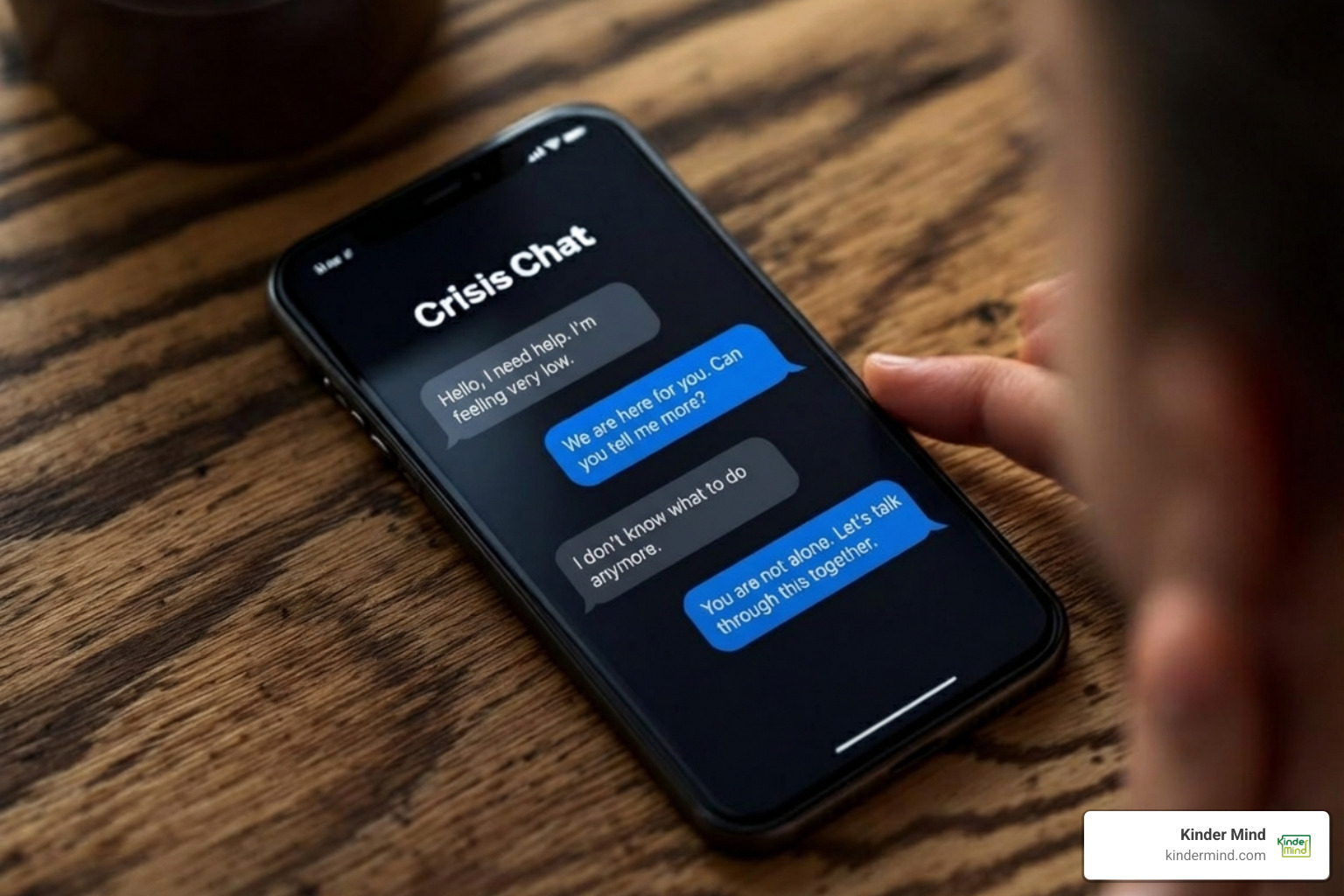
When a crisis strikes, time is of the essence. Fortunately, several resources offer immediate, confidential, and free online therapy-like support around the clock. The 988 Suicide & Lifeline is a critical national resource, available 24/7 by calling or texting 988, or through online chat, for urgent emotional support. Similarly, Crisis Text Line provides confidential support via text; simply text HOME or HOLA to 741741. These services are designed for de-escalation and immediate emotional aid, not long-term therapy, but they are crucial for safety and initial relief. If someone is in immediate danger or experiencing a life-threatening mental health crisis, the safest and most appropriate action is to go to the nearest emergency room. You can find more information at 988 Suicide & Lifeline and Crisis Text Line.
Finding community with free peer support
Connecting with others who understand what you’re going through can be incredibly powerful. Free peer support groups, often available both online and in person, offer a space for shared experiences, mutual encouragement, and practical coping strategies. NAMI’s support groups, for example, are free and peer-led, providing an opportunity to connect with others in a non-judgmental environment. These groups aren’t therapy in the traditional sense, but they can significantly reduce feelings of isolation and provide a sense of belonging. Online platforms also facilitate peer connection, offering trained listeners who provide empathetic support. For those seeking group dynamics in a therapeutic context, exploring Online Group Therapy for Anxiety can be beneficial. More details on NAMI’s offerings are available at NAMI’s support groups.
Programs for specific populations
Certain populations often have access to specialized free online therapy or low-cost mental health programs. For members of the military community, organizations like Give an Hour offer no-cost mental health care services to active-duty military personnel, reservists, guards, veterans, and sometimes their spouses and caregivers. College and university students may also find free counseling services offered through their educational institutions.
Additionally, some states and local communities have programs designed to support specific needs or demographic groups. For example, some initiatives provide free mental health services for people with Medicaid coverage, often utilizing compassionate Clinical Residents under the guidance of licensed Therapist Supervisors. To find local or state programs in your area, or to find general assistance, calling 211 can often connect individuals with a wide range of social services and mental health resources. Check out Give an Hour for military support, and remember to call 211 for local assistance.
Affordable Alternatives to Free Online Therapy
While truly free online therapy from a licensed professional can be challenging to find for ongoing care, numerous affordable alternatives make professional mental health support accessible. These options bridge the gap between completely free resources and traditional, higher-cost therapy, ensuring that financial constraints don’t prevent individuals from receiving the care they need. For comprehensive guidance on managing therapy costs, More info about Affordable Therapy is an excellent resource.

How to find low-cost professional therapy
Navigating the landscape of low-cost professional therapy requires knowing where to look. Sliding-scale clinics are a fantastic option, as they adjust the cost of services based on an individual’s income and ability to pay. These can include community mental health centers, which often serve medically underserved areas and offer comprehensive services at reduced rates. Federally Qualified Health Centers (FQHCs) are another excellent resource, providing integrated medical and mental health care with sliding-scale fees.
University training clinics, where students provide services under the supervision of licensed professionals, also offer therapy at significantly lower costs. These clinics ensure quality care through rigorous oversight while making therapy more accessible. Websites like CIMHS and FindTreatment.gov can help individuals locate these valuable resources in their communities. Additionally, Federally Qualified Health Centers are designed to provide care to all, regardless of their ability to pay.
Using insurance and other payment options for a free online therapy alternative
For many, insurance can significantly reduce the out-of-pocket cost of therapy, making professional care much more affordable. Many online therapy platforms and in-person providers now accept various insurance plans. It’s always wise to check with your insurance provider about your specific mental health benefits. For detailed guidance on this, Online Therapy That Takes Insurance offers helpful information, and a list of important Questions to Ask Your Insurance Provider About Therapy can prepare you for that conversation.
Beyond traditional insurance, other payment options can make therapy more manageable. If you have Medicaid coverage, you may be eligible for free or very low-cost mental health services, as some programs specifically cater to Medicaid recipients. Health Savings Accounts (HSAs) and Flexible Spending Accounts (FSAs) allow individuals to use pre-tax dollars for eligible medical expenses, including therapy, which can lead to substantial savings. Some therapy providers also offer self-pay plans or financial aid options, sometimes with flexible subscription models, further reducing the financial burden.
Evaluating Your Options: When to Choose Free vs. Paid Therapy
Deciding between free online therapy and investing in paid professional services can feel like a big decision. Both have their place in mental health care, and the best choice often depends on an individual’s specific needs, the severity of their concerns, and their goals for support. It’s about finding the right fit for your unique journey.
Assessing the quality and legitimacy of resources
When exploring any mental health resource, especially those that are free or low-cost, assessing its quality and legitimacy is paramount. For professional therapy, always verify the credentials of the provider. Licensed therapists (such as psychologists, clinical social workers, or licensed professional counselors) have undergone extensive education, supervised training, and passed state-specific examinations. Organizations like the American Psychological Association support online therapy from licensed practitioners, and studies, including a 4-year study from the Yale School of Medicine and the US Department of Veteran Affairs, have found
