
Beyond Borders: A State-by-State Guide to Online Therapy in New Jersey, New Hampshire, and New Mexico
Dr. Elizabeth Barlow, LCSW-S · 1/22/2026

Why Online Therapy in New Jersey Matters Now More Than Ever
Online therapy New Jersey provides accessible and effective mental health support from home. Through secure video or phone sessions with licensed therapists, it eliminates commutes, offers flexible scheduling, and is often more affordable than in-person care, all while delivering high-quality treatment.
Quick Facts About Online Therapy in NJ:
- How it works: Connect with licensed therapists via secure video or phone.
- Effectiveness: Research shows it’s as effective as in-person therapy, with higher retention.
- Cost: Most insurance plans cover online therapy like in-person care.
- Availability: Access qualified therapists across New Jersey, no matter your location.
- Getting started: Schedule initial sessions within 24-48 hours.
Mental health care in New Jersey has rapidly acceptd telehealth, making therapy more accessible than ever. Whether you’re in Jersey City, Princeton, or a rural area, online therapy removes barriers like traffic, scheduling conflicts, and limited local options. The pandemic accelerated this trend, as relaxed regulations and expanded insurance coverage proved that the therapeutic relationship thrives on-screen. For many, virtual care is the most realistic path to consistent mental health support, overcoming obstacles of cost, insurance complexity, and specialist availability.
Understanding Online Therapy in the Garden State
Online therapy, or teletherapy, delivers mental health services remotely. In New Jersey, you can connect with a licensed therapist from any private space using secure, HIPAA-compliant video platforms or by phone. The core principles of therapy remain the same—only the delivery method has evolved.
The effectiveness of online therapy is well-supported by research, which shows it is just as effective as in-person counseling for many conditions. In some cases, the convenience leads to higher retention rates, as people are more likely to stick with a treatment that fits their lives. This shift to virtual therapy and online counseling has made mental healthcare more accessible throughout New Jersey.
What are the benefits of online therapy in New Jersey?
Choosing online therapy New Jersey offers significant advantages over traditional sessions.
- Unparalleled Convenience: Attend therapy from home without the stress of commuting, traffic, or parking.
- Flexible Scheduling: Find appointments, including evenings and weekends, that fit your work, childcare, and other commitments.
- Comfort of Your Own Space: Discussing sensitive topics can feel easier and more natural in a familiar, private environment.
- Improved Privacy: Avoid the potential discomfort of being seen at a therapist’s office.
- Access to a Wider Range of Specialists: Connect with Kinder Mind specialists across the state who have the exact expertise you need, regardless of location.
- Reduced Barriers: Overcome obstacles related to mobility issues, chronic illness, social anxiety, or living in a rural area.
- Consistency: Your therapy schedule is less likely to be disrupted by travel, weather, or other life events.
For more on how virtual care can help, explore our resources on virtual mental health support.
What to Expect and How to Prepare for Your First Session
Starting online therapy can feel new, but a little preparation can make your first session a success.

Here’s what to expect:
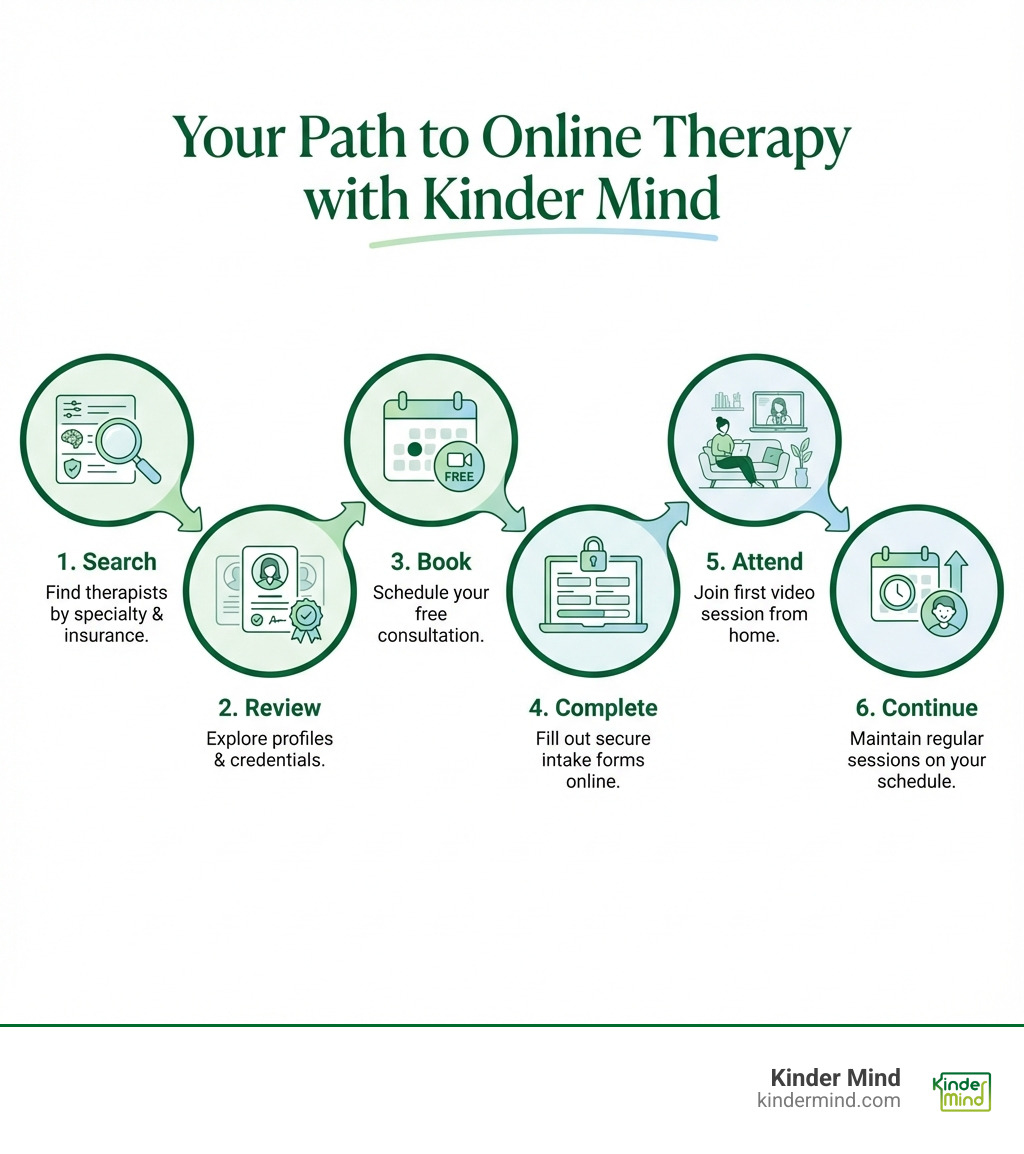
- Initial Consultation & Intake: After a brief, free consultation to ensure a good fit, you’ll complete online intake forms about your history and goals. This helps you get an appointment quickly.
- Discussing Your Goals: The first session is about getting to know each other. You’ll discuss your background, current concerns, and what you hope to achieve.
- Finding Your Private Oasis: Before your session, find a quiet, private space where you won’t be interrupted. Using headphones can improve privacy and focus.
- Tech Check: Test your internet, camera, and microphone beforehand to ensure a smooth connection. Have a backup plan, like your therapist’s phone number, just in case.
- Mental Preparation: Take a few moments before your session to reflect on what you want to discuss. This will help you be present and engaged.
The first session builds the foundation for your therapeutic journey. For more tips, see our guide on your virtual therapy appointment.
Finding the Right Fit: Your Guide to Qualified Therapists in NJ
Finding the right therapist is a personal journey. With online therapy New Jersey, you have access to a broad network of professionals, and Kinder Mind is here to help you connect with a qualified expert.

New Jersey’s mental health professionals, including LPCs, LCSWs, and MFTs, all meet rigorous state licensing standards. A crucial aspect of online therapy is HIPAA compliance, which protects your health information. Reputable providers like Kinder Mind use secure, encrypted platforms to ensure your sessions remain confidential.
The therapeutic relationship is the most significant predictor of success. It’s about finding someone you feel understood and supported by. Online therapy fosters these strong connections, and if you don’t feel a good fit, it’s okay to seek a different therapist.
Explore our our therapy providers to see the expertise available.
How to find a qualified provider for online therapy in New Jersey
A clear strategy makes finding a provider for online therapy New Jersey much smoother.
- Explore Kinder Mind’s Therapist Directory: Browse profiles of licensed NJ therapists, filtering by specialization and approach.
- Check Credentials and Licensing: Verify that your therapist is licensed in New Jersey. Kinder Mind pre-screens all providers to ensure they are fully qualified.
- Read Reviews and Testimonials: Client feedback can offer valuable insight into a therapist’s style.
- Use Free Consultations: Take advantage of brief, free consultations to ask questions and gauge compatibility before committing.
- Consider Specializations: Filter your search by your primary concerns, such as anxiety, trauma, or relationship issues, to find an expert in that area.
For more guidance, visit our resource on finding a therapist near you.
Common Conditions Treated Virtually
Online therapy New Jersey is versatile and effective for a wide spectrum of mental health concerns.
- Anxiety Disorders: Learn tools and coping mechanisms to manage worry, panic, and phobias from the comfort of home. See online therapy for anxiety.
- Depression: Get support for persistent sadness and low energy, and develop strategies for mood improvement. Explore our resources on online therapy for depression.
- Trauma and PTSD: Process difficult memories and build resilience in a safe, controlled virtual setting.
- Relationship Issues: Work on communication, conflict resolution, and intimacy with a neutral, guiding professional.
- Life Transitions: Steer major changes like career shifts, divorce, or parenthood with supportive guidance.
- Grief and Loss: Process loss in a compassionate space and find healthy ways to move forward.
- Stress Management: Learn practical techniques for stress reduction, mindfulness, and building resilience.
- Parental Consulting: Get convenient access to expert advice on family dynamics and supporting your children’s mental health.
- LGBTQ+ Support: Find an affirming therapist who understands the unique experiences of the LGBTQ+ community.
- Behavioral Addictions and Substance Abuse: Online therapy can be a vital part of recovery, offering consistent support and relapse prevention strategies.
Navigating Costs and Insurance for Online Therapy in New Jersey
Understanding the financial side of therapy is a key concern. Fortunately, online therapy New Jersey is often financially accessible due to state regulations and insurance policies.
New Jersey’s mental health parity laws generally require insurers to cover mental health services at the same level as medical care. This means if your plan covers in-person therapy, it will likely cover online therapy with similar co-pays and deductibles.
Payment options typically include:
- In-Network Coverage: Kinder Mind works with many major insurance providers. When a therapist is in-network, you are usually only responsible for a co-pay after meeting your deductible.
- Out-of-Network Coverage: If a therapist is out-of-network, your plan may still reimburse you for a percentage of the fee after you pay upfront.
- Self-Pay Options: For those without insurance or who prefer not to use it, self-pay is available. Kinder Mind also offers reduced-rate plans or sliding scale fees to ensure therapy remains affordable.
Online therapy often has the same insurance benefits as in-person care, making it a convenient financial choice. For more, read our guide on online therapy that takes insurance.
How to Check Your Insurance Coverage
Before starting online therapy New Jersey, clarify your insurance coverage to avoid unexpected costs.
Here’s a simple guide to checking your benefits:
- Call Your Insurance Provider: Use the member services number on your insurance card to ask about your benefits.
- Use Online Portals: Many insurers have online portals where you can view your benefits and estimate costs.
- Key Questions to Ask:
- Do I have mental health benefits?
- Does my plan cover telehealth or online therapy services?
- What is my deductible, and has it been met?
- What is my co-pay or co-insurance for in-network and out-of-network mental health services?
- Are there any limitations on the number of sessions?
- Do I need a referral from my primary care physician?
- Verify Telehealth Specifics: Explicitly ask if online therapy is covered and if any special requirements apply.
Taking these steps provides a clear picture of your financial responsibility. To easily verify your coverage with Kinder Mind, use our insurance eligibility check. Additionally, we’ve compiled a list of questions to ask your insurance provider about therapy to ensure you cover all your bases.
Specialized Online Therapy: Support for Children, Teens, and Couples
Online therapy New Jersey extends beyond individuals to offer custom support for children, teens, and couples, addressing their unique developmental and relational needs.
For children and teens, the comfort of home can make it easier to open up, and tech-savvy adolescents often find virtual sessions natural. For couples, scheduling flexibility is a major advantage. Virtual platforms can also facilitate family involvement by bringing members together from different locations. Kinder Mind’s therapists are skilled at building rapport online and using engaging techniques for all ages.
Find out more about our therapists and their diverse specializations.
Considerations for Children and Teens
Online therapy for young people in New Jersey requires special considerations to be effective.
- Engaging Kids Online: For younger children, therapists use digital games and interactive activities. “Virtual play therapy” guides children through play with their own toys at home.
- Suitability for Different Age Groups: Children 12 and older generally do well with telehealth, while those 6 and under may be better suited for in-person play therapy, though adaptations are possible.
- Parental Consent and Involvement: Parental consent is required for minors. Therapists often work with parents separately to reinforce skills and ensure a supportive home environment.
- Teen Privacy Concerns: Establishing clear boundaries for confidentiality is crucial. Teens need a private, distraction-free space to feel safe speaking freely.
Online Therapy for Couples
Couples can find immense value in online therapy New Jersey to strengthen their bond and improve communication. The virtual format offers practical advantages that make counseling more accessible.
| Feature | Individual Online Therapy | Couples Online Therapy |
|---|---|---|
| Participants | One client and one therapist | Two clients (partners) and one therapist |
| Logistics | Client needs one private space | Partners can be in one shared private space or separate private spaces |
| Scheduling | Easier to coordinate one person’s schedule | Requires coordinating two busy schedules, easier virtually |
| Communication Focus | Personal thoughts, feelings, behaviors | Relational dynamics, shared communication patterns, joint goals |
| Therapeutic Goal | Individual growth and well-being | Improving relationship health and functionality |
| Privacy Needs | Client’s personal privacy | Shared couple privacy, or individual privacy if in separate locations |
The scheduling convenience of online therapy is a standout benefit, allowing partners to join from different locations and attend sessions more consistently
