
How Students and Teachers Can Find Affordable Therapy Today
Dr. Elizabeth Barlow, LCSW-S · 3/26/2026

Why Finding Affordable Therapy for Students Matters More Than Ever
Affordable therapy for students is more accessible than most people realize — here are the most common ways to get support without breaking the bank:
- On-campus counseling centers — often free or low-cost through your university
- University training clinics — supervised graduate interns offering sessions at reduced rates
- Sliding scale therapists — fees adjusted to your income level
- Online therapy platforms — flexible, often cheaper than in-person sessions
- Community health centers — low-cost care open to the public
- Non-profit directories — connect you with vetted, affordable providers
- Employee Assistance Programs (EAPs) — free short-term sessions, sometimes available to students through a parent’s employer
College is supposed to be exciting. But for millions of students, it’s also overwhelming.
Academic pressure, financial stress, social adjustment, and being away from home for the first time — these challenges stack up fast. And they take a real toll on mental health.
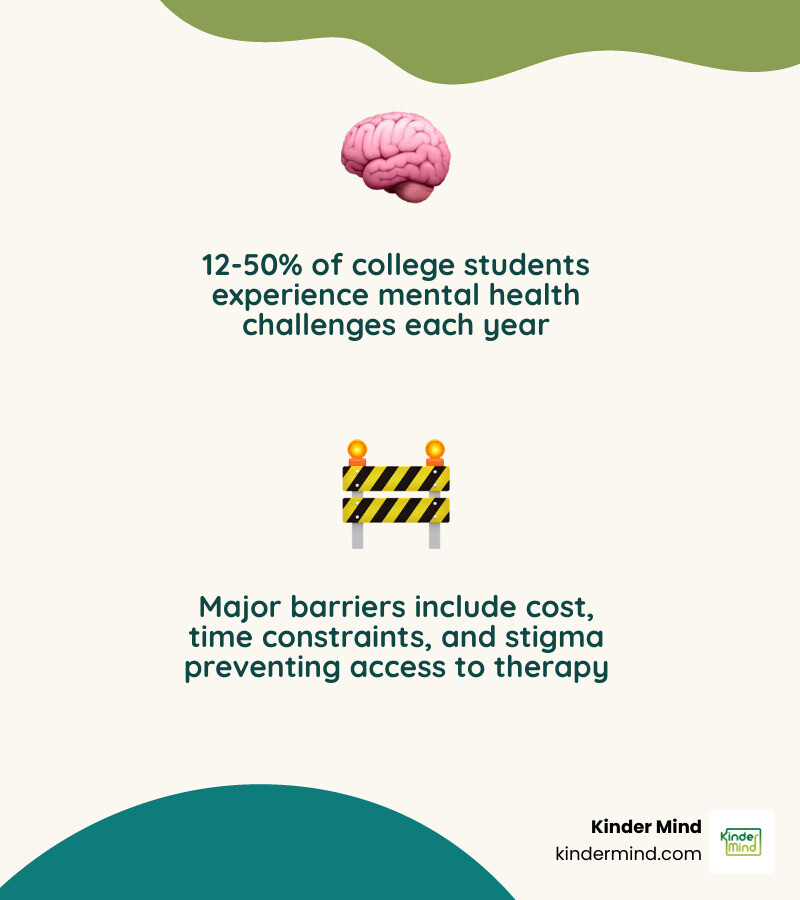
Research shows that between 12% and 50% of college students experience mental health challenges. That’s not a small number. That’s potentially half of every campus.
Yet many students never get help. The reasons are familiar: therapy feels too expensive, too hard to find, or too complicated to navigate alongside a packed schedule.
The good news? There are more options than ever — and many of them are genuinely affordable, even on a student budget.
This guide walks you through all of them, from free campus resources to low-cost online platforms, so you can find the right support for your situation.
The Critical Need for Mental Health Support in Education
Navigating the halls of academia is rarely a walk in the park. For many, the transition to college life acts as a catalyst for pre-existing conditions or the development of new mental health hurdles. When students struggle with their well-being, it isn’t just their personal lives that suffer; their grades often take a hit, too.

The connection between a healthy mind and a high GPA is backed by science. Mental health has been found to impact academic performance significantly. When anxiety or depression goes untreated, focus dissolves, motivation wanes, and the simple act of attending a lecture can feel like climbing a mountain. Conversely, early intervention and consistent support make it much easier to succeed academically.
Beyond the students, educators are also feeling the heat. Teacher burnout is at an all-time high, often stemming from the same systemic pressures that affect their students. This shared environment of stress makes it vital to understand why therapy rocks for students and educators alike. It builds emotional resilience and provides the coping tools necessary to handle “adulting” when it feels impossible.
Furthermore, investing in mental health isn’t just “nice to have”—it’s economically smart. Scientific research on the cost-effectiveness of psychotherapy indicates that providing mental health care can reduce overall healthcare costs and improve long-term productivity. In short, therapy pays for itself by helping students stay in school and helping teachers stay in the classroom.
On-Campus Resources and University Training Clinics
Most students’ first stop should be their university’s counseling center. These centers are designed specifically to handle the unique stressors of campus life. Whether it’s homesickness, a bad breakup, or the crushing weight of finals week, these professionals have seen it all before.
On-campus services typically include:
- Short-term individual counseling: Focused on immediate concerns.
- Crisis intervention: For urgent situations involving safety.
- Peer support groups: Connecting you with others who “get it.”
- Academic coaching: Helping you manage time and study habits.
While these services are often included in your student fees, they can sometimes have long waitlists or limit the number of sessions you can attend. If you find yourself needing more specialized or long-term care, you might want to look into more info on therapy for students to see how to supplement campus care.
Utilizing Training Clinics for Affordable Therapy for Students
If the general counseling center is full, check if your school has a psychology or counseling graduate program. Most of these programs run “training clinics” where graduate interns provide services to the community and fellow students.
Don’t let the word “intern” scare you. These are individuals who have completed years of advanced coursework and are now gaining clinical experience. Every session is recorded or observed by a licensed professional to ensure high-quality care.
The Benefits of Training Clinics:
- Supervised Practice: You essentially get two sets of eyes on your case—the intern and their experienced supervisor.
- Quality Assurance: Clinics follow strict protocols and use evidence-based treatments.
- Accessibility: These clinics often prioritize students and local residents who lack insurance.
Exploring Off-Campus and Online Affordable Therapy for Students
Sometimes, the best fit isn’t found on campus. Many students prefer off-campus options for increased privacy or because they want a therapist who specializes in a specific area, like LGBTQIA+ issues or neurodivergence.
The rise of virtual platforms has revolutionized affordable therapy for students. You no longer have to commute across town; you can have a session from your dorm room between classes. Research on the effectiveness of online therapy shows that virtual sessions are just as effective as sitting in a traditional office for most conditions.
If you are on a tight budget, you can explore the best free online therapy options. Some platforms offer free 24/7 chat with trained “listeners” and community support forums. For those struggling specifically with low mood, there is also targeted free online counseling for depression available through various non-profits and community initiatives.
Community health centers and federally qualified health centers (FQHCs) are another excellent off-campus resource. They receive government funding to provide care to underserved populations and almost always offer a sliding scale based on your income.
Financial Strategies: Insurance, Sliding Scales, and Intern Rates
Understanding how to pay for care is often the biggest hurdle. However, there are several affordable therapy options that can make the math work in your favor.
If you are covered by a health insurance plan—whether through your school, your parents, or your own employer—you should start there. Many people don’t realize that online therapy that takes insurance is now widely available. Using in-network providers can bring your cost down to a small copayment.
Before you book a session, it is vital to call your insurance company. You should prepare a list of questions for your insurance provider to understand your deductible, your out-of-pocket maximum, and whether you need a referral from a primary care doctor first.
Sliding Scale Eligibility for Affordable Therapy for Students
A “sliding scale” is a fee structure where the therapist reduces their standard rate based on what the client can actually afford. Since most students have limited income, they are often prime candidates for these slots.
To qualify, you may need to provide:
- Income verification: This could be a pay stub or a tax return.
- Financial aid award letters: To prove your status as a student with a high need.
- Household income details: If you are still a dependent, they may look at your family’s total income.
Many clinics also offer payment plans for therapy, allowing you to spread the cost of sessions over time. This ensures equitable access so that a temporary financial dip doesn’t mean you have to stop your treatment.
How to Choose the Right Affordable Therapy for Students
Finding a therapist is a bit like dating—the “vibe” matters. You want someone who is not only affordable but also qualified and compatible with your personality.
When searching, look for:
- Qualifications: Ensure they are licensed (LCSW, LMHC, LPC, etc.) or a supervised intern.
- Specialization: If you’re dealing with something specific like an eating disorder or ADHD, find someone with that expertise.
- Cultural Competency: It’s okay to want a therapist who shares your background or understands your identity.
- Therapeutic Alliance: Research shows that the relationship between therapist and client is one of the biggest predictors of success.
If you’re feeling stuck, try finding your online match through directories that allow you to filter by gender, identity, and treatment style.
Long-Term Management of Affordable Therapy for Students
Therapy isn’t always a “one and done” situation. To make it sustainable, you have to manage your long-term costs. This might mean attending sessions every other week instead of weekly or supplementing individual therapy with group sessions.
Group therapy is often significantly cheaper than individual sessions and provides the added benefit of community. Sharing your struggles with others who are in the same boat can be incredibly validating. You might also look into the Kinder Care Plan to see how structured support can fit into a long-term wellness strategy.
In between sessions, lean on self-help resources. Mindfulness tools, journaling, and support groups can keep you grounded and help you apply what you’ve learned in therapy to your daily life.
Frequently Asked Questions
What is the average cost of therapy for students?
The cost varies wildly depending on your location and the type of provider. Without insurance, private practice rates can be high. However, with a sliding scale or a graduate intern, the cost can drop significantly. Many students using insurance only pay a small copay per session.
Can I get therapy for free through my university?
Yes, most universities offer a set number of free counseling sessions per semester as part of your student health fees. Additionally, some schools partner with external teletherapy providers to provide free virtual sessions 24/7.
Is online therapy as effective as in-person sessions?
Absolutely. Major psychological associations have found no measurable difference in effectiveness between the two for common issues like anxiety and depression. The convenience of virtual care often makes it easier for students to stay consistent with their appointments.
Conclusion
At Kinder Mind, we believe that mental health is a right, not a privilege. By offering accessible, virtual, and in-person services, we aim to take the stress out of finding a provider. Whether you are navigating the pressure of a PhD or just trying to survive your first semester of freshman year, there is a path to feeling better.
Destigmatizing care starts with the realization that seeking help is a sign of strength, not weakness. If you are ready to take the next step, you can find a therapist in California or in any of the many states where Kinder Mind provides support. Your education is an investment in your future—and your mental health is the foundation that makes that future possible.
