
Navigating Love in the Golden State: A California Couples Therapy Directory
Dr. Elizabeth Barlow, LCSW-S · 2/6/2026

Why Relationships in California Need Support
Couples therapy California is a proven resource for partners experiencing communication breakdowns, loss of intimacy, recurring conflicts, or major life transitions. Whether you’re in Los Angeles, San Francisco, or anywhere in between, licensed therapists across the state offer both in-person and online support to help you rebuild connection.
Quick answers for finding couples therapy in California:
- Types of therapy available: Emotionally Focused Therapy (EFT), Gottman Method, Cognitive-Behavioral Therapy (CBT)
- Common reasons to seek help: Communication issues, infidelity, financial stress, co-parenting challenges, intimacy concerns
- Format options: Virtual therapy (accessible statewide) or in-person sessions
- What to look for: Licensed therapists (LMFT, LCSW, PsyD) with specialized couples training
- Success rates: Research shows 73% of couples in EFT move from distress to health
Every couple faces challenges. Maybe you’re having the same argument for the hundredth time. Maybe you’re feeling more like roommates than partners. Maybe you’re wondering if the connection you once had can ever come back.
You’re not alone in feeling this way.
The average couple waits six years before seeking help. That’s six years of frustration, disconnection, and missed opportunities to learn the skills that make relationships thrive. But here’s the good news: therapy works. Couples who engage in evidence-based therapy see real improvements in communication, emotional intimacy, and their ability to steer conflict together.
California offers a unique landscape for couples therapy. You’ll find therapists trained in the latest research-backed methods, specialized support for diverse relationships (including LGBTQ+ and non-monogamous partnerships), and flexible options that fit your life—whether that means meeting in an office or connecting from your couch.
The path forward starts with understanding your options and finding the right support for your specific needs.
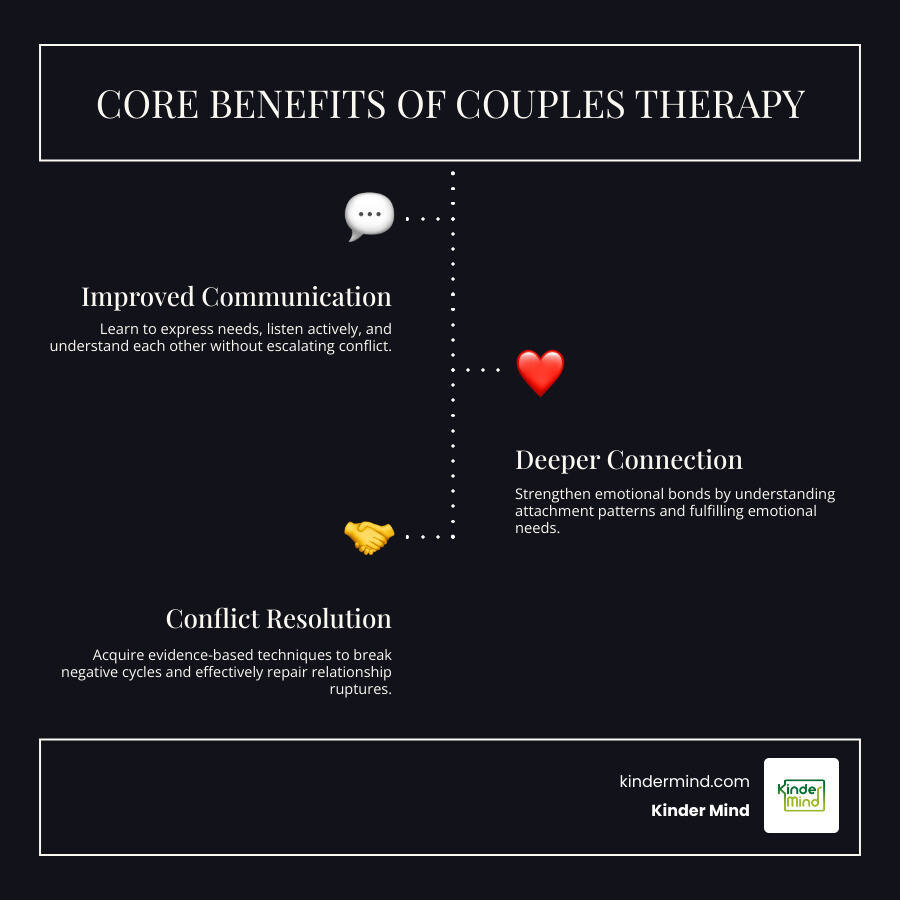
Why California Couples Seek Therapy: Common Challenges and Early Intervention
Every couple, at one point or another, faces challenges that test their partnership. From the busy streets of Los Angeles to the serene landscapes of Northern California, couples therapy offers support and structure in a safe, unbiased, productive space. Partners learn conflict-resolution strategies, how to communicate more effectively, explore relationship patterns, restore trust, refind passions, and address dysfunction to build a healthier, stronger, loving relationship.
What are the common reasons couples seek therapy in California? The reasons are as diverse as the Golden State itself, but many boil down to a few core struggles:
- Recurring Arguments: Many couples find themselves stuck repeating the same fights over and over, whether it’s about sex, anxiety, child-rearing, money, or chores. It can feel like being on a hamster wheel, unable to break free from the “blame game.”
- Communication Breakdown: Partners may feel unheard, misunderstood, or unable to express their needs without escalating conflict. This can lead to feeling more like roommates than lovers, with conversation becoming superficial or hostile.
- Intimacy Issues: A decline in sexual passion or emotional closeness often signals deeper relationship problems. Couples may yearn to reconnect and fall more deeply in love, but struggle to bridge the gap.
- Financial Stress: Money matters are a leading cause of conflict. Financial challenges can threaten the safety and optimism in a relationship, leading to difficult conversations and resentment.
- Co-parenting Challenges: Raising children, especially when navigating differing parenting styles or co-parenting with an ex-spouse, can put immense strain on a relationship. Step-parenting issues also frequently bring couples to therapy.
- Infidelity and Betrayal: Finding an affair or experiencing other forms of betrayal can shatter trust and leave a relationship reeling. Healing from such deep wounds requires immense effort and professional guidance.
- Life Transitions: Major life changes—such as moving in together, getting engaged, having children, career changes, or empty nesting—can disrupt relationship dynamics and create new stressors. Couples may question their compatibility or readiness for these significant steps.
- Loss of Passion and Fun: Over time, the spark can fade, and the joy and spontaneity that once defined a relationship can diminish. Couples may seek therapy to rekindle that passion and bring fun back into their lives.

It’s a common, yet unfortunate, statistic that the average couple waits six years of feeling discontent before seeking therapeutic support. This delay often means that problems have become deeply entrenched, making the path to resolution more challenging, though never impossible. Addressing issues early can prevent them from escalating into major crises. Marriage and Divorce Counseling and Premarital Counseling are excellent proactive steps for any couple.
Rebuilding Trust After Betrayal
Infidelity or other forms of betrayal can be one of the most devastating experiences in a relationship. The immediate aftermath is often characterized by shock, anger, grief, and a profound loss of safety. Couples therapy plays a crucial role in navigating this treacherous terrain. Therapists help partners process the trauma, understand the underlying factors that led to the betrayal, and create a roadmap for recovery.
Rebuilding trust isn’t a quick fix; it’s a marathon. It involves:
- Acknowledging and processing pain: Both partners need a safe space to express their hurt, anger, and confusion.
- Understanding the “why”: While nothing excuses betrayal, exploring the context and dynamics that contributed to it can be crucial for preventing future occurrences and fostering empathy.
- Transparency and accountability: The betraying partner must commit to radical honesty and demonstrate consistent, trustworthy behavior over time.
- Learning to repair: Therapy teaches specific skills for making amends, accepting apologies, and moving past painful moments. The concept of “repair” is vital here; it’s not about erasing the past, but about actively mending the emotional rupture.
- Forgiveness (eventually): Forgiveness is a complex process and doesn’t mean forgetting or condoning the act. It’s about letting go of resentment for one’s own healing, which can take a long time and is not always guaranteed.
Therapy helps couples develop improved Couples Communication Skills necessary to steer these difficult conversations and lay a new foundation for their relationship.
The Value of Early and Premarital Counseling
Why wait until problems escalate? The value of seeking couples therapy early in a relationship, or even before marriage, cannot be overstated. Premarital counseling, for instance, is not just for couples in distress; it’s a proactive measure for building a strong, resilient foundation.
Benefits of early intervention include:
- Building a strong foundation: Learning healthy communication patterns and conflict resolution strategies from the outset.
- Learning skills before crisis: Acquiring tools to steer future challenges before they become deeply entrenched issues.
- Addressing compatibility: Exploring core values, expectations, and potential areas of conflict in a structured environment.
- Preventing escalation of minor issues: Small disagreements can fester and grow into major problems if not addressed effectively. Early therapy teaches couples how to handle these “small” issues before they become overwhelming.
Couples therapy, when sought proactively, can help partners become “world experts” on each other, understanding attachment styles, love languages, and individual needs that stem from childhood experiences. It’s an investment in a joyful, nurturing haven for years to come.
Finding Your Path: Proven Therapeutic Approaches
In California, couples have access to a variety of evidence-based therapeutic approaches, each with its unique focus and techniques. Understanding these differences can help you find the right fit for your relationship.
| Therapy Type | Core Focus | Techniques |
|---|---|---|
| Emotionally Focused Therapy (EFT) | Understanding and reorganizing emotional responses, identifying “negative cycles,” and strengthening attachment bonds. | Identifying the structure of negative interaction cycles, de-escalating conflict, accessing underlying emotions, restructuring interactions, and creating new, secure attachment bonds. Often uses experiential exercises to foster emotional connection. |
| Gottman-Informed Therapy | Improving communication, conflict management, intimacy, and friendship based on extensive research into what makes relationships last. | Identifying “Four Horsemen” (criticism, contempt, defensiveness, stonewalling), building “love maps,” nurturing fondness and admiration, turning towards bids for connection, managing conflict, making life dreams come true, and creating shared meaning. Uses assessments and practical exercises. |
| Cognitive-Behavioral Therapy (CBT) | Identifying and changing negative thought patterns and behaviors that contribute to relationship distress. | Helping partners identify cognitive distortions, challenge irrational beliefs, develop healthier communication skills, improve problem-solving, and practice new, more positive interaction patterns. Focuses on present-day issues and practical solutions. |
Emotionally Focused Therapy (EFT)
Emotionally Focused Therapy (EFT) is widely recognized for its effectiveness, particularly in addressing the underlying emotional dynamics of a relationship. It helps clients identify the structure of their negative interaction cycle, allowing them to separate the pattern from their relationship and fight it together as a common enemy.
EFT operates on the premise that relationship distress often stems from insecure attachment needs and fear of disconnection. By helping couples understand their emotional responses and how they get caught in repetitive, destructive patterns (often called “negative cycles”), EFT guides them toward creating new, more secure ways of relating. Research shows that EFT is highly effective, with about 75 percent of couples improving, and 73% of couples going from distress to health. These benefits have been found to last at least two years.
Gottman-Informed Therapy
The Gottman Method is another highly respected, research-backed approach to couples therapy. Based on over 40 years of research with thousands of couples, the Gottman Institute has helped millions transform their relationships. This method focuses on identifying and counteracting “The Four Horsemen” of relationship apocalypse: criticism, contempt, defensiveness, and stonewalling.
Gottman-trained therapists provide couples with practical, science-backed tools to:
- Improve communication and manage conflict constructively.
- Deepen friendship and intimacy.
- Build “love maps” to better understand each other’s inner worlds.
- Turn towards “bids for connection” rather than away.
- Create shared meaning and purpose.
The Gottman Method emphasizes that it’s not just about talking; it’s about learning and practicing specific skills and interventions that have been proven to foster stronger, more lasting connections. Couples Therapy often incorporates these valuable relationship tools and assessments.
Cognitive-Behavioral Therapy (CBT) for Couples
While traditionally an individual therapy, principles of Cognitive-Behavioral Therapy (CBT) are often integrated into couples counseling. This approach helps partners identify the negative thought patterns and behaviors that contribute to their relationship problems. For example, if one partner consistently interprets their spouse’s actions as critical, even when not intended, CBT can help challenge that thought pattern and encourage a more balanced perspective.
By focusing on present-day issues and practical solutions, CBT helps couples:
- Develop healthier communication strategies.
- Improve problem-solving skills.
- Reduce conflict by changing maladaptive reactions.
- Learn to support each other’s individual growth.
Regardless of the specific modality, the goal of couples therapy California is to equip partners with the tools to recognize, reconsider, and respond in healthier ways, moving beyond the “blame game” to fight the common enemy—the negative cycle—together. The significance of “repair” in relationships, whether after a minor misunderstanding or a major betrayal, is facilitated in therapy by teaching couples how to effectively mend emotional ruptures and restore connection.
Your Guide to Couples Therapy California: Finding the Right Fit
Finding the right therapist is a crucial step toward successful couples therapy. It’s not just about finding someone qualified, but finding someone who is a good “fit” for both partners and your unique relationship dynamics.

How can couples find the right therapist in California for their specific needs?
- Understand Their Approach: Ask about their primary therapeutic modalities (EFT, Gottman, CBT, etc.) and why they believe it’s effective for couples.
- Check Credentials: Look for licensed professionals such as Licensed Marriage and Family Therapists (LMFT), Licensed Clinical Social Workers (LCSW), or Psychologists (PsyD, PhD). These designations ensure specialized training in relationship dynamics. You can explore Our Therapy Providers to see the qualifications of Kinder Mind’s team.
- Specialization: Does the therapist specialize in the specific issues you’re facing (e.g., infidelity, co-parenting, LGBTQ+ relationships, neurodiversity)?
- Experience and Training: Inquire about their experience working with couples and any advanced training they’ve received.
- Comfort and Connection: During an in
