
Adulting is Hard, Therapy Doesn’t Have to Be: Finding Your Online Match
Dr. Elizabeth Barlow, LCSW-S · 1/27/2026

Why Online Therapy for Adults Is Changing Mental Health Care
Online therapy for adults is professional mental health support delivered through digital platforms. It connects you with licensed therapists for the same quality care as in-person sessions, but with greater flexibility and often at a lower cost.
Quick Overview: What You Need to Know
- What it is: Therapy sessions via video, phone, text, or chat with licensed mental health professionals.
- Who provides it: Licensed therapists (LCSW, LMFT, LPC, psychologists) with required credentials and 1,000+ hours of experience.
- How to access: Complete an intake form, get matched with therapists, choose your provider, and start sessions.
- What it helps with: Depression, anxiety, stress, relationships, trauma, grief, self-esteem, and more.
- Privacy: HIPAA-compliant platforms with encrypted communication.
- Limitations: Not for crisis situations; therapists cannot prescribe medication.
Adulting is hard. Between work, relationships, and daily stress, support is often needed. The good news is that getting help no longer requires rearranging your schedule, sitting in a waiting room, or breaking the bank.
The online therapy market reached $10.7 billion in 2022 and continues to expand. Why? Because 70% of people report online therapy is as effective as in-person therapy, but it’s far more convenient. You can connect with thousands of licensed therapists from your couch, your car, or wherever you feel comfortable.
“I can actually see progress in my mental health which is something I haven’t been able to say in 15 years,” shared one therapy platform member about their experience with online counseling.
Whether you’re dealing with anxiety, navigating a tough life transition, or just feeling stuck, online therapy offers a practical path forward. No judgment. No hassle. Just real support when you need it.
What is Online Therapy? Your Digital Path to Mental Wellness
Online therapy, or virtual counseling, is the delivery of mental health services over the internet. Instead of meeting in an office, you connect with a licensed therapist through a secure online platform. This modern approach makes getting help more accessible and convenient than ever.
The core of therapy remains the same: discussing challenges, understanding feelings, and devising personalized plans. The main difference is the delivery. Traditional therapy requires travel and fixed hours, while online therapy removes these barriers, offering flexibility in location, time, and communication method. This shift is why user engagement on some platforms has risen by 60%, underscoring the growing acceptance of online therapy for adults.
Kinder Mind is at the forefront of this evolution, offering accessible virtual mental health therapy services across many states, ensuring quality support is just a few clicks away.
How does online therapy work?
Online therapy’s beauty is its adaptability. You can choose the communication method that feels most comfortable and effective for you.
- Text-based support: Exchange messages with your therapist at your convenience. This asynchronous method is ideal for processing thoughts in writing or fitting therapy into a busy schedule.
- Live chat sessions: Engage in real-time text conversations with your therapist at a scheduled time. This offers immediacy while being less intimidating for some than video.
- Video conferencing: This popular format mimics face-to-face traditional therapy through secure video calls, allowing for non-verbal cues and a strong sense of connection.
- Audio sessions: For those who prefer not to be on camera, audio-only calls provide a direct and personal connection without the visual element.
- Asynchronous messaging: This includes text-based support and other non-immediate communication, allowing for continuous reflection between you and your therapist.
Many platforms, including Kinder Mind, let you switch between methods based on your needs.
| Communication Method | Flexibility | Immediacy | Connection Level |
|---|---|---|---|
| Text-based Support | Very High | Low | Moderate |
| Live Chat Sessions | High | High | Moderate |
| Audio Sessions | High | High | High |
| Video Conferencing | Moderate | High | Very High |
What are the benefits of online therapy for adults?
The popularity of online therapy for adults is driven by compelling benefits that solve many challenges of traditional care.
- Convenience: Online therapy eliminates travel time and scheduling conflicts. Have a session from home, during a lunch break, or whenever it fits your busy life.
- Accessibility: Break down geographical barriers and connect with a wider selection of licensed therapists across your state, from Florida to Washington. This increases your options for finding a specialist for your needs.
- Affordability: Online therapy can be more affordable, often using a subscription model that may result in a lower weekly cost compared to per-session fees of private therapists.
- Wider selection of therapists: You aren’t limited to local therapists. Expansive networks, some with over 32,000 professionals, increase your chances of finding the perfect match.
- Reduced stigma: Seek help discreetly from the privacy of your home, which can reduce feelings of self-consciousness and normalize getting support.
- Flexible scheduling: Online therapists often offer evening and weekend appointments. Asynchronous messaging also allows you to share thoughts as they arise.
- Research on effectiveness: Studies show online therapy is effective. One found that 70% of participants reported it was as effective as in-person therapy, and research supports internet-based CBT for depression, anxiety, and PTSD.
Your Guide to Getting Started with Virtual Counseling
Taking the first step into virtual counseling is simpler than you might think. The process is streamlined to connect you with a professional who understands your needs quickly.

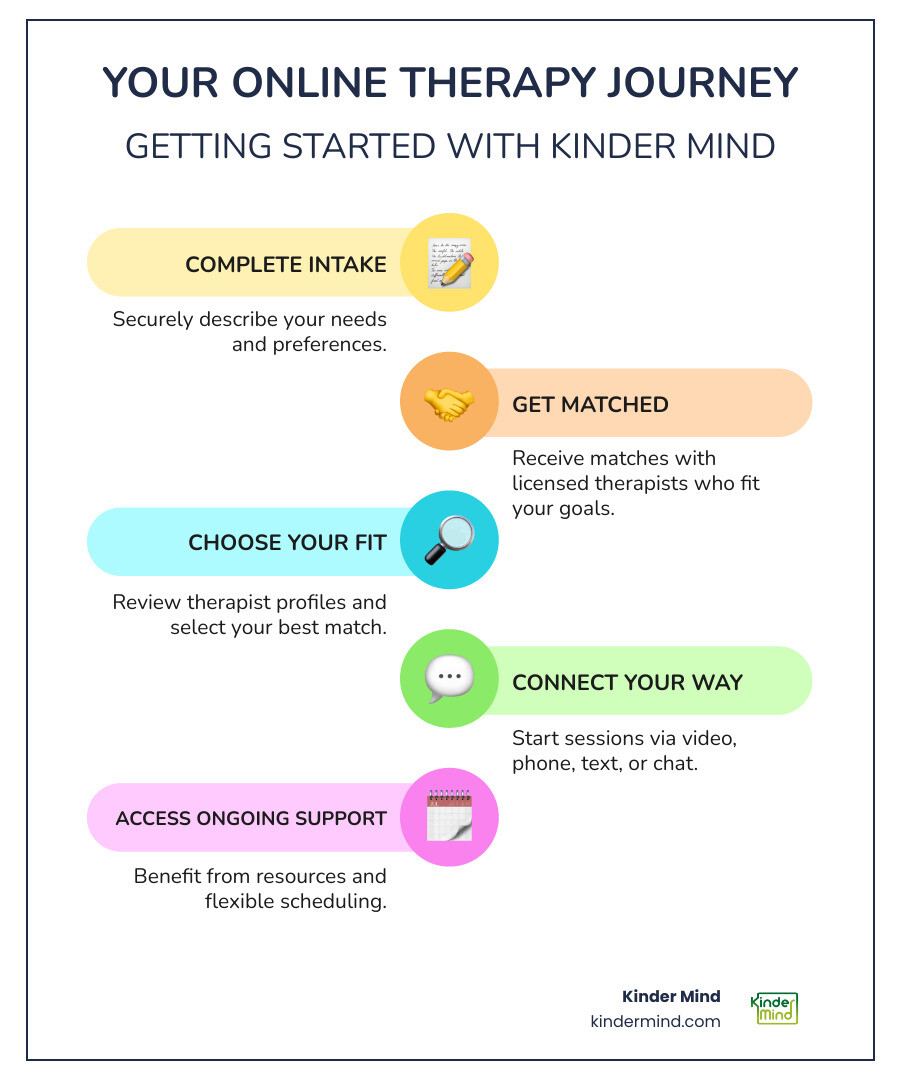
Typically, you’ll complete an intake form about your preferences and goals. Based on this, you’ll be matched with qualified therapists. You can then review their profiles and choose the best fit. Services like Kinder Mind vet all professionals to ensure they are licensed and experienced, and we guide you through understanding insurance coverage.
How to choose the right online therapy for adults
Choosing the right therapist is crucial for a successful journey.
- Assess your needs: Reflect on what you want to achieve. Are you dealing with anxiety, relationship issues, or a life transition? Knowing your concerns helps you find a specialist.
- Read therapist profiles: Look at their experience, expertise, therapeutic approaches, and philosophies to get a feel for their style.
- Understand therapeutic approaches: Kinder Mind connects you with therapists proficient in various evidence-based approaches:
- Cognitive Behavioral Therapy (CBT): Challenges negative thought patterns to change behaviors. Highly effective for depression and anxiety.
- Dialectical Behavior Therapy (DBT): Teaches skills in mindfulness, distress tolerance, and emotion regulation, often for more severe issues like PTSD.
- Psychodynamic Therapy: Explores how past experiences impact the present to gain insight into long-standing patterns.
- Client-Centered Therapy: The therapist offers empathy and support, empowering you to guide the session and build self-esteem.
- Existential Therapy: Helps clients confront life’s big questions, like isolation and mortality, to find meaning.
- Gestalt Therapy: Focuses on the present moment and personal responsibility, often using techniques like role-playing.
- Importance of a good fit: The relationship between you and your therapist is a strong predictor of success. Trust your gut feeling.
- Option to switch therapists within Kinder Mind: If your initial therapist isn’t a good fit, platforms like Kinder Mind make it easy to switch to a different professional.
What qualifications should I look for in an online therapist?
Verifying a therapist’s qualifications ensures you receive competent, ethical care. Kinder Mind requires all therapists to meet rigorous standards. Look for:
- Licensed Professionals: This is non-negotiable. A therapist must be licensed by their state board, signifying they have met professional standards.
- Credentials: Look for common credentials like LCSW (Licensed Clinical Social Worker), LMFT (Licensed Marriage and Family Therapist), LPC (Licensed Professional Counselor), or PhD/PsyD (Licensed Psychologist).
- State Board Licensing: A therapist must be licensed in the state where you are located during the session. Kinder Mind connects you with therapists licensed in many states across the U.S.
- Years of Experience: Reputable platforms often require a minimum of 3 years and 1,000+ hours of hands-on experience.
- Specializations: Check if the therapist has specific training in the areas you need help with, such as trauma or anxiety.
Kinder Mind is committed to connecting you with highly qualified professionals. You can Find a licensed online therapist with Kinder Mind who meets these criteria.
Understanding the Costs and Insurance Coverage
Online therapy for adults often has a more transparent pricing structure than traditional services. Many platforms use a subscription model (e.g., weekly or monthly) that covers a set number of live sessions and unlimited messaging. This can be more predictable and affordable than high per-session fees, with some services ranging from $70 to $100 per week.
For payment, Kinder Mind accepts credit/debit cards and often Health Savings Accounts (HSA) and Flexible Spending Accounts (FSA) cards, allowing you to use pre-tax dollars.
Navigating insurance can be complex, but we aim to make it straightforward. Many health plans now cover telehealth. To see if your plan covers online therapy for adults with Kinder Mind:
- Contact your insurance provider: Ask about your mental health benefits for outpatient telehealth.
- Understand your plan: Know your deductible, co-pay, and out-of-network benefits.
- Use provided documentation: Kinder Mind can provide receipts (superbills) for you to submit to your insurer for potential reimbursement.
What to Expect: From Your First Session to Making Progress
Starting on online therapy for adults is a personal journey, and knowing what to expect can help ease any apprehension. Your first session is typically an introductory opportunity for you and your therapist to get acquainted, discuss your concerns, and establish initial goals.

Building a strong therapeutic relationship based on trust and open communication is fundamental to growth. Your therapist will create a safe, non-judgmental space for you to explore your thoughts and feelings. Therapy can be short-term for specific issues or a longer-term process for deeper growth, depending on your needs.
Beyond live sessions, platforms like Kinder Mind offer supplementary resources like digital worksheets or modules to help you practice new skills and track your progress, empowering you to apply what you learn to your daily life.
What mental health concerns can be addressed?
Online therapy for adults is a versatile tool capable of addressing a wide range of mental health concerns, offering support for many of life’s challenges. You can find help for:
- Anxiety: Including generalized anxiety, panic attacks, social anxiety, and phobias.
- Depression, sadness, or low mood: Providing strategies to manage symptoms, improve mood, and regain a sense of purpose.
- Stress and burnout: Offering tools for stress management, work-life balance, and preventing emotional exhaustion.
- Relationship challenges: Whether with partners, family, or friends, therapy can improve communication, resolve conflicts, and foster healthier connections.
- Grief and loss: Supporting individuals through the complex process of mourning the loss of a loved one, a job, or a significant life change.
- Trauma: Including childhood experiences, sexual assault, or other traumatic events. Therapists can help process trauma and develop resilience.
- Self-esteem and confidence issues: Building a stronger sense of self-worth and assertiveness.
- Life transitions and uncertainty: Navigating major changes like career shifts, divorce, or relocation.
- Emotion regulation and anger management: Developing healthier ways to process and express emotions.
- Behavioral addictions: Including substance use, eating challenges, or other compulsive behaviors.
- ADHD: Providing strategies for managing symptoms and improving daily functioning.
- Identity concerns: Including self-exploration, sexual, or gender identity.
- Impacts of racism or discrimination: Offering a supportive space to process experiences and build coping strategies.
- Chronic pain or illness: Providing emotional support and coping strategies for managing physical health challenges.
- Sleep concerns: Addressing issues like insomnia and developing healthier sleep habits.
How is my privacy and confidentiality ensured?
Privacy and confidentiality are cornerstones of therapy. Reputable online platforms, including Kinder Mind, use robust measures to protect your personal health information, adhering to the Health Insurance Portability and Accountability Act (HIPAA). This federal law ensures your health information is kept confidential.
Key privacy measures include:
- Secure Platforms
