
Navigating Divorce Grief: Your Guide to Counseling and Healing
When Your Marriage Ends: Understanding the Grief That Follows

Grief counseling divorce support helps individuals steer the profound emotional loss that comes with the end of a marriage. Here's what you need to know:
What Divorce Grief Looks Like:
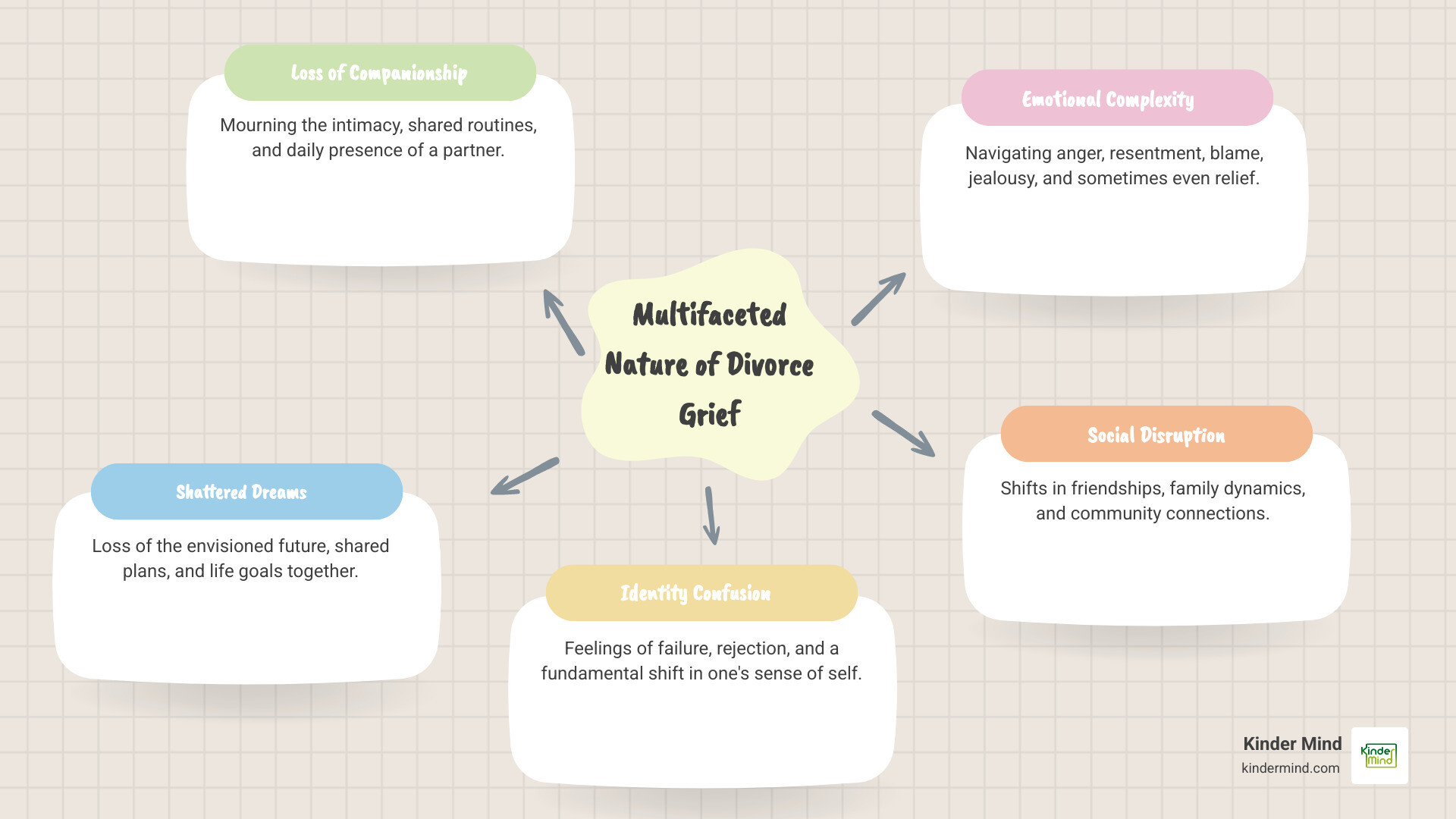
- Loss of companionship, shared dreams, and future plans
- Feelings of failure, rejection, or identity confusion
- Complicated emotions like anger, resentment, and relief mixed together
- Social disruption including shifts in friendships and family relationships
How Grief Counseling Helps:
- Provides a safe space to process complex emotions without judgment
- Develops healthy coping strategies for moving forward
- Helps you reframe your identity and rebuild your life
- Addresses symptoms of depression or anxiety that often accompany divorce
What to Expect:
- Grief doesn't follow a neat timeline or predictable stages
- Healing is possible, though the process is unique for everyone
- Professional support can make the journey less isolating and more manageable
Divorce ranks among life's most stressful events. Over 40 percent of marriages end in separation or divorce within their first 15 years. Yet despite how common it is, the grief that follows often catches people off guard.
When a marriage ends, you're not just losing a partner. You're mourning the loss of intimacy, companionship, daily routines, and the future you imagined together. Your social identity shifts. Your sense of self may feel shattered.
The emotional pain can feel even more complicated than grief from death. Death is final. Divorce leaves you not only with feelings of loss, but often hurt, resentment, jealousy, and blame as well.
Many people struggle in silence, unsure if their pain is valid or if they should just "move on." Some worry they're grieving "wrong" because their emotions don't match the famous five stages of grief. Others feel isolated because friends and family may not fully acknowledge their loss.
The truth is simpler: Divorce grief is real, valid, and deserves the same compassion and support as any other major loss.
Healing is possible. With time, support, and the right guidance, you can work through this grief and build a fulfilling life on the other side. Grief counseling offers a pathway through the pain—helping you understand your emotions, develop coping strategies, and ultimately find hope for a new beginning.
Understanding the Unique Nature of Divorce Grief
Divorce is not merely the dissolution of a legal contract; it's a profound loss that impacts nearly every aspect of an individual's life. This makes grief counseling divorce support essential for many. The experience is often described as a "social death," where the loss of the marital relationship triggers a complex and often confusing grief process.
This grief extends beyond the immediate pain of separation. It encompasses the loss of a shared reality, the disruption of routines, and the shattering of future dreams. The emotional investment in a marriage is immense, and its ending can lead to a significant reduction in personal resources, both tangible and intangible. Individuals may feel a loss of control, a diminished self-image, and a profound sense of failure, even if they initiated the divorce.
The impact can also ripple outwards. Individuals close to the divorcing couple, such as children and parents, may experience as much grief and loss as the couple themselves. This highlights the widespread psychological and social toll that divorce can take. For a deeper understanding of these transitions, explore More info about Life Transitions.
How Divorce Grief Differs from Bereavement
While both divorce and death involve profound loss, the grief associated with divorce has unique complexities. The primary difference lies in the ongoing presence of the former spouse. Unlike death, which is final, divorce often means continued interaction, especially if children are involved. This can prolong feelings of hurt, resentment, jealousy, and blame, making the healing process more intricate.
Divorce grief also presents as an "ambiguous loss" – a loss that lacks clear closure. The person is physically present but psychologically absent from the life you once shared. This ambiguity can make it difficult to process the loss, as there's no clear societal script for grieving a living person with whom you no longer share a life.
Additionally, divorce grief is often "disenfranchised." Society may not fully acknowledge or validate the depth of this loss, leading individuals to feel isolated or that their grief is somehow "less than" grief due to death. This lack of public recognition can hinder healthy coping and lead to increased feelings of loneliness and judgment.

The Psychological and Social Toll of Divorce
The ending of a marriage can shake the very foundation of an individual's mental and emotional well-being. Psychologically, divorce can lead to varied mental health challenges, including depression, low self-esteem, and isolation. It can also trigger anxiety disorders or trauma. The loss of a partner also means the loss of a key source of companionship and emotional support, which can be deeply destabilizing.
Socially, divorce often necessitates a significant recalibration of one's network. Mutual friends may feel compelled to choose sides, or existing social circles may no longer feel comfortable. The loss of a shared social identity – the "us" – can be particularly challenging. Individuals may grieve not only the partner but also the social standing and shared activities that defined their coupledom. This disruption can make it difficult to maintain existing friendships and build new ones, further contributing to feelings of isolation. Research suggests that the experience of separation or divorce confers risk for poor health outcomes, including a 23% higher mortality rate, underscoring the severe impact. To learn more about the mental health impact of relationship dissolution, refer to this research on the mental health impact of relationship dissolution.
Beyond the Rigid Stages: A Modern Approach to Grief
Many people entering grief counseling divorce support arrive with the expectation of navigating the "five stages of grief." These stages—denial, anger, bargaining, depression, and acceptance—stem from the seminal work of Dr. Elisabeth Kübler-Ross. However, it's a common misconception that these stages represent a rigid, linear progression that everyone must follow.
The Kübler-Ross framework was originally developed to describe the emotional process of individuals facing their own terminal illness, not for those grieving the loss of a loved one or a relationship. While it offered a valuable lens through which to understand profound loss, applying it strictly to divorce grief can be misleading and even harmful. Grief is a deeply personal and often chaotic experience, and the idea of distinct, sequential stages rarely reflects its messy reality. For more information on the origin of this model, see The origin of the Kübler-Ross framework. You can also explore More info about Grief.
Why Counselors Move Beyond a "Stages" Model
Grief counselors often advise against rigidly following the stages of grief for several important reasons:
- Prevents Self-Doubt: When individuals don't experience grief in the "expected" order or duration, they may question if they are "grieving wrong." This self-doubt can add unnecessary distress to an already painful process.
- Honors Unique Journeys: Every grief journey is unique. While commonalities exist, individual experiences are shaped by personality, the nature of the relationship, support systems, and personal history. A rigid model fails to accommodate this uniqueness.
- Grief Has No Timeline: The stages model can imply a fixed timeline or an endpoint to grief, suggesting that once "acceptance" is reached, grief is "over." In reality, grief never truly goes away; its intensity and frequency change over time, and it can resurface unexpectedly, especially during significant life events or anniversaries.
- Non-Linear Reality: Grief is not a linear progression. Emotions can ebb and flow, with individuals cycling through various feelings—sometimes within minutes. One might feel acceptance one day and intense anger the next. A linear model doesn't reflect this fluid, unpredictable nature.
By moving beyond a strict stages model, counselors empower individuals to accept their grief as it unfolds, validating their experience without imposing artificial expectations.

From Stages to Themes: What to Expect
Instead of rigid stages, many grief counselors now focus on common emotional themes or experiences that individuals might encounter when grieving a divorce. These themes provide a flexible framework, acknowledging the fluidity and individuality of the healing process. While the experience is unique, here are some common emotional themes you might encounter:
- Shock and Disorganization: Initially, individuals may feel numb or in disbelief, struggling to grasp the reality of the divorce. Life may feel chaotic and overwhelming. This can serve as a temporary emotional shock absorber.
- Anger and Resentment: As the initial shock fades, intense emotions like anger, resentment, and blame can surface. This anger might be directed at the former spouse, oneself, or even the circumstances of the divorce. Healthy expression of this anger is crucial for processing.
- Loneliness and Isolation: The loss of companionship and the disruption of social networks can lead to profound feelings of loneliness. Even if surrounded by loved ones, the specific void left by the former partner can feel immense.
- Guilt and Shame: Individuals may grapple with "what if" thoughts, regretting past actions or feeling guilt over the marriage's failure. Shame about the divorce itself, especially in cultures where it carries stigma, can also be prominent.
- Evaluation and Reflection: This theme involves a period of introspection, where individuals begin to make sense of what happened, learn from the experience, and identify their role in the relationship's dynamics. This self-awareness is crucial for personal growth.
- Gradual Acceptance: Acceptance in divorce grief is not about being "okay" with what happened, but rather a gradual shift in perspective. It means coming to terms with the divorce, letting go of bitterness, and focusing energy on future planning and new relationships. It's about integrating the loss into one's life and moving forward, rather than being stuck in the past.
These themes can appear in any order, overlap, and revisit throughout the healing journey. The key is to acknowledge and process them as they arise.
The Role of Grief Counseling for Divorce
Grief counseling divorce is a specialized form of therapy designed to help individuals steer the complex emotional landscape that follows the end of a marriage. It provides a dedicated, safe, and non-judgmental space to explore the myriad feelings, thoughts, and concerns associated with this significant life transition.
Unlike simply talking to friends or family, a professional grief counselor offers expert guidance and therapeutic tools to help process the layers of loss. They understand that divorce grief is multifaceted, encompassing not just the loss of a partner but also the loss of dreams, identity, and a shared future. Through counseling, individuals can gain clarity, develop healthier coping mechanisms, and begin to reframe their identity, paving the way for a fulfilling life post-divorce. For more insights, consider exploring More info about Divorce Therapy.
How Professional Grief Counseling for Divorce Can Help
Professional grief counseling divorce offers several profound benefits:
- Validating Your Experience: A counselor validates the legitimacy of your grief, helping you understand that your pain is a normal and expected response to such a significant loss. This validation can be incredibly healing, especially if you've experienced disenfranchised grief.
- Processing Complex Emotions: Therapists provide tools and techniques to help you safely express and process intense emotions like anger, resentment, sadness, and guilt, preventing them from becoming stagnant or destructive.
- Developing Coping Strategies: You'll learn healthy and effective coping mechanisms to manage the emotional ups and downs, stress, and anxiety that often accompany divorce. This might include mindfulness practices, stress reduction techniques, and emotional regulation skills.
- Identifying and Breaking Unhealthy Patterns: Counseling can help you reflect on past relationship dynamics, identify unhealthy patterns, and understand your role in them. This self-reflection is crucial for personal growth and building healthier future relationships.
- Managing Mental Health Symptoms: If you're experiencing symptoms of depression, anxiety, or even prolonged grief disorder, a therapist can provide targeted interventions. Therapies like Cognitive Behavioral Therapy (CBT), Dialectical Behavior Therapy (DBT), and Accelerated Resolution Therapy (ART) can be highly beneficial in processing difficult experiences and emotions.
- Reframing Identity and Future: Divorce often necessitates a redefinition of self. A counselor can help you explore who you are outside of the marital relationship, refind personal interests, and build a positive vision for your new chapter.
- Healthy Communication for Co-Parenting: If children are involved, a therapist can offer strategies for effective co-parenting communication, helping you steer interactions with your former spouse in a way that minimizes conflict and supports your children's well-being.
For a more in-depth look at individual therapeutic support, refer to More info about Individuals therapy.
Finding the Right Therapist for Grief Counseling for Divorce
Finding the right therapist is crucial for effective grief counseling divorce. Here's what to look for:
- Specialties: Seek therapists who specifically list expertise in grief, loss, divorce, relationship issues, or life transitions.
- Therapeutic Approaches: Inquire about their preferred modalities. Approaches like CBT are often effective for addressing negative thought patterns and developing coping skills.
- Experience: Look for a therapist with experience working with individuals navigating divorce grief.
- Good Fit: The most important factor is often the therapeutic relationship itself. You should feel comfortable, understood, and respected by your therapist. Don't hesitate to have initial consultations with a few different professionals to find someone who feels like a good match.
- Questions to Ask: Prepare questions about their experience with divorce grief, their approach to therapy, and what you can expect from the process.
Your trusted loved ones or primary care physician may also offer referrals. For more on therapeutic techniques, visit More info about Divorce Therapy Techniques.
Strategies for Healing and Rebuilding Your Life
Navigating divorce grief is a marathon, not a sprint. It requires patience, self-compassion, and a proactive approach to healing. Incorporating effective coping mechanisms and strategies for rebuilding your life is essential.
Actionable Coping Mechanisms
- Prioritize Self-Care: This is non-negotiable. Self-care practices help regulate emotions and support overall well-being. Think of it like recovering from an illness: get plenty of rest, minimize other sources of stress, and prioritize your physical health. Research suggests there’s a strong mind-body connection, so caring for your physical health can support your emotional health.
- Journaling: Writing about your experience can be a powerful way to process thoughts and emotions. Research suggests that journaling may be beneficial for both mental and physical health, potentially reducing anxiety and even boosting the immune system.
- Mindfulness and Meditation: Practicing mindfulness can have a significant positive impact on emotional well-being. It helps you observe present thoughts and sensations without judgment, allowing you to detach from negative emotions.
- Physical Activity: Exercise is a natural mood booster and stress reliever. Even short walks can make a difference.
- Healthy Diet and Sleep: During stressful times, it's easy to neglect basic needs. Eating nutritious foods and maintaining a consistent sleep schedule are vital for emotional resilience.
- Build a Strong Support System: Lean on friends, family, or support groups. Connecting with others who have experienced similar situations can normalize your feelings and provide immense comfort. Online or local divorce support groups can offer valuable tips and resources. Avoid isolating yourself, as this can exacerbate feelings of loneliness and depression. For more information on finding support, visit More info about Support Groups.
- Establish New Routines: Divorce often disrupts daily life. Creating new routines can provide a sense of stability and normalcy amidst the chaos.
- Ritualize Healing: Rituals can be powerful tools for acknowledging, processing, and changing the significant event of divorce. This could involve writing a farewell letter to your former spouse (even if unsent) and symbolically disposing of it, creating a memory box with cherished items, or even holding a "Divorce Party" to celebrate a new beginning. These acts offer symbolic closure and help consciously transition to a new chapter.
Supporting Children Through Divorce
One of the most common concerns during divorce is how to protect children's well-being. Children experience grief and loss too, often manifesting as confusion, anger, sadness, or anxiety.
- Maintain Routines: According to many experts, children often benefit from keeping to a routine as much as possible, as it may provide them with a sense of stability amidst the many changes.
- Encourage Open Communication: Create a safe space for children to express their feelings without judgment. Validate their emotions, letting them know it's okay to feel sad, angry, or confused.
- Co-Parent Effectively: Minimize conflict with your former spouse, especially in front of children. Focus on their needs and present a united front on parenting decisions.
- Seek Professional Help: If children are struggling significantly, consider Family Therapy or individual counseling for them. The American Psychological Association offers guidance on how to support children through divorce.
Signs of Healing and Moving Forward
Healing from divorce grief is not about forgetting the past or pretending the pain never existed. It's about integrating the experience into your life, learning from it, and moving forward with renewed purpose. Signs of healing and moving forward include:
- Shifting Focus: You find yourself thinking less about the past and more about the present and future.
- Refinding Personal Interests: You start engaging in hobbies and activities that bring you joy, some of which you may have neglected during your marriage.
- Sense of Peace: While sadness may still surface, there's a growing sense of peace and acceptance about your new reality.
- Openness to New Experiences: You become more open to new friendships, opportunities, and even new romantic relationships when you feel ready.
- Personal Growth: You recognize the lessons learned from the divorce, gaining self-knowledge and strength. This period of crisis can become an opportunity for profound personal growth, allowing you to reframe your identity and build a fulfilling life.
Frequently Asked Questions about Divorce Grief
How long does divorce grief last?
There is no set timeline for divorce grief, as it is a unique experience for each individual. The length and intensity can be influenced by many factors, including the nature of the relationship, how one copes with grief, other losses associated with the divorce, and available support systems. While the emotional intensity may peak in the first six months to two years, healing is not linear. Feelings can resurface unexpectedly, even years later, particularly during significant life events or anniversaries. Grief is a process, not an event, and it unfolds differently for everyone.
Does grieving the divorce mean I made the wrong decision?
No, grieving the divorce does not necessarily mean you made the wrong decision. Grief is a natural process of letting go of a significant part of your life—the relationship, the shared future you envisioned, the routines, and perhaps even a part of your identity. It is entirely possible to grieve these losses deeply while still knowing that the divorce was necessary for your well-being or the well-being of your family. Grieving is about acknowledging the loss and pain, not about regretting the decision to separate.
How do I know if I'm experiencing normal grief or something more serious like depression?
Both grief and clinical depression can share symptoms like sadness, loss of interest in activities, changes in sleep or appetite, and difficulty concentrating. However, there are key differences:
- Grief: Often comes in waves, with periods of intense sadness interspersed with moments of joy or pleasure. Individuals typically maintain their self-esteem and can still find meaning in life, even amidst the pain.
- Depression: Tends to be more pervasive and persistent, with a constant low mood and a profound loss of pleasure in nearly all activities. It often involves feelings of worthlessness, hopelessness, and can lead to suicidal thoughts.
If your symptoms are prolonged, debilitating, and significantly interfere with your daily functioning for an extended period (typically more than a year for grief symptoms), it may signal the presence of prolonged grief disorder (also known as complicated grief) or clinical depression. In such cases, seeking professional help from a therapist is crucial for accurate diagnosis and appropriate support.
Conclusion
Divorce grief is a valid and complex process, far removed from a simple checklist of stages. It's a journey unique to each individual, marked by a spectrum of emotions and significant life changes. While challenging, healing is undeniably possible with time, self-compassion, and the right support.
You are not alone on this journey. Kinder Mind provides compassionate and accessible therapy services, both in-person and virtually, across states like Alabama, Alaska, Arizona, Arkansas, California, Colorado, Connecticut, Delaware, Florida, Georgia, Hawaii, Idaho, Illinois, Indiana, Iowa, Kansas, Kentucky, Louisiana, Maine, Maryland, Massachusetts, Michigan, Minnesota, Mississippi, Missouri, Montana, Nebraska, Nevada, New Hampshire, New Jersey, New Mexico, New York, North Carolina, North Dakota, Ohio, Oklahoma, Oregon, Pennsylvania, Rhode Island, South Carolina, South Dakota, Tennessee, Texas, Utah, Vermont, Virginia, Washington, West Virginia, Wisconsin, and Wyoming. We are dedicated to guiding you through life's transitions, offering a safe space to process your emotions and build a fulfilling future.
If you're navigating the complexities of divorce grief, reach out for support. You can Find a therapist specializing in Divorce through Kinder Mind and take the next step towards healing and rebuilding your life.
