
Finding Your Calm: A Comprehensive Look at Online Anxiety Therapy
Why Anxiety Therapy Online Matters Now More Than Ever
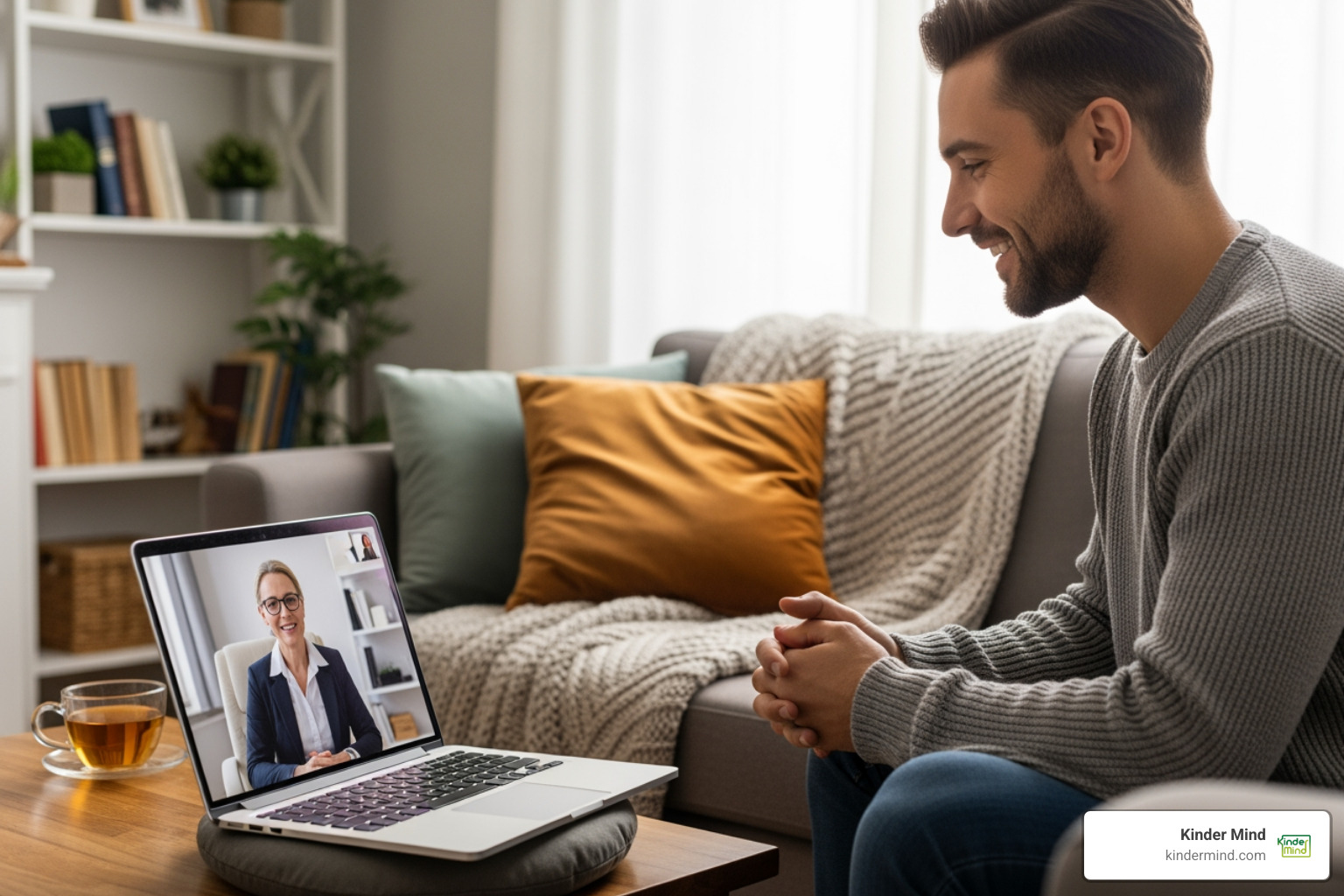
Anxiety therapy online connects you with licensed mental health professionals through secure digital platforms, offering convenient access to evidence-based treatment from anywhere with an internet connection.
Key ways online anxiety therapy works:
- Video sessions - Live face-to-face appointments with your therapist
- Secure messaging - Text-based communication between sessions
- Phone calls - Audio-only sessions for those who prefer it
- Self-guided tools - Worksheets, exercises, and resources you can access anytime
- Flexible scheduling - Appointments that fit your life, often available evenings and weekends
If you're experiencing persistent worry, fear, panic attacks, or sleep disturbances, you're far from alone. Research shows that 70% of people see improvement in their anxiety symptoms within just three months of starting online therapy, and 80% report it's as effective as traditional face-to-face sessions.
The rise of digital mental health care has transformed how we access support. No more waiting weeks for an appointment or driving across town after work. No more sitting in waiting rooms wondering who might see you there. Online therapy removes these barriers while delivering the same quality care you'd receive in a traditional office setting.
This guide walks you through everything you need to know about online anxiety therapy. We'll cover how it works, what to expect, how to choose the right provider, and how to steer costs and insurance. You'll learn about different therapeutic approaches, understand when online therapy is the right choice, and find how to prepare for your first session.
Whether you're dealing with generalized anxiety, panic attacks, social anxiety, or stress that's making daily life harder than it should be, accessible and affordable support is available. As one user shared about their virtual therapy experience: "I can actually see progress in my mental health which I haven't been able to say in 15 years."
Understanding Online Anxiety Therapy: How It Works and What to Expect
Think of online therapy as bringing the therapist's office to wherever you feel most comfortable. Instead of sitting in a waiting room flipping through outdated magazines, you're settling into your favorite chair at home, a quiet corner at work during lunch, or even your parked car if that's the only private space you can find.
Anxiety therapy online works through secure digital platforms that connect you with licensed mental health professionals. It's the same quality care you'd receive in a traditional office, just delivered through technology. You're not getting a watered-down version of therapy—you're getting real treatment from real professionals who specialize in helping people manage anxiety.
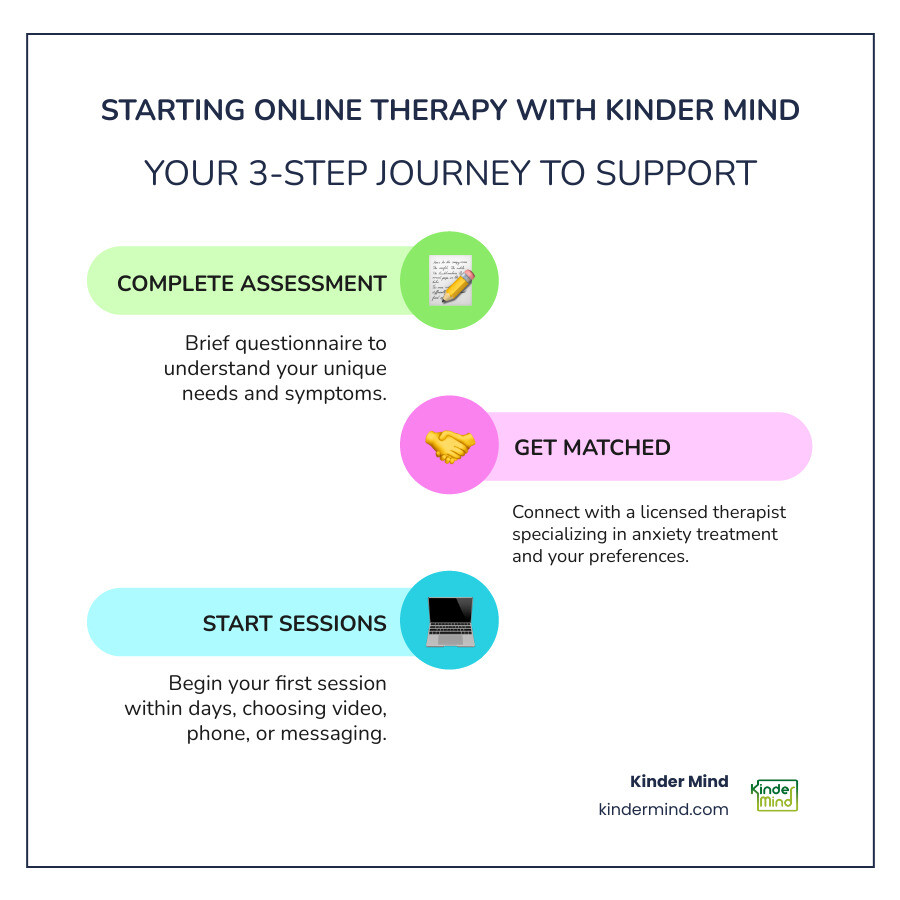
Here's how the process typically unfolds at Kinder Mind. First, you'll complete a brief assessment—think of it as a getting-to-know-you conversation, but in questionnaire form. You'll answer questions about what you're experiencing, what's bringing you to therapy, and what kind of support you're looking for. This isn't about judgment; it's about understanding your unique situation so you can get matched with the right therapist.
The matching process is where things get personal. Based on your assessment, Kinder Mind connects you with a licensed therapist who specializes in treating anxiety and whose approach aligns with what you need. Maybe you prefer someone direct and structured, or perhaps you want someone more exploratory and reflective. The goal is to set you up with a therapist who feels like a good fit from the start, because the relationship between you and your therapist matters tremendously.
Once you're matched, you can schedule your first session—often within just a few days. No months-long waiting lists. No endless phone tag trying to find an appointment time. You choose what works for your schedule, and you're off and running.
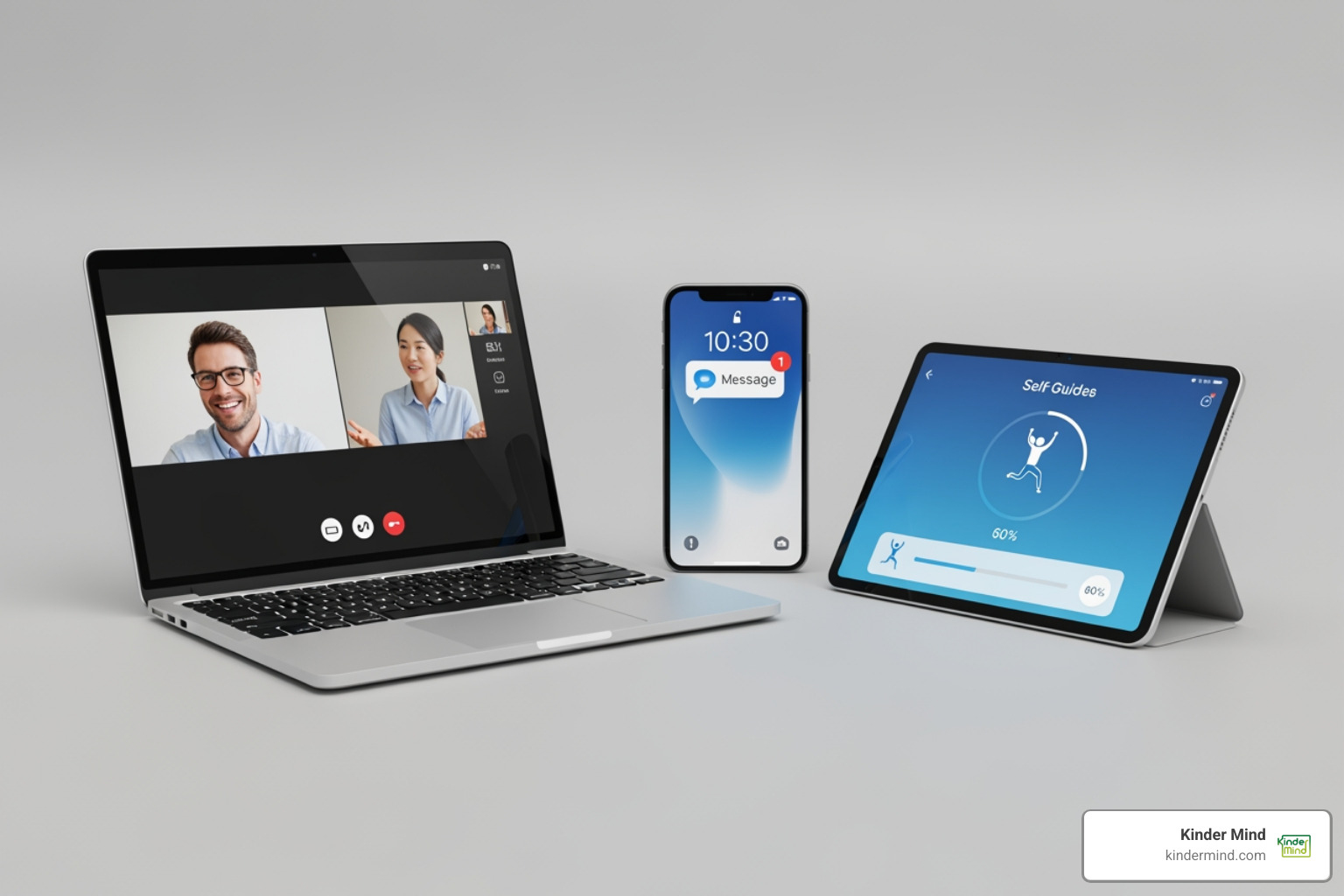
During sessions, you'll connect with your therapist through secure video calls, phone conversations, or text-based messaging—whatever feels most comfortable and effective for you. Between sessions, you'll have access to digital tools like worksheets, journaling features, and progress trackers. These aren't busywork; they're ways to practice what you're learning and notice patterns in your thoughts and feelings. Think of them as the homework that actually helps.
The technology behind it all is designed to be straightforward. You don't need to be tech-savvy to make this work. If you can send an email or make a video call with family, you can do online therapy. The platforms are secure, private, and built specifically for mental health care—not just repurposed video chat apps. For a deeper look at how this modern approach can help, check out more about Virtual Anxiety Treatment.
The Different Types of Online Therapy Available at Kinder Mind
Not everyone wants to talk face-to-face on video, and that's completely okay. Kinder Mind offers multiple ways to connect with your therapist because what works for one person might feel uncomfortable or impractical for another.
Live video sessions are probably what most people picture when they think of online therapy. You and your therapist see each other on screen, just like a traditional appointment but through a secure video platform. You can read each other's facial expressions, pick up on body language, and have that face-to-face connection that helps build trust. Many people find this format feels the most like "real" therapy, which can be comforting if you're new to the online experience.
But video isn't the only option. Phone calls offer a straightforward audio-only alternative that some people actually prefer. Maybe you feel less self-conscious when you're not on camera. Maybe you want to pace around your room while you talk, or lie on your couch with your eyes closed. Phone sessions give you that freedom while still providing real-time conversation with your therapist.
For those who process their thoughts better in writing, secure messaging creates space for asynchronous communication. You can type out what you're feeling when it hits you—at 2 AM when anxiety wakes you up, or during your lunch break when something suddenly clicks. Your therapist will respond thoughtfully, typically within a day or two on weekdays. It's like having ongoing support that fits around your life rather than being confined to a 50-minute appointment slot.
Kinder Mind also provides self-guided resources that complement your therapy sessions. These include digital worksheets, educational modules about anxiety, mindfulness exercises, and journaling prompts. They're designed to help you practice coping skills and deepen your understanding between sessions. Think of them as tools you can pull out whenever you need them, not just during appointments.
If you're someone who draws strength from knowing others share your struggles, online group therapy for anxiety might resonate with you. These sessions bring together people facing similar challenges in a safe, structured environment led by a licensed therapist. You'll hear other people's stories, share your own if you're comfortable, and realize you're not alone in this. There's something powerful about that collective experience. Learn more about Online Group Therapy for Anxiety to see if it might be right for you.
The beauty of Kinder Mind's approach is that you're not locked into one format. They offer hybrid models that let you mix and match based on what's working. Maybe you do weekly video sessions with your therapist, use messaging for quick check-ins when you're struggling, and work through self-guided exercises daily. Your treatment can evolve as your needs change, giving you flexibility without losing continuity of care.
Common Signs and Symptoms of Anxiety
Everyone feels anxious sometimes—before a big presentation, during a job interview, or when facing a difficult conversation. That's normal. But when anxiety becomes a constant companion that follows you through ordinary days and makes normal life feel exhausting, that's when it's worth paying attention.
Anxiety doesn't always announce itself clearly. Sometimes it shows up as excessive worry that you can't seem to turn off, even when you know logically there's nothing to worry about. Your mind spins through worst-case scenarios on repeat, and telling yourself to "just relax" doesn't help one bit.
You might feel restless and on edge, like you're waiting for something bad to happen but you don't know what. It's hard to settle down or feel calm. Kids and teenagers often become irritable or easily frustrated when anxiety is running the show—snapping at family members or getting upset over small things.
Difficulty concentrating is another common sign. You sit down to work or read, but your mind keeps wandering to your worries. Sometimes it feels like your thoughts have completely blanked out. You read the same paragraph five times and still don't know what it said.
Sleep often takes a hit. You might have trouble falling asleep because your brain won't stop running through tomorrow's to-do list or replaying today's conversations. Or you fall asleep fine but wake up at 3 AM with your heart racing and can't get back to sleep. Restless, unrefreshing sleep leaves you exhausted even when you technically got enough hours.
Panic attacks can feel like they come out of nowhere—sudden, intense waves of fear accompanied by physical symptoms that can be genuinely terrifying. Your heart pounds, you feel like you can't catch your breath, you might feel dizzy, sweaty, or shaky. Some people describe feeling like they're having a heart attack or losing control of their mind.
Many people with anxiety start avoiding social situations because the fear of judgment or embarrassment feels overwhelming. You decline invitations, skip events, or make excuses to leave early. Over time, your world can get smaller as you retreat from things that used to bring you joy.
The physical symptoms are just as real as the emotional ones. Muscle tension settles into your neck, shoulders, and jaw, leading to headaches that won't quit. You might notice gastrointestinal issues like stomachaches, nausea, or IBS symptoms that flare up when you're stressed. Some people experience increased heart rate or shortness of breath even when they're just sitting still. Fatigue becomes your baseline because your body and mind are constantly on high alert, burning through energy even when you're not doing anything physically demanding.
Anxiety truly affects the whole body, not just your thoughts. To understand more about this mind-body connection, take a look at Anxiety and Your Body: The Connection.
If several of these symptoms sound familiar and they're making your daily life harder than it should be, you're not imagining things, and you're definitely not alone. These are signs that anxiety therapy online could help you find relief and get back to feeling more like yourself.
The Effectiveness and Benefits of Virtual Anxiety Treatment
The shift to online therapy has transformed how people access mental health care, particularly for those struggling with anxiety. It's not just a convenient alternative—for many, it's become the preferred way to get help. Anxiety therapy online removes barriers that have kept people from seeking support for far too long.
Think about the traditional therapy experience: scheduling an appointment weeks out, taking time off work, sitting in traffic, finding parking, waiting in a lobby where you might run into someone you know. By the time you reach your session, you're already exhausted. Online therapy eliminates all of that. You can attend your session from your living room, your parked car during lunch, or even while traveling. One client shared how, as a truck driver constantly on the road, online therapy made it possible to receive consistent care regardless of which state he was in that week.
This convenience and flexibility extends beyond just location. Evening and weekend appointments become much more accessible when therapists can see clients from their own homes too. Parents can schedule sessions during naptime. People with demanding jobs can fit therapy into their lunch breaks. There's no commute time to factor in, no waiting room anxiety, and no need to explain to your boss why you need to leave early every Tuesday.
For people living in rural areas or small towns, online therapy can be life-changing. When the nearest mental health professional specializing in anxiety is two hours away, regular therapy becomes nearly impossible. Accessibility for remote areas means that geography no longer determines the quality of care you can receive. Through platforms like Kinder Mind, you can connect with licensed therapists who specialize in anxiety treatment, regardless of where you live.
There's something else that makes online therapy particularly powerful for anxiety: reduced stigma. Many people worry about being seen entering a mental health clinic. They're concerned about their car being spotted in the parking lot or running into a neighbor in the waiting room. These fears—while they shouldn't exist—are real and keep countless people from seeking help. When you can attend therapy from the privacy of your own space, that barrier disappears. You're more likely to be honest, more likely to show up consistently, and more likely to engage fully in the process.
The affordability factor shouldn't be overlooked either. While costs vary, online therapy often presents a more budget-friendly option than traditional in-office sessions. Therapists have lower overhead costs, which can translate to more competitive rates for clients. Kinder Mind is committed to making mental health care accessible through various payment options, including working with insurance providers and offering reduced-rate plans. The goal is simple: ensuring that cost doesn't stand between you and the support you need. For more insights on how online therapy specifically helps with anxiety, explore Online Therapy for Anxiety.

How effective is anxiety therapy online for treating disorders?
The big question everyone asks: does online therapy actually work? The research is clear, and the answer is a resounding yes. In fact, the effectiveness of anxiety therapy online often matches or even exceeds traditional face-to-face therapy.
Let's look at the numbers. Studies show that 70% of people see improvement in their anxiety or depression symptoms within just three months of starting online therapy. That's significant progress in a relatively short time. Even more compelling, 80% of users report that online therapy was as effective or more effective than face-to-face therapy. This challenges the outdated notion that you need to be in the same room as your therapist for treatment to work.
The outcomes get even more impressive. Research indicates that 55% of patients achieved remission within 12 weeks—meaning their symptoms reduced significantly or disappeared entirely. Some studies have found that online therapy platforms show 30% higher response and remission rates compared to traditional health systems. Perhaps most importantly, 57% of people no longer experienced suicidal thoughts after just 12 weeks of treatment, demonstrating the profound impact that accessible mental health care can have.
Why is online therapy so effective? The consistency plays a huge role. When therapy is convenient, people actually show up. They don't cancel because they can't find a babysitter or because they're stuck at work. They engage more fully because they're in a comfortable environment where they feel safe to be vulnerable. The flexibility to message your therapist between sessions or access self-guided resources at 2 AM when anxiety strikes means support is there when you need it most.
For those interested in the scientific backing, you can explore the scientific research on effectiveness that supports these findings.
When comparing online therapy to traditional approaches, the differences become clear:
| Factor | Online Therapy | Traditional Therapy |
|---|---|---|
| Cost | Generally more affordable with lower overhead costs; various payment options available | Often higher costs due to office expenses; limited payment flexibility |
| Convenience | Attend from anywhere; flexible scheduling including evenings and weekends; no commute time | Requires travel to office; limited appointment times; commute adds time and stress |
| Accessibility | Available regardless of location; connects you with specialists across service areas | Limited by geographic location; fewer options in rural areas |
| Effectiveness | 80% report equal or better results; 70% see improvement within 3 months | Proven effective but requires consistent attendance; barriers can reduce engagement |
| Privacy | Attend from home; less stigma; no public waiting rooms | Public office visits; potential concerns about being seen |
| Communication Options | Video, phone, messaging, and self-guided resources | Typically face-to-face only; limited between-session support |
The bottom line? Online therapy isn't a compromise—it's a legitimate, effective form of treatment that works particularly well for anxiety disorders. The combination of evidence-based approaches, consistent access, and reduced barriers makes it a powerful tool for anyone seeking to manage their anxiety and reclaim their peace of mind.
What therapeutic approaches are commonly used at Kinder Mind?
Effective anxiety therapy online relies on evidence-based approaches that have been proven to work. At Kinder Mind, therapists draw from several established therapeutic methods, tailoring treatment to each person's unique needs and circumstances.
Cognitive Behavioral Therapy (CBT) forms the foundation of most anxiety treatment. This approach helps you identify and change the thought patterns that fuel your anxiety. When you catch yourself thinking "I'm going to fail this presentation and everyone will judge me," CBT teaches you to examine that thought, challenge it, and replace it with something more balanced and realistic. It's practical, skills-based, and particularly effective for anxiety disorders. You can learn more about this approach through Best Online CBT Therapy for Anxiety.
Dialectical Behavior Therapy (DBT) takes things a step further, focusing on emotional regulation and distress tolerance. Originally developed for intense emotional experiences, DBT teaches specific skills for managing overwhelming feelings. You learn mindfulness techniques, ways to tolerate distress without making things worse, and strategies for navigating difficult emotions. It's especially helpful when anxiety comes with intense emotional reactions or impulsive behaviors.
Exposure therapy works by gradually and safely facing the things that trigger your anxiety. This might sound scary, but it's done in a controlled, supportive way. If social situations make you anxious, you might start by imagining a social event, then watching videos of social interactions, then having brief conversations, and eventually attending larger gatherings. The key is that you move at your pace, building confidence as you go.
Psychodynamic therapy takes a different angle, exploring how past experiences and unconscious patterns might be contributing to current anxiety. Sometimes anxiety has roots in earlier life experiences or unresolved conflicts. Understanding these connections can be incredibly freeing and help you break patterns that no longer serve you.
Your therapist at Kinder Mind won't necessarily stick to just one approach. The most effective treatment often combines elements from different methods, creating a personalized plan that addresses your specific symptoms, goals, and preferences. What matters most is finding what works for you and having a therapist who can adapt their approach as your needs evolve.
