No Waiting Room, No Problem: Find Your Perfect Virtual Therapy Session Today
Kinder Mind · 12/29/2025

Why Virtual Therapy Matters More Than Ever
Virtual therapy appointment options have transformed how people access mental health care. If you’re looking for platforms that offer online therapy, here are your key options:
- Traditional teletherapy platforms – Licensed therapists conduct live video sessions similar to in-person appointments
- Therapy apps – Offer messaging, video, and phone sessions with matched therapists
- Mental health service providers – Healthcare organizations offering both in-person and virtual appointments
- Specialized platforms – Focus on specific needs like couples therapy, teen counseling, or anxiety treatment
Virtual therapy—also called teletherapy or online counseling—lets you connect with a licensed mental health professional from anywhere with an internet connection. Instead of sitting in a waiting room, you meet your therapist through secure video calls, phone sessions, or even text-based messaging.
The numbers tell a compelling story. Research shows that 90% of people say virtual therapy helped them feel better, and 76% of patients experiencing depression reported symptom improvement after just three therapy visits. One large study of over 27,500 patients found that talking to your therapist over video is just as helpful for anxiety and depression as going to in-person therapy.
The shift to virtual care accelerated dramatically during the COVID-19 pandemic. Video appointments within the Veterans Affairs Health Care System jumped from about 2% of all mental health encounters in January 2019 to 35% by August 2023. Today, almost all mental health services offer some form of virtual format.
What makes virtual therapy particularly valuable is its accessibility. You don’t need to live near a major city or have reliable transportation. People in rural areas, those with mobility issues, busy professionals, and anyone who feels more comfortable in their own space can now access quality mental health care.
The Benefits of Virtual Therapy: Convenience, Access, and Proven Results
The rise of the virtual therapy appointment has undeniably revolutionized access to mental health care, bringing with it a plethora of advantages that traditional in-person therapy often can’t match. These benefits extend beyond mere accessibility, impacting everything from patient comfort to the overall effectiveness of treatment.
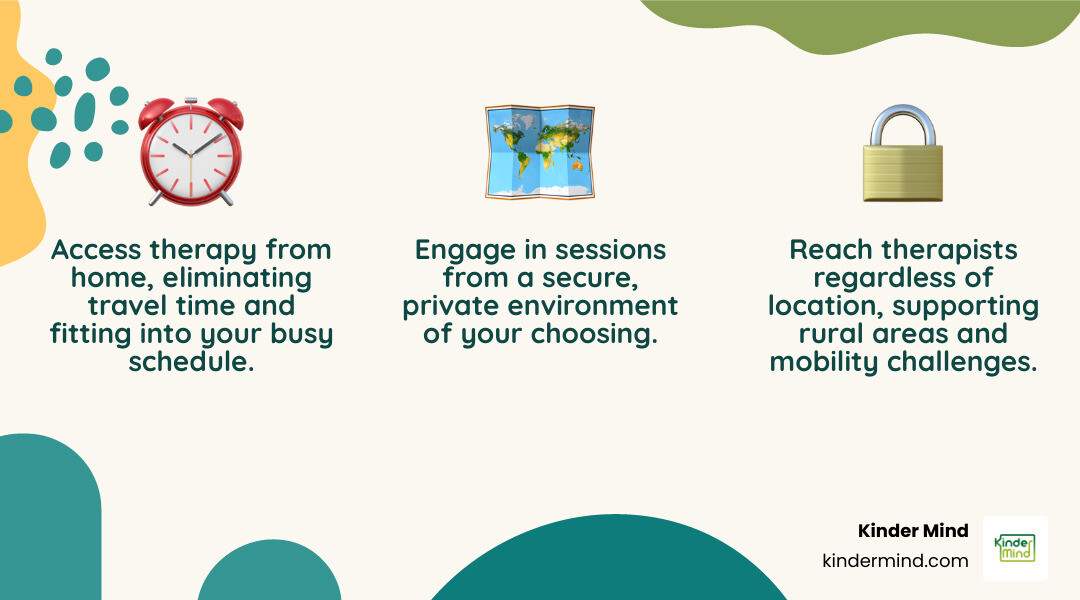
First and foremost is convenience. Imagine fitting a therapy session into your lunch break without the added stress of commuting, finding parking, or battling traffic. Virtual therapy makes this a reality, allowing individuals to access professional support from the comfort of their own home, office, or any private space. This eliminates travel time and costs, making therapy a more manageable part of a busy schedule. This flexibility is a game-changer for many, turning what was once a logistical hurdle into a seamless experience.

Next, accessibility is profoundly improved. For individuals living in rural areas where mental health professionals might be scarce, or for those with physical disabilities that make leaving home challenging, virtual therapy opens doors that were previously closed. It also provides a lifeline for people with social anxiety who might find the idea of entering a therapist’s office intimidating. The ability to connect with a therapist from anywhere with an internet connection means that geographical barriers or mobility issues no longer dictate who can receive care.
While specific pricing varies, virtual therapy often presents a more cost-effective option. Reduced overhead for providers can sometimes translate to lower session fees. Furthermore, the elimination of travel expenses and time off work contributes to overall savings for the patient. A new study suggests that online talk therapy works as well as an in-person session, and a major benefit is that it can allow people to get treatment faster, which increases their quality of life and reduces the amount of additional medical care they require. This faster access to effective care can actually make it more cost-effective in the long run by preventing escalation of symptoms and reducing the need for more intensive interventions.
Finally, virtual therapy can contribute to a reduced stigma surrounding mental health. The privacy of engaging in therapy from one’s own chosen environment can make the process feel less exposed and more personal. Research indicates that individuals who received virtual therapy were more likely to describe their care as “personal,” a meaningful finding given the importance of a positive therapist-client relationship for treatment efficacy. This comfort and sense of control can empower more people to seek the help they need.
More info about Virtual Therapy
Is Online Therapy Really Effective?
A common question for those considering virtual mental health care is whether it truly measures up to traditional in-person sessions. The resounding answer from recent research and patient experiences is a confident “yes.”
Numerous studies have demonstrated that online therapy is proven to be as effective, if not more effective, than face-to-face therapy for many conditions. For instance, one study on a major virtual therapy platform found that 80% of participants reported it was as or more effective than face-to-face therapy, while a remarkable 98% found it more convenient. This high level of satisfaction, combined with comparable outcomes, paints a clear picture of its efficacy.
Further data supports these findings: 70% of individuals saw improvement of anxiety or depression symptoms within 3 months of engaging in virtual therapy. This rapid improvement underscores the idea that faster access to treatment, a hallmark of virtual care, can lead to quicker and more positive outcomes. Cognitive Behavioral Therapy (CBT), a widely recognized and effective talk therapy, has been shown to be “at least as effective” online as in-person for reducing symptoms of depression and anxiety.
Beyond individual therapy, the benefits extend to other modalities. Couples who attended relationship counseling via video reported feeling safer and “less intimidated and judged” by their therapist. This highlights how the virtual format can sometimes foster an environment of increased comfort and openness, crucial for sensitive discussions.
The evidence is clear: for many, a virtual therapy appointment is not just a convenient alternative, but an equally powerful, and sometimes even preferred, path to mental well-being.
Online therapy is proven to be as effective Online Counseling
How Does a Virtual Therapy Appointment Work?
Understanding the practicalities of a virtual therapy appointment can help explain the process and ease any initial apprehension. While the core therapeutic principles remain the same as in-person sessions, the delivery method leverages technology to provide a flexible and accessible experience.
At its heart, virtual therapy relies on technology used to bridge the distance between patient and therapist. This typically involves video conferencing platforms, which are specifically designed to be secure and confidential. These platforms allow for live, face-to-face interaction, mimicking the in-person experience as closely as possible.
To participate, you’ll need an internet-enabled device such as a computer, tablet, or smartphone. A stable internet connection is essential to ensure a smooth and uninterrupted session. These platforms are often HIPAA-compliant, meaning they adhere to strict privacy and security standards to protect your personal health information.
The session formats primarily involve live video calls. You and your therapist will connect at a pre-arranged time, much like a traditional appointment. Some platforms may also offer phone sessions or asynchronous messaging, providing even greater flexibility. However, live video remains the most common and often preferred method, as it allows for the visual cues and real-time interaction that are vital for effective therapy.

The process usually begins with scheduling your virtual therapy appointment through an online portal or by contacting the provider directly. Once your appointment is confirmed, you’ll receive instructions on how to access the virtual meeting room. Before your session, you simply log in, and your therapist will join you, ready to begin your confidential conversation.
How Providers Are Matched to Your Needs
Finding the right therapist is a cornerstone of successful mental health treatment, and virtual therapy platforms have refined the matching process to help patients connect with professionals who best suit their unique needs.
When you begin your journey with a virtual therapy appointment, you’ll typically be asked to complete a set of questionnaires. These questions dig into your symptoms, your reasons for seeking therapy, and your personal preferences regarding a therapist (e.g., gender, therapeutic approach, areas of specialization). This information is crucial for the platform to identify potential matches.
After completing the initial assessment, you’ll often have the opportunity to review provider profiles. These profiles offer valuable insights into a therapist’s background, including their licensing, experience, specialties, and even their therapeutic philosophy. This transparency empowers you to make an informed decision, ensuring you select a professional with whom you feel comfortable and confident.
A significant advantage of many virtual platforms is the option to switch providers. If, after a few sessions, you feel that your initial match isn’t quite right, you can easily request a different therapist. This flexibility is vital, as the therapeutic relationship, or “fit,” is a strong predictor of treatment success. The goal is to ensure you connect with someone who truly understands your concerns and can guide you effectively.
Find the right therapist for you
What Conditions Can Be Treated Virtually?
The scope of mental health conditions effectively addressed through a virtual therapy appointment is broad, making it a versatile option for many individuals seeking support. Thanks to advances in technology and therapeutic approaches, a wide array of concerns can be managed effectively online.
Among the most commonly treated conditions are anxiety and depression. Virtual therapy has been shown to be highly effective in alleviating symptoms associated with both, with studies indicating comparable outcomes to in-person sessions. This includes various forms of anxiety, such as generalized anxiety disorder, social anxiety, and panic disorder.
Beyond these, virtual therapy is also a valuable tool for addressing:
- Stress: Learning coping mechanisms and stress management techniques.
- Relationship issues: Individual counseling to steer interpersonal challenges.
- PTSD (Post-Traumatic Stress Disorder): Utilizing evidence-based therapies like CBT, which can be delivered effectively online.
- OCD (Obsessive-Compulsive Disorder): Providing structured therapeutic interventions.
- Grief: Offering support and strategies for processing loss.
Many people also find virtual therapy helpful for managing chronic stress, improving social functioning, and addressing obsessive or intrusive thoughts. The ability to engage in therapy from a comfortable and familiar environment can sometimes make it easier to open up about sensitive topics.
While a vast range of conditions can be treated, the suitability of virtual therapy for specific complex cases should always be discussed with a mental health professional.
Online Therapy for Anxiety Online Therapy for Depression
Preparing for Your First Session: What to Expect and How to Succeed
Starting on your first virtual therapy appointment can feel a bit like preparing for a first date—a mix of anticipation and a touch of nerves. But with a little preparation, you can ensure a smooth and productive experience.
Your first session is primarily an initial evaluation. This is where your therapist gets to know you, your background, and your reasons for seeking help. They will likely conduct a Biopsychosocial (BPS) assessment, which helps them understand your mental health history, current challenges, and what you hope to achieve through therapy. Think of it as laying the groundwork for your personalized care plan.
During this appointment, you’ll have the opportunity to discuss your goals for therapy. Whether you’re aiming to manage anxiety, cope with stress, or improve relationships, clearly articulating your objectives will help your therapist tailor their approach. It’s also a perfect time for asking questions about the therapeutic process, your therapist’s methods, or what to expect during your first virtual therapy appointment and subsequent sessions. This collaborative approach helps in setting expectations and building a strong foundation for your therapeutic journey.
Session length for initial evaluations typically ranges from 45 to 60 minutes, allowing ample time for comprehensive discussion. For follow-up sessions, the duration is usually between 30 and 50 minutes. The goal is always to build rapport and work together towards your mental well-being.
More info about Virtual Mental Health Support
What to Expect During Your First Virtual Therapy Appointment
Your first virtual therapy appointment is a crucial step in your mental health journey. It’s designed to be an introductory session where you and your therapist begin to establish a connection and understand the path forward.
You can expect the session to start with a warm welcome from your therapist, who will guide you through the process. A significant part of this initial meeting is the initial evaluation, where your therapist will ask questions to gather information about your background, current concerns, and mental health history. This often involves a biops