Heal from Anywhere with Online Therapy for Addiction
Dr. Elizabeth Barlow, LCSW-S · 4/6/2026

Online Therapy for Addiction: What You Need to Know Before You Start
Online therapy for addiction gives you access to licensed counselors, evidence-based treatment, and peer support — all from home, without waiting weeks for an appointment.
Here’s a quick look at what it covers:
- What it is: Virtual sessions with licensed therapists treating substance use disorders
- How it works: Video calls, messaging, or phone — on your schedule
- What’s included: Individual counseling, group therapy, medication support, and peer coaching
- Who it’s for: Anyone with a stable internet connection and a private space — no detox required to start
- Is it effective? Yes — research from Northwestern University and Leipzig University shows outcomes comparable to in-person care
- Cost: Often covered by insurance, including Medicaid and Medicare
Struggling with addiction is hard enough. Having to drive to a clinic, sit in a waiting room, or rearrange your entire life around a treatment schedule makes it even harder.
That’s exactly why online addiction therapy has grown so fast. It meets you where you are — at home, on your lunch break, or wherever feels safe.
And the numbers back it up. Studies show that 91% of people currently in online therapy believe more people should try it. Programs report that 82% of members experience reduced substance cravings, and 77% see improvement in depression symptoms.
This guide walks you through everything: how virtual addiction treatment works, what therapies are used, what to expect in sessions, and how to get started today.
Online therapy for addiction terms to know:
What is Online Therapy for Addiction?
At its core, online therapy for addiction is the delivery of professional substance use disorder treatment through digital platforms. Instead of traveling to a physical “rehab” center or a brick-and-mortar clinic, individuals connect with licensed clinicians via secure video conferencing, phone calls, or messaging. It is a form of virtual outpatient care that provides the same clinical excellence as traditional settings but with significantly more flexibility.
Many people think of addiction treatment as a “locked-in” 30-day facility, but digital health has changed the landscape. Modern virtual programs often utilize a rolling intake model, meaning you don’t have to wait for a specific “start date” or a bed to open up. You can often begin your recovery journey within 24 to 48 hours of your first inquiry.
These programs are highly personalized. Because the therapist sees you in your natural environment, they can help you navigate real-world triggers as they happen. Whether you are looking for specialty addiction services or a comprehensive virtual intensive outpatient program (IOP), the goal remains the same: to provide a structured, compassionate path to wellness from the comfort of your own home.
Benefits of Virtual Counseling
Why are so many people choosing the screen over the sofa? The benefits of online therapy for addiction extend far beyond just avoiding a commute.
- Environmental Control: You choose where your session happens. You can wear your most comfortable clothes, sit in your favorite chair, and even have your pet nearby for emotional support. This sense of security can make it easier to open up about difficult topics.
- Accessibility and Reach: If you live in a rural area or a “treatment desert,” your options for high-quality care used to be limited. Virtual counseling removes geographic barriers, connecting you with top-tier specialists regardless of your zip code.
- Lifestyle Fit: For those with full-time jobs, childcare responsibilities, or school schedules, traditional rehab is often impossible. Online therapy fits into your life, not the other way around.
- Reduced Stigma: Unfortunately, the “shame” factor still prevents many from seeking help. Virtual care offers an extra layer of privacy. You don’t have to worry about bumping into an acquaintance in a clinic waiting room.

Eligibility and Requirements
While online therapy for addiction is a powerful tool, it isn’t a one-size-fits-all solution for every stage of recovery. To be eligible and ensure a successful experience, certain requirements should be met:
- Medical Stability: Virtual treatment is ideal for those who do not require immediate medical detoxification or 24/7 nursing supervision. If you are at risk for dangerous withdrawal symptoms, a short-term inpatient stay may be necessary before transitioning to virtual care.
- Technology: You need a stable internet connection and a device with a camera and microphone (like a smartphone, tablet, or laptop).
- Privacy: A quiet, confidential space where you won’t be interrupted is essential for maintaining the “therapeutic bubble.”
- Licensing Regulations: Due to telehealth regulations and state laws, your therapist must generally be licensed in the state where you are physically located during the session.
The Effectiveness of Online Therapy for Addiction
One of the most common questions is: “Does it actually work as well as being there in person?” The scientific answer is a resounding yes.
Major studies from institutions like Northwestern University in the US and Leipzig University in Germany have confirmed that online therapy is just as effective as face-to-face work, especially over the long term. In the context of addiction, the data is even more encouraging.
Recent statistics highlight the impact:
- 82% of members in virtual programs report a significant reduction in substance cravings.
- 83% of participants meet their goals on their most recent urine or health screenings.
- 77% of members report a notable improvement in co-occurring depression.
- Participants in virtual models are often 5X more likely to quit compared to those attempting to quit without professional support.
- There is a 71% higher likelihood of remaining abstinent at the 12-month mark in structured virtual programs.
With a 91% user approval rating, it is clear that the digital format does not diminish the human connection required for healing.
Common Modalities in Online Therapy for Addiction
Virtual providers don’t just “chat”; they use the same evidence-based techniques found in the world’s leading hospitals. These therapies are adapted for the screen to ensure they remain interactive and impactful.
- Cognitive Behavioral Therapy (CBT): This is the gold standard for addiction. It helps you identify the “loops” in your thinking that lead to substance use. You’ll learn to recognize triggers and build new, healthier responses.
- Dialectical Behavior Therapy (DBT): Focused on emotional regulation and distress tolerance, DBT is incredibly helpful for managing the intense feelings that often lead to relapse.
- Motivational Interviewing (MI): This approach helps you find your own internal motivation to change, rather than feeling like someone is forcing you to get sober.
- Skill-Building and Homework: Online therapy often involves “work” between sessions. This might include tracking your moods on an app or practicing a new coping skill in a stressful situation.
For a deeper dive into these methods, you can read Beyond the Bottle: How Therapy Transforms Recovery.
Real Success Stories and Testimonials
The true measure of online therapy for addiction is found in the lives it changes. Across various accredited platforms, 96% of members report feeling “genuinely cared for” by their virtual team. This connection is vital because addiction thrives in isolation.
Testimonials often highlight the power of peer connection. Many virtual programs include online support groups where you can meet others who have “walked the walk.” Hearing a story from someone who survived a suicide attempt or overcame a decade-long opioid struggle provides a level of hope that a textbook cannot. Whether it is a business traveler staying sober via hotel-room sessions or a parent finding balance again, the support for substance use is real and measurable.
Comprehensive Services and Treatment Modalities
Effective addiction treatment must address the “whole person,” not just the substance use. Online therapy for addiction has evolved into a comprehensive ecosystem of care.
Individual, Group, and Family Involvement
- Individual Counseling: One-on-one time with a therapist to dig into the “why” behind the addiction, such as past trauma or co-occurring mental health disorders.
- Group Therapy: Facilitated by a professional, these sessions allow you to build a “sober network.” In the virtual world, groups are often kept small to ensure everyone has a voice.
- Family Involvement: Addiction is a family disease. Many virtual programs offer family sessions to help loved ones understand boundaries, heal from codependency, and learn how to provide healthy support.
Medication-Assisted Treatment (MAT) and Peer Support
One of the biggest breakthroughs in virtual care is the ability to provide Medication-Assisted Treatment (MAT) remotely. In many states, licensed physicians can prescribe FDA-approved medications like Suboxone or Naltrexone via telehealth to help manage withdrawal symptoms and block cravings.
This medical care is often paired with Peer Support Specialists. These are individuals in long-term recovery who are professionally trained to help you navigate the “day-to-day” of getting sober. They provide accountability and can connect you with local state-specific resources if you need in-person medical follow-ups.
What to Expect in a Session
If you’ve never done it before, the first session can feel intimidating. Here is the typical roadmap:
- The Intake: You’ll discuss your history, your goals, and any previous attempts at recovery.
- Stabilization: If you are currently using, the focus will be on safety and potentially starting MAT to help you feel physically “normal.”
- The Routine: You’ll log in to a secure video platform. Sessions usually last 45–60 minutes for individuals, though some intensive programs require up to 9 hours of engagement per week.
- The Interaction: You and your therapist will interact just like a FaceTime call, but with professional tools like screen-sharing for worksheets or digital whiteboards for goal-setting.
Privacy, Insurance, and Accessibility in Virtual Care
Privacy is often the number one concern for people seeking online therapy for addiction. Providers use HIPAA-compliant, encrypted platforms to ensure that your data and your conversations remain strictly confidential. This is a higher level of security than standard apps like Skype or Zoom.
Affordability and Coverage Options
A major myth is that online therapy is an “out-of-pocket” luxury. In reality, it is often more affordable than traditional rehab.
- Insurance: Most major providers now cover telehealth for substance use. This includes Aetna, Blue Cross Blue Shield, UnitedHealthcare, and many others.
- Public Options: Many virtual programs are now in-network with Medicaid and Medicare, making care accessible to those who previously couldn’t afford it.
- Direct Billing: Providers often handle the paperwork for you, billing your insurance directly so you don’t have to deal with reimbursements.
You can check your insurance coverage to see what options are available to you.
Regional Availability and Licensing
Kinder Mind provides services across the United States, including Alabama, Arizona, California, Florida, New York, Texas, and Washington (among many others). It is important to work with a provider that understands the specific licensing requirements of your state. Therapists must renew their licenses every two years, ensuring they stay up-to-date on the latest clinical practices. If you are looking for a substance abuse counselor near me, virtual options often provide the fastest path to a match.
Recognizing the Signs and Taking the First Step
How do you know if it’s “time”? Addiction often sneaks up on people, but there are clear indicators that professional help is needed:
- Loss of Control: You find yourself using more of a substance than you intended, or you can’t stop even when you want to.
- Cravings: You experience a physical or intense psychological “need” to use.
- Relationship Strain: Your use is causing arguments with your spouse, parents, or friends.
- Neglecting Responsibilities: Work, school, or home life is starting to slip.
- Physical Health Issues: Changes in sleep, weight, or general health linked to substance use.
How to Get Started with Online Therapy for Addiction
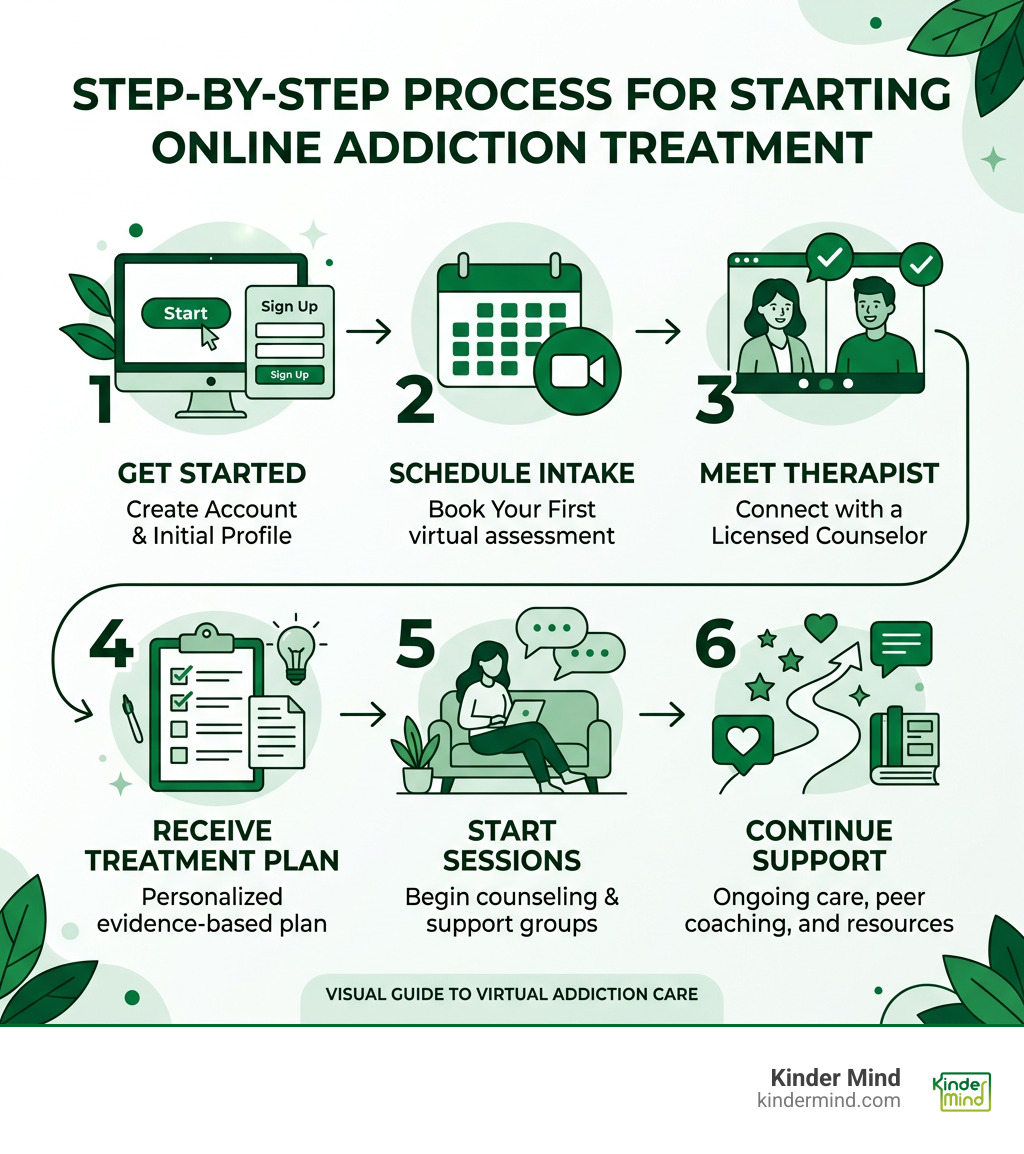
Taking the first step is often the hardest part of the entire process. Here is how to move from “thinking about it” to “doing it”: