
Your Guide to Bipolar Disorder Counselors in Your Area
Kinder Mind · 12/19/2025

Understanding Your Search for Specialized Bipolar Support
Navigating the path to mental wellness can feel overwhelming, especially when you’re dealing with the intense challenges of bipolar disorder. If you’ve found yourself searching for a counselor for bipolar disorder near me, you’ve already taken a courageous and vital first step toward regaining control and finding stability. Here’s what you need to know to move forward with confidence:
Quick Answer: Finding Your Bipolar Disorder Counselor
- Look for specialized credentials and experience. Your ideal therapist will be a Licensed Mental Health Counselor (LMHC), Licensed Clinical Social Worker (LCSW), or a psychologist (PhD or PsyD) who explicitly states they have experience treating bipolar disorder. This specialization is crucial because they understand the unique nuances of the condition.
- Verify their therapeutic approach. Effective therapists don’t just listen; they use proven, evidence-based methods. Ask if they use Cognitive Behavioral Therapy (CBT) to address thought patterns, Dialectical Behavior Therapy (DBT) for emotional regulation, or Family-Focused Therapy (FFT) to improve your support system.
- Check their collaboration network. The best care for bipolar disorder is integrated. A great counselor will be willing and able to work closely with your psychiatrist or medical doctor to ensure your therapy and medication plans are aligned and supporting each other.
- Start your search with targeted tools. Use online directories that allow you to filter by specialty and location. Platforms like Kinder Mind’s therapist directory are designed to connect you with qualified professionals who meet your specific needs.
- Prepare for costs and explore payment options. Don’t let cost be a barrier. Many therapists accept a wide range of insurance plans. If you’re uninsured or underinsured, ask about sliding scale fees, which adjust the cost based on your income, making care more affordable.
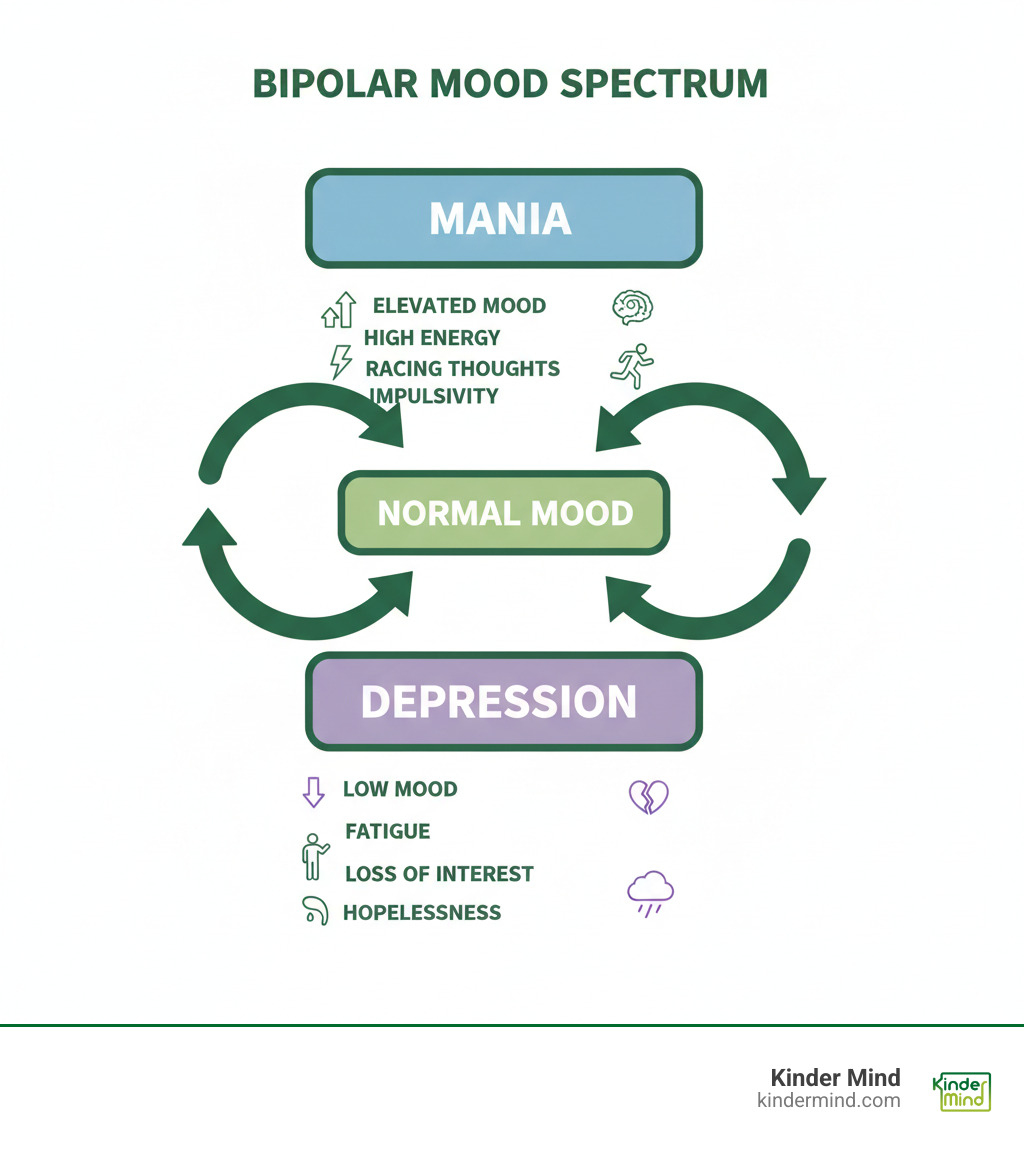
Bipolar disorder affects millions of people, creating a world of intense mood swings that cycle between manic highs and depressive lows. Mania isn’t just feeling happy; it can be a period of dangerously impulsive behavior, racing thoughts, and a decreased need for sleep. Depression is more than just sadness; it’s a crushing weight of hopelessness, fatigue, and a loss of interest in all the things you once enjoyed. These shifts can strain relationships, jeopardize careers, and disrupt daily life in profound ways. But here’s the essential truth: effective treatment exists, and it works.
The most successful approach combines two key elements: medication and therapy. Medication, prescribed by a psychiatrist, helps stabilize your brain chemistry to regulate your moods, thinking, and energy levels. At the same time, therapy provides you with the tools to understand your condition, identify triggers, establish routines that prevent mood episodes, and develop skills to manage the ups and downs that define this condition.
Finding the right counselor isn’t just about finding someone close by. It’s about finding a partner in your wellness journey—someone with specific training in bipolar disorder who can help you recognize early warning signs, cope with relationship conflicts, and build the stable, fulfilling life you deserve. This guide will walk you through exactly how to find that person in your area.
What to expect in your first weeks of care
- A thorough assessment to clarify your diagnosis, past episodes, and current symptoms, so your care plan fits your specific pattern (Bipolar I, Bipolar II, or cyclothymic features).
- Collaborative goal-setting that reflects what matters to you—sleep stability, work or school functioning, relationship repair, or relapse prevention.
- Practical monitoring tools (mood charts, sleep logs, and trigger trackers) that provide early warning signs you and your provider can act on quickly.
- A personalized relapse-prevention and safety plan that outlines what to do if symptoms escalate, including who you want involved in your support network.
- A discussion of session cadence (often weekly at first, then stepping down as stability grows) and how therapy will coordinate with any medication management.
- Clear guidance on privacy, consent, and how your information is shared if you choose to involve family or a psychiatrist.
Kinder Mind can meet you where you are
Kinder Mind offers accessible care that fits into real life—virtual sessions for convenience, and in-person options where available across the U.S. We work to keep therapy attainable through insurance and reduced-rate plans, so cost is less likely to stand between you and the support you deserve. If you’re ready to begin, start with Kinder Mind’s therapist directory to filter for providers with bipolar experience in your area. You can also explore educational articles and tools in our Bipolar and Mental Health resources to help you prepare for your first session and beyond.
The Comprehensive Approach to Bipolar Disorder Treatment

If you’re living with bipolar disorder, you know it can feel like riding an emotional rollercoaster with unpredictable twists and turns. One moment you might feel on top of the world, and the next, you could be struggling to get out of bed. The good news? Effective treatment exists, and it works best when medication and therapy work together.
Medication plays a crucial, foundational role in managing bipolar disorder. A psychiatrist or medical doctor will work with you to find the right medication, which often includes mood stabilizers (like lithium) to regulate the chemical imbalances in your brain that contribute to extreme mood swings. Depending on your symptoms, they may also prescribe atypical antipsychotics to manage mania or, with careful monitoring, antidepressants to lift you out of a depressive episode without triggering a manic one. This medical oversight is key to steadying your thinking patterns, energy levels, and emotions.
But medication alone isn’t the complete picture. That’s where psychotherapy becomes essential. Think of therapy as your personalized toolkit for understanding and managing the condition in your daily life. A skilled counselor for bipolar disorder helps you do more than just talk about your feelings. They help you recognize the subtle warning signs before a full mood episode hits, identify specific situations or stressors that trigger mood shifts, and develop practical strategies for navigating the relationship conflicts and workplace challenges that often arise with this condition.
Through therapy, you’ll learn how to establish healthy, predictable routines for sleep, diet, and exercise that decrease the likelihood of mood switches. You’ll develop concrete coping skills to manage both the exhilarating highs of mania and the debilitating lows of depression. This holistic approach addresses both the biological aspects (through medication) and the psychological and behavioral aspects (through therapy) of bipolar disorder, giving you the best chance at long-term stability and a fulfilling life.
The Power of Combining Therapy and Medication
Research consistently shows that combining therapy with medication leads to better outcomes than either treatment alone. It’s not just about adding two treatments together—it’s about creating a synergy where each approach strengthens the other. This integrated approach is widely recognized as the gold standard. For a deeper dive into the research and treatment guidelines, the National Institute of Mental Health (NIMH) offers comprehensive resources.
While medication stabilizes your brain chemistry, therapy provides the understanding and practical tools you need to steer daily challenges. This complementary approach leads to improved treatment adherence, meaning you’re more likely to stick with your medication plan when you also have the support of therapy. It also significantly increases your chances of long-term stability and helps prevent relapse.
Here’s a real-world example: Many people feel so good after an extended period of mood stability that they consider stopping their medication, believing they’re “cured.” Therapy helps you understand this pattern and recognize it as a high-risk trigger for relapse. Similarly, the early phases of manic episodes can feel energizing and productive, which might tempt you to skip medication doses. A therapist helps you process these experiences, challenge the thinking that justifies stopping treatment, and develop strategies to maintain your plan even when your mood tells you otherwise.
Therapy also gives you a dedicated space to process the emotional impact of your diagnosis, learn personalized coping mechanisms for stress, and build your own relapse prevention plan. When you combine these powerful interventions, you are empowered to achieve a more stable, balanced, and rewarding life.
Who Can Treat Bipolar Disorder?
When you’re searching for a counselor for bipolar disorder near me, it helps to understand the different types of mental health professionals and what each brings to your care team. While they often work together to provide comprehensive support, each has a distinct role and expertise.
| Professional Role | Primary Focus |
|---|---|
| Psychiatrist | A medical doctor (MD or DO) specializing in mental health. They diagnose and treat bipolar disorder primarily through medication management. |
| Psychologist | A doctoral-level professional (PhD or PsyD) who provides psychotherapy and can conduct psychological testing for diagnostic clarification. |
| Licensed Mental Health Counselor (LMHC) | A master’s-level therapist (along with LCSWs and LPCs) who provides psychotherapy, counseling, and skill-building to manage daily life. |
The best treatment almost always involves a team approach. Your psychiatrist is the medical expert who manages your medications, adjusting dosages and types to keep your brain chemistry as stable as possible. Your psychologist or Licensed Mental Health Counselor (LMHC) acts as your guide and coach, providing ongoing psychotherapy and support. They help you implement the strategies and build the skills you need to thrive. This collaboration ensures that both the biological and psychological aspects of your condition receive expert attention, giving you the comprehensive care you deserve.
What an evidence-based therapy plan can include
- CBT to identify thinking traps and develop balanced, reality-based thoughts that reduce impulsivity and hopelessness.
- DBT skills (mindfulness, distress tolerance, emotion regulation, and interpersonal effectiveness) to ride out intense feelings without making things worse.
- Interpersonal and Social Rhythm Therapy (IPSRT) to stabilize daily routines—especially sleep/wake times—that protect mood stability.
- Family-Focused Therapy (FFT) to strengthen communication and problem-solving within your support system and reduce conflict-driven triggers.
- Psychoeducation that helps you and your loved ones recognize early warning signs, understand medications, and know when to reach out for help.
How often should I see my therapist?
Frequency varies with your needs. Many people start with weekly sessions to build momentum and skills, then shift to biweekly or monthly maintenance as stability improves. During high-risk periods (early signs of mania or deepening depression), brief check-ins or increased frequency can help you course-correct sooner.
Coordinated care and your privacy
If you’d like your therapist and psychiatrist to collaborate, you can sign a simple consent (release of information) so they can share essential updates. This coordination keeps your therapy goals, medication plan, and symptom monitoring aligned—without compromising your confidentiality or control over what is shared.
Teletherapy tips for bipolar care
- Choose a quiet, private space and add sessions to your calendar like any important appointment.
- Keep a therapy notebook with weekly mood/sleep data and questions you want to cover.
- Share a preferred emergency contact with your therapist in case urgent support is needed.
- Have a simple backup plan for tech issues (phone audio, alternate device) so you don’t lose momentum.
With a thoughtful, coordinated plan—and a therapist who understands bipolar disorder—you can build the routines, skills, and support that make long-term stability possible.