
Why Therapy Rocks for Students: Essential Benefits You Can’t Ignore
Dr. Elizabeth Barlow, LCSW-S · 1/11/2026

Why Student Mental Health Matters More Than Ever
Therapy for Students is professional mental health support designed to help steer the unique challenges of academic life—from overwhelming anxiety and depression to managing transitions, building coping skills, and improving overall well-being.
Quick Facts About Therapy for Students:
- What it addresses: Academic stress, anxiety, depression, relationship issues, identity struggles, and life transitions
- Common approaches: Cognitive Behavioral Therapy (CBT), Acceptance and Commitment Therapy (ACT), and Dialectical Behavior Therapy (DBT)
- Where to access it: On-campus counseling centers, community health centers, online therapy platforms, and specialized student mental health services
- Why it works: Research shows therapy helps students develop healthy coping mechanisms, improve academic performance, and build resilience for long-term success
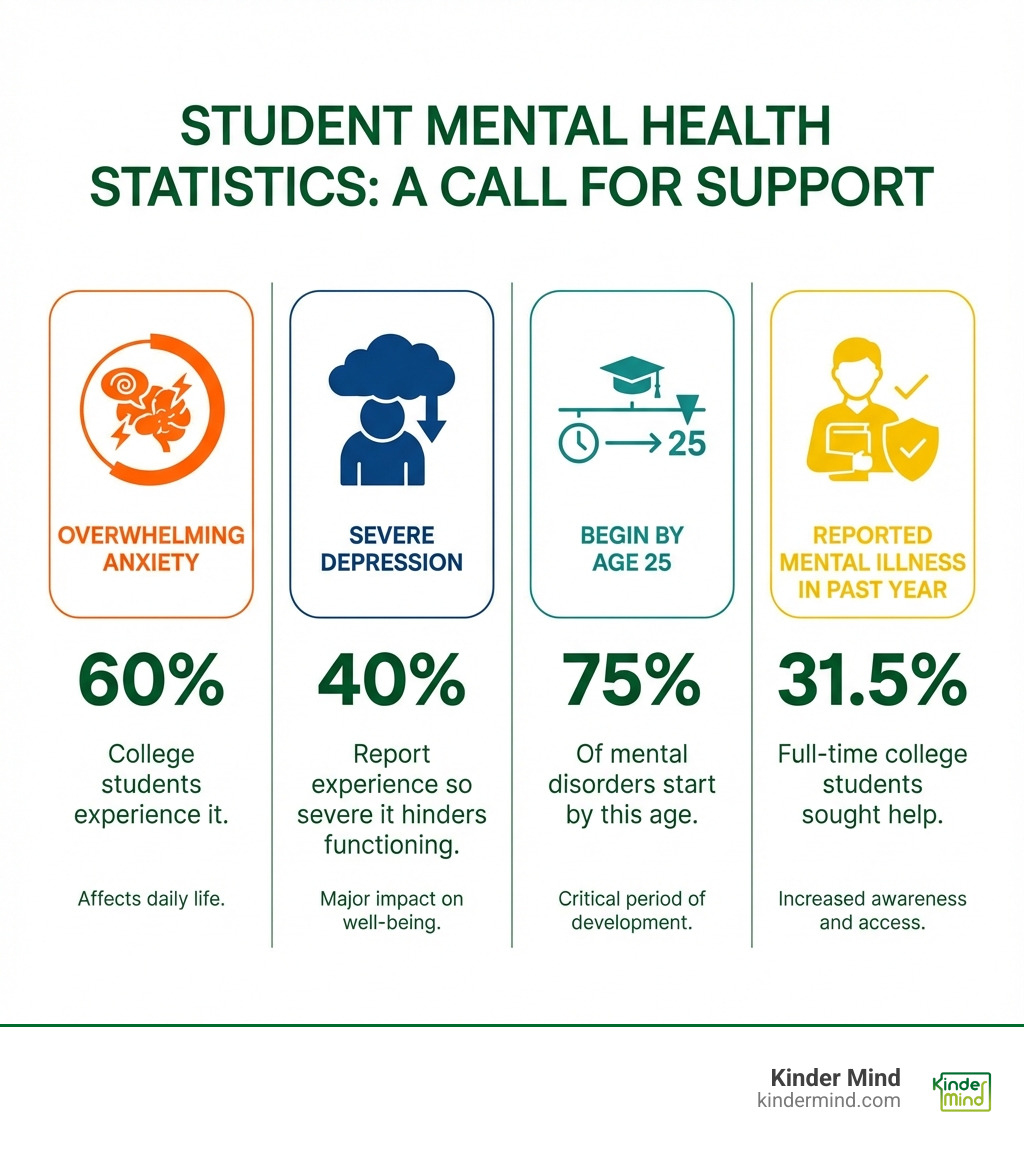
The numbers tell a sobering story. Over 60% of college students report overwhelming anxiety, while 40% experience depression so severe it affects their daily functioning. Even more striking: 75% of mental health conditions begin by age 25—right when most students are navigating the intense pressures of academic life.
Between juggling classes, managing finances, building social connections, and planning for the future, student life has never been more demanding. Add in the lasting effects of the pandemic, rising costs, and increased competition, and it’s no wonder mental health concerns among students have reached crisis levels.
But here’s the good news: therapy works. Research consistently shows that students who access mental health support see real improvements—not just in how they feel, but in their academic performance, relationships, and ability to handle life’s challenges.
Whether you’re dealing with test anxiety, feeling isolated, struggling with a major life transition, or just sensing that something feels off, seeking support isn’t a sign of weakness. It’s a practical step toward building the skills you need to thrive.
The Student Mental Health Landscape: Why It Matters Now More Than Ever
Student life is often painted as the “best years of your life,” filled with freedom and new experiences. While this can be true, it’s also a period of immense pressure. Students today face a unique blend of stressors that can significantly impact their mental well-being. Academic stress, financial worries, and the challenge of balancing multiple responsibilities are common culprits. Many students juggle classes, assignments, extracurricular activities, and social time, which can quickly become overwhelming. Poor time management often leads to increased stress, late submissions, and even burnout. The desire to excel academically, driven by the belief that high grades are crucial for future opportunities, only amplifies this pressure.
Financial stress is another major contributor to student mental health challenges. The average amount of student loan debt has increased substantially, and worries about these financial pressures can significantly contribute to negative mental health outcomes. Many students work part-time or even full-time jobs to cover their college costs, adding another layer of complexity to their already busy schedules. This often leaves little room for self-care or social activities, further isolating them.
Social isolation can also be a significant issue. While college offers opportunities to build new connections, the transition can be lonely for many. Friendship and social support are strongly associated with greater psychological well-being, helping to buffer against stress and negative emotions. Yet, forming these bonds takes time and effort, and some students struggle to find their place.
The growing need for accessible mental health care on college campuses is undeniable. Rates of anxiety, depression, and suicidal ideation have never been higher. For example, about 60% of students in the National College Health Assessment felt overwhelming anxiety, and 40% experienced depression so severe that they had difficulty functioning. In fact, 31.5% of full-time college students aged 18 to 22 reported any mental illness in the past year, with 7.5% reporting serious mental illness. A concerning 11.1% of students had serious thoughts of suicide in the past year.
These challenges are not evenly distributed. Marginalized communities often bear a disproportionate burden. Female students typically exhibit more depressive symptoms and report higher levels of stress than their male counterparts. Bisexual students are more likely to report mental health diagnoses and suicidal thoughts compared to heterosexual and gay/lesbian students. Gender minority students, particularly transgender students, face increased risks of depression, anxiety, and panic attacks. Racial and ethnic minority students, such as those identifying as multiracial or Asian/Pacific Islander, report higher feelings of hopelessness, depression, and anger. Black, Latino/a, and Asian students are individually more likely to consider or attempt suicide compared to White students, yet BIPOC students use mental health services less frequently and have more unmet mental health needs. Furthermore, low socioeconomic status (SES) is closely related to high levels of stress, anxiety, and depression in college students.

The first year of college, in particular, can be a time of high risk for developing psychiatric symptoms. The new social environment, increased academic demands, and general upheaval can be overwhelming. Recognizing these pressures and understanding that help is available is the first step toward a healthier student experience.
Signs It Might Be Time to Seek Support
It’s common to feel stressed or down occasionally, but certain signs might indicate a deeper struggle that warrants professional support. Recognizing these can be crucial for early intervention and better outcomes.
Here are some common signs that a student might need professional mental health support:
- Persistent sadness or hopelessness: Feeling down most of the time for weeks on end, with little to no improvement.
- Overwhelming anxiety or worry: Constant, intense worry about daily tasks, academic performance, social situations, or the future, often accompanied by physical symptoms like a racing heart or difficulty breathing.
- Changes in sleep or appetite: Significant changes in sleeping patterns (insomnia, oversleeping) or eating habits (loss of appetite, overeating) that affect energy levels and physical health.
- Difficulty concentrating: Struggling to focus in classes, read, or complete assignments, leading to a decline in academic performance.
- Withdrawing from friends and activities: Avoiding social gatherings, isolating oneself, and losing interest in activities that once brought joy.
- Loss of interest in hobbies: No longer finding pleasure in activities, sports, or creative pursuits that were previously enjoyed.
- Increased substance use: Relying on alcohol, drugs, or other substances to cope with stress, anxiety, or sadness.
- Feeling unable to cope: Feeling overwhelmed by daily tasks and responsibilities, as if life’s challenges are too much to handle.
If you or someone you know is experiencing several of these signs, reaching out for help is a brave and important step.
Opening Up Your Potential: The Core Benefits of Therapy for Students
Seeking Therapy for Students is not just about addressing problems; it’s about open uping potential and building a foundation for a successful and fulfilling life. The benefits extend far beyond managing immediate crises, impacting academic success, personal growth, and long-term well-being.
One of the most significant advantages is improved academic performance. Mental health has been repeatedly found to impact academic performance. Untreated mental health concerns can hinder focus and motivation, making it difficult to succeed academically. Therapy can help students address challenges like stress, anxiety, and time management, making it easier to concentrate, retain information, and perform well in their studies.
Therapy also equips students with better stress management techniques. College life is inherently stressful, but learning healthy ways to cope with pressure can prevent it from spiraling into overwhelming anxiety or burnout. Through therapy, students can develop personalized strategies to handle academic demands, social pressures, and future uncertainties.
Developing healthy coping mechanisms is a cornerstone of therapy. Instead of resorting to unhealthy habits like avoidance, excessive substance use, or social withdrawal, students learn constructive ways to process emotions and steer difficulties. This includes techniques like mindfulness, emotional regulation, and problem-solving skills.
Navigating life transitions is a huge part of the student experience, whether it’s moving away from home, adjusting to a new environment, forming new relationships, or planning post-graduation life. Therapy provides a safe space to explore these changes, process feelings of uncertainty or loss, and build confidence in adapting to new circumstances.
Furthermore, therapy fosters increased self-awareness. Students gain a deeper understanding of their thoughts, feelings, and behaviors, learning to identify patterns and triggers. This self-knowledge is empowering, enabling them to make conscious choices that align with their values and goals.
Improved communication skills are another invaluable benefit. Therapy often involves practicing assertive communication, active listening, and conflict resolution, which can improve relationships with peers, professors, and family members. This can lead to stronger social support networks, which are vital for mental well-being.
Finally, therapy helps students build resilience. Life will always present challenges, but resilience is the ability to bounce back from adversity. By facing and processing difficulties in a therapeutic setting, students develop inner strength and a belief in their capacity to overcome future obstacles. This prepares them not just for academic success, but for the complexities of adult life.

How Therapy Specifically Addresses Academic Life
Academic life is a unique beast, often bringing its own set of mental health challenges. Thankfully, Therapy for Students is well-equipped to tackle these specific pressures head-on.
Managing academic burnout is a common issue. The relentless cycle of assignments, exams, and projects can leave students feeling exhausted and disengaged. Therapy helps identify the roots of burnout, whether it’s perfectionism, poor time management, or an inability to set boundaries. Therapists can work with students to develop sustainable study habits, prioritize tasks, and incorporate essential self-care to prevent exhaustion.
Overcoming procrastination is another battle many students face. It’s not just laziness; procrastination often stems from anxiety, fear of failure, or feeling overwhelmed. Therapy can uncover these underlying psychological factors and provide strategies to break the cycle, such as setting realistic goals, breaking down large tasks, and developing motivational techniques.
Dealing with performance anxiety—be it test-taking, presentations, or even class participation—can be debilitating. Therapy provides tools like cognitive restructuring to challenge negative thoughts, relaxation techniques to manage physical symptoms, and exposure strategies to gradually build confidence in high-pressure situations.
Improving focus and motivation is crucial for academic success. When mental health challenges like depression or anxiety are present, concentration can wane, and motivation can plummet. Therapy helps address these underlying issues, clearing mental clutter and helping students reconnect with their academic goals and intrinsic drive.
Finally, balancing school, work, and social life is the ultimate juggling act. Therapy can provide guidance on time management, boundary setting, and prioritizing commitments. It helps students understand that it’s okay to say “no,” to take breaks, and to seek support when the load becomes too heavy. This holistic approach ensures students can not only survive but thrive in their academic environment.
Finding Your Fit: Types of Therapy and Finding the Right Professional
When considering Therapy for Students, understanding that “therapy” isn’t a one-size-fits-all solution is key. There are many different therapeutic approaches, each with its own philosophy and techniques. The effectiveness of therapy often hinges on the client-therapist relationship, which is generally considered to be the cornerstone of effective treatment. Finding a therapist with whom you can build a trusting bond is paramount. This process can take some time, and it’s not uncommon for people to meet with a few therapists before finding a good fit.
Another important distinction is between short-term and long-term therapy. Short-term therapy typically focuses on specific, immediate goals and current challenges, often lasting a few weeks to several months. Long-term therapy is more exploratory, delving into deeper-seated patterns, past experiences, and personality development, and can continue for a year or more.
Here’s a comparison:
| Feature | Short-Term Therapy | Long-Term Therapy |
|---|---|---|
| Duration | Typically 6-12 sessions (weeks to a few months) | Ongoing (several months to years) |
| Focus | Specific symptoms, immediate problems, current stressors | Deeper patterns, past experiences, personality growth |
| Goals | Rapid symptom reduction, coping skills for specific issues | Self-exploration, lasting change, addressing root causes |
| Example Modalities | Solution-Focused Brief Therapy (SFBT), some CBT | Psychodynamic, Humanistic, some Gestalt |
Common and Effective Types of Therapy for Students
Several types of therapy have proven particularly effective for the mental health issues commonly faced by students.
- Cognitive Behavioral Therapy (CBT): Often considered the “gold standard” of psychotherapy, CBT is highly effective for anxiety, depression, and stress. It helps students identify and change negative thought patterns and behaviors that contribute to their distress. For example, a student struggling with test anxiety might learn to challenge thoughts like “I’m going to fail” and replace them with more realistic and helpful ones.
- Gestalt Therapy: This approach focuses on the “here and now,” inviting a fuller presence and awareness. It can help students explore unfinished business, find creative solutions in relationships, and decrease levels of fear and anxiety by bringing awareness to current experiences and emotions.
- Accep
