
Navigating Healing: Online Trauma Therapy for Lasting Recovery
Dr. Elizabeth Barlow, LCSW-S · 2/23/2026

Understanding the Path to Healing from Trauma
Online trauma therapy connects you with licensed mental health professionals through secure video, messaging, or phone calls, allowing you to process traumatic experiences and develop coping skills from anywhere. Here’s a quick overview:
- What it is: Evidence-based treatment for trauma and PTSD delivered via secure digital platforms.
- How it works: Video sessions, messaging, or phone calls with licensed trauma specialists.
- Who it helps: Adults with symptoms from traumatic events, PTSD, or Complex PTSD.
- Main benefits: Accessible from home, reduced stigma, flexible scheduling, and often more affordable.
- Effectiveness: Research shows online CBT for PTSD is as effective as face-to-face therapy.
- Cost: Varies from subscriptions to per-session fees, with many insurance plans covering telehealth.
Trauma is more common than many realize. 76% of Canadians report experiencing a traumatic event, and about 8% of them develop Post-Traumatic Stress Disorder (PTSD). However, traditional therapy can be inaccessible due to cost, location, wait times, or stigma.
The weight of unprocessed trauma can manifest as feeling constantly on edge, avoiding reminders of the past, or struggling with intrusive thoughts. You might wonder, “I survived this. Why can’t I just move past it?”
Survival and healing are different. Your brain’s protective responses during a traumatic event may now be interfering with your daily life. Online trauma therapy offers a path forward that fits your life, without the commute or waiting room anxiety. Research confirms that therapist-supported online CBT is as effective as in-person therapy for reducing symptoms of anxiety, depression, and PTSD.
This guide covers how online trauma therapy works, what to expect, and how to steer costs and find the right therapist with Kinder Mind’s support across the many states we serve in the U.S. Understanding your options is the first step on your healing journey.
Understanding Online Trauma Therapy
Online trauma therapy uses digital technology to provide specialized mental health support for individuals who have experienced trauma. It adapts traditional therapy for a virtual setting, allowing clients to connect with licensed therapists from the comfort of their own space. This modern approach removes many barriers to care, making support more accessible.
At its core, online trauma therapy uses secure, HIPAA-compliant platforms for communication, which typically involve:
- Video sessions: Live, face-to-face interactions via webcam that mimic in-person sessions.
- Messaging: Asynchronous text communication, allowing clients to process thoughts at their own pace.
- Phone calls: Live audio sessions for those who prefer not to use video.
The goal is the same as traditional therapy: to process traumatic experiences, develop coping mechanisms, and regain a sense of safety. The therapeutic relationship remains vital for creating a space of trust and healing.
Here’s a comparison between online and traditional therapy:
| Aspect | Online Therapy | Traditional Therapy |
|---|---|---|
| Accessibility | Significantly expanded reach, overcoming geographical barriers (especially beneficial for those in “therapy deserts” or remote areas across states like Alaska, Montana, or Wyoming), and physical limitations. | Limited by physical location, requiring clients to travel to a therapist’s office. Can be a barrier for individuals with mobility challenges or living far from specialized care. |
| Convenience | Offers flexible scheduling, eliminating commute time and costs, and easily integrates into busy lifestyles. Sessions can be held from home or a private office. | Requires travel to and from appointments, which can be time-consuming, costly, and difficult to coordinate with work, childcare, or other responsibilities. |
| Privacy | Conducted in the client’s chosen private space, potentially reducing the stigma associated with visiting a mental health clinic. However, ensuring a truly private space at home is the client’s responsibility. | Provides a dedicated, neutral, and confidential space away from home. However, the act of going to a therapist’s office can sometimes feel stigmatizing for some individuals. |
| Unique Considerations | Requires a stable internet connection and a private, quiet environment. Clients must be comfortable with technology. Not suitable for urgent crises or individuals who require immediate, in-person intervention. | May be preferred by individuals who value the physical presence of a therapist or struggle with technology. Offers immediate in-person support during crises, though not all traditional therapists provide emergency services. |
| Technology Requirements | Reliable internet access, a device with a camera and microphone (smartphone, tablet, computer), and familiarity with video conferencing platforms. | No specific technology requirements for the client beyond initial scheduling communication. |
| Crisis Support Differences | Not designed for immediate crisis intervention. Clients in urgent crisis or emergency situations should seek emergency services. | While not an emergency service, a traditional therapist might be able to more directly assess and assist in an immediate crisis during an in-person session, or have local resources readily available for referral. |
What Are the Benefits of Online Trauma Therapy?
The shift to virtual care offers numerous advantages for individuals seeking to heal from trauma:
- Comfort of Home: Engaging in difficult therapy from a familiar, safe environment can ease the intensity of sessions and make it easier to be vulnerable.
- Reduced Stigma: Online trauma therapy provides a layer of anonymity, allowing you to access support without worrying about being seen entering a clinic. This is especially helpful in smaller communities like those in Vermont or Delaware.
- Flexible Scheduling: Online therapy accommodates busy schedules, making it easier to fit sessions around work or family commitments, whether you’re in New York or California.
- Wider Access to Trauma-Informed Specialists: Online platforms connect you to a broad network of qualified professionals with expertise in modalities like EMDR or CPT, regardless of your location in the United States.
- Cost-Effectiveness: Online therapy can be more affordable due to reduced overhead for providers and no travel costs for clients. Many platforms, including Kinder Mind, offer affordable care plans and reduced-rate options.

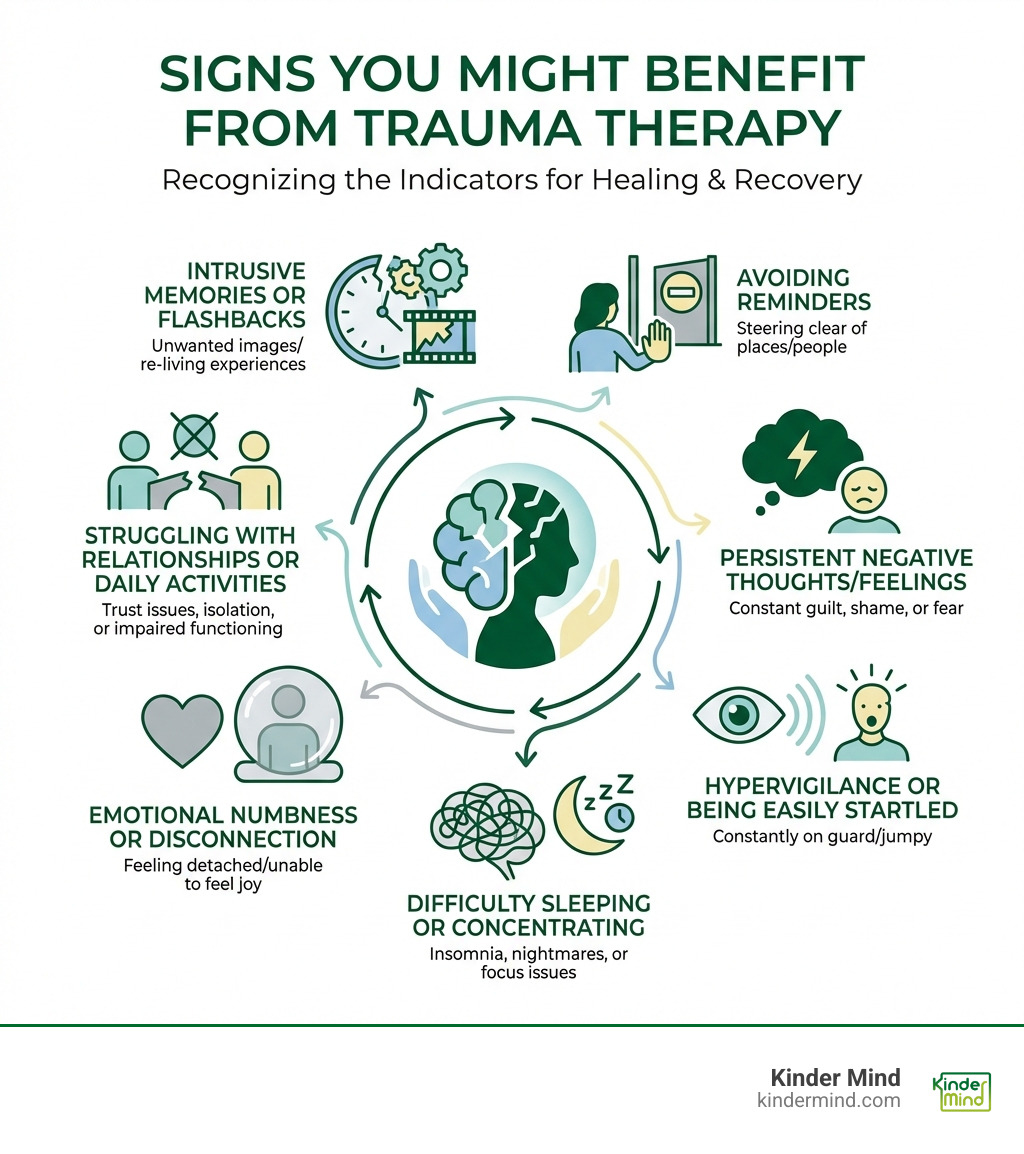
What are the signs that you might benefit from trauma therapy?
Trauma manifests differently in everyone, but common signs indicate a need for professional support. If you identify with several of the following, exploring online trauma therapy could be a beneficial next step:
- Intrusive Memories: Unwanted and distressing memories of the event, such as flashbacks, nightmares, or intrusive thoughts that feel like you’re reliving the trauma.
- Avoidance Behaviors: Actively avoiding people, places, conversations, or thoughts that remind you of the trauma, which can lead to social isolation.
- Negative Changes in Thinking and Mood: A persistent sense of hopelessness, detachment, difficulty concentrating, or a negative outlook on yourself and the future. Major depression is a common issue after trauma.
- Changes in Physical and Emotional Reactions: Feeling constantly on edge, easily startled, or having trouble sleeping. Irritability, anger, and physical symptoms like nausea or headaches are also common. This “hypervigilance” is your body staying on alert for danger.
- Relationship Difficulties: Trauma can impact how you relate to others, leading to mistrust, difficulty with healthy attachments, or patterns of “trauma bonding.”
- Co-occurring Issues like Anxiety or Depression: Trauma often contributes to or worsens other mental health conditions. As many as 18% of U.S. adults experience an anxiety disorder annually, often with trauma as an underlying factor.
If these symptoms persist for three months or more or significantly disrupt your life, reaching out to a mental health professional is highly recommended. You don’t have to steer this alone.
Evidence-Based Trauma Therapies Available Online
Effective therapy relies on evidence-based practices, which is crucial for trauma recovery. Kinder Mind is committed to providing access to these scientifically supported methods through its online trauma therapy platform.

A key factor in success is the therapeutic alliance—the collaborative relationship between you and your therapist. Research shows a strong online therapeutic alliance predicts positive outcomes for traumatized patients. This alliance creates the safe space essential for processing traumatic memories.
Kinder Mind’s platform offers access to therapists trained in various trauma-informed modalities to meet each individual’s needs.
What are the different types of trauma therapy available online?
Online trauma therapy includes several evidence-based approaches to help individuals process memories, challenge unhelpful thoughts, and develop healthier coping strategies. Some primary types available through Kinder Mind include:
- Cognitive Behavioral Therapy (CBT): Helps clients identify and change negative thought patterns and behaviors linked to the traumatic event.
- Trauma-Focused Cognitive Behavioral Therapy (TF-CBT): A specialized form of CBT adapted for adults, children, and adolescents to process traumatic memories and reduce PTSD symptoms.
- Cognitive Processing Therapy (CPT): A type of CBT that helps individuals challenge and modify unhelpful beliefs about themselves and the world that were altered by trauma.
- Dialectical Behavior Therapy (DBT) for Trauma: DBT’s focus on mindfulness, emotion regulation, and distress tolerance is highly beneficial for those with trauma-related emotional dysregulation.
- Eye Movement Desensitization and Reprocessing (EMDR): An innovative therapy that uses external stimuli (like eye movements) to help the brain reprocess distressing memories, reducing their emotional impact.
- Prolonged Exposure Therapy (PE): Helps individuals gradually confront trauma-related memories and situations they have been avoiding, reducing fear and anxiety.
- Somatic Therapy: A body-centered approach that helps release physical tension and stress associated with trauma by completing the body’s interrupted “fight, flight, or freeze” responses.
- Internal Family Systems (IFS) Therapy: Views the mind as having various “parts” and helps heal trauma by fostering self-compassion and integrating these parts.
- Trauma-Informed Therapy: An overarching approach where the therapist is always mindful of how trauma affects a client, prioritizing safety, trust, collaboration, and empowerment.
- Individual and Group Therapy Options: Therapy can be one-on-one or in a group. Group therapy for trauma can reduce feelings of isolation by providing a sense of community. Research has shown that group psychotherapy can significantly reduce PTSD symptoms. You can learn more from scientific research on psychotherapy interventions for PTSD.
How Effective is Online Trauma Therapy for PTSD?
Numerous studies confirm the effectiveness of online trauma therapy for Post-Traumatic Stress Disorder (PTSD).
A significant body of research, including a key study on online CBT for PTSD, indicates that it is as effective as face-to-face therapy. This means individuals can expect similar positive outcomes in symptom reduction. Findings also show that therapist-supported online CBT is more effective than no treatment for reducing anxiety and PTSD symptoms.
While some early reviews noted a need for more studies, they still suggested that internet-based CBT may be more effective than a waitlist. More recent analyses conclude that e-therapy with therapist support is a promising treatment option for managing PTSD symptoms. The effectiveness is often tied to the level of therapist support, highlighting the crucial role of a skilled therapist in a virtual setting.
The therapeutic alliance remains a powerful predictor of success. Kinder Mind prioritizes this by connecting clients with experienced, licensed therapists trained in trauma-informed care. By engaging openly in the therapeutic process, clients can achieve lasting recovery.
Finding a Therapist and Starting Your Healing Journey
Starting online trauma therapy is a significant step, and finding the right therapist is crucial. You want an experienced guide who makes you feel safe.
When seeking an online trauma therapist, consider these key points:
- Checking Credentials: Ensure the therapist is licensed in your state (e.g., LCSW, LPC, or Psychologist). Kinder Mind verifies that all its therapists are licensed and qualified in the states they serve, from Florida to Washington.
- Verifying Specialization in Trauma: Look for therapists with stated expertise in trauma, PTSD, or specific modalities like EMDR or CPT. Ask about their experience with your specific type of trauma.
- Using Therapist Directories: Online directories can help filter therapists by specialty and insurance. While Kinder Mind connects you with a therapist, knowing what to look for is helpful.
- Questions to Ask a Potential Therapist: During an initial consultation, consider asking:
- “What is your approach to trauma therapy?”
- “What modalities do you use?”
- “How do you ensure safety in online sessions?”
- “What should I expect in terms of session structure?”
What should I expect during online trauma therapy sessions?
Online trauma therapy follows a structured process to facilitate healing: