
Mayo Clinic Q and A: Teen Anxiety Treatment Options
Dr. Elizabeth Barlow, LCSW-S · 2/5/2026

Why Understanding Teen Anxiety Treatment Matters
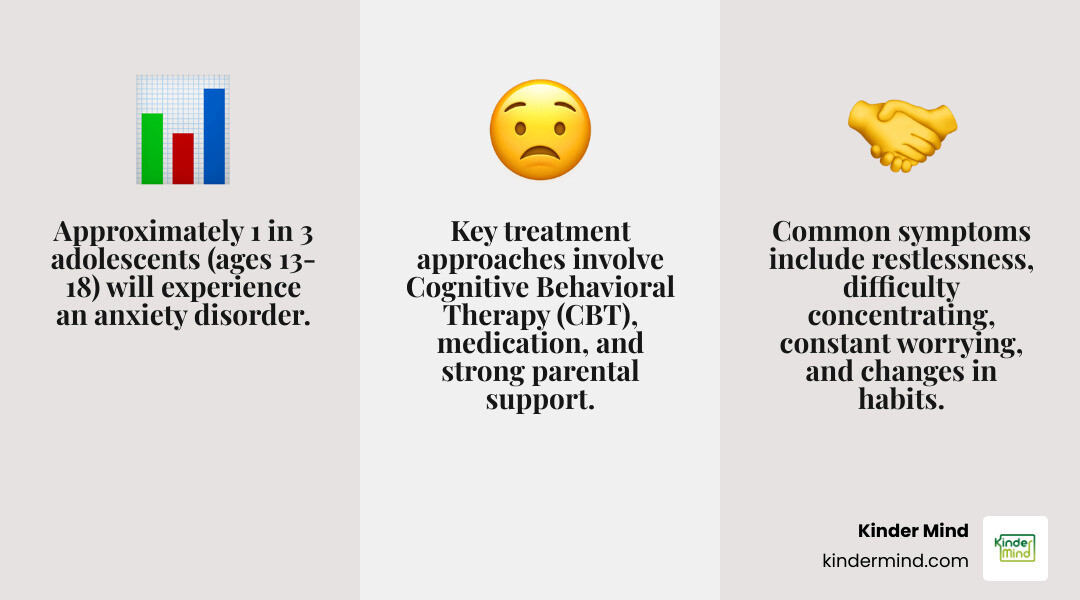
Teen anxiety treatment involves evidence-based approaches like Cognitive Behavioral Therapy (CBT), medication, and support from parents and schools. Research shows that approximately one in three adolescents (ages 13-18) will experience an anxiety disorder, yet a vast majority do not receive the help they need.
Quick Overview: Teen Anxiety Treatment Options
- Cognitive Behavioral Therapy (CBT): A first-line treatment that helps teens change anxious thought patterns.
- Exposure Therapy: A method of gradually facing fears to build confidence.
- Medication (SSRIs): Used for moderate to severe cases, often with therapy.
- Parental Support: Creating a validating environment and modeling healthy coping.
- School Accommodations: Working with educators to reduce academic stress.
Many parents share similar concerns: “My 15-year-old daughter has always been anxious, but her anxiety seems to be worsening by the day. She is worried about everything… to getting accepted into a good college.” This reflects what many families face, especially as the pandemic amplified anxiety for countless teens. Research shows depressive and anxiety symptoms doubled globally among youth during that time.
The good news is that anxiety disorders are highly treatable. Studies show about two-thirds of children treated with CBT are free of their primary diagnosis after treatment. When worry or fear becomes difficult to control, lasts for months, or interferes with daily life, it’s time to seek help. Understanding the difference between normal teen stress and an anxiety disorder is the first step. While it’s normal to worry about tests or social events, anxiety becomes a disorder when these concerns are excessive, persistent, and disruptive.
Understanding Teen Anxiety: Signs, Symptoms, and Causes
Anxiety is a natural “fight, flight, or freeze” response. It can even be a motivator for teens. However, it can develop into an anxiety disorder when it becomes overwhelming, persistent, and disproportionate to the situation. Anxiety disorders are the most common mental health concern in the U.S., and approximately 1 in 3 adolescents will experience one. Worryingly, rates have been rising, with recent data showing about 20% of teens reporting significant anxiety symptoms.
During the turbulent teenage years, anxiety often shifts from external fears (like monsters) to internal ones, such as self-image, social acceptance, and academic performance, making it harder to recognize.
Common Signs and Symptoms of Anxiety in Teenagers
Anxiety can manifest emotionally, physically, and behaviorally. Look for a combination of these signs:
- Emotional Signs:
- Constant, out-of-proportion worries about everyday life.
- Irritability, mood swings, or feeling “on edge.”
- Difficulty concentrating or mind going blank.
- Catastrophic thinking (always expecting the worst).
- Constantly seeking reassurance.
- Behavioral Symptoms:
- Withdrawing from friends, social activities, or hobbies.
- Changes in eating or sleeping habits.
- Avoiding school or a sudden drop in academic performance.
- Hesitancy to try new things.
- Perfectionism that leads to procrastination or avoidance.
- Physical Complaints:
- Frequent headaches or stomachaches with no medical cause.
- Muscle tension or fatigue.
- Nervous habits like nail-biting or fidgeting.
- Rapid heartbeat, shortness of breath, or dizziness.
Distinguishing Anxiety from Normal Teen Stress
All teens experience stress. The difference between normal worry and an anxiety disorder lies in the intensity, duration, and impact on daily life.
- Normal Stress: A response to a specific stressor (like a test) that resolves when the situation passes and doesn’t significantly impair daily life.
- Anxiety Disorder: Feelings of worry or fear that are hard to control, last for weeks or months, and interfere with school, friendships, and enjoyment of life. It often leads to avoidance behaviors that limit a teen’s development.
If anxiety is limiting your teen’s activities, it’s time to seek professional guidance.
Underlying Causes and Risk Factors
Teen anxiety is complex, stemming from an interplay of factors:
- Genetics and Family History: Anxiety tends to run in families. A teen with an anxious parent is more likely to develop anxiety, suggesting a genetic predisposition or inherited temperament (like shyness).
- Brain Chemistry: The brain’s “fear circuit,” particularly the amygdala, can function differently in anxious individuals, showing exaggerated responses to perceived threats.
- Temperament: Traits like shyness or perfectionism can increase vulnerability.
- Stressful Life Events: Major changes like moving, family difficulties, or traumatic events like bullying can trigger or worsen anxiety. The COVID-19 pandemic, for example, significantly amplified fear and uncertainty for youth.
- Academic and Social Pressures: The pressure to succeed in school, get into college, and fit in with peers are major stressors.
- Parental Influence: While not a cause for blame, parental anxiety or overprotectiveness can contribute to a child’s anxiety. Conversely, positive parenting is a crucial protective factor.
Professional Teen Anxiety Treatment Options
The good news is that teen anxiety treatment is highly effective. Since anxiety disorders rarely go away on their own, professional help is crucial. The most effective approaches combine psychotherapy and, when needed, medication.
The Role of Cognitive Behavioral Therapy (CBT)
Cognitive Behavioral Therapy (CBT) is the first-line psychological treatment for teen anxiety. This goal-oriented therapy is based on the idea that thoughts, feelings, and behaviors are connected. CBT empowers teens by teaching them to:
- Identify Negative Thought Patterns: Recognize unhelpful thoughts that fuel anxiety (e.g., “Everyone will laugh at me”).
- Challenge Anxious Thoughts: Evaluate the evidence for their fears and develop more realistic perspectives.
- Learn Coping Skills: Practice relaxation techniques, problem-solving, and social skills.
- Practice New Skills: Use homework assignments to apply what they’ve learned in real-life situations, often with parental support.
Research overwhelmingly supports CBT’s effectiveness. Studies show that about two-thirds of children treated with CBT are free of their primary diagnosis after treatment, and these gains are often maintained for years.
How Exposure-Based Approaches Help Manage Fears
A key part of CBT, exposure therapy, involves gradually and systematically confronting feared situations instead of avoiding them. This helps teens build confidence and learn that their anxiety will decrease on its own. The process involves:
- Creating a Fear Hierarchy: Ranking anxiety-provoking situations from least to most frightening.
- Gradual Exposure: Starting with the easiest step, the teen is guided to face these situations.
- Habituation: By remaining in the situation, the teen learns that their anxiety naturally peaks and then subsides.
- Preventing Avoidance: The teen learns they can cope without resorting to escape or safety behaviors.
With each success, teens gain a sense of mastery. This approach is one of the most effective for helping teens overcome their fears.
Considering Medication for Teen Anxiety Treatment
For moderate to severe anxiety, medication can be a valuable part of a teen anxiety treatment plan, usually combined with therapy like CBT.
- When Medication is Appropriate: It’s typically considered when anxiety severely impairs a teen’s daily life or when therapy alone isn’t enough.
- Types of Medication: Selective Serotonin Reuptake Inhibitors (SSRIs) are the most common and effective medications for youth anxiety. Serotonin Norepinephrine Reuptake Inhibitors (SNRIs) are another option. Benzodiazepines are generally not recommended for long-term use.
- Side Effects and Risks: SSRIs can have side effects like nausea or insomnia. A significant concern is the FDA “black box warning” for an increased risk of suicidal thoughts and behaviors in youth, especially when starting the medication or changing the dose.
- Regular Monitoring: Close monitoring by the prescribing physician is essential. Treatment starts with a low dose that is slowly increased, and it may take 6 to 12 weeks to see the full benefits.
A combination of CBT and an SSRI has been shown to be the most effective treatment for moderate to severe anxiety disorders.
How Parents and Schools Can Support Anxious Teens
A supportive environment at home and school is vital for teens navigating anxiety. Parents and educators play key roles in helping them manage symptoms and build resilience.
When to Seek Professional Help
It’s time to seek professional help when a teen’s anxiety involves:
- Significant emotional distress or worsening symptoms.
- Avoiding school, social isolation, or a drop in academic performance.
- Interference with daily life, relationships, or personal development.
- Persistent symptoms lasting for several months.
- Any mention of self-harm or suicidal thoughts. This requires immediate attention. You can connect with people who can support you by calling or texting 988 anytime in the US and Canada. In the UK, you can call 111.
A family physician or pediatrician is a good starting point for an evaluation and referral to a mental health professional. For those experiencing abuse, the National Domestic Violence Hotline at 1-800-799-SAFE (7233) and the SAMHSA National Helpline at 1-800-662-HELP (4357) are also vital resources.
Supportive Strategies for Parents and Caregivers
Parental support is a cornerstone of effective teen anxiety treatment.
- Listen and Validate: Acknowledge your teen’s fears without judgment. Create a safe space for them to talk.
- Model Healthy Coping: Manage your own stress calmly. Demonstrate self-compassion and healthy habits like good sleep and exercise.
- Encourage Bravery: Gently encourage your teen to face situations they avoid. Celebrate their effort and progress, not just perfection.
- Avoid Accommodating Anxiety: While it’s natural to want to protect your child, letting them avoid all feared situations can reinforce the anxiety. Work with them on gradual steps.
- Maintain Routines: Consistent routines for meals, sleep, and screen time provide a comforting sense of stability.
- Educate About Panic Attacks: If your teen has panic attacks, explain that the physical sensations are temporary and not harmful. Be a calm, reassuring presence.
The School’s Role in Supporting Students
Schools are crucial partners in supporting students with anxiety.
- School Counselors: These professionals can offer direct support and facilitate communication between the family and teachers.
- Classroom Accommodations: Simple changes like extended time on tests or a quiet testing environment can significantly reduce academic pressure.
- Mental Health Education: Integrating mental health into the curriculum helps normalize anxiety and teaches all students basic coping skills.
- Collaboration: Open communication between parents, school staff, and mental health providers is essential for creating a comprehensive support plan, which might include an IEP or 504 plan.
Building Resilience and Long-Term Wellness
Effective teen anxiety treatment extends beyond formal sessions; it involves fostering resilience and lifelong wellness strategies. The long-term outcomes for treated teens are generally positive, with many maintaining their gains for years.
Developing Healthy Coping Mechanisms for Teen Anxiety Treatment
Empowering teens with coping skills is key to managing anxiety independently.
- Deep Breathing: Simple breathing exercises can calm the nervous system during moments of stress.
- Regular Exercise: Physical activity has a profound positive impact on mental health, lessening symptoms of anxiety and depression.
- Mindfulness and Meditation: These practices help teens stay present and observe their thoughts without judgment, which is especially helpful for social anxiety.
- Journaling: Writing can help teens process emotions, identify triggers, and track progress.
- Healthy Sleep Hygiene: Consistent sleep schedules and a relaxing bedtime routine are crucial for managing anxiety.
- Building Self-Esteem: Help teens build self-worth by highlighting their strengths, encouraging hobbies, and reframing setbacks as learning opportunities.
Navigating Social Media and Its Impact
Social media’s impact on teen anxiety is complex. It can lead to social comparison, feelings of inadequacy, and the “Fear of Missing Out” (FOMO). One study found that teens spending over three hours a day on social media were at increased risk for mental health problems. To mitigate these risks, encourage teens to:
- Set Time Limits: Use app timers to manage screen time.
- Curate a Positive Feed: Unfollow accounts that trigger negative feelings.
- Take Digital Detoxes: Schedule regular breaks from social media.
- Discuss Social Media Realities: Talk openly about how online personas are often curated and unrealistic.
Long-Term Outcomes and Relapse Prevention
The outlook for teens who receive proper teen anxiety treatment is very encouraging.
- High Success Rates: Treatment leads to high rates of remission and sustained improvement.
- Reduced Future Risk: Effective treatment can reduce the risk of developing depression or substance use disorders in adulthood.
- Ongoing Skill Practice: Relapse prevention involves continued practice of coping skills learned in therapy.
- Booster Sessions: Occasional therapy sessions can help reinforce skills and address new challenges.
- Wellness Plan: A personalized plan including healthy habits and a support network helps teens maintain their mental health long-term.
Frequently Asked Questions about Teen Anxiety
What are the most common types of anxiety disorders in teens?
While anxiety can manifest in various ways, several types of anxiety disorders are particularly prevalent among teenagers:
- Generalized Anxiety Disorder (GAD): Characterized by excessive and continuous worry about many different things (school, family, friends, future) that is difficult to control. This isn’t just occasional worry but a persistent fear.
- Social Anxiety Disorder (Social Phobia): Intense fear of being judged, embarrassed, or humiliated in social situations. This is more common in teenagers than in younger children and can lead to significant social withdrawal.
- Panic Disorder: Recurrent, unexpected panic attacks, which are sudden episodes of intense fear accompanied by physical
