
How Emotional Abuse Changes Everything for Women
Dr. Elizabeth Barlow, LCSW-S · 4/15/2026

The Effects of Emotional Abuse on a Woman Are Real — and Run Deep
The effects of emotional abuse on a woman touch every part of her life — her mind, her body, and her relationships. And unlike a bruise or a broken bone, these wounds are invisible. That makes them easy to dismiss, minimize, or miss entirely — even by the woman experiencing them.
Here is a quick summary of the most common effects:
- Psychological: Chronic anxiety, depression, low self-esteem, PTSD, and difficulty trusting others
- Physical: Cardiovascular problems, gastrointestinal issues, weakened immune system, and chronic fatigue
- Relational: Withdrawal from friends and family, struggles in future relationships, and difficulty setting boundaries
- Behavioral: People-pleasing, emotional numbness, self-doubt, and in some cases substance use
These effects are not small. Research consistently shows that psychological abuse can be just as harmful — sometimes more so — than physical violence. In fact, 88% of practitioners in one large survey agreed that psychological violence is as harmful or more harmful than physical abuse.
Yet emotional abuse is often dismissed because it leaves no visible marks.
That gap between how serious it is and how seriously it is taken is exactly why this guide exists.
Emotional abuse works through control, humiliation, isolation, and the slow erosion of a woman’s sense of self. It can happen in romantic relationships, in families, and even in workplaces. It often starts gradually — sometimes after a phase of intense affection and attention — before shifting into patterns of manipulation and fear.
The effects do not stop when the relationship ends. For many women, the damage continues long after — shaping how they see themselves, how they relate to others, and how they move through the world.
You deserve to understand what is happening, and to know that healing is possible.
Understanding the Effects of Emotional Abuse on a Woman
Emotional abuse is a pattern of behavior used to gain power and control over another person through words and non-physical actions. While physical abuse leaves external scars, emotional abuse targets a woman’s internal world — her thoughts, her sanity, and her worth.
According to the National Center for Injury Prevention and Control, approximately 48.4% of women have experienced at least one psychologically aggressive behavior by an intimate partner in their lifetime. This is not a rare occurrence; it is the most pervasive form of Domestic Violence reported globally.
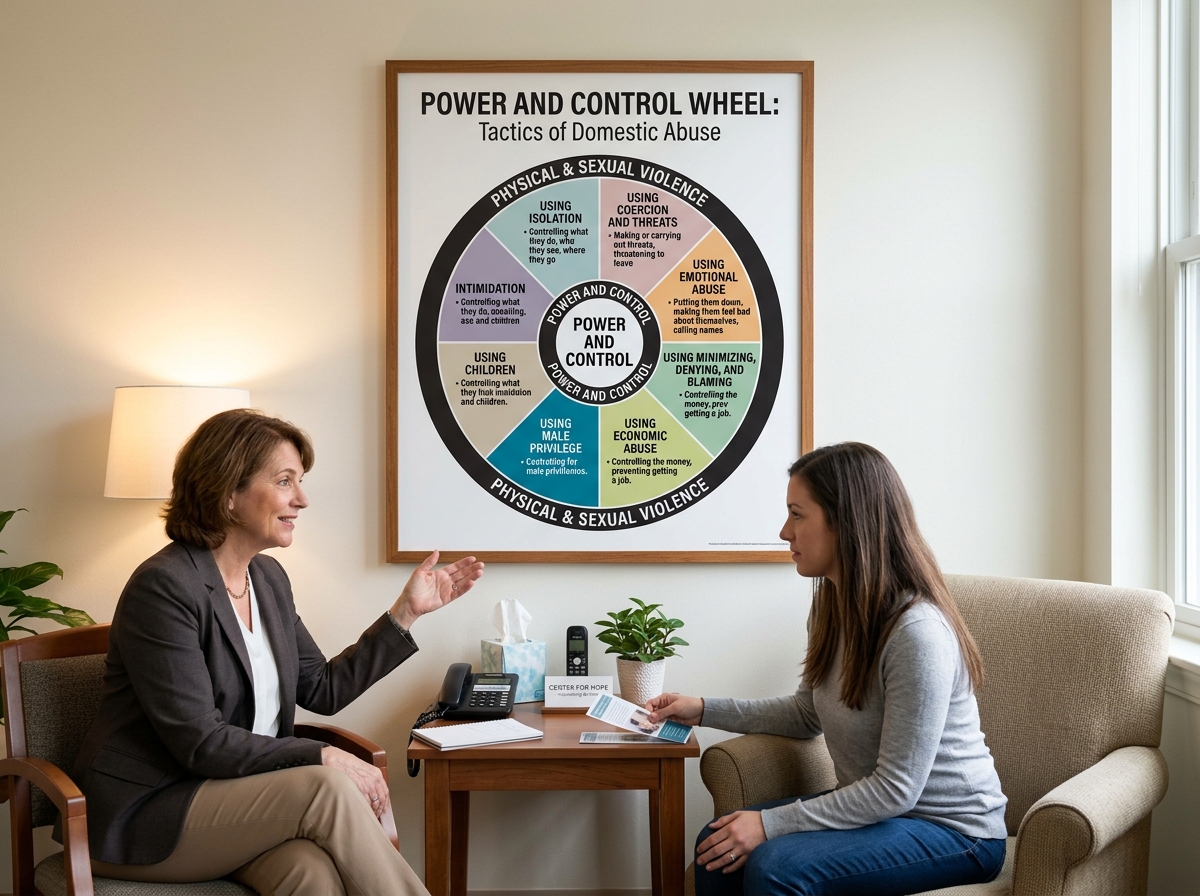
To understand how this impact develops, it is helpful to look at the Power and Control Wheel. This tool illustrates how abusers use tactics like isolation, coercion, and threats to maintain dominance. Unlike a simple argument, emotional abuse is regular, deliberate, and designed to weaken the victim over time.
| Feature | Physical Abuse | Emotional Abuse |
|---|---|---|
| Visibility | Visible (bruises, scars, breaks) | Invisible (mental and emotional wounds) |
| Tactics | Hitting, pushing, strangling | Gaslighting, shaming, silent treatment |
| Impact | Physical pain and injury | Erosion of identity and self-worth |
| Detection | Easier to identify by others | Sneaky and often hidden from view |
| Health Risks | Immediate physical danger | Chronic stress-related illnesses |
The University of Michigan Health System notes in their resource Emotional Abuse Hurts that these patterns often start with “love-bombing” — a phase of excessive attention that builds a false sense of security and dependency before the control begins.
Defining Psychological Aggression and the Effects of Emotional Abuse on a Woman
Psychological aggression includes a wide range of behaviors. One of the most damaging is gaslighting, a tactic where an abuser denies reality to make a woman doubt her own memory or sanity. When a partner says, “That never happened, you’re just crazy,” they are effectively dismantling her ability to trust her own mind.
Other common tactics include:
- Intimidation: Using looks, actions, or gestures to instill fear.
- Constant Criticism: Belittling a woman’s intelligence, appearance, or abilities until she believes she is “worthless.”
- Isolation: Controlling who she sees and where she goes to cut off her support system.
- Economic Abuse: Controlling all finances so she cannot leave.
If a woman is unsure if her relationship has crossed the line, she can use the Am I Being Abused? Checklist to identify red flags. Recognizing these patterns is the first step in addressing the effects of emotional abuse on a woman.
Age and Gender-Specific Patterns in Abuse
The way emotional abuse manifests can change depending on a woman’s stage in life. Research on gender and age in abuse suggests that younger women often face higher levels of isolation tactics. In adolescent dating, this might look like a partner demanding passwords or checking phones constantly to foster total dependency.
In contrast, older women may experience different forms of psychological violence. A study on the healthcare needs of older victims found that property damage and threats against family members or pets become more common as physical violence may decline with age. Cultural factors also play a role; in some communities, patriarchal norms can make it harder for women to recognize emotional control as a form of Abuse.
Immediate and Long-Term Psychological Impact
The psychological effects of emotional abuse on a woman are profound. Immediately, she may feel a sense of hopelessness, confusion, and a constant state of “walking on eggshells.” Over time, this chronic stress leads to significant mental health challenges.
Research published in the Journal of Psychology on the mental health effects of IPV highlights that emotional abuse is strongly correlated with clinical depression and generalized anxiety disorders. In many cases, these effects are even more severe than those seen in survivors of physical-only abuse.
A study on emotional abuse and depression found that adults who experienced emotional maltreatment are 3.5 times more likely to experience depression later in life. This often stems from emotional dysregulation — a struggle to manage intense feelings because they were never safely expressed during the period of abuse.
Perhaps most concerning is the link to suicidal ideation. The lack of a “visible” reason for her pain often leads a woman to blame herself, increasing feelings of despair.
Long-Term Mental Health Effects of Emotional Abuse on a Woman
When emotional abuse is prolonged, it can lead to PTSD or a related condition known as complex PTSD (C-PTSD). While standard PTSD often follows a single traumatic event, C-PTSD results from repeated trauma over months or years.
Symptoms of C-PTSD in women include:
- Hyper-vigilance: Always being on high alert for danger or anger from others.
- Emotional Numbness: Feeling disconnected from one’s own feelings as a way to survive the pain.
- Trust Issues: Difficulty forming secure attachments because the most intimate relationship was a source of harm.
- Dissociation: Feeling like she is “outside” of her body or that the world around her isn’t real.
Research on PTSD and emotional abuse shows that nearly 80% of individuals reporting intimate partner violence meet the criteria for PTSD. This long-term psychological impact requires specialized Trauma Therapy to address the deep-seated beliefs of worthlessness that the abuser instilled.
The Physical Toll: How the Body Responds to Trauma
One of the most surprising effects of emotional abuse on a woman is how it manifests in the body. The mind and body are inextricably linked; when the mind is in a constant state of fear, the body stays in a “fight or flight” mode.
A landmark Physical and Psychological Symptoms study revealed that emotionally abused women report significantly more physical symptoms than non-abused women, even when no physical violence is present. The chronic release of stress hormones like cortisol can lead to:
- Cardiovascular Health: Palpitations, chest tightness, and an increased risk of long-term heart problems.
- Gastrointestinal Issues: Abdominal discomfort, difficulty swallowing, and conditions like Irritable Bowel Syndrome (IBS).
- Weakened Immunity: Frequent infections and a slower recovery time from illnesses because the body’s resources are diverted to managing stress.
- Chronic Fatigue and Fibromyalgia: A sense of total emotional and physical exhaustion that sleep cannot fix.
The body “holds the memory” of the trauma. For many women, physical symptoms like seizures or dizziness are actually manifestations of psychological distress that has nowhere else to go.
Impact on Relationships and Social Functioning
Emotional abuse rarely stays contained within the relationship where it started. It bleeds into every social interaction a woman has. Abusers often use isolation as a weapon, making the woman feel that her friends and family “don’t understand” or are “trying to tear them apart.”
This isolation leads to several relational challenges:
- Attachment Styles: A woman may develop an anxious or avoidant attachment style, making it difficult to feel safe in future healthy relationships.
- Parenting Challenges: If children are involved, the abuser may use them to threaten or control her. 85% of survivors report that the perpetrator used the children as a tactic of control.
- Social Withdrawal: The internalized shame of the abuse often causes women to pull away from social circles, fearing judgment or Why Do People Blame Survivors of Abuse and Trauma?
Research on relationship instability shows that early exposure to psychological violence leads to significant difficulty forming secure bonds later in life. Furthermore, economic abuse often leaves women without the resources to maintain their social standing or independence. Tools like the Scale of Economic Abuse help professionals identify when financial control is being used to trap a woman in an abusive cycle.
Strategies for Healing and Recovery
Healing from the effects of emotional abuse on a woman is a journey, not a destination. It requires patience, support, and a commitment to reclaiming one’s identity.
One of the most effective treatments is Cognitive Behavioral Therapy (CBT). CBT helps survivors identify the harmful thought patterns installed by the abuser — like “I’m not good enough” — and replace them with reality-based beliefs. For those with deep-seated trauma, Trauma and PTSD specialists may also use EMDR (Eye Movement Desensitization and Reprocessing) to reduce the emotional intensity of traumatic memories.
Key steps for recovery include:
- Boundary Setting: Learning to say “no” and protecting your emotional space is vital.
- Self-Care: Prioritizing sleep, nutrition, and movement to help the body exit the chronic stress state.
- Support Groups: Connecting with others who have shared similar experiences reduces the isolation and shame that abuse thrives on.
- Safety Planning: Even if there is no physical violence, having a plan to leave safely is essential if the control escalates.
If you are in immediate danger or need someone to talk to, the Domestic Violence Hotline is available 24/7. You do not have to navigate this alone.
Frequently Asked Questions about Emotional Abuse
Can emotional abuse be as harmful as physical abuse?
Yes. In many cases, the psychological damage of emotional abuse lasts longer and is harder to treat than physical injuries. 88% of practitioners agree that psychological violence can be as or more harmful than physical violence. It erodes the victim’s sense of self and can lead to chronic physical health issues.
How do I know if I am being gaslighted?
Gaslighting involves a partner denying your reality. Signs include feeling constantly confused, second-guessing your memory, frequently apologizing for things you didn’t do, and feeling like you can’t do anything right. If you find yourself thinking, “Am I too sensitive?” or “Am I crazy?” after a conflict, you may be experiencing gaslighting.
What are the first steps to seeking help?
The first step is recognizing that the abuse is not your fault. Reach out to a trusted friend, a healthcare professional, or a Domestic Abuse advocate. You can also contact a therapist who specializes in Women’s Issues to begin processing the experience in a safe, confidential environment.
