
Your Guide to Polyamory-Friendly Therapy: Finding the Support You Need
Kinder Mind · 7/13/2024


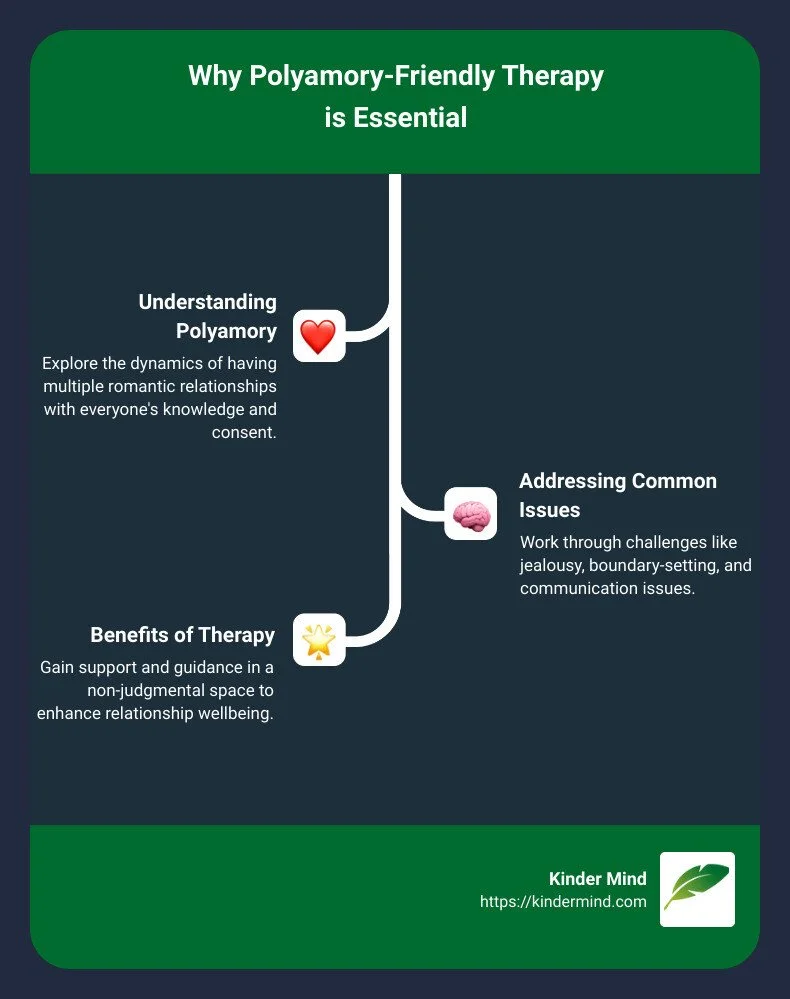
Why Polyamory-Friendly Therapy is Essential
When it comes to counseling polyamory, finding the right support is crucial for maintaining healthy relationships. Here’s a quick answer to what you need to know:
-
Polyamory involves having multiple romantic relationships with everyone’s knowledge and consent.
-
Counseling polyamory can help address communication issues, jealousy, and boundary setting.
-
Seek polyamory-affirmative therapists who understand non-monogamous relationships.
Polyamory, which means “many loves,” is the practice of having multiple romantic relationships with the knowledge and consent of everyone involved. While monogamy is the norm in many cultures, polyamory is a recognized and increasingly common relationship style. Understanding and navigating these non-monogamous relationships can require expert support, particularly when challenges arise. This is where specialized therapy comes in.
Ethical nonmonogamy, including polyamory, operates on informed choices and consent. Unlike polygamy, where individuals are married to multiple spouses, polyamory often involves emotional and romantic connections that do not necessarily include marriage. Understanding and navigating these relationships can be complex, and that’s where polyamory-friendly therapy comes into play.
Polyamory-friendly therapists can help couples and individuals work through issues like jealousy, boundary-setting, and communication challenges. They provide a non-judgmental space to explore these dynamics, ensuring mental health and relationship wellbeing are prioritized.
I’m Dr. Elizabeth Barlow, a Licensed Clinical Social Worker and CEO of Kinder Mind. With years of experience in counseling polyamory, I’ve seen how vital expert support is for managing these unique relationships. Let’s dive deeper into how therapy can help and what you can expect.
Understanding Polyamory and Non-Monogamous Relationships
Polyamory means “many loves.” It’s the practice of having multiple romantic relationships with the consent of everyone involved. It’s a type of ethical non-monogamy, which means that honesty and openness are key.
Types of Polyamorous Relationships
There are different ways people practice polyamory. Here are a few common types:
Solo Polyamory
Solo polyamorous people prioritize their independence. They may have multiple partners, but they don’t want to merge lives or households with anyone. They value their personal freedom and often live alone.
Hierarchical Polyamory
In hierarchical polyamory, relationships are ranked. There might be a “primary” partner who gets more time and resources, and “secondary” or “tertiary” partners who get less. This structure helps some people manage their time and emotional energy.
Polycule
A polycule is a network of interconnected polyamorous relationships. Imagine a web where everyone is connected through romantic or sexual relationships. Each person may have multiple partners, and those partners may have other partners too.
Kitchen Table Polyamory
In kitchen table polyamory, everyone involved is comfortable sitting around the same table. This means all partners and metamours (partners of partners) are friendly and open with each other. It’s like one big extended family.
Parallel Polyamory
Parallel polyamory is the opposite of kitchen table polyamory. Partners know about each other but don’t interact. Each relationship is separate, and there may be little to no contact between metamours.
Ethical Non-Monogamy
Ethical non-monogamy is the umbrella term that includes polyamory. It means having multiple consensual romantic or sexual relationships. The key is that everyone involved knows about and agrees to the arrangement. It’s different from cheating because there’s no secrecy or deception.
Relationship Styles
People approach relationships in different ways. Some prefer monogamy, where they have one partner at a time. Others might move through a series of monogamous relationships, seeking new partners when one ends. And then there are those who find monogamy doesn’t work for them and choose non-monogamous styles like polyamory.
Understanding these different types and styles can help you figure out what works best for you. Each type has its own challenges and benefits, and what matters most is that all parties feel respected and fulfilled.
Next, we’ll explore the importance of polyamory-friendly therapy and how it can support your unique relationship dynamics.
The Importance of Polyamory-Friendly Therapy
Benefits of Polyamory-Friendly Therapy
Polyamory-Friendly Therapy offers a non-judgmental space where you can explore your relationship dynamics without fear of misunderstanding or stigma. This type of therapy can significantly improve your mental health and relationship satisfaction. Here are some key benefits:
Communication
Good communication is crucial in any relationship, but it’s even more important in polyamorous and non-monogamous relationships. With more people involved, there’s more potential for miscommunication. Therapy can help you learn how to express your feelings and needs clearly and effectively.
Boundaries
Establishing boundaries is vital to prevent misunderstandings and hurt feelings. In polyamory, you might need to set boundaries about how many new partners you’re open to, what kinds of activities are okay, and how much time you want to spend with other partners. Therapy can guide you through setting these boundaries.
Jealousy
Even in consensual non-monogamous relationships, jealousy can still arise. It’s a normal human emotion. A therapist can help you understand the root of your jealousy and teach you coping mechanisms. For example, in therapy, you might learn that jealousy often stems from insecurities or past experiences.
Trust
Building trust is essential when multiple partners are involved. Therapy encourages frequent and open conversations about sexual practices, boundaries, and personal comfort levels. This helps create a relationship based on mutual trust and respect.
Attachment Anxiety
Managing attachment anxiety can be challenging. Therapy can help you understand and work through feelings of insecurity or fear of losing your partner. This is crucial for maintaining healthy and fulfilling relationships.
Case Example: Eliza and Morton sought therapy to navigate their differing views on opening their relationship. With the help of a polyamory-affirmative therapist, they set clear boundaries and worked on trust issues. This helped them feel more secure and committed to each other, even as they pursued other connections.
Polyamory-friendly therapy provides the support you need to navigate the complexities of non-monogamous relationships. It’s about fostering a healthy, respectful, and fulfilling relationship dynamic for everyone involved.
Next, we’ll discuss how to find a polyamory-friendly therapist and the resources available to help you.
How to Find a Polyamory-Friendly Therapist
Online Resources for Finding Therapists
Finding a polyamory-friendly therapist can be a challenge, but there are many resources to help. Here are some of the best online directories and tips for identifying a therapist who understands and supports polyamorous relationships.
Online Directories
1. Polyamory-Friendly Professionals Directory:
This directory lists professionals who are polyamory-friendly. While it doesn’t verify credentials, those listed have made an effort to be included, indicating they are likely supportive of polyamory.
2. Kink Aware Professionals Directory (KAP):
Managed by the National Coalition for Sexual Freedom, this directory includes therapists who are knowledgeable about kink and polyamory. It’s a good resource for finding professionals who are open to alternative relationship styles.
3. The Open List:
This list, available on Opening Up, features professionals who are open to working with non-monogamous clients. Like other directories, it’s a starting point for finding supportive therapists.
4. Loving More Member Professionals List:
Loving More offers a list of professionals who support polyamory. While credentials are not verified, these professionals are likely to be more understanding of polyamorous relationships.
5. The Affirmative Couch:
This platform lists mental health professionals who are affirmative of diverse sexual orientations and relationship structures, including polyamory.
Checking Therapist Qualifications
When you find potential therapists, check their qualifications. Look at their licensure status and read their profiles carefully. Therapists who mention terms like “hierarchical polyamory,” “relationship anarchy,” or “solo polyamory” are likely more knowledgeable about polyamorous relationships.
LGBTQ-Affirmative Therapists
If you can’t find a polyamory-specific therapist, consider an LGBTQ-affirmative therapist. These professionals often have experience with non-traditional relationships and may be more open to polyamory, even if they don’t specifically advertise it.
Tele-Health Options
If local options are limited, look for therapists who offer online services. Tele-health can connect you with polyamory-friendly therapists from other parts of your state or even the country. This flexibility can be crucial for finding the right support.
By using these resources and tips, you can find a therapist who understands and supports your polyamorous relationship. This can make a significant difference in navigating the complexities of non-monogamy and building healthier, more fulfilling connections.
Next, we’ll explore what to expect in therapy for polyamory and the common issues that can be addressed.
Counseling Polyamory: What to Expect in Therapy
Common Issues Addressed in Polyamory Counseling
Navigating Non-Monogamy Challenges
Polyamorous relationships can be complex. They often involve multiple partners, each with their own needs and boundaries. Therapy can help you navigate these complexities by providing a safe space to discuss your feelings and challenges.
In therapy, you and your partners will set goals. These might include improving communication, managing jealousy, or establishing boundaries. Your therapist will guide you in creating achievable and meaningful goals.
Individual Therapy
Sometimes, individual therapy is necessary. It can help you understand your own needs, desires, and insecurities. For example, if you’re struggling with jealousy, individual sessions can help you explore the root causes and develop coping strategies.
Couple Therapy
Couple therapy isn’t just for monogamous couples. In polyamory, it can help two partners work through specific issues. For instance, Eliza and Morton, a couple who sought therapy to open their relationship, used sessions to set boundaries and build trust.
Metamour Therapy
Metamours are your partner’s partners. Therapy can include sessions with metamours to address any tension or misunderstandings. This can help in building a more harmonious polycule.
Boundaries
Establishing boundaries is crucial. Therapy can help you and your partners define what you’re comfortable with. This might include how much time you spend with other partners or what activities are okay. Clear boundaries prevent misunderstandings and hurt feelings.
Jealousy
Jealousy is normal, even in polyamorous relationships. Therapy helps you understand and manage these feelings. For example, a therapist might help you explore why you feel jealous and teach you ways to cope.
Trust
Trust is the foundation of any relationship. In polyamory, trust must extend to multiple partners. Therapy can help build and maintain this trust. Frequent and open conversations about preferences, desires, and deal-breakers are essential.
Communication
Good communication is key. Therapy can teach you how to express your feelings and needs clearly. It also helps you listen to your partners without judgment. Effective communication can prevent many issues before they become serious.
Attachment Anxiety
Attachment anxiety can be challenging in polyamorous relationships. Therapy can help you manage these feelings. It can teach you how to feel secure and balanced, even when your partner is with someone else.
In summary, therapy for polyamory addresses a range of issues. From setting boundaries to managing jealousy, a therapist can help you navigate the complexities of non-monogamous relationships.
Next, we’ll answer some frequently asked questions about counseling polyamory.
Frequently Asked Questions about Counseling Polyamory
What is a polyamory therapist?
A polyamory therapist is a mental health professional who understands and supports non-monogamous relationships. They are trained to help individuals and couples navigate the unique challenges of polyamory. Unlike traditional therapists, polyamory therapists are knowledgeable about different relationship styles, such as hierarchical polyamory, solo polyamory, and relationship anarchy.
They provide a non-judgmental space where you can discuss your feelings, set boundaries, and improve communication with your partners. This type of therapy is essential for anyone in a polyamorous relationship who wants to build healthier and more fulfilling connections.
Is polyamory psychologically healthy?
Yes, polyamory can be psychologically healthy. Research and expert opinions suggest that
