
Bridging the Gap: Managing Expectations in LDR Polyamorous Relationships
Dr. Elizabeth Barlow, LCSW-S · 1/11/2026

Why Long Distance Polyamory Requires Intentional Connection
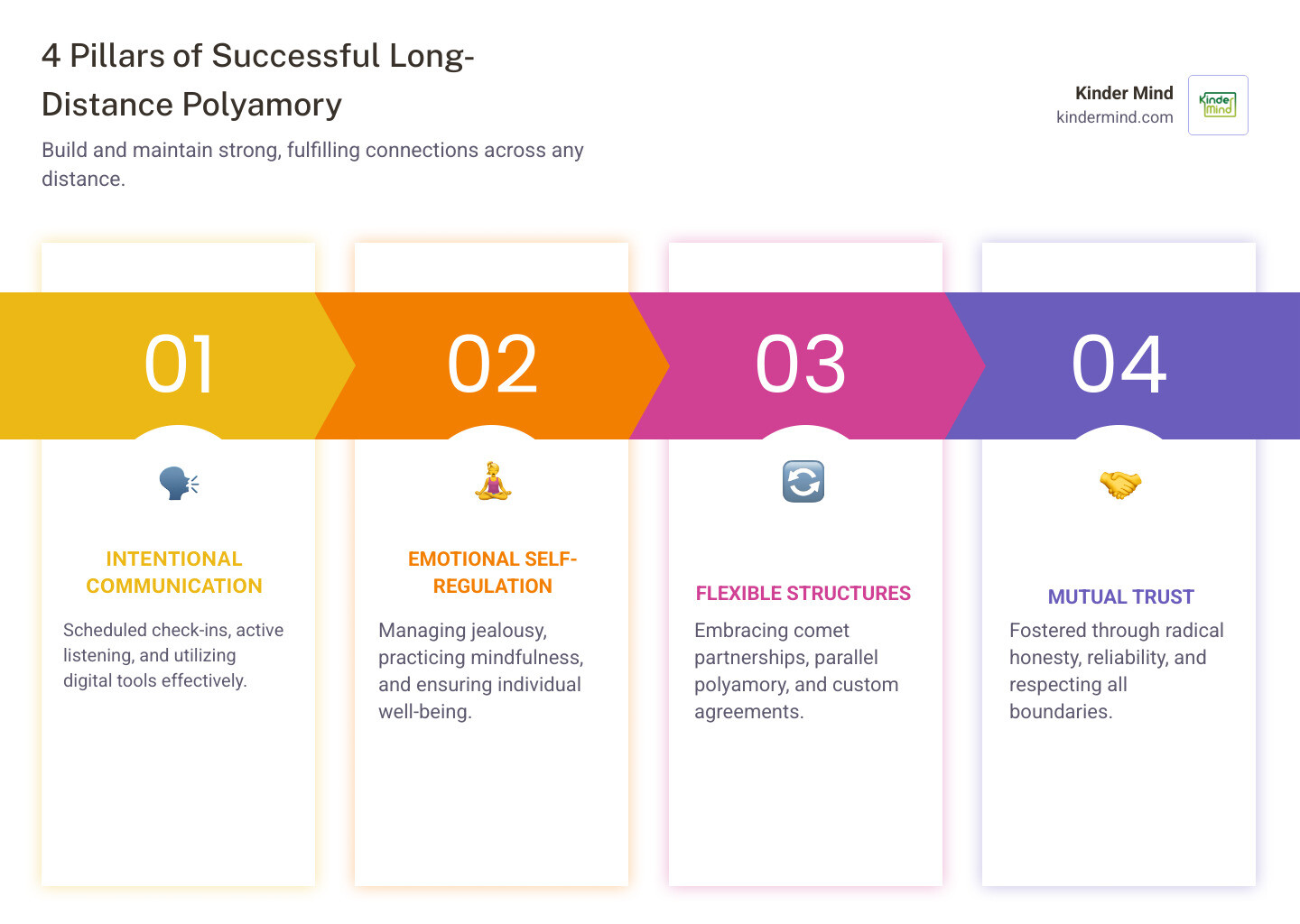
Long distance polyamory is more than just managing miles—it’s about creating meaningful connections across physical separation while honoring multiple relationships. Here’s what you need to know:
Key Success Factors for Long Distance Polyamory:
- Communication schedules that work across time zones and multiple partners
- Clear boundaries about visits, communication frequency, and emotional expectations
- Individual support systems to maintain personal well-being and reduce loneliness
- Flexible relationship structures like comet partners or parallel polyamory
- Technology tools for video dates, shared activities, and daily connection
The good news? Research shows that long-distance relationships can be just as satisfying as geographically close ones. According to the Journal of Communication, people in LDRs report equal or higher satisfaction levels, with better long-term success rates after the six-month mark. They also feel more dedicated and less trapped in their relationships.
More than 34% of people have experienced a long-distance relationship, and this number is even higher in polyamorous communities. Why? Polyamory offers unique flexibility—you can maintain a distant connection while also building local relationships, something traditional monogamy doesn’t easily accommodate.
“I come from a very traditional Christian background and got married when I was just 19,” shared one person navigating long-distance polyamory. “Fast forward, my relationship with my wife ended when we both deconstructed our views on religion and relationships. I had always felt that polyamory was the path I wanted to take in life.” Their story reflects how many people find themselves building relationships across distance while exploring ethical non-monogamy.
The challenges are real: time zone differences, lack of physical intimacy, managing jealousy across multiple partners, and the financial burden of travel. But so are the rewards: deeper emotional bonds, increased autonomy, prolonged honeymoon phases, and opportunities for personal growth.
Success in long-distance polyamory isn’t about perfection. It’s about intentional effort, honest communication, and self-awareness. Whether you’re maintaining a comet relationship you see once a year or coordinating weekly video calls with a partner two states away, the same principles apply.
Understanding the Landscape of Long Distance Polyamory
When you’re navigating long distance polyamory, you’re stepping into territory that’s both uniquely challenging and surprisingly rewarding. It’s different from both traditional long-distance relationships and local polyamorous connections—and understanding these differences can help you build something meaningful across the miles.
The challenges are real and immediate. Physical intimacy becomes something you can’t take for granted. While local polyamorous relationships naturally weave touch and proximity into daily life, long-distance partners need to find other ways to nurture closeness. This often means leaning heavily on verbal and digital communication, which can feel limiting at first but often leads to deeper emotional connections than you might expect.
The logistics can feel overwhelming at times. You’re coordinating schedules across time zones, planning visits that might require flights from California to New York, and managing the financial reality of maintaining a relationship across states. The average long-distance couple lives about 125 miles apart, but in polyamory, those distances can stretch much further. Between travel costs, time off work, and the mental energy of constant planning, the practical demands add up quickly. This is where thoughtful financial planning and realistic expectations become essential.
But here’s what’s beautiful about this arrangement: the rewards are just as profound as the challenges. Many people in long distance polyamory report feeling more dedicated to their relationships and less trapped than they expected. There’s a freedom in the space between visits—a chance to maintain your individual identity while staying deeply connected. Some studies suggest that long-distance relationships may involve stronger bonds than geographically close ones, precisely because they require such intentional effort.
The distance naturally creates more thoughtful, deliberate communication. You learn to articulate your needs and feelings more clearly because you can’t rely on physical presence to smooth over misunderstandings. This increased emotional literacy becomes a gift that extends into all your relationships. The autonomy that comes with distance lets you cultivate a rich personal life—pursuing individual interests, maintaining local friendships, and growing as a person without constant negotiation of shared space.
Exploring ethical non-monogamy in a long-distance context also means you’re already stepping outside the traditional relationship escalator—that societal expectation that relationships must progress from dating to cohabitation to marriage. When geography keeps you apart, you’re free to define success on your own terms. What matters isn’t how often you see each other or whether you’re working toward living together. What matters is the quality of connection, the mutual growth, and the joy you bring to each other’s lives.
Different Models for LDR Polyamory
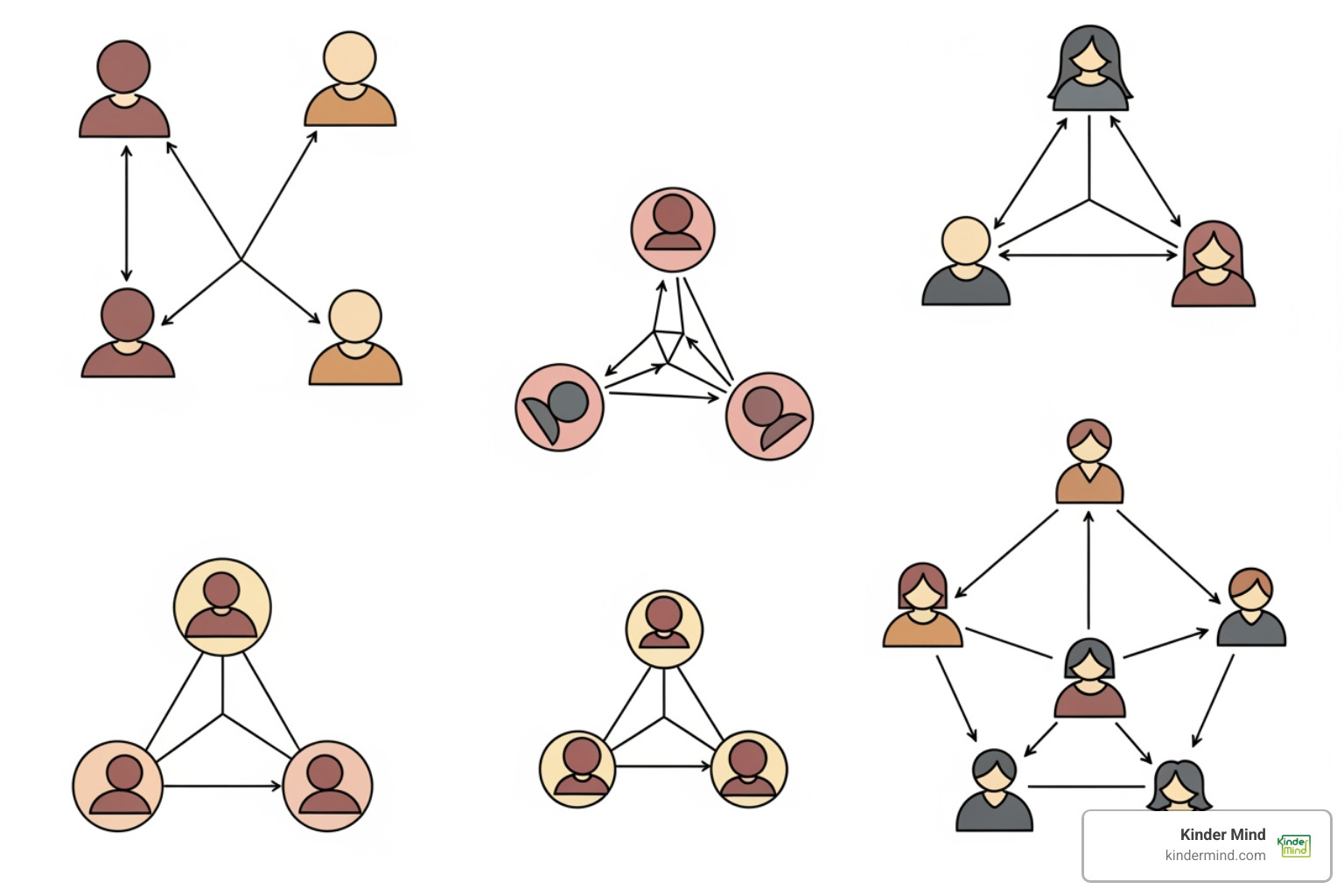
Long distance polyamory isn’t one-size-fits-all. The beauty of polyamory is that you get to design relationships that actually work for your life, and distance often makes this creativity even more necessary.
Comet partners are one of the most common long-distance models. These are relationships where you see each other infrequently—maybe a few times a year, or even annually—but the connection remains deeply meaningful between visits. You might exchange long emails or have occasional calls, living full independent lives while still holding space for each other. Despite the infrequency, these relationships can sustain for years because both people value the unique connection they share when they do come together.
Some people maintain nesting partners with distant connections. In this structure, you might share a home and daily life with one partner while also nurturing one or more long-distance polyamorous relationships. This requires careful attention to boundaries and communication with everyone involved. Your nesting partner needs to feel secure and valued, while your distant partners need to know they matter too—even if they can’t be part of your everyday routine.
Parallel polyamory works particularly well across distances. In this model, you and your partners know about each other but don’t necessarily interact directly. This reduces the complexity of managing multiple in-person relationships across different cities or states. Everyone maintains their separate connection with you without the added layer of building metamour relationships.
On the other hand, garden party polyamory can adapt to distance through virtual meetups. In this more interconnected approach, metamours might join video calls together occasionally, creating friendly low-pressure interactions even when they can’t meet face-to-face. It’s like hosting a casual gathering, just through screens instead of around a table.
Some people choose entirely separate lives even with local partners, which naturally extends to long-distance dynamics. You maintain distinct households and lifestyles whether your partners are across town or across the country. This model emphasizes independence and can make distance feel less like an obstacle and more like a natural part of how you structure relationships.
The key is choosing structures that honor your emotional capacity, your partners’ needs, and the geographical realities you’re working with. There’s no “right” way to do long distance polyamory—only the way that works for you.
Comparing Relationship Dynamics
| Feature | LDR Polyamory | Local Polyamory | Monogamous LDRs |
|---|---|---|---|
| Physical Touch | Limited to visits; requires creativity with technology and planning | Regular access to physical intimacy with multiple partners | Limited to visits; single partner focus during reunions |
| Time Zone Management | Coordinating across multiple partners and time zones; scheduling becomes complex | Easier coordination within similar time zones | Simpler with only one partner’s schedule to consider |
| Autonomy | High independence between visits; space to maintain individual identity | Varies by relationship agreements; may involve more daily negotiation | High autonomy but may feel isolated without local support |
| Communication Depth | Often deeper due to reliance on intentional verbal connection | Mix of verbal and non-verbal communication; physical presence helps | Deep verbal connection but limited to single relationship |
| New Relationship Energy (NRE) | Can last longer due to infrequent visits; excitement remains high between reunions | More typical progression as daily reality sets in | Extended NRE phase common; absence maintains novelty |
| Financial Impact | Significant travel costs multiplied across multiple partners and visits | Lower costs; mainly local activities and occasional trips | Moderate travel costs focused on single partner |
| Jealousy Management | Distance can reduce comparison anxiety; out of sight can ease insecurity | More immediate triggers; seeing partners with others requires processing | Focused on partner’s daily life and potential local connections |
| Flexibility | High adaptability; relationships can evolve without pressure to escalate | Room for various structures but may face pressure to “progress” | Often pressure toward eventual cohabitation or “closing the gap” |
Understanding these dynamics helps you see where long distance polyamory offers unique advantages and where it demands extra attention. The distance isn’t just an obstacle to overcome—it’s a feature that shapes your relationships in distinctive ways, creating space for both challenges and unexpected growth.