
Beyond the Bottle: How Therapy Transforms Addiction Recovery
Dr. Elizabeth Barlow, LCSW-S · 1/29/2026

Why Addiction Recovery Therapy Changes Lives
Addiction recovery therapy is a proven way to help people stop using drugs or alcohol and rebuild their lives. It’s not a cure, but a set of tools that help manage a chronic condition—much like treating heart disease or diabetes.
What Addiction Recovery Therapy Includes:
- Behavioral therapies like Cognitive-Behavioral Therapy (CBT) and Motivational Interviewing that help change thought patterns and behaviors
- Individual and group counseling to address triggers, build coping skills, and prevent relapse
- Medication-assisted treatment (when appropriate) combined with therapy for substances like opioids or alcohol
- Family therapy to heal relationships and build support systems
- Holistic approaches like mindfulness, art therapy, or yoga that complement traditional treatment
Research shows that addiction changes the brain’s reward system, making it incredibly difficult to stop using substances without support. That’s why therapy is crucial. It helps counteract these brain changes and teaches practical skills for handling stress, cravings, and high-risk situations.
The good news? Treatment works. People who stay in therapy for at least 90 days and receive the right combination of support can significantly reduce or stop substance use. Relapse rates for addiction are similar to other chronic illnesses—around 40-60%—which means relapse doesn’t equal failure. It simply signals a need to adjust the treatment plan.
Every person’s path to recovery looks different. Some need intensive inpatient care. Others do well with outpatient therapy. What matters most is finding a therapeutic approach that addresses your unique needs—whether that’s trauma, mental health concerns, family issues, or practical barriers like childcare or transportation.
The therapeutic relationship itself is one of the strongest predictors of success. When you trust your therapist and feel heard, recovery becomes more achievable. That’s why finding the right fit matters just as much as the type of therapy you choose.
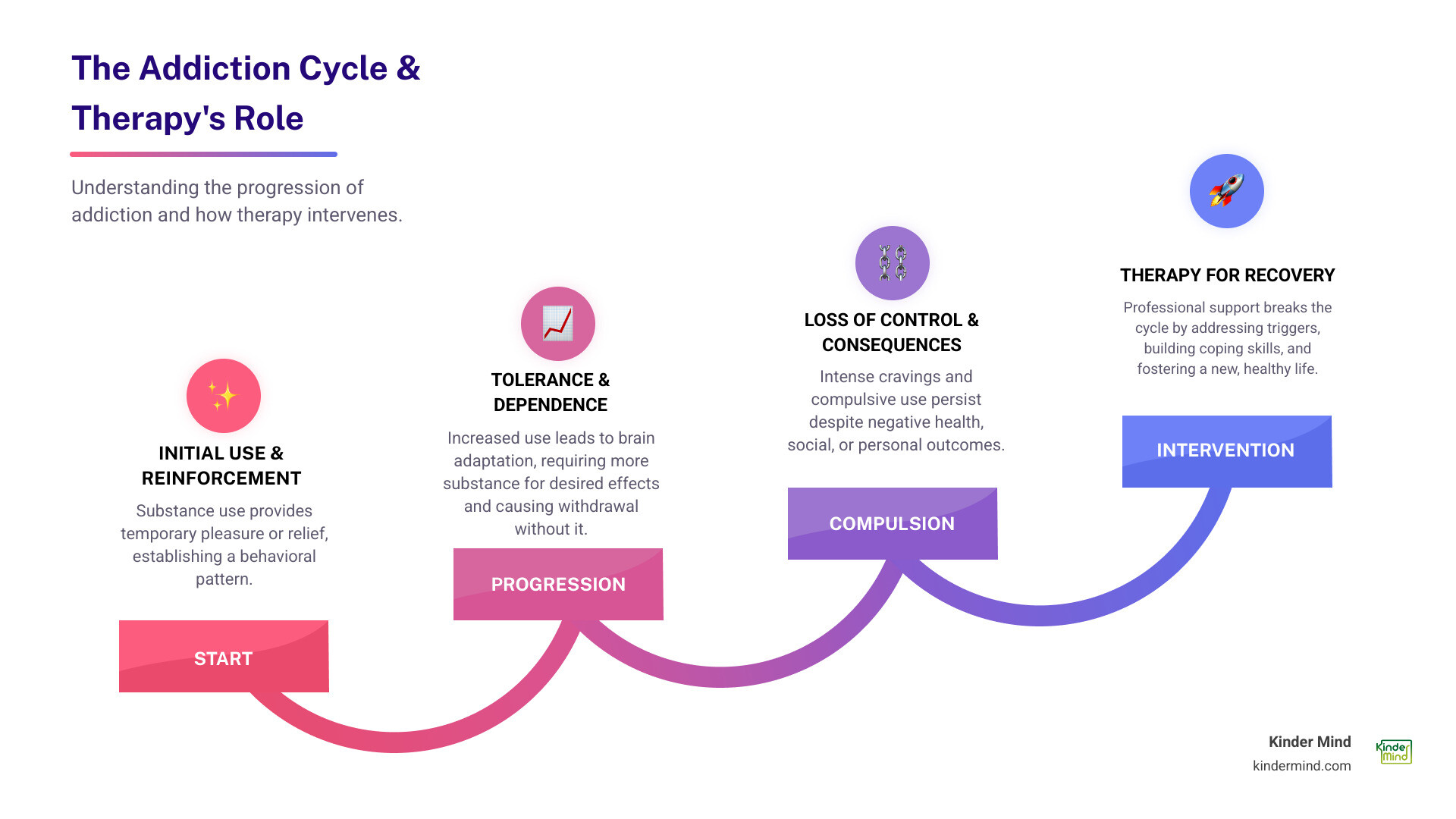
Addiction is a complex but treatable brain disorder. It’s characterized by intense, sometimes uncontrollable cravings and compulsive drug-seeking behavior, persisting even when facing devastating consequences. It’s not a moral failing or a lack of willpower; rather, it’s often our biochemistry gone awry, making it incredibly difficult to overcome without professional support. The ultimate goal of addiction recovery is to help individuals stop compulsive substance seeking and use, and then resume productive, fulfilling lives. Therapy is absolutely essential to achieve this, helping individuals steer the challenges of recovery, address underlying issues, and build a foundation for a healthier future.
The Therapist’s Toolkit: Evidence-Based Approaches in Addiction Treatment

When starting on the journey of addiction recovery, you’ll encounter a diverse array of therapeutic approaches, many of which are backed by extensive research. Behavioral therapies are among the most common and effective tools in a therapist’s toolkit. They are designed to help individuals modify their attitudes and behaviors related to substance use, teaching them how to handle stressful situations and various triggers that might otherwise lead to a relapse. These therapies can also improve the effectiveness of medications and help people stay engaged in treatment longer.
Therapy for substance use is one of the most widely used forms of treatment, helping individuals significantly reduce or stop substance use by fostering behavioral changes, cementing new skills, and preventing relapse. This can involve individual counseling, where a person works one-on-one with a therapist, or group counseling, which offers a supportive peer environment.
How Behavioral Therapies Shape Addiction Recovery Therapy
Behavioral therapies are designed to help individuals learn new ways of thinking and behaving that support sobriety. Let’s look at some of the most prominent ones:
-
Cognitive-Behavioral Therapy (CBT)
CBT is a goal-oriented treatment that zeroes in on the psychological triggers behind compulsive behaviors. It helps patients become keenly aware of how their thoughts and actions influence their feelings. Through mindfulness techniques, CBT teaches individuals to identify and challenge negative, incorrect, or unhelpful thoughts and beliefs that drive unhealthy behaviors. For example, if someone thinks, “One drink won’t hurt me,” or “It’s been a bad day, I deserve to use,” CBT helps them recognize these cognitive distortions and develop healthier responses. This therapy is widely used for conditions like anxiety, eating disorders, obsessive thoughts, and PTSD symptoms, making it incredibly versatile in addiction recovery. A 2019 meta-analysis showed that CBT is more effective than no or minimal treatment, proving its significant role in recovery. -
Motivational Interviewing (MI)
Motivational Interviewing is a therapeutic technique designed to draw out and strengthen a person’s motivation for change. Instead of confronting a patient, MI uses a conversational style that gently explores their beliefs, motivations, and concerns about changing their substance use. It helps individuals find their inner drive to accomplish goals by listening to their concerns and finding encouraging ways to commit to change. This approach is especially helpful for those who might feel ambivalent about seeking treatment or changing their behaviors. MI’s effectiveness lies in its ability to help people identify and increase their internal motivation, leading to quicker achievement of desired goals. -
Dialectical Behavior Therapy (DBT)
DBT is a specialized form of CBT that focuses on managing intense emotions and improving relationships. It helps individuals boost self-esteem and provides strong support in group settings through validation. DBT combines individual therapy with group skills training, teaching essential skills in mindfulness, distress tolerance, emotion regulation, and interpersonal effectiveness. Originally developed for Borderline Personality Disorder, DBT has shown great promise in addiction recovery by helping individuals develop healthier coping mechanisms for overwhelming feelings that might otherwise lead to substance use.
Here’s a quick comparison of CBT and Motivational Interviewing:
| Feature | Cognitive-Behavioral Therapy (CBT) | Motivational Interviewing (MI) |
|---|---|---|
| Focus | Identifying and changing problematic thoughts and behaviors. | Exploring and resolving ambivalence to strengthen motivation for change. |
| Techniques | Functional analysis (triggers), cognitive restructuring, skills training (coping, problem-solving). | Open-ended questions, affirmations, reflections, summaries (OARS). |
| Goal | Teach concrete skills to manage cravings, avoid triggers, and prevent relapse. | Help individuals articulate their own reasons for change and commit to action. |
| Style | Structured, directive, educational. | Collaborative, evocative, patient-centered, non-confrontational. |
| Application | Effective for various SUDs, anxiety, depression, PTSD. | Often used early in treatment to engage reluctant clients, can be combined with CBT. |
For a deeper dive into the science behind CBT for substance use disorders, you can explore this detailed review: Cognitive-Behavioral Therapy for Substance Use Disorders.
The Role of Peer Support and Facilitation Therapy
Addiction recovery is rarely a solo endeavor. Peer support plays a monumental role in helping individuals feel understood and connected. Mutual help groups, such as the well-known 12-step programs like Alcoholics Anonymous (AA) and Narcotics Anonymous (NA), are peer-led and offer emotional support, community, and coping strategies. These groups provide a safe space for individuals to share their experiences, build trust, and learn from others who are navigating similar challenges. The sense of camaraderie and de-stigmatization found in these groups can be incredibly validating and empowering.
Facilitation therapy is specifically designed to help individuals become familiar with and actively engage in these 12-step programs. It bridges the gap between formal treatment settings and community-based support, ensuring that clients can tap into a powerful network of ongoing support. By integrating peer support into formal treatment, individuals gain a lifelong resource for maintaining sobriety and building a fulfilling life in recovery. To explore more resources and support networks, including peer support options, you can visit Find support resources.
Exploring Holistic and Complementary Therapies
While evidence-based behavioral therapies form the cornerstone of addiction recovery, a truly comprehensive approach often involves holistic and complementary therapies. These approaches focus on treating the “whole person” – mind, body, and spirit – rather than just the addiction in isolation.
Holistic treatments can be incredibly beneficial in managing the side effects of traditional medicine and decreasing negative feelings like anxiety and depression. Here are a few examples:
- Mindfulness and Meditation: Practices like meditation promote a calm mind, helping those who struggle with anxiety and stress. Mindfulness helps individuals stay present, observe their thoughts and feelings without judgment, and develop a greater sense of self-awareness, which is crucial for identifying triggers and managing cravings.
- Art and Music Therapy: These creative therapies offer hands-on experiences for emotional expression. Art therapy, whether through drawing, painting, or sculpting, and music therapy, through listening, playing instruments, or singing, help patients release and work through emotions and trauma in healthy ways. They provide a non-verbal outlet for processing difficult experiences that might contribute to substance use.
- Yoga: Combining physical postures, breathing exercises, and meditation, yoga can alleviate inner and outer tension, promote physical wellness, and reduce stress. It boosts endorphins and lifts moods, serving as a healthy coping mechanism.
- Other Complementary Approaches: Biofeedback helps individuals gain self-control over physiological responses to stress. Hypnotherapy may assist in managing responses to triggers. Equine therapy, involving interaction with horses, can foster a sense of responsibility and improve emotional understanding. These complementary methods, when integrated thoughtfully, can significantly improve the overall therapy experience and support sustained recovery.
A Holistic Path to Healing: Integrating Mind, Body, and Support Systems
Addiction is rarely an isolated issue; it impacts every aspect of a person’s life and often co-occurs with other challenges. That’s why a holistic approach to addiction recovery is so vital. The best treatment programs address the “whole person,” considering not just the substance use itself, but also medical, mental, social, occupational, family, and legal needs. This integrated care model acknowledges that true healing involves addressing all these interconnected areas.
For instance, it’s common for individuals with substance use disorders to also struggle with other mental health conditions. As many as 6 in 10 people with an illicit substance use disorder also suffer from another mental illness, such as anxiety, depression, or PTSD. When drug addiction co-occurs with these mental disorders, one condition can make the other harder to treat. In such cases, integrated treatment that addresses both conditions simultaneously is generally the most effective approach. This ensures that mental health issues are not overlooked, as they can often be underlying factors or exacerbating conditions for substance use.
Physical health is another critical component. Addiction can take a severe toll on the body, and medical support is often necessary to manage physical ailments and ensure overall well-being during recovery. Similarly, social well-being, including healthy relationships, employment, and a supportive community, are fundamental to long-term recovery.
The Role of Supportive Interventions in Recovery
Supportive interventions, particularly medication-assisted treatment (MAT), play a crucial role in complementing therapy and easing the path to recovery. While therapy helps individuals develop coping skills and address psychological factors, medications can directly address the physiological aspects of addiction and withdrawal.
Medications can help manage severe withdrawal symptoms, making the initial, often daunting, phase of stopping substance use much more manageable and safer. For example, for addictions to opioids, alcohol, and nicotine, specific medications are available that can reduce cravings and withdrawal discomfort. Research strongly suggests that for opioid addiction, medication should often be the first line of treatment, typically combined with some form of behavioral therapy or counseling. These medications are not simply “replacing one addiction with another”; they are prescribed under monitored conditions to stabilize the individual, reduce cravings, and prevent the “rush” and “crash” associated with abused substances, allowing the person to engage more fully in therapy and address other life problems.
By combining supportive interventions like MAT with behavioral therapies, treatment outcomes can be significantly improved. This integrated approach tackles both the physical and psychological aspects of addiction, leading to a more comprehensive and sustainable recovery.
How Family Therapy Strengthens the Recovery Process
Addiction is often called a “family disease” because its effects ripple through the entire family system. Family therapy recognizes this profound impact and places the identified patient’s problems within the broader family context. It’s a powerful tool that can significantly strengthen the recovery process by involving loved ones directly in treatment.
Family therapy helps improve communication within the family, allowing for open and honest dialogue about the challenges of addiction. It works to heal relationships that may have been strained or broken by substance use, fostering understanding and empathy among family members. Through therapy, families can learn to identify and change unhealthy relational patterns, such as co-dependency or enabling behaviors, that might inadvertently perpetuate the addiction cycle.
By building a stronger, more supportive family system, individuals in recovery gain a crucial network of encouragement and accountability. The involvement of a family member or significant other can strengthen and extend the benefits of treatment, providing consistent support outside of therapy sessions. For adolescents, in particular, family therapy has been found to be the most consistently effective intervention for substance use disorders compared to other approaches, highlighting its importance across different age groups.
Navigating the Journey: The Realities of Addiction Recovery and Relapse
Understanding addiction means recognizing it as a chronic illness, much like diabetes, asthma, or heart disease. This crucial perspective helps us grasp the nuances of recovery. Just as someone with diabetes manages their blood sugar levels daily, a person in addiction recovery manages their condition through ongoing effort and support.
This understanding also clarifies the difference between treatment and a “cure.” Addiction treatment is not a cure that eradicates the condition entirely; rather

