
Beyond the Border: A Clear Definition of Borderline Personality Disorder
Dr. Elizabeth Barlow, LCSW-S · 1/20/2026

Understanding a Complex Mental Health Condition
Define borderline disorder as a mental illness characterized by pervasive instability in emotions, relationships, self-image, and behavior. Borderline Personality Disorder (BPD) is a serious mental health condition that affects approximately 1% to 2.7% of adults in the United States—over 5 million people.
Quick Definition:
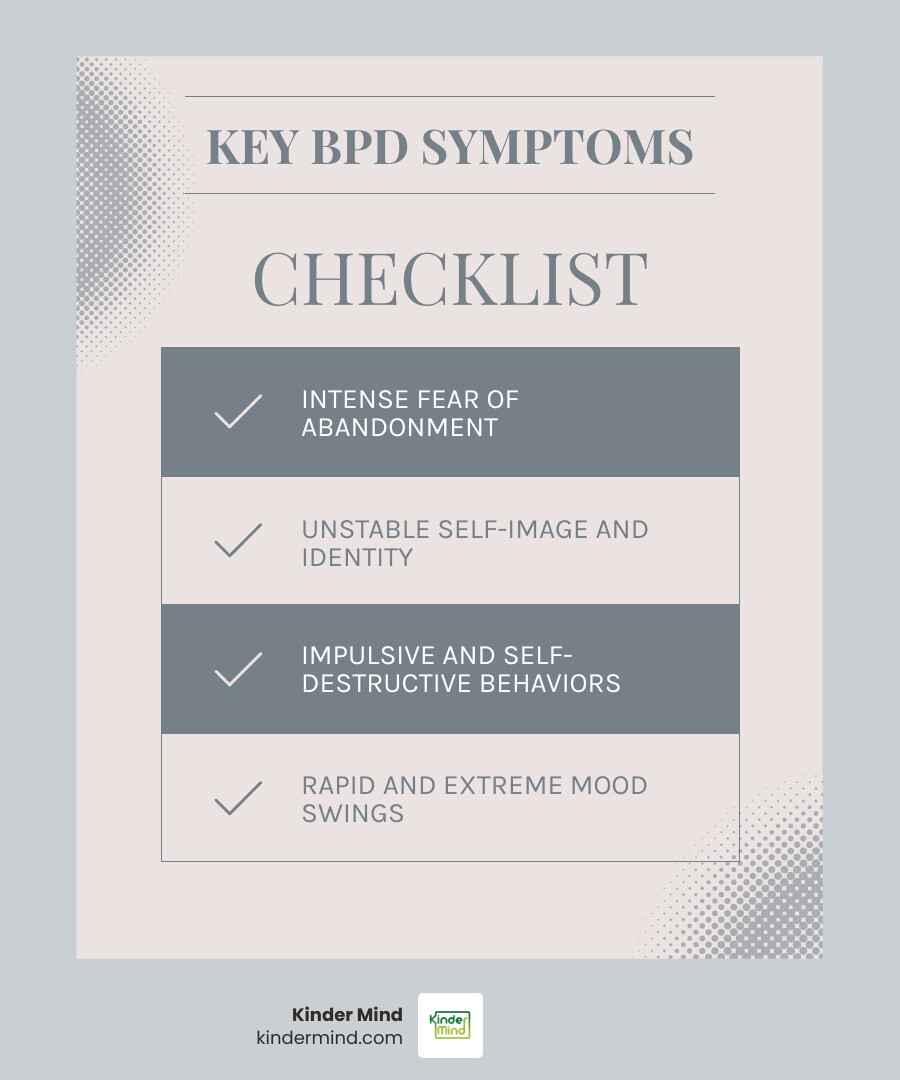
Borderline Personality Disorder (BPD) is a personality disorder marked by:
- Chronic instability in mood and emotions
- Intense fear of abandonment
- Unstable and turbulent relationships
- Poor or rapidly shifting self-image
- Impulsive and self-destructive behaviors
- Difficulty regulating emotions
According to the National Institute of Mental Health, BPD severely impacts a person’s ability to regulate their emotions, which increases impulsivity, affects how they feel about themselves, and negatively impacts their relationships with others.
If you’ve been searching for clarity about BPD, you’re not alone. Many people struggle to understand this complex condition—whether they’re experiencing symptoms themselves or supporting someone who is. The term “borderline” itself is often confusing and historically rooted in outdated psychiatric concepts about patients on the “border” between neurosis and psychosis.
The reality is simpler: BPD is a treatable mental health condition that causes intense emotional pain and instability. It’s not a character flaw or something to be ashamed of.
The good news is that effective treatments exist. Research shows that up to half of individuals with BPD may show significant improvement over ten years with appropriate treatment. Many people with BPD go on to lead fulfilling, stable lives.
This guide will help you understand what BPD really is, recognize its symptoms, learn about causes and risk factors, and find effective treatment options. Whether you’re seeking information for yourself or a loved one, understanding BPD is the first step toward finding help and hope.
What is Borderline Personality Disorder (BPD)?
Borderline Personality Disorder (BPD) is a mental illness defined by a pervasive pattern of instability in a person’s mood, self-image, and behavior. At its core, BPD involves significant emotional dysregulation, meaning an individual struggles to manage and respond to their emotions in a healthy way. This can lead to intense emotional experiences, difficulties in relationships, and a fluctuating sense of self.
Individuals with BPD often experience emotions more and for longer periods than others, and they may find it challenging to return to an emotional baseline once upset. This emotional intensity can profoundly impact their interpersonal relationships, which frequently swing between extremes of idealization and devaluation. Their self-image can also be unstable, leading to shifts in goals, values, and even identity. Behaviors often become impulsive and risky as a way to cope with overwhelming emotions or a chronic feeling of emptiness.
For more information on BPD, you can visit the Substance Abuse and Mental Health Services Administration website.
How BPD Affects Daily Life
Living with BPD can feel like being on an “emotional rollercoaster.” The intense mood swings, relationship turmoil, and impulsive actions can make navigating daily life incredibly challenging. An individual with BPD might struggle to maintain stable employment, complete their education, or manage finances. They may experience repeated job changes or losses and leave educational pursuits unfinished.
Relationship turmoil is common, with connections often characterized by a desperate fear of abandonment. This can lead to conflict-filled interactions, marital stress, or even estrangement from loved ones. Impulsive behaviors, such as reckless driving, excessive spending, binge eating, or substance misuse, can lead to legal issues, unplanned pregnancies, sexually transmitted infections, and physical fights.
Identity confusion is a significant aspect, where a person’s sense of self, goals, and values can shift rapidly, making it hard to feel grounded or consistent. Chronic feelings of emptiness can drive individuals to seek external stimulation, sometimes through risky or self-destructive behaviors, to fill the void. Intense anger, often inappropriate to the situation, can manifest as frequent temper outbursts, sarcasm, or bitterness. Under extreme stress, some individuals may also experience stress-related paranoia or dissociative symptoms, feeling disconnected from themselves or reality.
BPD vs. Bipolar Disorder
BPD is often mistaken for or co-occurs with other mental health conditions, particularly bipolar disorder. Both conditions involve mood swings, but there are key differences:
| Feature | Borderline Personality Disorder (BPD) | Bipolar Disorder (BD) |
|---|---|---|
| Mood Swing Duration | Mood swings are typically rapid, lasting hours to a few days. They are often reactive to external stressors or perceived interpersonal slights. | Mood episodes are more sustained, lasting days, weeks, or months. They are less reactive to immediate external events. |
| Triggers for Mood Shifts | Highly sensitive to perceived abandonment, rejection, or interpersonal conflict. Moods shift rapidly in response to these triggers. | Mood shifts are often internal and biochemical, though stress can exacerbate them. |
| Core Symptoms | Characterized by unstable self-image, chronic emptiness, intense fear of abandonment, unstable relationships, and impulsivity. Identity disturbance is central. | Defined by distinct episodes of mania/hypomania (lifted energy, decreased need for sleep, grandiosity) and depression (low mood, loss of interest, fatigue). Energy shifts are central. |
| Impulsivity | Impulsivity is often a coping mechanism for intense emotional pain or emptiness, leading to behaviors like self-harm, substance abuse, or risky sexual activity. | Impulsivity occurs primarily during manic or hypomanic episodes and is a direct symptom of the lifted mood state. |
| Treatment Approaches | Primarily treated with specialized psychotherapies like Dialectical Behavior Therapy (DBT), which focuses on emotional regulation, distress tolerance, and interpersonal effectiveness. | Primarily treated with mood-stabilizing medications (e.g., lithium, antipsychotics) and psychotherapy (e.g., CBT) to manage symptoms and prevent episodes. |
| Self-Harm/Suicidality | Self-harm is often a means to regulate intense emotions or punish oneself. Suicidal ideation and attempts are frequent. | Suicidal ideation is common during depressive episodes; self-harm may occur but is typically not a core feature for emotional regulation in the same way as in BPD. |
The 9 Core Symptoms and Signs of BPD
The diagnosis of BPD, as outlined in the Diagnostic and Statistical Manual of Mental Disorders (DSM-5), requires a persistent pattern of at least five out of nine specific symptoms.

At the heart of BPD is emotional dysregulation, which manifests as a heightened sensitivity to emotional stimuli, intense emotional reactions, and a slow return to baseline after an emotional event. This dysregulation is often coupled with interpersonal hypersensitivity, meaning individuals with BPD are acutely aware and reactive to the behaviors and perceived intentions of others. Behavioral impulsivity is another hallmark, driven by the need to alleviate intense emotional pain or fill a chronic sense of emptiness. Cognitive symptoms can include stress-related paranoia and dissociative experiences.
The nine diagnostic criteria for BPD are:
- Frantic efforts to avoid real or imagined abandonment.
- A pattern of unstable and intense interpersonal relationships characterized by alternating between extremes of idealization and devaluation.
- Identity disturbance: markedly and persistently unstable self-image or sense of self.
- Impulsivity in at least two areas that are potentially self-damaging (e.g., spending, sex, substance abuse, reckless driving, binge eating).
- Recurrent suicidal behavior, gestures, or threats, or self-mutilating behavior.
- Affective instability due to a marked reactivity of mood (e.g., intense episodic dysphoria, irritability, or anxiety usually lasting a few hours and only rarely more than a few days).
- Chronic feelings of emptiness.
- Inappropriate, intense anger or difficulty controlling anger (e.g., frequent displays of temper, constant anger, recurrent physical fights).
- Transient, stress-related paranoid ideation or severe dissociative symptoms.
Fear of Abandonment and Unstable Relationships
A defining characteristic of BPD is an intense fear of abandonment. This fear, real or imagined, can drive frantic efforts to avoid being left alone, such as rapidly initiating intimate relationships or pushing people away to test their commitment.
Relationships are often marked by a cycle of idealization and devaluation, sometimes referred to as “splitting.” A person with BPD might quickly change their view of someone from seeing them as perfect and caring to believing they are cruel and do not care enough. This leads to intense but unstable relationships where emotions swing between love and hate, making stable connections difficult.
Unstable Self-Image and Impulsivity
Individuals with BPD frequently struggle with a distorted and unstable sense of self. Their identity, goals, values, and even their perception of themselves can shift rapidly. One moment, they might feel completely confident, and the next, they might view themselves as entirely bad or even nonexistent. This instability can manifest as suddenly changing friend groups, hobbies, or opinions, making it hard for others and for themselves to know who they truly are.
Chronic feelings of emptiness are also prevalent, often leading to impulsive behaviors as an attempt to fill the void or escape overwhelming emotions. These risky behaviors can be self-damaging and include gambling, dangerous driving, unsafe sex, spending sprees, binge eating, or drug misuse. These actions can lead to severe consequences, including legal and financial problems, and even sabotage success by suddenly quitting a good job or ending a positive relationship. A significant concern is self-harm: between 50% and 80% of individuals with BPD engage in self-harm (e.g., cutting or burning) to cope with intense emotional pain or to feel something when numb. More statistics on self-harm in BPD are available from the National Institute of Mental Health.
Emotional Volatility, Anger, and Dissociation
Intense and rapid mood swings are a hallmark of BPD. These emotional shifts can last from a few hours to a few days and are often triggered by external events, particularly those involving interpersonal interactions or perceived rejection. Alongside this volatility, individuals with BPD often experience inappropriate and intense anger. This anger can manifest as frequent temper outbursts, sarcasm, bitterness, or even physical fights, making it hard to maintain stable relationships.
Under stress, some individuals with BPD may experience transient, stress-related paranoia, where they feel suspicious or distrustful of others without clear reason. Dissociative symptoms are also common, where a person might feel disconnected from themselves, their body, or their surroundings, as if observing themselves from outside. These experiences can range from mild feelings of being “spaced out” to more severe episodes where they lose touch with reality. Research indicates that about 20% to 50% of patients with BPD report psychotic-like symptoms, such as hallucinations or delusions, particularly during times of extreme stress.
Solving the Causes, Risks, and Complications
The precise causes of BPD are not fully understood, but it is widely accepted that a combination of genetic, neurobiological, and environmental factors contribute to its development. This is often described through the biosocial theory, which suggests that individuals with a biological vulnerability to emotional dysregulation develop BPD when raised in an invalidating environment.
Is BPD Genetic? A Look at the Causes and Risk Factors
Yes, BPD has a genetic component. It is significantly more common in people with a family history of the disorder. The risk is higher if a first-degree relative, such as a parent or sibling, has BPD. The heritability of BPD is estimated to range from 37% to 69%, suggesting a strong genetic predisposition. Twin studies have also supported this genetic link.
Beyond genetics, brain structure differences play a role. Research using neuroimaging has shown variations in certain brain regions in individuals with BPD. These include hyperactivity in the amygdala, which is involved in processing emotions like fear and anger, and altered activity in the prefrontal cortex, which is crucial for emotional regulation, impulse control, and decision-making.
Environmental factors are also significant contributors. Adverse childhood experiences (ACEs) are linked to BPD. These can include:
- Childhood trauma: such as physical, sexual, or emotional abuse.
- Neglect: emotional or physical neglect during developmental years.
- Caregiver loss or separation: early parental loss or inconsistent care.
- Invalidating environments: growing up in an environment where one’s emotions are consistently dismissed, criticized, or punished.
- Disrupted family life: unstable family dynamics or chronic conflict.
While these factors increase risk, not everyone who experiences them will develop BPD, and some individuals may develop BPD without a clear history of such experiences.
The Complications Associated with BPD
The pervasive instability and intense emotional pain associated with BPD can lead to a range of serious complications that significantly impact an individual’s life.
- Self-harm: as mentioned, many individuals diagnosed with BPD engage in self-harm, often as a coping mechanism for overwhelming emotions.
- Suicide risk: this is a severe complication. Studies reveal that suicides typically occur later during the course
