
Beyond the Blame Game A Better Way to Resolve Conflict in Your Marriage
Dr. Elizabeth Barlow, LCSW-S · 1/21/2026

Why Every Marriage Needs Better Conflict Resolution Tools
Marital conflict resolution is the process of addressing disagreements in your relationship through healthy communication, emotional regulation, and collaborative problem-solving instead of blame or avoidance. The most effective approaches include using “I” statements, practicing active listening, taking timeouts when emotions run high, and understanding that 69% of relationship problems are perpetual and require ongoing management rather than permanent solutions.
Quick conflict resolution strategies:
- Focus on the issue, not the person – Attack the problem together, not each other
- Listen to understand – Reflect back what you heard before responding
- Take breaks – Step away for 15-20 minutes when flooded with emotion
- Accept differences – Some problems won’t be “solved” and that’s normal
- Seek help early – Professional support prevents small issues from becoming crises
Disagreements and arguments crop up in even the best marriages. In fact, conflict is fundamentally just the experience of difference between two people, not inherently negative. The real question isn’t whether you’ll fight, but how you’ll steer those moments when you disagree.
Here’s the challenging reality: roughly 40% of today’s first marriages are projected to end in divorce. But here’s the hopeful part – research from Dr. John Gottman shows that how couples handle conflict matters far more than how often they disagree.
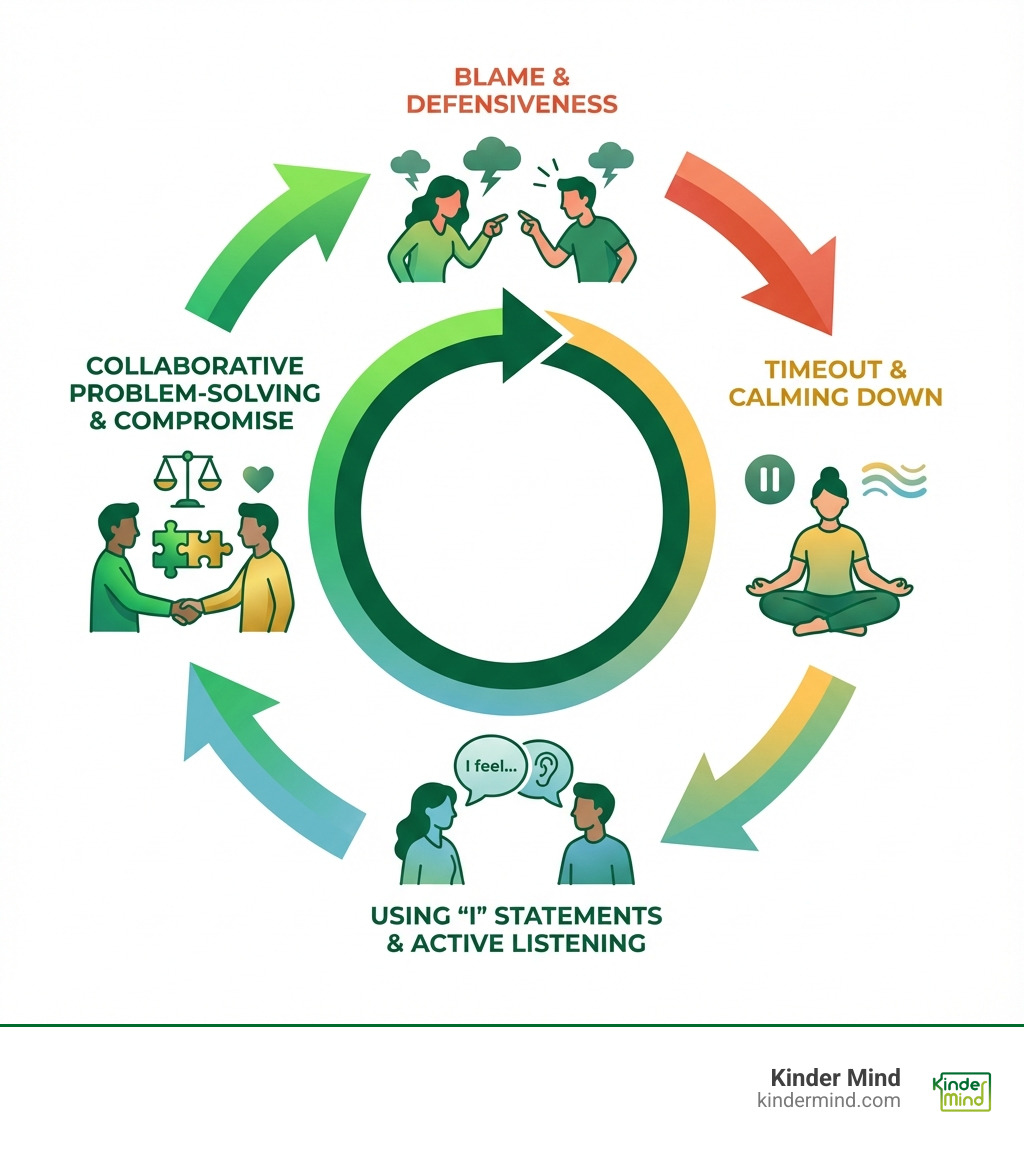
Most couples get stuck in what therapists call the “blame game.” One person attacks, the other defends. Someone wins, someone loses. The relationship suffers either way.
There’s a better path forward. When you shift from trying to win arguments to building understanding together, everything changes. You move from opponents to teammates tackling problems side by side.
This guide will show you exactly how to make that shift, using proven strategies from relationship research and clinical practice. You’ll learn practical tools you can use today, understand why certain conflicts keep happening, and find when it’s time to bring in professional support.
Understanding the Landscape of Marital Conflict

Conflict is a natural part of marriage. When two unique individuals build a life together, disagreements are inevitable. The key to a healthy marriage isn’t avoiding conflict, but how you engage with it. Understanding the nature of your disagreements is the first step toward effective marital conflict resolution.
Solvable vs. Perpetual Problems
Dr. John Gottman’s research identifies two types of marital conflicts: solvable and perpetual. Recognizing the difference is crucial.
Solvable problems are situational and can be resolved. They might include disagreements over chores or planning a vacation. With good communication and compromise, couples can find a solution.
Perpetual problems are rooted in fundamental differences in personality or values. These conflicts are unlikely to disappear, as they might involve clashes between an introvert and an extrovert or differing views on money. Dr. Gottman’s research shows that 69% of relationship problems are perpetual.
The goal for perpetual problems is management, not elimination. Couples must learn to discuss these recurring issues without escalating into damaging fights, finding ways to live with the differences while maintaining respect and connection.
Common Root Causes of Disagreements
Several common themes often cause conflict in relationships:
-
Miscommunication: When partners fail to express themselves clearly or make assumptions, misunderstandings can lead to a cycle where neither person feels heard.
-
Financial Stress: Differing attitudes towards spending, saving, or debt can ignite intense conflicts. Scientific research on money as a topic of marital conflict highlights its significance, especially since more than half of all couples enter a marriage already in debt.
-
Jealousy: While a touch of jealousy can be normal, unchecked jealousy rooted in insecurity can erode trust and lead to control issues.
-
Differing Values and Expectations: Mismatched core beliefs about family, lifestyle, or future plans can lead to deep disappointment and resentment.
-
Household Responsibilities: Disputes over the division of labor can lead to feelings of unfairness if not openly negotiated.
-
Intimacy Issues: Problems with physical or emotional intimacy, stemming from differing needs or a lack of open communication, can cause significant conflict.
-
Problematic Behaviors: Dishonesty, disrespect, or unreliability can severely damage trust and require a commitment to change.
Pinpointing these triggers in your relationship is a key part of your marital conflict resolution journey.
The Gottman Method: 3 Blueprints for Healthy Disagreements
The Gottman Institute, founded by Drs. John and Julie Gottman, offers research-backed “blueprints” to help couples move from destructive arguments to constructive dialogue. These frameworks provide a structured approach to healthy marital conflict resolution for different types of disagreements, recognizing that people aren’t automatons and must steer their differences.
Blueprint 1: The Gottman-Rapoport Blueprint
This blueprint is a structured conversation for solvable conflicts, ensuring both partners feel heard. It slows down the interaction to prevent emotional flooding and build empathy.
- Take Turns: One person is the speaker, the other is the listener, preventing interruptions.
- Speaker’s Role: Use “I” statements to express feelings and needs without blame. Start the conversation gently.
- Listener’s Role: The goal is to understand, not to solve. Listen actively, take notes if helpful, and then paraphrase what you heard to confirm understanding.
- Validate: Acknowledge your partner’s feelings, even if you don’t agree with their perspective (e.g., “I can see why you would feel frustrated”). This process cultivates empathy and paves the way for collaboration.
Blueprint 2: Processing a Fight or Regrettable Incident
This blueprint helps couples heal and learn from past fights or hurtful incidents, often called “attachment injuries.” Unresolved past events can create resentment, and this process helps move past them.
The five steps are:
- Feelings: The injured partner expresses their feelings about the incident.
- Realities: Each partner shares their subjective perception of what happened.
- Triggers: Identify any deeper fears or past experiences the incident activated.
- Responsibility: The partner who caused hurt acknowledges their role and offers a genuine apology. This is a critical step in healing attachment injuries.
- Healing Plan: The couple discusses what is needed to heal and prevent similar hurts in the future.
Blueprint 3: The Dreams-Within-Conflict Blueprint
This blueprint addresses perpetual problems where couples are “gridlocked.” Often, this means unexpressed dreams or core values are at stake for each partner.
- Uncover Dreams: Instead of arguing about the surface issue (like money), explore the underlying dreams behind each person’s position (e.g., a dream of security vs. a dream of experiencing life).
- Explore Meaning: The speaker communicates the origin and importance of their dream, while the listener creates a safe space to understand without judgment.
- Find Compromise: By understanding the dreams, couples can move from gridlock to dialogue. The goal is not to solve the problem but to find compromises that honor both partners’ aspirations, fostering acceptance and appreciation.
These blueprints provide a comprehensive approach to marital conflict resolution, helping couples manage everything from minor disagreements to deep-seated differences with skill and empathy.
Seven Proven Tips for Effective Marital Conflict Resolution
Effective marital conflict resolution turns disagreements into opportunities for growth. Here are seven proven tips to help couples steer conflicts more constructively.
1. Use “I” Statements to Express Feelings
Avoid blaming language like “You always…” which puts your partner on the defensive. Instead, use “I” statements to own your feelings without assigning fault. For example, say “I feel overwhelmed when the dishes pile up,” instead of “You never help with the dishes.” This promotes collaboration and helps you move away from the blame game.
2. Practice Active and Reflective Listening
Instead of just waiting for your turn to speak, give your full attention to your partner to make them feel heard. To listen without getting defensive, try these techniques:
- Summarize: Briefly rephrase what you heard to ensure you understood correctly.
- Ask questions: Use open-ended questions like, “Can you tell me more about that?” to gain deeper insight.
- Validate feelings: Acknowledge their emotions with phrases like, “I can see why you feel that way,” even if you don’t agree.
3. Stick to One Issue at a Time
Bringing up past grievances, or “kitchen-sinking,” can escalate an argument and make resolution impossible. Your ability to solve one problem will get lost in the shuffle of trying to solve many problems. Focus on one specific issue. If other topics arise, agree to discuss them later.
4. Take a Time-Out When Things Get Heated
When you feel emotionally flooded, it’s impossible to think rationally. When you’re angry, you’re more likely to say hurtful things. Agree on a signal to call a time-out. Step away for at least 15-20 minutes to calm down with a soothing activity, and agree on a specific time to reconvene the discussion calmly.
5. Accept Forgiveness and Apology
The ability to offer and accept sincere apologies is fundamental. A genuine apology acknowledges the hurt caused and takes responsibility. Forgiveness is a choice to let go of resentment, allowing both partners to move forward and preventing bitterness from festering.
6. Focus on Collaboration, Not Competition
Shift your mindset from “me against you” to “us against the problem.” A marriage is a partnership, not a competition.
- Shared Goals: Remind yourselves you are on the same team.
- Brainstorming Solutions: Work together to generate multiple options.
- Compromise: Be willing to meet halfway to find a solution that works for both of you.
7. Learn to Manage Perpetual Problems
Many marital conflicts are perpetual and require management, not a solution.
- Accept Differences: Accept that some personality traits or values won’t change. Learning to live with them, and even find humor in them, reduces friction. As Richard Carlson’s book advises, “Don’t Sweat the Small Stuff”.
- Connect: Create rituals of connection that reinforce your bond and buffer against the strain of these problems.
- Find Humor: Laughter can be a powerful antidote to tension. Learning to laugh about a recurring issue can defuse it.
How Your Health and History Influence Fights
Our bodies and past experiences play a significant, often unseen, role in how we engage in marital conflict resolution. Understanding these underlying forces provides crucial insight into our reactions and fosters greater empathy.
The Impact of Unresolved Conflict on Health
Frequent, unresolved marital conflict can take a serious toll on physical and mental health. The body’s repeated stress response can lead to:
- Liftd Stress Hormones: Chronic conflict keeps cortisol levels high, impacting nearly every system in the body.
- Blood Pressure Issues: While high-quality marriages are linked to better health, research shows that unhappy marriages can be worse for blood pressure than being single.
- Weakened Immune System: Chronic stress from conflict can make you more susceptible to illness.
- Mental Health Effects: Constant tension contributes to increased anxiety and depression.
- Other Issues: Unresolved conflict is also linked to sleep disturbances and poor gut health.
Developing healthy marital conflict resolution skills is vital for both the relationship and your individual well-being.
How Attachment Styles Shape Your Marital Conflict Resolution Approach
Our early experiences with caregivers shape our “attachment style,” which influences how we react to conflict in adult relationships.
- Secure Attachment: Individuals with a secure style are comfortable with intimacy. In conflict, they tend to communicate openly, seek compromise, and trust their partner.
- Anxious A
