
All About Family Therapy
Dr. Elizabeth Barlow, LCSW-S · 2/10/2026

Understanding Family Therapy: A Path to Stronger Connections
Family therapy is a form of psychotherapy that helps families improve communication, resolve conflicts, and strengthen their relationships by treating the family as a connected system rather than focusing on individuals alone.
Quick Overview: What You Need to Know
- What it is: A type of counseling that works with families as a whole unit to address relationship problems, behavioral issues, and mental health challenges
- Who can attend: Parents, children, siblings, partners, or any group of people with close emotional ties
- How long it takes: Most families attend 9-12 sessions on average, though this varies based on needs
- What it helps with: Communication problems, parent-child conflict, mental health conditions, grief, divorce, substance abuse, and major life changes
- Success rate: Nearly 90% of people report improved emotional health after family therapy
When someone searches for family therapy, they’re often facing a challenging moment. Maybe parents are struggling to connect with a teenager who’s pulling away. Perhaps a couple is trying to blend two families and everyone feels stuck. Or a family member’s mental health condition is affecting the whole household.
The good news? Family therapy recognizes that families are interconnected systems. When one person struggles, everyone feels it. And when the family learns new ways to communicate and support each other, everyone benefits.
Unlike individual therapy that focuses on one person’s thoughts and feelings, family therapy looks at patterns of interaction between family members. A therapist helps identify what’s not working and guides the family toward healthier ways of relating. The focus is on solutions, not blame.
Research backs this up. Studies show that family therapy is as effective or more effective than individual treatment for many mental health problems. It’s particularly helpful for adolescents with behavioral issues, adults dealing with mood disorders, and families navigating major transitions.
What is Family Therapy and How Does It Work?
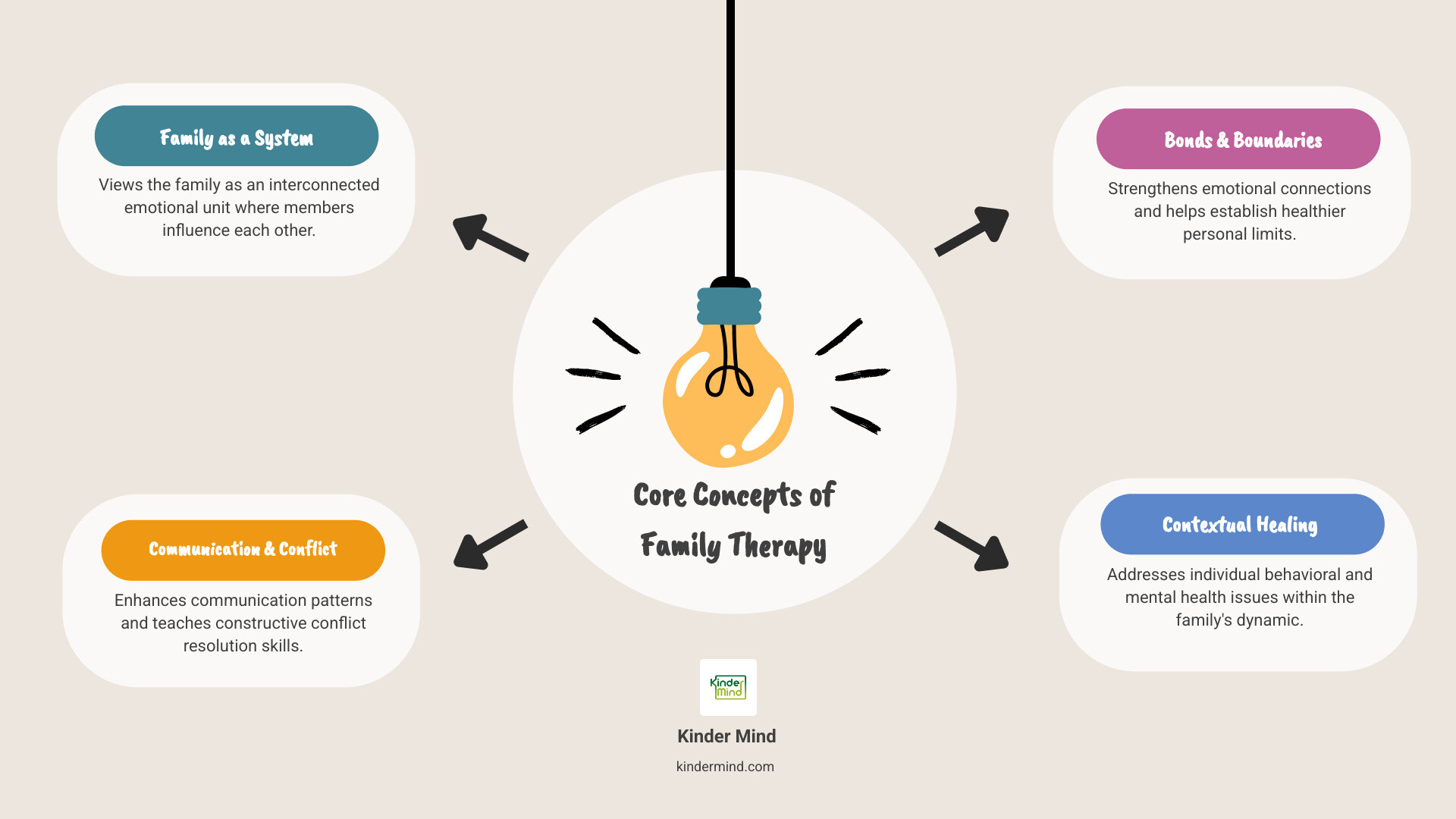
Family therapy is a specialized type of psychotherapy that operates on a systemic approach. This means it views the family not just as a collection of individuals, but as an emotional unit, or an intricate system where each member’s actions and behaviors are interconnected and influence the others. When one person in the family struggles, the entire system is affected, and conversely, changes within the family system can positively impact individual members. This interconnectedness is a core concept, highlighting that problems often arise from the patterns of interaction within the family rather than solely from an individual’s psychology.
The fundamental difference from individual therapy lies in its focus. While individual therapy digs into one person’s thoughts, feelings, and behaviors to help them achieve personal growth, family therapy examines the dynamics and communication patterns between family members. It seeks to understand how these interactions contribute to existing problems and how they can be modified to foster healthier relationships.
Family therapy is typically goal-oriented and solution-focused. This means that therapists and families work collaboratively to identify specific, attainable goals and develop strategies to achieve them. The aim is often designed with an “end in mind,” meaning there’s a clear vision of what a healthier family dynamic looks like and how to get there.
| Feature | Family Therapy | Individual Therapy |
|---|---|---|
| Goals | Improve family dynamics, communication, and relationships; resolve conflicts; strengthen family bonds; support members through challenges. | Address individual well-being, symptoms, and personal growth; develop coping skills; process individual trauma or experiences. |
| Focus | Interaction patterns, communication styles, and emotional dynamics within the family system. | Individual thoughts, feelings, behaviors, and personal history. |
| Session Structure | Typically involves multiple family members (e.g., parents, children, siblings) but can also include couples or individual sessions as needed. | Solely involves the individual client and the therapist. |
What to expect during a family therapy session
Stepping into a family therapy session for the first time can feel a bit daunting, but knowing what to expect can ease some apprehension. The initial session is primarily dedicated to information gathering and establishing a safe, neutral environment. The therapist will explain how therapy works, including confidentiality guidelines, and set some ground rules to ensure respectful communication.
You can expect the therapist to ask each family member to introduce themselves and share their perspective on the family’s history and the issues bringing them to therapy. This helps identify specific challenges and allows the therapist to begin understanding the family’s dynamics. Together, the family and therapist will work to set clear, attainable goals for therapy.
Throughout subsequent sessions, the therapist acts as a guide, coach, or mentor. Their role is to facilitate conversations, clarify feelings, and suggest strategies for change. They encourage active participation from all family members, ensuring everyone has a voice. The therapist might use various techniques, such as asking questions that encourage different perspectives or assigning “homework” to practice new communication skills between sessions. This collaborative process ensures that the focus remains on solutions and strengthening the family unit.
What issues can family therapy help address?
Family therapy is a versatile tool, capable of addressing a wide array of challenges that impact family life and individual well-being. It’s not just for families in crisis; it can also be incredibly beneficial during times of change or when proactive improvements are desired. Here are some common issues it effectively helps with:
- Parent-child conflict: From daily disagreements to significant behavioral challenges in children and adolescents, family therapy can help bridge communication gaps and establish healthier boundaries. It can address struggles at school, defiance, or withdrawal. More info about family conflict
- Marital problems: Whether it’s ongoing conflict, communication breakdowns, relationship distress, or navigating separation and divorce, family therapy (often overlapping with couples therapy) provides a space for partners to work through issues. Couples Therapy
- Substance abuse: When a family member is struggling with alcohol or drug issues, family therapy helps the entire family understand the impact, learn how to support recovery, and heal from the trauma it may have caused.
- Grief and loss: Coping with the death of a loved one or other significant losses can strain family bonds. Family therapy offers a supportive environment to process grief collectively and individually. Grief Counseling
- Behavioral issues in children: For children and teens exhibiting conduct problems, oppositional defiant disorder (ODD), ADHD, or other behavioral concerns, family therapy can help parents develop effective strategies and improve family functioning. Children and Teen Therapy
- Mental health conditions: When a family member experiences mental health challenges like depression, anxiety, schizophrenia, bipolar disorder, eating disorders, or psychosis, family therapy helps the family understand the condition, learn supportive coping mechanisms, and reduce caregiver burden.
- Life transitions: Major life changes such as moving, job loss, navigating challenges that come with aging, or adjusting to a new medical condition can create stress. Family therapy provides tools to adapt and maintain strong connections during these periods. Help with life transitions
- Blended family issues: Integrating two families can bring unique challenges related to roles, rules, and expectations. Family therapy assists blended families in establishing new dynamics and fostering cohesion. Blended Family Issues blog
- Trauma, abuse, or family secrets: Addressing the lingering effects of past trauma or unspoken family issues can be a powerful way to promote healing and healthier relationships.
Goals, Benefits, and Effectiveness of Family Therapy
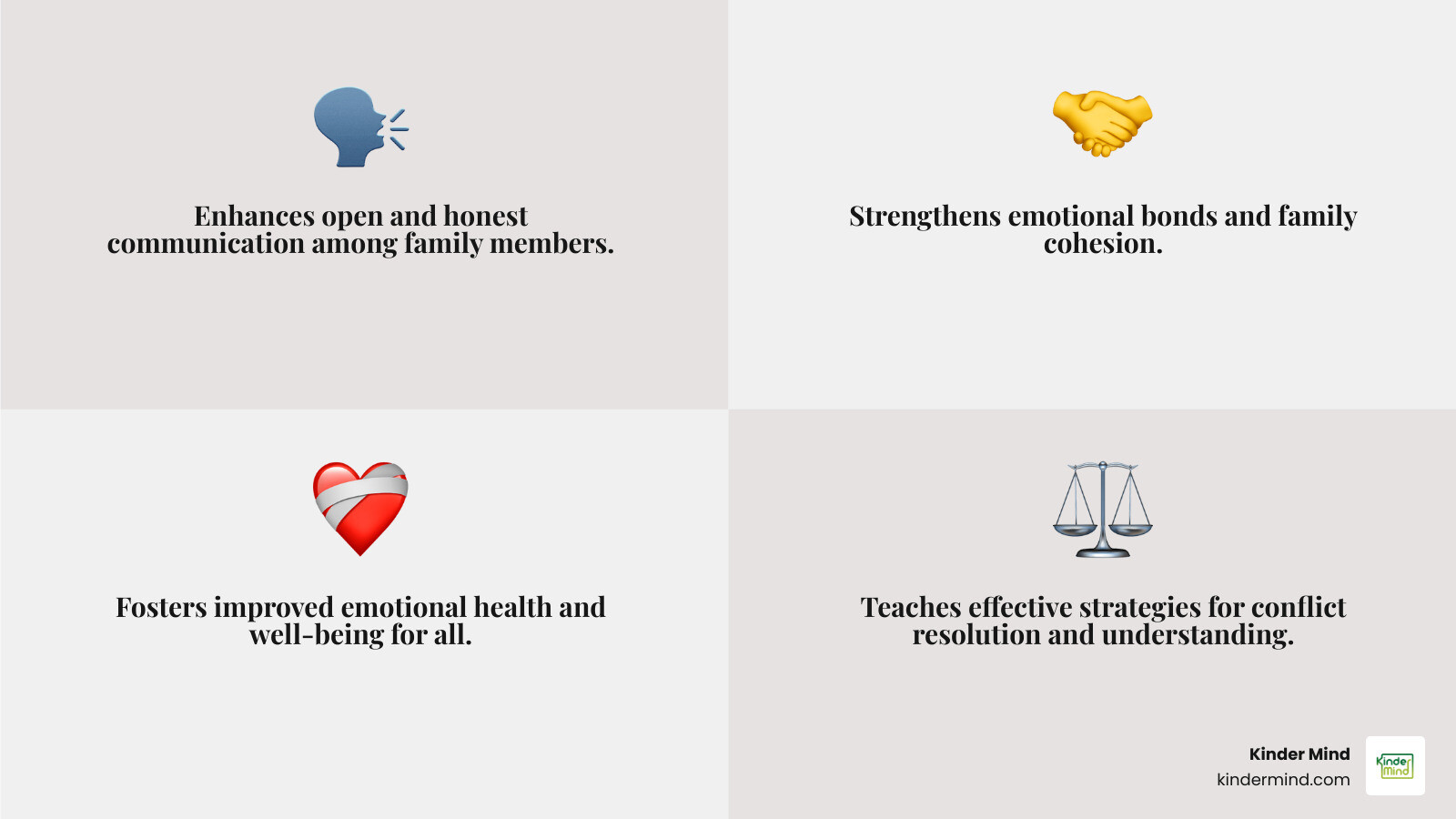
The ultimate aim of family therapy is to cultivate a more functional, supportive, and understanding family environment. The benefits extend far beyond resolving immediate conflicts, fostering long-term resilience and well-being for all members.
What are the main goals of family therapy?
The primary goals of family therapy are centered around creating positive, lasting change within the family system:
- Create a better home environment: This involves fostering an atmosphere of respect, safety, and emotional support where every member feels valued.
- Solve family issues: Therapists work with families to identify recurring problems, develop constructive problem-solving strategies, and implement solutions that benefit the whole unit.
- Understand unique family dynamics: By exploring interactional patterns and roles, families gain insight into how their behaviors affect each other, leading to greater empathy and understanding.
- Develop healthy coping mechanisms: Families learn new skills to manage stress, steer challenges, and adapt to life changes in constructive ways.
- Support a family member in recovery: For families dealing with mental illness or addiction, a key goal is to ensure the individual’s recovery is sustained by strengthening family support and preventing relapse. This includes helping the family strengthen its emotional health so everyone can thrive.
What are the benefits of family therapy?
The positive ripple effects of family therapy are well-documented by research and client experiences:
- Improved emotional health: Almost 90% of clients report an improvement in their emotional health after receiving family therapy. This significant statistic highlights its effectiveness in reducing distress and fostering emotional well-being.
- Better physical health: The mind-body connection is powerful. Nearly 66% of clients report an improvement in their overall physical health, suggesting that reducing family stress and improving emotional states can have tangible physical benefits.
- Improved work/school performance: When family dynamics improve, individuals often experience better focus and reduced stress, leading to improved functioning in their jobs or academic settings. Parents, for instance, report that their child’s behavior improved in 73.7% of cases after therapy, often leading to improved school performance.
- Healthier relationships: Over three-fourths of those engaging in marital/couples or family therapy report an improvement in their relationships. This includes better communication, increased trust, and stronger emotional bonds.
- High client satisfaction: Over 98 percent of clients of marriage and family therapists report therapy services as good or excellent, underscoring the positive impact and perceived value of this therapeutic approach. Statistics on client satisfaction
- Proven effectiveness for specific issues: Research indicates that family therapy is highly effective for a range of conditions. For instance, a 2018 review found it useful in treating adult-focused problems such as relationship distress, mood disorders, anxiety disorders, and adjustment to chronic physical illness. A 2019 study also demonstrated its effectiveness in improving different areas of family functioning for teens experiencing mental health problems. Effectiveness for adolescents with mental health problems
These outcomes demonstrate that family therapy offers a powerful pathway to healing, growth, and stronger, more resilient family units.
Approaches and Types of Family Therapy
Just as every family is unique, so are the methods therapists use to help them. There isn’t a one-size-fits-all approach to family therapy. Instead, therapists often draw from various models, sometimes using an eclectic approach, to tailor treatment specifically to a family’s needs. This custom treatment ensures that the therapeutic journey is as unique as the family it serves.

Structural Family Therapy
Developed by Salvador Minuchin in the 1960s, Structural Family Therapy (SFT) focuses on the family’s organizational structure, including its unspoken rules, hierarchies, and boundaries. The core idea is that dysfunction often arises from rigid or chaotic family structures.
- Family structure: This refers to the invisible set of functional demands that organizes the ways in which family members interact.
- Subsystems: Families are made up of smaller groups (e.g., parental subsystem, sibling subsystem) with their own functions and boundaries.
- Boundaries: These are the rules defining who participates and how. They can be clear, diffuse (enmeshed), or rigid (disengaged).
In SFT sessions, the therapist actively participates, sometimes even stepp
