
Your Guide to Affordable Virtual Counseling for Depression
Dr. Elizabeth Barlow, LCSW-S · 3/16/2026

Depression Is Treatable — And Help Is Closer Than You Think
Virtual counseling for depression connects you with a licensed therapist from your own home, using video, phone, or even text-based messaging — no commute, no waiting rooms, no barriers.
Here’s what you need to know upfront:
- What it is: Online therapy sessions with a licensed mental health professional, delivered via secure video calls, phone, or messaging apps
- Who it helps: Adults and teens dealing with major depression, persistent low mood, seasonal depression, postpartum depression, and more
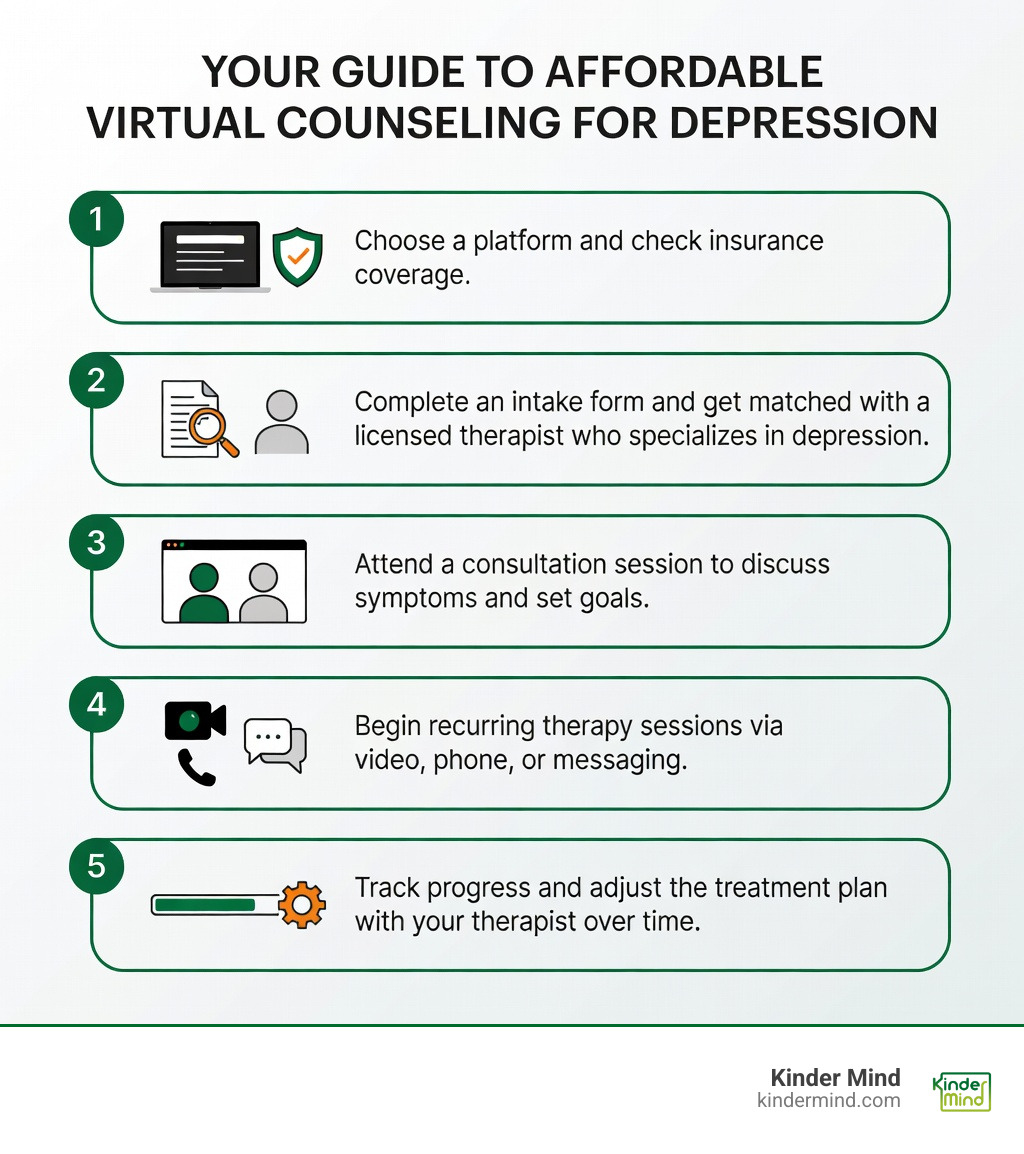
- How it works: You match with a therapist, complete an intake, and attend regular sessions on a schedule that fits your life
- Is it effective? Yes — research shows virtual therapy produces outcomes comparable to in-person care for most people with depression
- When to seek in-person care: If you’re experiencing a mental health crisis, active self-harm, or psychosis, please contact the 988 Suicide & Crisis Lifeline or call 911
Depression is more common than most people realize. Between 2017 and 2018, about 8.7% of U.S. adults met the clinical criteria for major depressive disorder. That number jumped to as high as 27.8% during the COVID-19 pandemic. At the same time, access to traditional in-person therapy remained difficult for millions of people — due to cost, location, scheduling, or stigma.
Virtual counseling changed that.
Therapist use of telehealth surged from just 7.1% before the pandemic to 85.5% during it. Today, almost every mental health service offers some form of virtual care. And the evidence is clear: it works.
Whether you’ve tried therapy before or you’re just starting to explore your options, this guide will help you understand how virtual counseling for depression works, what to look for in a provider, and how to get the most out of every session.
Understanding Virtual Counseling for Depression
Virtual counseling, often called telemental health or telehealth, is the delivery of mental health services using technology. Instead of driving to a clinic and sitting on a leather sofa, you connect with your therapist through a screen or a phone line. It sounds modern, but the core of the work remains the same: a human connection aimed at healing.
How It Works Digitally
Most virtual counseling for depression happens through three main channels:
- Video Visits: These are live, face-to-face sessions that most closely mimic an in-person office visit.
- Phone Calls: A great option for those who may feel “camera-shy” or have lower internet bandwidth.
- Asynchronous Messaging: This allows you to send text, video, or audio messages to your therapist at any time, and they respond during their professional hours.
The Importance of Security
When you’re sharing your deepest thoughts, you want to know they’re staying between you and your provider. Legitimate virtual counseling services use HIPAA-compliant platforms. This means the technology has high-level encryption—much more secure than a standard FaceTime or Skype call—to protect your privacy.
What Is Depression in a Clinical Sense?
To understand how therapy helps, we first have to look at the condition itself. What is depression? It isn’t just “feeling blue” for a day or two. It is a medical condition that affects how you feel, think, and handle daily activities like sleeping, eating, and working.
A therapist uses virtual sessions to perform a diagnostic assessment. They look for patterns of persistent sadness, loss of interest in hobbies, and physical changes like fatigue. Once a diagnosis is made, they work with you to create a personalized treatment plan. This plan serves as your roadmap, outlining the goals you want to achieve and the therapeutic techniques you’ll use to get there.
Is Virtual Therapy Effective for Different Types of Depression?
One of the most common questions people ask is: “Can a screen really help me with something as heavy as depression?” The answer, backed by a growing mountain of data, is a resounding yes.
Virtual care is effective for treating a wide range of mental illnesses, including ADHD, bipolar disorder, PTSD, and various forms of depression.
Major Depressive Disorder (MDD)
MDD is characterized by a persistent low mood that lasts for at least two weeks. It can make even getting out of bed feel like climbing a mountain. Research has shown that virtual therapy for depression produces sustained and clinically meaningful improvements for those with MDD. In fact, one study found that 84% of patients no longer met the criteria for major depression after about 15 weeks of message-based therapy.
Dysthymia and Persistent Depressive Disorder (PDD)
Dysthymia and persistent depressive disorder involve a depressed mood that lasts for two years or more. While the symptoms may not always feel as “acute” as MDD, the longevity of the condition can be exhausting. Virtual counseling provides the long-term, consistent support needed to manage PDD without the logistical burnout of traveling to an office for years on end.
Postpartum Depression
New parents often face immense barriers to traditional therapy—childcare, lack of sleep, and physical recovery. Postpartum depression can affect any parent, including adoptive parents. For these individuals, virtual therapy is a lifeline, allowing them to receive care while their baby naps in the next room.
Seasonal Affective Disorder (SAD)
Seasonal affective disorder typically kicks in during the winter months when sunlight is scarce. When the weather is cold and the days are dark, the last thing someone with SAD wants to do is leave the house. Virtual counseling meets them where they are, providing support during the exact months they need it most.
Comparing the Methods
You might wonder if you need video sessions or if messaging is enough. A randomized controlled trial found that message-based therapy is “noninferior” to video therapy. In plain English? They both work incredibly well.
| Outcome Measure | Video-Based Therapy | Message-Based (Asynchronous) |
|---|---|---|
| Depression Improvement | High (Cohen’s d=1.00) | High (Cohen’s d=1.04) |
| Anxiety Reduction | Significant | Significant |
| Patient Engagement | High | High |
| Therapeutic Alliance | Strong | Strong |
Evidence-Based Approaches in Virtual Counseling for Depression
Therapists don’t just “chat” with you; they use specific, scientifically-proven methods to help you rewire your brain and habits.
- Cognitive Behavioral Therapy (CBT): This is the gold standard for depression. It helps you identify negative thought patterns (like “I’m a failure”) and replace them with more realistic, helpful ones. CBT research shows significantly reduced depression after just a few months of virtual sessions.
- Dialectical Behavior Therapy (DBT): Often used if you struggle with intense emotions, DBT focuses on mindfulness, distress tolerance, and emotional regulation.
- Mindfulness-Based Therapy: This helps you stay present in the moment rather than ruminating on the past or worrying about the future.
- Psychodynamic Approach: This involves looking at how your past experiences and subconscious mind influence your current depression symptoms.
When Virtual Counseling for Depression is Not Suitable
While virtual therapy is a powerful tool, it isn’t the right fit for every situation. There are times when the safety and intensity of in-person care are necessary.
Virtual therapy is generally NOT recommended for:
- High-risk self-harm or suicidal ideation: If you are in immediate danger, you need a higher level of care than a weekly video call can provide.
- Psychosis or Schizophrenia: Conditions that involve hallucinations or delusions often require intensive, in-person monitoring and specialized intervention.
- Severe Substance Use: If a person requires medical detox or inpatient rehabilitation, virtual therapy should only be used as a secondary support.
- Medically Unstable Eating Disorders: These require physical monitoring that cannot be done through a screen.
If you or someone you know is in a crisis, please reach out to the 988 Suicide & Crisis Lifeline immediately. You can call or text 988, or use the chat feature at 988lifeline.org. For those looking for local clinics, the SAMHSA website for locating in-person or online mental health services is an excellent resource.
Benefits and Limitations of Online Mental Health Care
Virtual counseling has revolutionized the industry, but like any technology, it has its pros and cons.
The Benefits: Why People Love It
- Convenience: You can have a session during your lunch break, in your pajamas, or while sitting in your parked car.
- Accessibility: For those in rural areas, virtual care is a game-changer. You are no longer limited to the three therapists in your town; you can see any licensed professional in your state.
- Reduced Stigma: Some people feel more comfortable opening up from the safety of their own home. It feels less like a “doctor’s appointment” and more like a supportive conversation.
- Flexibility: It’s much easier to reschedule a virtual appointment than an in-person one.
The Limitations: What to Watch Out For
- Technology Barriers: A “frozen” screen during a breakthrough moment is frustrating. You need a reliable internet connection and a working device.
- Privacy Concerns: If you live in a small apartment with roommates or a busy house with kids, finding a private spot can be tricky. Privacy in virtual sessions is a valid concern, as you have to ensure no one is eavesdropping on your end.
- The Therapeutic Alliance: Some people feel that it takes slightly longer to build a “spark” or therapeutic alliance with a therapist through a screen compared to being in the same room.
Despite these hurdles, beyond-the-couch treatment is changing mental healthcare for the better by making it a standard part of modern life rather than a luxury.
How to Maximize Your Virtual Therapy Sessions
To get the most out of virtual counseling for depression, you have to treat it with the same respect you would an in-person visit.
1. Prepare Your Tech in Advance
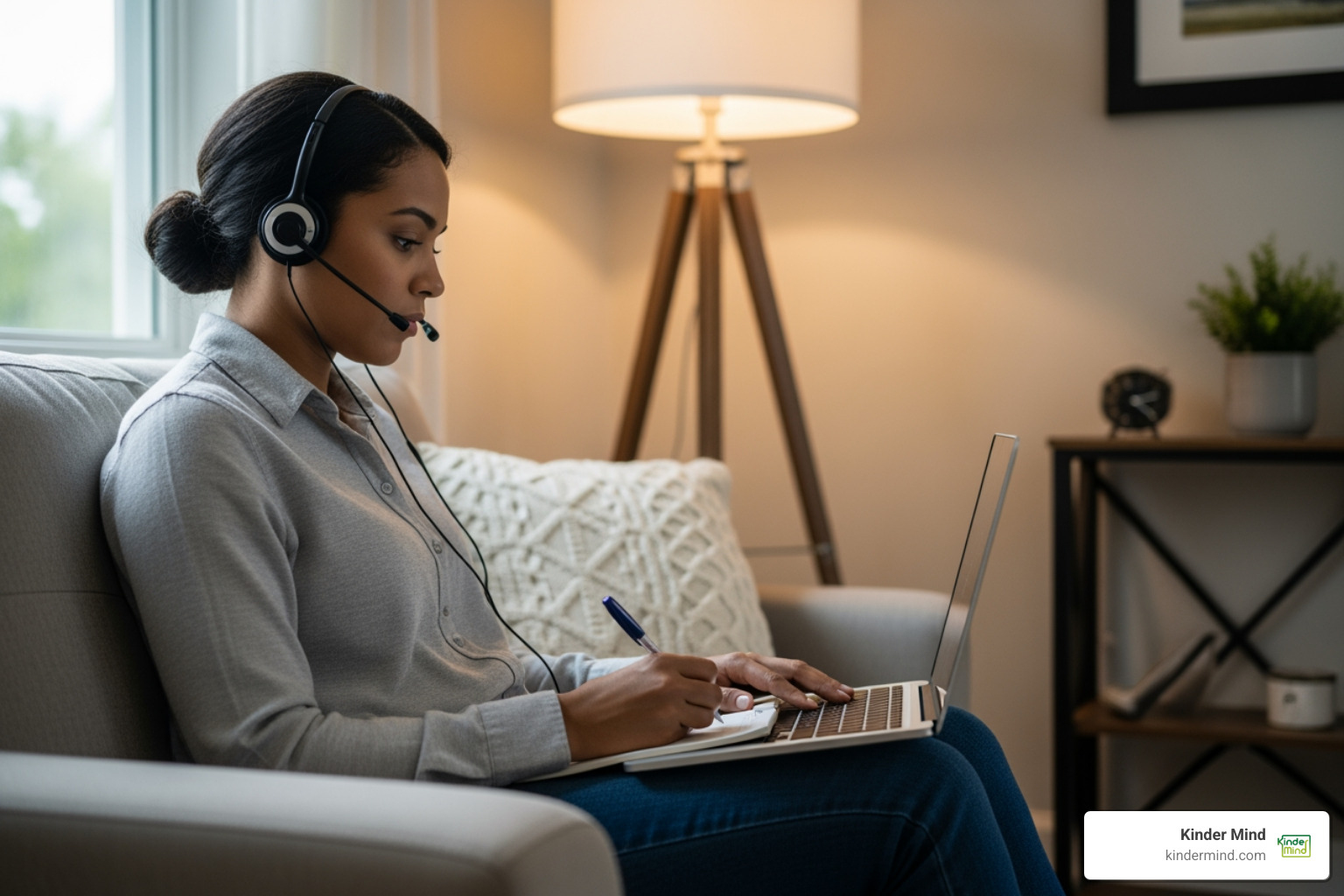
Nothing kills the mood like a “Battery Low” notification. Test your camera, microphone, and Wi-Fi at least 15 minutes before your session. If possible, use a headset to improve audio quality and add an extra layer of privacy.
2. Create a “Therapy Zone”
Find a quiet, uninterrupted space. If you live with others, let them know you’re on an important call and shouldn’t be disturbed. Position your camera at eye level—it helps create the feeling of real eye contact, which is vital for talking to a therapist about depression.
3. Be Ready to Write
Making the most of virtual therapy often involves taking notes. Because you aren’t in a clinical setting, it’s easy to get distracted. Having a notepad ready helps you jot down “aha!” moments or homework assignments your therapist gives you.
4. Speak Up About the Experience
If the connection is laggy, or if you feel like the video