
Beyond the Couch: How Virtual Depression Treatment is Changing Mental Healthcare
Dr. Elizabeth Barlow, LCSW-S · 2/19/2026

The Digital Shift: Your Guide to Virtual Depression Treatment
Virtual depression treatment uses technology to bring mental health care right to you. It includes online therapy, psychiatry, and managing medications. This modern approach offers convenient and accessible support for depression. Research shows it can be just as effective as traditional in-person care.
Depression is a serious mental health condition. It affects millions worldwide. Often, people also struggle with anxiety at the same time. Finding help can be tough. Things like long wait times, travel, or feeling judged can get in the way.
But times are changing. Virtual depression treatment offers a new path. It uses the internet and technology to deliver support. This means you can get help from almost anywhere.
Imagine getting care from the comfort of your home. This can make treatment easier and more comfortable, especially if you have anxiety. This guide will walk you through how virtual care works. It will show you how it’s changing mental healthcare for the better.
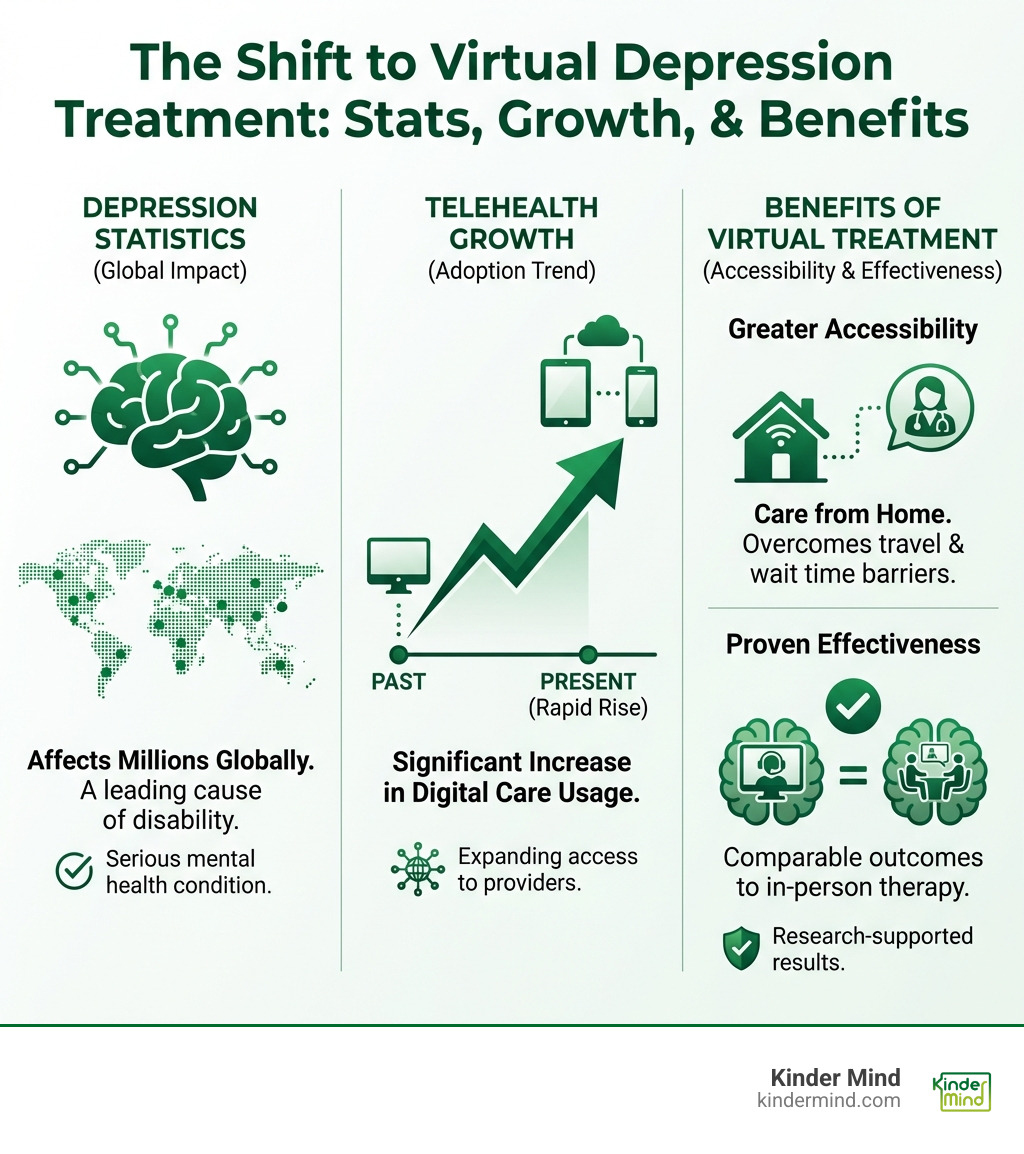
Virtual depression treatment terms explained:
Understanding Depression and Its Suitability for Online Care
Depression is more than just feeling sad. It is a persistent mood disorder that can significantly impact daily life. It affects how an individual thinks, feels, and behaves. Recognizing the signs is the first step toward seeking help, and thankfully, many forms of depression are highly treatable through virtual care.

The primary symptoms of depression, which can be effectively addressed through virtual treatment, often fall into several categories:
- Emotional Symptoms: These include persistent sadness, feelings of emptiness, irritability, loss of pleasure or interest in activities once enjoyed (anhedonia), and feelings of hopelessness or worthlessness. Many people with depression also experience co-occurring anxiety, which virtual treatments can also address.
- Physical Symptoms: Depression can manifest physically through fatigue, decreased energy, changes in sleep patterns (insomnia or oversleeping), changes in appetite or weight, and unexplained aches or pains.
- Cognitive Symptoms: Individuals may struggle with difficulty concentrating, remembering details, making decisions, and often experience negative thought patterns or self-criticism.
- Behavioral Symptoms: These can include social withdrawal, reduced activity levels, and, in severe cases, thoughts of self-harm or suicide. (If you are experiencing suicidal thoughts or urges, please call the National Suicide Prevention Lifeline at 1-800-273-TALK (8255) or text 988 to talk to someone over SMS. Support is available 24/7.)
The causes of depression are complex and multifaceted. They often involve a combination of factors:
- Genetics: A family history of depression can increase an individual’s risk.
- Brain Chemistry: Imbalances in neurotransmitters, the brain’s chemical messengers, play a role.
- Life Events: Trauma, major life changes, chronic stress (like homelessness or poverty), and loss can trigger depressive episodes.
- Chronic Illness: Living with chronic pain, certain diseases, or taking particular medications can contribute to depression.
- Discrimination: Experiences of racism, sexism, or other forms of discrimination can significantly increase the risk.
- Substance Use: Alcohol or drug use can both trigger and worsen depressive symptoms.
Virtual depression treatment is particularly well-suited for individuals experiencing mild to moderate depression. Online platforms offer a comfortable and convenient environment, which can be especially beneficial for those whose symptoms include social anxiety or difficulty leaving home. While severe cases, such as those with active suicidality or psychotic features, may require more intensive or in-person care, virtual platforms are increasingly equipped to assess and manage these situations with appropriate protocols. For instance, some platforms have automated systems to alert clinicians if a patient endorses severe symptoms or suicidality on self-report measures.
Exploring Your Virtual Depression Treatment Options
When considering virtual depression treatment, you’ll find a range of options designed to meet diverse needs. The most common approaches involve online therapy, online psychiatry for medication management, or a combination of both. These services are delivered by licensed professionals who create personalized care plans custom to your specific situation.

Online Therapy vs. Online Psychiatry: What’s the Difference?
Understanding the distinction between online therapy and online psychiatry is crucial for choosing the right path for your virtual depression treatment:
- Online Therapy: This involves working with licensed therapists, psychologists, or counselors. These professionals primarily use talk therapy to help you explore thoughts, feelings, and behaviors, and develop coping strategies. Therapists lead sessions via video, phone, or text, focusing on techniques like Cognitive Behavioral Therapy (CBT) or Interpersonal Therapy. They cannot prescribe medication.
- Online Psychiatry: This is a medical specialty provided by licensed psychiatrists or psychiatric nurse practitioners. These medical doctors specialize in mental health and can diagnose mental health conditions, prescribe medication (such as antidepressants), and monitor their effects. They can offer psychiatric care services and personalized medication management, often as part of a more holistic treatment plan that may also include therapy.
Both play vital roles in mental health, and often, a combined approach of therapy and medication management yields the most effective results for depression.
Common Online Treatment Options and Modalities
Virtual depression treatment platforms offer a variety of evidence-based therapeutic modalities, mirroring those available in traditional in-person settings:
- Cognitive Behavioral Therapy (CBT): This is one of the most widely used and effective approaches in virtual settings. Internet-based CBT (iCBT) teaches individuals to identify and change negative thought patterns and behaviors that contribute to depression. It often includes modules on behavioral activation, cognitive restructuring, and problem-solving. Research, including a Systematic Review and Individual Patient Data Network Meta-analysis on Internet-Based Cognitive Behavioral Therapy for Depression, consistently supports its efficacy.
- Psychodynamic Therapy: Explores how past experiences and unconscious patterns influence current feelings and behaviors.
- Interpersonal Therapy (IPT): Focuses on improving interpersonal relationships and social functioning to alleviate depressive symptoms.
- Mindfulness-Based Therapy: Teaches techniques like meditation and breath awareness to help individuals manage thoughts and emotions more effectively.
Online platforms deliver these therapies through various formats:
- Self-guided programs: These platforms offer structured modules, exercises, and resources that users complete at their own pace. Examples include programs like MoodGYM, which provides cognitive behavioral modules focusing on thoughts and emotions. While effective, some research suggests higher dropout rates compared to guided programs.
- Therapist-guided programs: These combine self-guided modules with support from a therapist via messaging, video calls, or phone calls. This human support often leads to better engagement and outcomes.
- Video sessions: Real-time video calls with a therapist or psychiatrist, offering a direct and interactive experience similar to in-person sessions.
- Messaging therapy: Asynchronous communication where you exchange messages with your therapist or psychiatrist, allowing for flexibility and reflection.
What Medications Can Be Prescribed Virtually?
Online platforms can facilitate medication management for depression, which typically involves a licensed psychiatric provider. The process usually includes a virtual evaluation, diagnosis (if appropriate), prescription, and ongoing monitoring.
The types of medications typically prescribed for depression through online platforms include:
- Antidepressants: These are the most common medications for depression.
- Selective Serotonin Reuptake Inhibitors (SSRIs): Such as Escitalopram (Lexapro), Sertraline (Zoloft), and Fluoxetine (Prozac).
- Serotonin-Norepinephrine Reuptake Inhibitors (SNRIs): Including Duloxetine (Cymbalta) and Desvenlafaxine (Pristiq).
- Atypical Antidepressants: This category includes medications like Aripiprazole (Abilify), Olanzapine (Zyprexa), Quetiapine (Seroquel), and Ziprasidone (Geodon), which work differently from SSRIs and SNRIs.
However, certain medications are generally excluded from virtual prescription due to federal regulations, particularly the Ryan Haight Online Pharmacy Consumer Protection Act. This act typically requires an in-person medical evaluation before a controlled substance can be prescribed via the internet. Therefore, medications that are considered controlled substances are usually not prescribed through online platforms:
- Controlled Substances: This includes medications like benzodiazepines (e.g., Xanax, Klonopin, Valium) often used for anxiety, and stimulants (e.g., Adderall, Ritalin) used for ADHD. These medications require careful in-person monitoring due to their potential for abuse and dependence.
Once prescribed, medication can often be sent to your preferred local pharmacy for pick-up or, in some cases, mailed directly to you, depending on the platform and state regulations.
The Practicalities: Cost, Access, and Privacy
Venturing into virtual depression treatment means navigating practical aspects like cost, how to get started, and ensuring your privacy. These elements are designed to make mental health care more accessible and less daunting.
How to Get Started with Virtual Mental Health Care
Accessing virtual mental health care for depression typically involves a few straightforward steps:
- Initial Assessment: Many platforms begin with an online questionnaire or a brief consultation to understand your needs and symptoms. This helps match you with the most suitable provider.
- Choosing a Provider: You’ll often have the opportunity to review bios and profiles of licensed therapists or psychiatric providers to find someone whose approach and experience align with your preferences.
- Scheduling Appointments: Virtual care offers immense flexibility. You can schedule sessions at times that fit your busy life, often including evenings or weekends, from the comfort of your home in Alabama, Alaska, Arizona, Arkansas, California, Colorado, Connecticut, Delaware, Florida, Georgia, Hawaii, Idaho, Illinois, Indiana, Iowa, Kansas, Kentucky, Louisiana, Maine, Maryland, Massachusetts, Michigan, Minnesota, Mississippi, Missouri, Montana, Nebraska, Nevada, New Hampshire, New Jersey, New Mexico, New York, North Carolina, North Dakota, Ohio, Oklahoma, Oregon, Pennsylvania, Rhode Island, South Carolina, South Dakota, Tennessee, Texas, Utah, Vermont, Virginia, Washington, West Virginia, Wisconsin, or Wyoming.
- Platform Navigation: You’ll connect with your provider via a secure, user-friendly platform, typically through video calls, live chat, or messaging.
- Technical Requirements: All you need is a reliable internet connection and a private space where you feel comfortable talking openly.
For more information on getting started with therapy, explore virtual therapy services.
Navigating Costs and Insurance Coverage
The cost structure for virtual depression treatment is designed to be flexible and often more affordable than traditional in-person care.
- Out-of-pocket costs: These can vary widely depending on the provider, the type of service (therapy, medication management, or combined), and the frequency of sessions. Many platforms offer different plans, such as monthly or quarterly subscriptions, or per-session fees.
- Insurance coverage: Most insurance plans now cover some form of telehealth, including online platforms. It’s always recommended to check with your insurance provider directly to understand your specific benefits, including co-pays and deductibles.
- In-network providers: If a virtual provider is in your insurance network, you typically pay a co-pay, and your insurance covers the rest.
- Out-of-network claims: If a provider is out-of-network, you might pay upfront, and the platform can often help you submit a superbill to your insurance for potential reimbursement.
- FSA/HSA cards: Many subscription plans and medication costs are eligible for FSA/HSA (Flexible Spending Account/Health Savings Account) payments.
For detailed information on how Kinder Mind handles pricing and insurance, you can visit our pricing and insurance page.
Ensuring Your Privacy and Security
Privacy and security are paramount in virtual depression treatment. Reputable online mental health services adhere to strict regulations to protect your sensitive information:
- HIPAA Compliance: This is the gold standard for healthcare privacy in the United States. It ensures that your health information is protected and that providers maintain confidentiality.
- Encrypted Communication: All communication, whether video, chat, or messaging, is typically end-to-end encrypted. This means your conversations are secure and cannot be intercepted by unauthorized parties.
- Secure Platforms: Virtual mental health providers use specialized, secure platforms designed specifically for telehealth, rather than generic communication tools.
- Confidentiality Policies: Providers have clear policies outlining how your data is collected, stored, and shared, always with your informed consent.
- Data Protection Measures: Beyond HIPAA, platforms implement robust cybersecurity measures to safeguard your personal and medical information against breaches.
The Science Behind Virtual Depression Treatment
The effectiveness of virtual depression treatment is not just anecdotal; it is backed by a growing body of scientific evidence. Clinical trials and extensive research have demonstrated that online interventions can be just as impactful as traditional in-person care for many individuals.
What Evidence Supports the Effectiveness of Virtual Depression Treatments?
Numerous studies, including systematic reviews and meta-analyses, confirm the efficacy of virtual treatments for depression:
- Comparable Effectiveness: A sig