
Depression Decoded: Everything You Need to Know About This Common Condition
Kinder Mind · 11/19/2025

Understanding Depression: A Common Yet Serious Mental Health Condition
What is depression? Depression is a serious mood disorder that causes persistent feelings of sadness and a loss of interest in daily activities. Unlike the normal sadness that everyone experiences, clinical depression lasts for at least two weeks and significantly affects how you think, feel, and function. It’s a medical condition, not a personal weakness, and it interferes with work, sleep, eating, and relationships.
Key Facts About Depression:
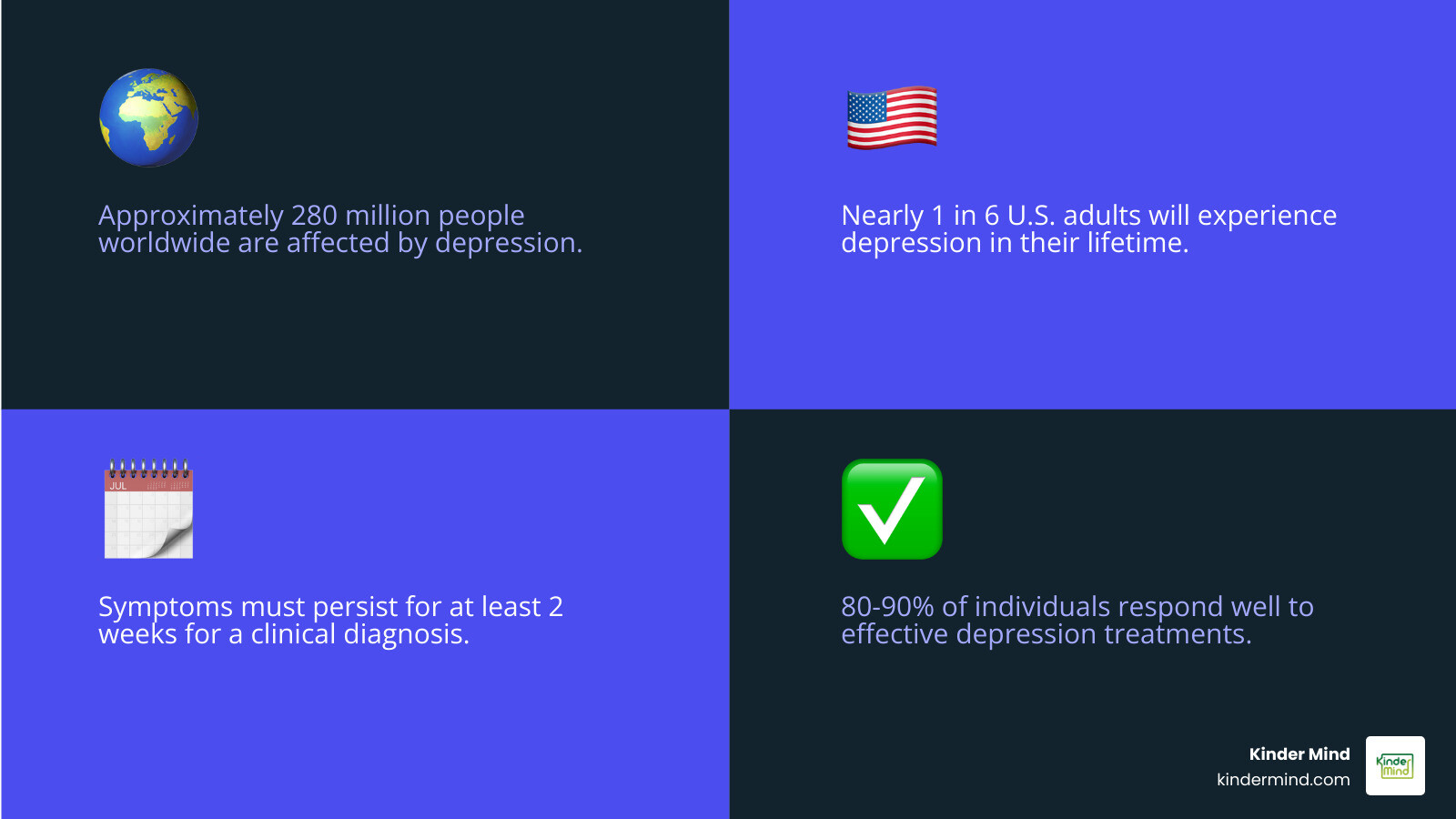
- It’s common: Nearly 1 in 6 U.S. adults will experience depression in their lifetime.
- It’s treatable: 80-90% of people who seek treatment respond well to it.
- It’s a medical condition: Depression involves real changes in brain chemistry.
- It affects daily life: It interferes with work, sleep, eating, and relationships.
- It’s not just sadness: It includes physical symptoms and loss of interest in once-enjoyed activities.
Depression is a common mental disorder affecting approximately 280 million people worldwide, yet many don’t seek help due to stigma or lack of access to care. The good news is that depression is highly treatable. With the right support—whether that’s therapy, medication, lifestyle changes, or a combination—most people can feel better and return to living full lives. Understanding what depression is and how it works is the first step toward healing.
What is Depression and How Does It Manifest?
You’ve probably heard someone say they’re “feeling depressed,” but what is depression in the clinical sense? It’s a serious mood disorder that fundamentally changes how you experience life, not just a fleeting bad mood.
What is depression and how is it different from feeling sad?
What is depression? It’s a medical illness affecting your brain, emotions, and daily functioning. Unlike ordinary sadness that comes and goes, depression settles in. For a diagnosis, the DSM-5 requires at least five specific symptoms for most of the day, nearly every day, for at least two weeks, significantly interfering with your life.
Here’s what sets clinical depression apart from everyday sadness:
| Characteristic | Everyday Sadness | Clinical Depression |
|---|---|---|
| Duration | Temporary, usually days | Persistent, at least two weeks |
| Intensity | Mild to moderate, fluctuates | Severe, pervasive, constant |
| Cause | Reaction to specific events | Complex interaction of factors |
| Impact on Function | Generally doesn’t impair daily life | Significantly interferes with work, relationships, self-care |
| Core Feelings | Unhappiness, disappointment | Persistent sadness, emptiness, hopelessness, loss of pleasure |
| Physical Symptoms | Minor, fleeting | Fatigue, sleep/appetite changes, aches |
| Self-Esteem | Usually intact | Feelings of worthlessness, guilt |
When you’re sad, you can still enjoy things. Depression often steals that ability, creating a persistent sense of emptiness. It’s a medical condition that requires professional attention. To learn more, check out our guide on Mental Emotional Health vs Mental Illness.
What are the common symptoms of depression?
Depression symptoms touch every part of your life. Key signs include:
- Emotional: Persistent sadness, anxiety, or emptiness. Feelings of hopelessness or guilt. Irritability. A hallmark symptom is anhedonia—losing interest or pleasure in activities you once enjoyed.
- Physical: Constant fatigue, even with enough sleep. Insomnia or sleeping too much. Significant appetite or weight changes. Unexplained aches, pains, or digestive problems.
- Behavioral: Withdrawing from friends and family. Finding simple tasks overwhelming. Some people become angry or turn to substances to cope.
- Cognitive: Difficulty concentrating, making decisions, or remembering details. A feeling of mental fog. In severe cases, thoughts of death or suicide.
These symptoms create a vicious cycle, which is why depression is a whole-body illness, not just a mental struggle.
How does depression look different across age groups?
What is depression‘s appearance in a child versus an adult? The core condition is the same, but it wears different masks depending on age.

- In children, depression often appears as irritability, anger, or physical complaints like stomachaches. They might refuse to go to school or become unusually clingy.
- Teenagers may show intense anger and irritability. Social withdrawal is pronounced, and academic performance often drops. Some engage in risky behaviors or develop eating disorders.
- Adults typically experience classic symptoms like sadness and loss of interest. However, men may mask emotional pain with anger, overworking, or risky behaviors, often complaining of physical symptoms instead.
- Older adults face diagnostic challenges, as symptoms like memory problems can be mistaken for dementia. Depression may manifest as apathy, unexplained pain, or neglect of personal hygiene, rather than obvious sadness. Because it can worsen other medical conditions, early recognition is crucial. Learn more at Depression and Older Adults.
Recognizing these age-specific patterns is the first step toward getting appropriate help.
The Types and Causes of Depression
What is depression? The answer isn’t one-size-fits-all. Depression appears differently in different people, and understanding these variations is key to finding the right help.
What are the different types of depression?
Depression comes in several forms, each with its own pattern. Think of it like how “headache” can mean anything from a mild tension headache to a migraine.
- Major Depressive Disorder (MDD): This is the most severe form, with intense symptoms like persistent sadness and loss of interest lasting at least two weeks and significantly disrupting daily life.
- Persistent Depressive Disorder (PDD): Formerly dysthymia, this is a chronic, low-grade depression lasting at least two years. People with PDD often feel like they’ve “always been this way.” Learn more in our guide on Dysthymia.
- Perinatal and Postpartum Depression: Affecting people during pregnancy or after childbirth, this involves deep sadness, severe anxiety, and exhaustion that goes far beyond the “baby blues.” Resources like Moms’ Mental Health Matters offer crucial support.
- Seasonal Affective Disorder (SAD): This type follows the seasons, typically starting in late fall and lifting in the spring, linked to reduced sunlight exposure.
- Bipolar Disorder: Involves depressive episodes similar to MDD, but they alternate with periods of liftd mood (mania or hypomania).
- Premenstrual Dysphoric Disorder (PMDD): A severe form of PMS with extreme mood shifts, irritability, and sadness in the week or two before menstruation.
- Other Types: Some people experience Depression with Psychotic Features (delusions or hallucinations) or Atypical Depression (mood temporarily lifts with positive events, increased appetite, and excessive sleep).
What causes depression?
It’s crucial to remember: depression is never your fault. It’s not a character flaw or a sign of weakness. It arises from a complex mix of factors, often several working together.

- Biological factors: Your brain chemistry and genetics play a significant role. Imbalances in neurotransmitters (like serotonin and dopamine) and a family history of depression can increase vulnerability.
- Psychological factors: Early trauma, such as childhood abuse or neglect, can reshape the brain’s stress response. Personality traits like persistent pessimism or low self-esteem also contribute.
- Environmental factors: Major life stressors like grief, job loss, or financial struggles can trigger depressive episodes in vulnerable individuals.
- Other contributors: Chronic physical illnesses, certain medications, substance abuse, and hormonal changes can all trigger or worsen depression. For more on this, see Understanding the Link Between Chronic Disease and Depression.
Usually, depression results from several of these factors interacting. Understanding this helps lift the burden of shame and makes it easier to seek professional help.
The Path to Healing: Diagnosis, Treatment, and Prevention
Recognizing the signs of depression is the first step. The next is getting a diagnosis and exploring treatment. The most important thing to know is that depression is highly treatable, with 80-90% of people responding positively to treatment.
How is depression diagnosed?
An accurate diagnosis from a healthcare professional is essential. What is depression? It’s a medical condition, so the process is thorough.
A provider will conduct a detailed conversation about your symptoms, history, and family history. A physical exam and lab tests (like blood work) are used to rule out other medical conditions that can mimic depression, such as thyroid problems or vitamin deficiencies. Finally, a psychological assessment, often using standardized questionnaires and DSM-5 criteria, helps confirm the diagnosis and type of depression.
This comprehensive approach ensures you get the right treatment plan. If you’re unsure how to begin, our guide on Talking to a Therapist About Depression can help.
What are the effective treatments for depression?
The good news is that you have options, and treatment is often personalized. The most effective plans frequently combine several strategies.

Psychotherapy (Talk Therapy) is a cornerstone of treatment. Several types are effective:
- Cognitive Behavioral Therapy (CBT) helps you identify and change negative thought patterns and behaviors.
- Interpersonal Therapy (IPT) focuses on improving your relationships and communication skills.
- Other approaches like Behavioral Activation and Problem-Solving Therapy provide practical skills to break the cycle of depression. Many find Online Therapy for Depression to be a convenient and effective option. The National Institute of Mental Health offers more information on Psychotherapies.
Medication is often used for moderate to severe depression, usually alongside therapy. Antidepressants like SSRIs and SNRIs work by balancing brain chemicals that regulate mood. They are not addictive and take several weeks to work fully. It’s vital to work with your doctor and never stop medication abruptly.
Lifestyle Changes are powerful additions to formal treatment. These include regular exercise, a balanced diet, consistent sleep, avoiding alcohol, and staying connected with loved ones.
For severe or treatment-resistant depression, brain stimulation therapies like Electroconvulsive Therapy (ECT) or Transcranial Magnetic Stimulation (TMS) can be highly effective.
Finding the right treatment may take some adjustment, but it’s a collaborative process with