
New to Polyamory? Honest Tips for a Smooth Start
Dr. Elizabeth Barlow, LCSW-S · 3/4/2026

Why Exploring Polyamory for Beginners Starts with Understanding Yourself
Polyamory for beginners often starts with a simple question: Can I love more than one person at a time? If you’re here, you’re already questioning the traditional relationship scripts society handed you. Maybe you’ve felt confined by monogamy, or you’ve developed feelings for someone outside your primary relationship, or you’re simply curious about what ethical non-monogamy could offer.
Quick Start Guide for Polyamory Beginners:
- What it is: Polyamory means having multiple romantic or sexual relationships with everyone’s knowledge and consent.
- Core principles: Honest communication, enthusiastic consent, and clear boundaries.
- Not the same as: Cheating (which lacks consent) or polygamy (which is often religious and gendered).
- Common structures: Hierarchical (primary/secondary partners), egalitarian (all partners equal), or solo poly (no primary partner).
- Biggest challenges: Managing jealousy, time, and societal judgment.
- Key to success: Self-reflection, ongoing communication, and finding supportive community.
According to research, approximately 4-5% of the US population currently practices ethical non-monogamy, with another 10-12% having tried it in the past. A 2021 YouGov poll found that 23% of Americans have fantasized about or are currently in a polyamorous relationship. These numbers show you’re far from alone in your curiosity.
The truth is, polyamory isn’t just about dating multiple people. It’s about challenging the idea that one person must meet all your needs. It’s about recognizing that love is abundant, not scarce. But it also requires more intentional communication, emotional labor, and self-awareness than many traditional relationships demand.
This guide will walk you through the foundational concepts, common challenges, and practical steps for exploring polyamory. We’ll offer honest, research-backed advice without sugarcoating the difficulties, while also showing the potential for personal growth and deeper connections found in ethical non-monogamy.
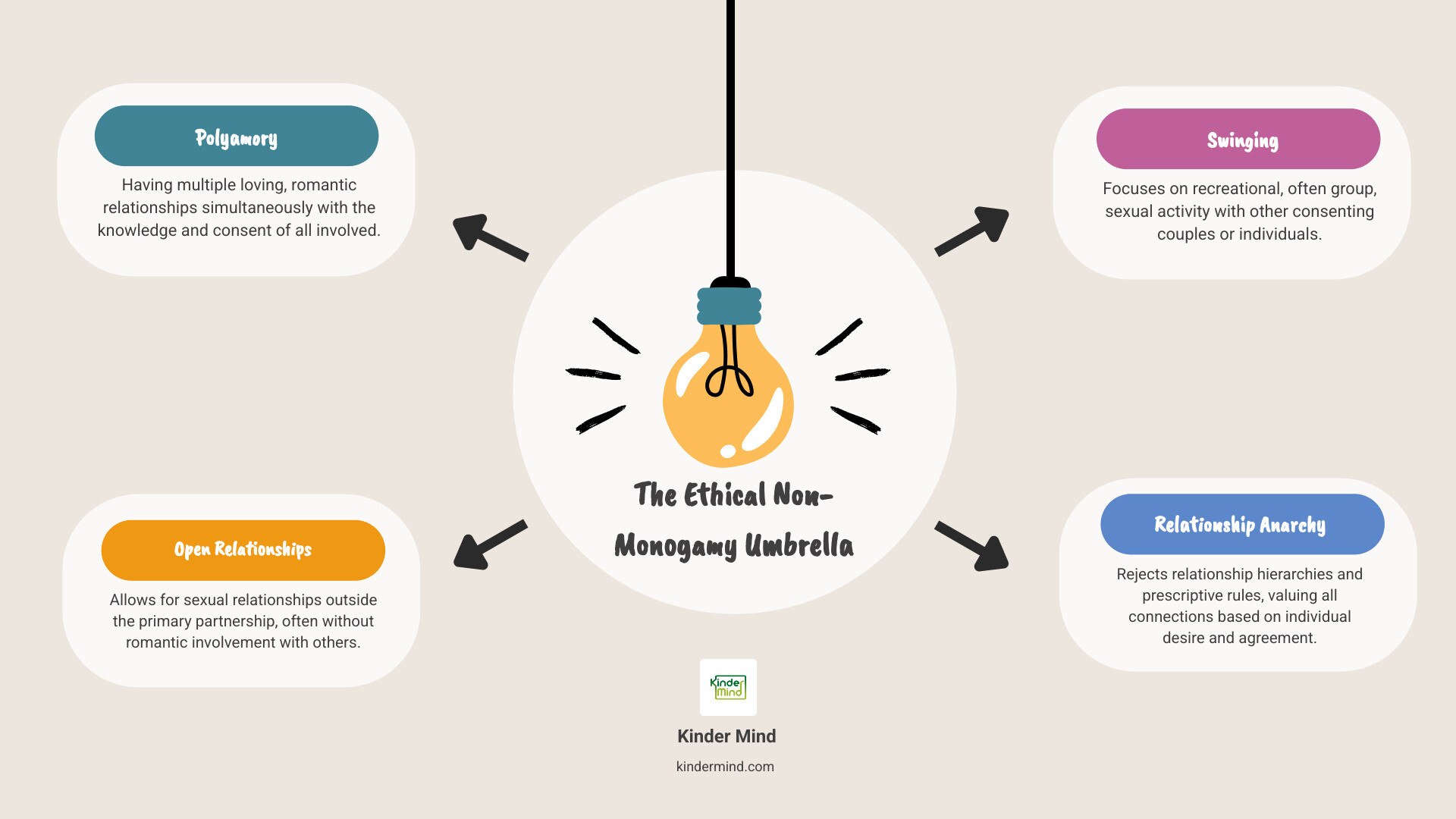
Polyamory for beginners further reading:
What is Polyamory? Understanding the Basics
Polyamory is a form of consensual or ethical non-monogamy where individuals can have romantic, sexual, or intimate relationships with multiple people at the same time, with the full knowledge and consent of everyone involved. The word “polyamory” literally means “many loves,” derived from the Greek “poly” (many) and Latin “amor” (love). It’s built on the belief that love is not a finite resource and that a person can genuinely love and commit to more than one partner.
The core tenets of polyamory include open communication, honesty, and mutual consent. These principles distinguish it sharply from other relationship dynamics. For instance, polyamory is not cheating because cheating involves deception and a breach of agreed-upon exclusivity. In polyamory, all partners are aware of and consent to the multiple relationships. It’s also not solely about sex; while sexual relationships can be a component, polyamory emphasizes deep emotional connections, love, and commitment.
Many misconceptions surround polyamory. It’s often mistakenly equated with polygamy, which refers to being married to more than one spouse, typically involving one man with multiple wives (polygyny) or one woman with multiple husbands (polyandry). Marriage to more than one person is illegal in the United States. Polyamory, however, is not about marriage to multiple people; it’s about multiple loving relationships, and it’s not illegal.
Another common myth is that polyamory is primarily motivated by a desire for more sex or that it’s inherently oppressive to women. Research, including a 2022 review of consensual non-monogamy in the journal Current Opinion in Psychology, has found no evidence to support these claims. Instead, motivations for polyamory often include personal growth, expressing political values, exploring sexual orientations, or seeking a sense of community.
Here’s a quick comparison to clarify:
| Feature | Monogamy | Polyamory | Polygamy |
|---|---|---|---|
| Definition | Exclusive romantic/sexual relationship with one person. | Multiple romantic/sexual relationships with consent of all. | Marriage to more than one spouse (often gender-specific). |
| Legality | Legal in the US. | Legal (relationships, not marriage to multiple). | Illegal in the US. |
| Consent | Implied exclusivity. | Explicit, ongoing consent from all partners. | Varies; often cultural/religious, sometimes non-consensual. |
| Focus | Exclusive partnership. | Multiple loving, committed relationships. | Marriage structure, often for family/procreation. |
| Deception | Cheating is non-consensual. | No cheating, built on honesty. | Not applicable in the same way. |
For more foundational understanding, explore Kinder Mind’s blog on Exploring Ethical Non-Monogamy and Polyamory.
Different Types of Polyamorous Relationships
Just like monogamous relationships, polyamorous relationships aren’t one-size-fits-all. They come in many forms, each with its own dynamics and agreements. Understanding these structures is a key part of polyamory for beginners.

- Hierarchical Polyamory: This structure involves a primary couple or relationship that holds a central, prioritized position, often referred to as “nesting partners” if they live together. Other relationships are considered “secondary” or “tertiary” and typically operate with certain boundaries or agreements set by the primary couple. While historically common, some in the polyamorous community now view the terms “primary” and “secondary” as potentially oppressive.
- Egalitarian or Non-Hierarchical Polyamory: In this model, all partners are considered equally important, with no ranking. This approach emphasizes autonomy and challenges traditional relationship structures.
- Relationship Anarchy (RA): This philosophy rejects all traditional relationship norms and hierarchies. Each connection is defined by the individuals involved, without labels like “partner” or “friend.”
- Solo Polyamory: An individual who identifies as solo poly prioritizes their own autonomy and independence. They may have multiple intimate relationships but typically do not seek to merge lives or share traditional relationship milestones (like cohabitation or marriage) with any specific partner. They see themselves as their own primary partner.
- Polyfidelity: This is a closed polyamorous group where all members are romantically and/or sexually involved with each other and agree not to seek connections outside the group. A common example is a closed triad (three people) or quad (four people).
Key Terms to Know
Navigating polyamory for beginners involves learning a new vocabulary. Here are some essential terms:
- Metamour: Your partner’s partner, with whom you are not romantically or sexually involved.
- Polycule: The entire network of people connected through polyamorous relationships. It’s like an extended family tree of partners and metamours.
- Kitchen Table Polyamory (KTP): A style of polyamory where metamours are comfortable and friendly enough to gather around a “kitchen table” – meaning they can interact, be supportive, and possibly even form friendships.
- Parallel Polyamory: In contrast to KTP, this is a dynamic where metamours have little to no interaction. The shared partner often mediates communication between relationships.
- Compersion: Often described as the opposite of jealousy, compersion is the feeling of joy or delight one experiences when a partner is happy with another partner. It’s taking pleasure in your partner’s happiness, even if that happiness comes from someone else.
- New Relationship Energy (NRE): The intense, exhilarating feeling often experienced at the beginning of a new romantic or sexual relationship. It’s characterized by excitement, infatuation, and a strong desire to spend time with the new partner. While thrilling, NRE requires careful management in polyamory so it doesn’t destabilize existing relationships.
For a more comprehensive list of terms, check out Kinder Mind’s blog on polyamory terms.
The Core Principles: A Beginner’s Guide to Ethical Practice
Ethical non-monogamy isn’t just about having multiple partners; it’s about how you have them. The foundation of successful polyamorous relationships rests on a commitment to ethical practice. This involves deep self-reflection, understanding your personal values, and constantly building trust with all involved.

Good poly relationships don’t happen by accident; they require significant interpersonal skills, self-awareness, and proactive management. As one expert suggests, polyamory can be a “very potent and rewarding way to improve a good relationship,” but it will also “expose the problems in a relationship.”
Consent, Communication, and Honesty
These three pillars are non-negotiable in ethical non-monogamy.
- Enthusiastic Consent: This goes beyond simply not saying “no.” It means actively and enthusiastically agreeing to a sexual act or relationship dynamic. Consent must be ongoing, freely given, and can be withdrawn at any time. For polyamory for beginners, understanding enthusiastic consent is paramount.
- Ongoing Negotiation: People and relationships are dynamic. Polyamory requires continuous negotiation about expectations, boundaries, and structures as relationships evolve.
- Radical Honesty: While honesty is crucial, it’s not about being brutal. It’s about being transparent and truthful about your feelings, desires, and actions with all partners. This includes sharing information about other relationships, emotions, and any challenges that arise. Using “I” statements (“I feel X when Y happens”) helps express feelings without placing blame. Regular check-ins are vital to ensure everyone feels heard and respected.
For a deeper dive into consent, explore Kinder Mind’s blog on Consent in Polyamory Guide.
Setting Healthy Boundaries and Agreements
Boundaries and agreements are the rules of the road for polyamorous relationships. A key distinction often made is between “rules” and “boundaries/agreements.” While rules can sometimes feel restrictive or designed to control another person’s actions, boundaries and agreements are typically seen as expressions of personal needs and mutual understandings.
- Boundaries vs. Rules: Some polyamorous individuals advise against rigid “rules,” especially those imposed by one partner on another, as they can mask insecurities and be difficult to enforce. Instead, they advocate for personal boundaries (what you will or won’t do or accept) and mutual agreements (what we decide together).
- Personal Boundaries: These are your personal limits regarding physical, emotional, and sexual interactions. Knowing your limits is crucial, as you’ll likely only find them when they’ve been crossed.
- Interpersonal Agreements: These are mutual understandings between partners about how their relationships will function. They can cover anything from how often partners will see each other, to what kind of information is shared about other relationships, to specific safer sex practices.
- Safer Sex Practices: With multiple partners, discussions about sexual health and STI prevention become even more critical. Open and honest conversations about STI status, testing, and consistent use of barrier methods are essential. Trusting partners to take care of themselves and selecting partners who do the same is key.
- Time Management: Balancing multiple relationships requires realistic time commitments. This involves transparent scheduling, prioritizing quality time with each partner, and sometimes sacrificing personal hobbies.
- Discussing New Partners: Agreements should cover how and when new partners are introduced or discussed. Some relationships prefer a “don’t ask, don’t tell” approach (though this can be problematic), while others encourage open sharing.
- Veto Power Controversy: Veto power, where one partner can unilaterally end another partner’s relationship, is a contentious topic in polyamory. While some relationships use it, many consider it to be an unethical practice that undermines autonomy and trust.
For more insights into managing these aspects, refer to Kinder Mind’s blog on Polyamory Relationship Advice.
Navigating Common Challenges in Polyamory for Beginners
Polyamory offers benefits like personal growth and diverse intimacy, but it also presents challenges like emotional complexity, time management, and societal stigma. It can amplify existing relationship problems, making a strong foundation crucial. The practice pushes individual