How Young Adults Can Find Online Therapy That Actually Works
Dr. Elizabeth Barlow, LCSW-S · 5/6/2026

The Real Deal on Online Therapy for Young Adults
Online therapy for young adults is a flexible, effective way to get licensed mental health support — without the waitlists, commuting, or rigid scheduling of traditional in-person care.
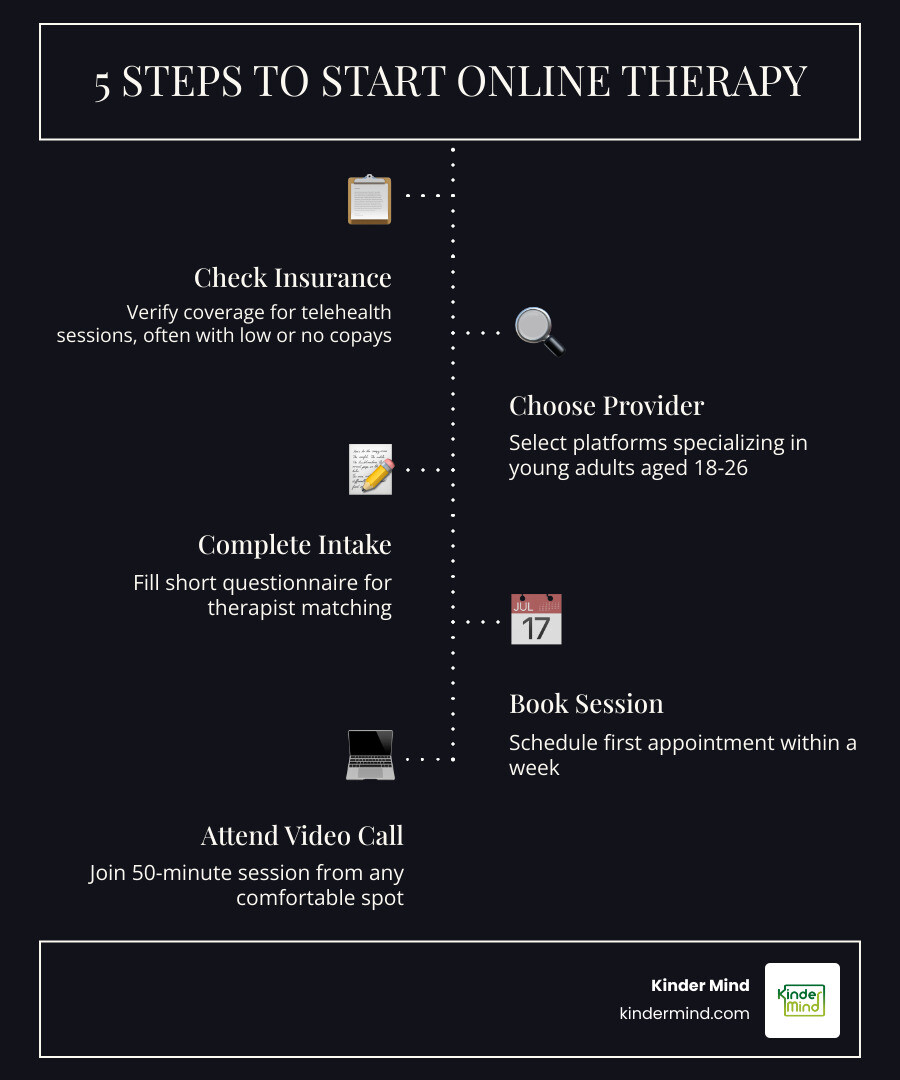
Here’s how to get started quickly:
- Check your insurance — many plans cover online therapy, often with low or no copay
- Choose a platform or provider that specializes in young adults (ages 18–26)
- Complete a short intake questionnaire to get matched with a licensed therapist
- Book your first session — most platforms can get you started within a week
- Attend your 50-minute video session from wherever you feel comfortable
Being in your late teens or early 20s is genuinely hard. You’re navigating school pressure, career uncertainty, shifting relationships, and big questions about who you are — often all at once.
It’s no surprise that 1 in 5 young people experience a mental health condition each year. Yet most never get support, whether because of cost, stigma, or simply not knowing where to start.
Online therapy removes a lot of those barriers. You don’t need to drive anywhere, sit in a waiting room, or work around a 9-to-5 schedule. You just need a device, an internet connection, and a few minutes to get matched with someone who can actually help.
Early support matters. Getting help now — rather than waiting until things get worse — builds skills and resilience that carry forward for life.
Explore more about online therapy for young adults:
Why Online Therapy for Young Adults is a Game Changer
For the generation that grew up with a smartphone in their hand, Virtual Therapy isn’t just a backup option—it’s often the preferred choice. Digital natives are naturally comfortable communicating through screens, which can actually lower the “intimidation factor” of starting therapy. Instead of the sterile environment of a doctor’s office, you can talk to a professional from the safety of your bedroom or a quiet corner of the library.
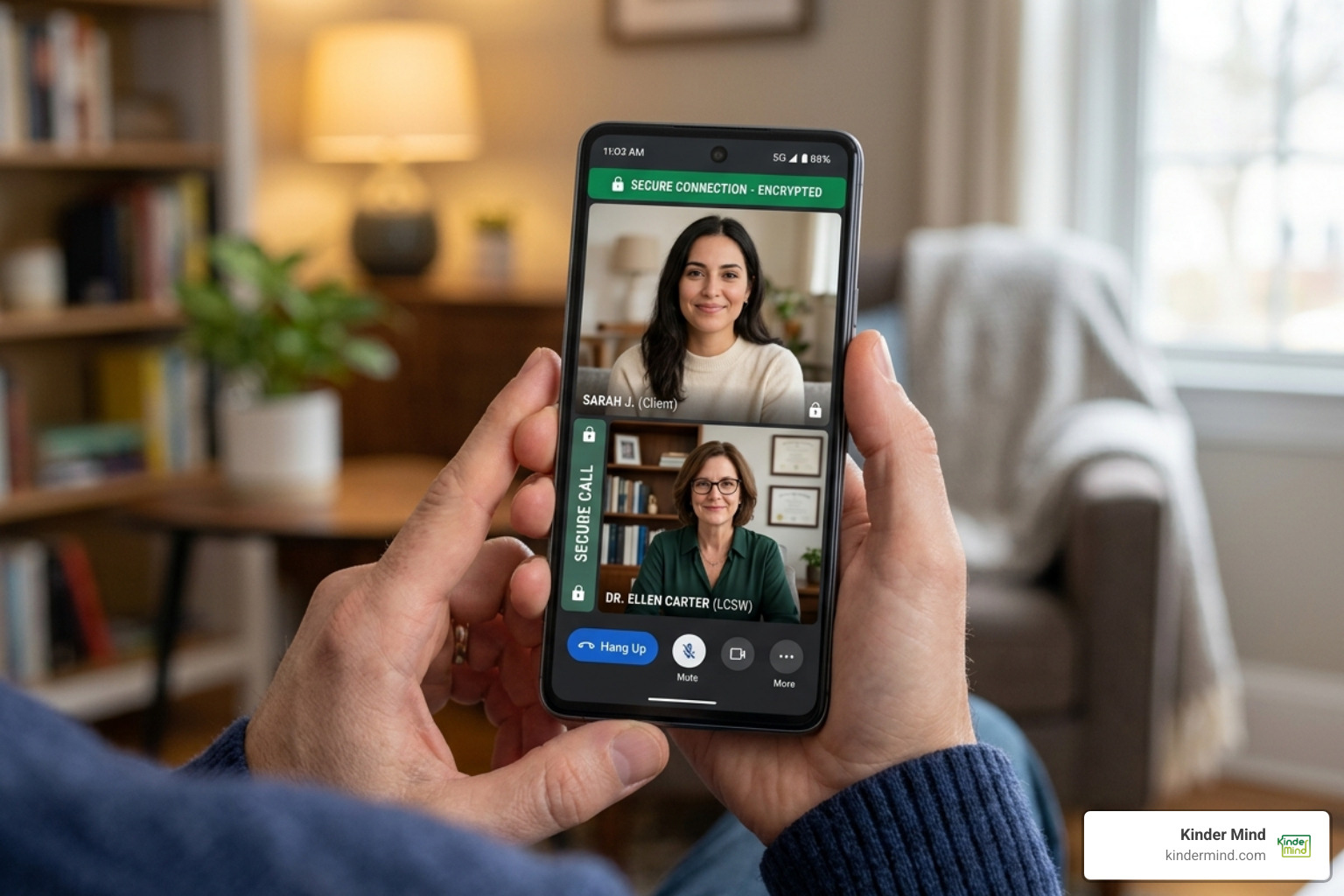
One of the biggest hurdles for people aged 18-26 is schedule flexibility. Between college classes, part-time jobs, and trying to maintain a social life, finding two hours for a commute and an appointment is nearly impossible. Online Therapy solves this by allowing sessions during lunch breaks, after evening shifts, or even on weekends.
Privacy is another massive win. Many young adults live in shared dorms or with parents and may not want to explain where they are going every Tuesday at 4 PM. Virtual care allows for a level of discretion that in-person visits simply can’t match. Furthermore, scientific research on virtual therapy for caregivers and youth shows that telehealth is just as effective as traditional methods. In fact, research indicates an 80% effectiveness rate, with many users finding it even more convenient than face-to-face sessions.
Addressing Common Mental Health Challenges in Your 20s
The transition to adulthood is a high-pressure environment. Young adults often deal with a specific set of Young Adult Issues Specialty areas that older generations might not fully grasp.
- Anxiety and Depression: These are the most common challenges, often fueled by the “quarter-life crisis” or the pressure to have a perfect career mapped out by age 22.
- Social Media Fatigue: Constant comparison to the highlight reels of others can lead to feelings of inadequacy, loneliness, and “phone addiction.”
- Identity Exploration: Figuring out your values, gender identity, or sexual orientation requires a safe, non-judgmental space to talk.
- Relationship Struggles: Navigating the complexities of modern dating, setting boundaries with parents, and finding “your people” can be emotionally draining.
Is Online Therapy for Young Adults as Effective as In-Person?
A common question is whether a video call can truly replace a couch. The data says yes. Clinical outcomes for online therapy for young adults are remarkably strong. Some studies have shown that virtual platforms can achieve 2x recovery rates for clinical anxiety and depression compared to traditional in-person models.
For those currently in school, Therapy for Students provides a vital bridge. The therapeutic alliance—the bond between you and your therapist—is just as strong over video. Because young adults are “digital natives,” they often find it easier to be vulnerable through a screen. Licensed providers use the same evidence-based methods, such as Cognitive Behavioral Therapy (CBT), ensuring that the quality of care remains high regardless of the medium.
Signs You or a Loved One May Need Professional Support
It can be hard to tell the difference between “normal stress” and a situation that requires professional help. If you’re wondering whether it’s time to reach out, look for persistent patterns rather than a single bad day.
Common signs that it’s time to seek support include:
- Mood Shifts: Persistent irritability, sudden outbursts, or feeling “flat” and empty for weeks at a time.
- Sleep and Appetite Changes: Sleeping too much, having trouble falling asleep, or noticing a significant change in how much you eat.
- Social Withdrawal: Pulling away from friends, skipping social events you used to enjoy, or isolating yourself in your room.
- Academic or Work Decline: A sudden drop in grades or productivity, or a loss of interest in a career path you were once excited about.
- Feelings of Hopelessness: Thinking that things will never get better or having thoughts of self-harm.
There is a growing movement to normalize these struggles. Understanding Why Therapy Rocks for Students is about realizing that seeking help is a proactive way to build emotional strength, not a sign of failure.
Choosing the Right Type of Online Therapy for Young Adults
Not all therapy is the same. Depending on what you are facing, different “modalities” might work better for you:
- Cognitive Behavioral Therapy (CBT): Focuses on identifying and changing negative thought patterns that lead to difficult emotions.
- Dialectical Behavior Therapy (DBT): Excellent for managing intense emotions and improving relationships through mindfulness and distress tolerance.
- Individual Counseling: A one-on-one deep dive into your personal history and goals, often found in Young Adult Therapy programs.
- Group Sessions: Connecting with peers who are going through similar struggles can reduce feelings of isolation.
- Trauma-Informed Care: Specialized support for those who have experienced past or recent traumatic events.
- Mental Health Coaching: For those who need help with goal-setting and daily functioning, Mental Health Coaching can be a great, action-oriented supplement to traditional therapy.
How to Know if Virtual Support is Right for You
While online therapy for young adults is widely effective, it requires a few things to work well. You’ll need a bit of self-motivation to log on each week and a reliable device with a camera. Most importantly, you need a private space where you feel safe speaking freely.
If you are in the middle of a high-risk crisis involving immediate danger, in-person emergency services are often the better starting point. However, for the vast majority of young adults dealing with life transitions, stress, and mood disorders, virtual support is an ideal fit.
Navigating Costs and Insurance for Virtual Care
One of the biggest myths about therapy is that it’s only for the wealthy. In reality, virtual care has made support more affordable than ever.
Many young adults are still covered by their parents’ insurance or have plans through their university. Most major insurance providers now cover telehealth. For many, the average copay is around $15, and some plans even offer $0 copays for mental health services. If you’re wondering How Students and Teachers Can Find Affordable Therapy, the first step is always checking your insurance benefits.
How to Get Started with Low-Cost Options
If you don’t have insurance, don’t panic. There are several ways to access care:
- Sliding Scales: Many providers offer “sliding scale” fees based on your income.
- Mental Health Coaching: Options like Online Mental Health Coaching are often more budget-friendly than clinical therapy while still providing significant support.
- University Resources: Most colleges offer free or low-cost short-term counseling for students.
- Scholarship Programs: Some organizations offer grants or scholarships to cover the cost of therapy for those in need.
What Parents Should Know About Supporting Young Adults
If you are a parent or guardian, your role is to be a “supportive observer.” While you might be paying for the sessions, it is crucial to respect privacy boundaries. For young adults aged 18-26, the relationship between the therapist and the client is confidential.
Encouragement and open communication go a long way. Instead of trying to “fix” the problem, focus on reducing stigma and supporting their decision to seek help. Coordinated care—where therapy is combined with a healthy routine and, if necessary, medication management—often leads to the best long-term outcomes.
What to Expect During Your First Online Session
The first session is usually an “intake evaluation.” Think of it as a low-pressure “get to know you” meeting.
- Duration: Standard sessions are usually 50 minutes, though the first intake might be slightly longer (up to 60 minutes).
- Goal Setting: You and your therapist will discuss what you hope to achieve. Whether it’s managing panic attacks or figuring out a career path, you’re the one in the driver’s seat.
- Tech Check: You’ll receive a link to a secure, HIPAA-compliant video platform. You just need a stable internet connection and a microphone.
- The Timeline: While 89% of people report feeling a noticeable improvement within just 5 sessions, most significant progress happens around the 12-week mark. Many people “graduate” from therapy in under 6 months once they’ve built a solid toolkit of coping skills.
You can browse All Providers to find someone whose background and specialty align with your needs.
Frequently Asked Questions about Online Therapy
What technology do I need to start?
You don’t need a high-tech studio. A smartphone, tablet, or laptop with a working camera and microphone is enough. A stable, high-speed internet connection is important to avoid lagging. Most importantly, you need a private environment where you won’t be interrupted.
How long does it take to see results?
Everyone’s pace is different. However, many users report feeling better after just a few sessions because they finally have a place to vent. Significant, lasting change usually takes about 12 weeks of consistent effort. Therapy is a marathon, not a sprint, and individualized pacing is key.
Are there any drawbacks to virtual sessions?
The most common issues are technical, like a poor Wi-Fi signal. Some people also miss the physical presence of a therapist, though most find the convenience outweighs this. It’s also important to note that virtual therapy is generally not recommended for those in an active, life-threatening crisis; those situations require immediate, in-person intervention.
Conclusion
Taking the step to start online therapy for young adults is a powerful investment in your future self. Whether you are dealing with the stress of Alabama’s job market, navigating a university in California, or managing life transitions in New York, support is closer than you think.
Kinder Mind is dedicated to making this process as simple as possible. We offer virtual services across the United States, from Alaska to Florida, ensuring that high-quality, affordable care is accessible to everyone.
Ready to start feeling more grounded?
- Our Providers — Meet our team of specialists.
- Book a Session — Find a time that works for your schedule.
- Get Started — Take the first step toward a healthier you.
- Check Your Insurance Coverage — See how affordable your care can be.