
Tie the Knot Without the Tangle with Virtual Premarital Sessions
Dr. Elizabeth Barlow, LCSW-S · 3/27/2026

Why Premarital Counseling Virtual Sessions Are Worth It Before You Say “I Do”
Premarital counseling virtual sessions give engaged couples a structured, affordable way to build a strong foundation before marriage — from the comfort of home.
Here’s a quick look at what to expect:
- What it is: Guided sessions with a licensed therapist over secure video call, focused on communication, finances, conflict, and intimacy
- How long it takes: Most couples complete programs in 8 to 15 weeks
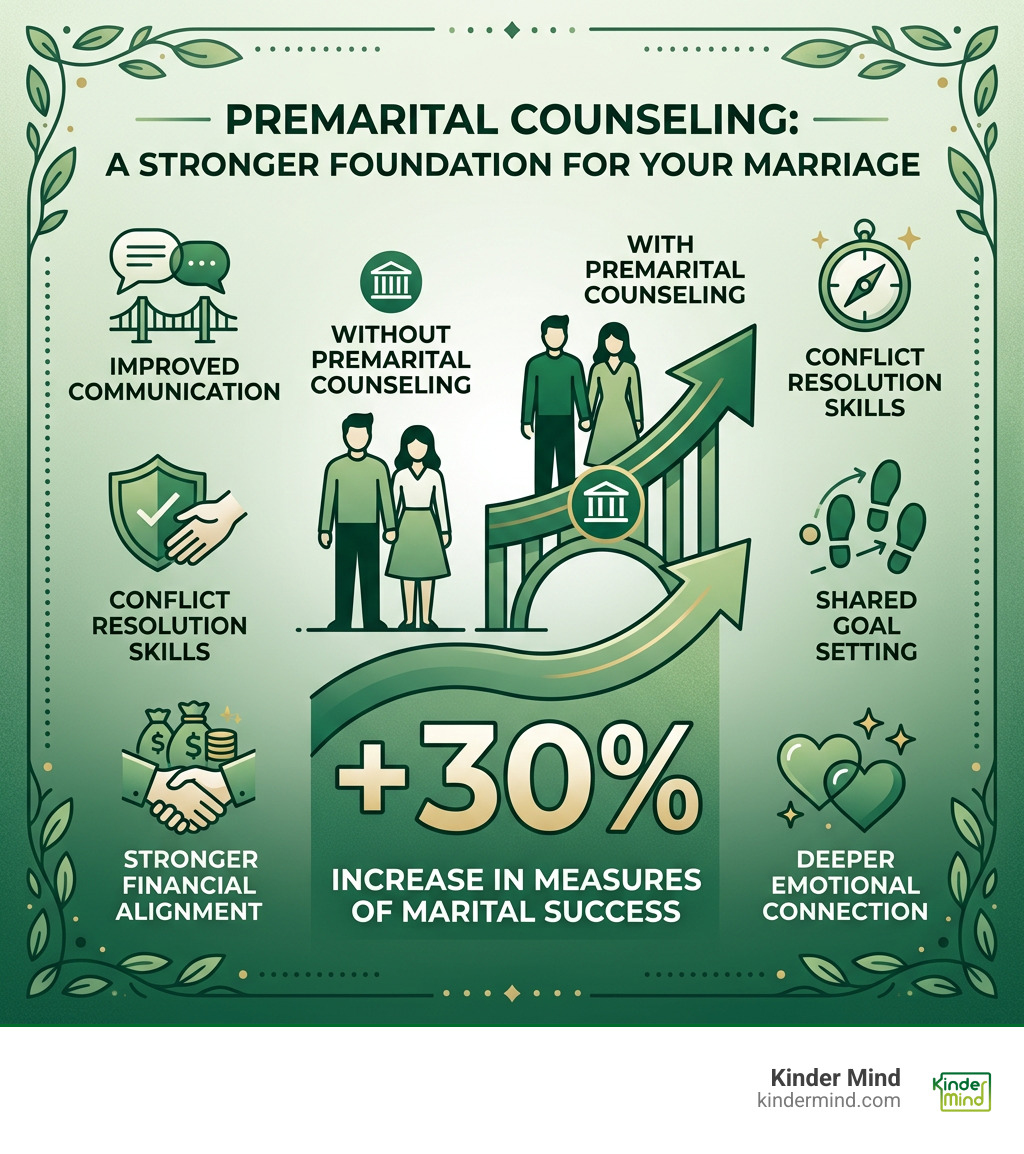
- Does it work? Research shows premarital counseling participants see roughly a 30% increase in measures of marital success
- Who it’s for: Any engaged couple — including long-distance pairs, busy professionals, and those who’ve never tried therapy before
- Cost: Online sessions are typically more affordable than in-person alternatives
Wedding planning gets a lot of attention. Flowers, venues, guest lists, seating charts. But the conversations that actually shape a marriage? Those often get skipped.
That’s the gap premarital counseling fills. And now, virtual sessions make it easier than ever to access — no commute, no waiting rooms, no scheduling gymnastics.
Think of it as relationship insurance. You’re not going because something is broken. You’re going because you want it to stay strong.
Whether you’re weighing your options or ready to book your first session, this guide covers everything you need to know about virtual premarital counseling — what it covers, how it works, what it costs, and how to find the right fit.
Understanding Premarital Counseling Virtual Sessions
Premarital care is essentially a proactive “pre-flight check” for your relationship. While many people view therapy as something you do only when a “check engine” light comes on, premarital work is preventive. It is designed to equip couples with the tools they need to navigate the inevitable turbulence of life before they ever leave the ground.
One of the most common questions couples ask is: how does this differ from regular therapy? The difference between premarital and couples therapy often comes down to the starting point. Traditional couples therapy often addresses existing distress or specific crises. Premarital counseling, on the other hand, focuses on goal alignment and skill-building. It’s less about “fixing” and more about “preparing.”
Licensed professionals provide a safe, unbiased space to explore relationship patterns that might not have surfaced during the “honeymoon phase.” According to the American Psychological Association, proven benefits include improved communication during conflict, better preparedness for future stressors, and an outlet for partners to express opinions without judgment.

How Virtual Premarital Counseling Sessions Work
The beauty of premarital counseling virtual sessions lies in their simplicity. Instead of rushing across town after work to find a parking spot, couples simply log into a HIPAA-compliant video conferencing platform. These platforms are encrypted to ensure that your private conversations stay private.
The format typically involves:
- Synchronous Video Calls: Real-time interaction where you can see and hear your therapist.
- Digital Assessments: Many providers use tools like Prepare-Enrich, an online questionnaire that snapshots your relationship’s strengths.
- Screen Sharing: Therapists can share worksheets, communication templates, or “pathway” guides directly on the screen.
- Flexible Scheduling: Virtual options often allow for evening or weekend sessions that fit around wedding planning.
For those interested in the logistical side, virtual therapy for couples offers a level of flexibility that traditional offices simply can’t match.
Is Online Therapy as Effective as In-Person?
Couples often wonder if they’ll lose that “human connection” through a screen. However, research and therapist anecdotes suggest otherwise. In a study of couples in premarital partnerships, researchers found that online therapy can actually increase a couple’s positive feelings regarding marriage and help them develop a deeper understanding of one another.
There is also a unique “comfort of home” factor. Some therapists note that couples are often more vulnerable and authentic when they are in their own living room—perhaps even without shoes on—rather than in a sterile office environment. This comfort leads to a stronger therapeutic alliance. Furthermore, virtual sessions often see higher consistency in attendance because there are fewer logistical barriers like traffic or childcare issues.
Key Topics Covered in Your Program
A comprehensive premarital program isn’t just a generic chat. It’s a deep dive into the “Big Three” (money, kids, and sex) and beyond. Here is a comparison of common discussion areas:
| Topic Area | Focus of Discussion |
|---|---|
| Communication | Learning to listen without getting defensive. |
| Finances | Debt transparency, budgeting styles, and shared goals. |
| Intimacy | Sexual expectations and emotional connection. |
| Family Dynamics | Dealing with in-laws and family-of-origin patterns. |
| Roles & Goals | Who does the dishes? Where do we want to be in 5 years? |
Improving couples communication skills is usually the top priority. Most arguments aren’t actually about the dishes; they are about feeling unheard or unappreciated. Virtual sessions give you a laboratory to practice these skills in real-time.
Navigating Conflict and Expectations
Conflict is a natural part of any long-term partnership. Research shows that couples in distress often struggle because they lack constructive problem-solving skills. Premarital sessions teach you “fair fighting” rules.
You’ll also explore your “Family of Origin.” This is a fancy way of saying you’ll look at how your parents handled conflict and how that influences your own behavior today. If you find yourselves at a crossroads regarding the future of the relationship itself, a beginners guide to discernment counseling can help you decide the best path forward.
Addressing Intimacy and Connection
Marriage is about more than just being roommates who share a bank account. Maintaining a “spark” takes intentionality. Sessions often cover:
- Love Languages: How do you and your partner give and receive affection?
- Sexual Expectations: Discussing frequency, desires, and how to communicate about sex without awkwardness.
- Quality Time: Establishing rituals of connection to prevent the “drift” that can happen over years of marriage.
Focusing on marital and premarital growth ensures that you aren’t just planning for a wedding day, but for a lifetime of intimacy.
What to Expect and How to Prepare
When you start your journey, the first session is usually an “intake interview.” This is where the therapist gets to know your history—how you met, what your current challenges are, and what you hope to achieve.
Many therapists use the Prepare-Enrich assessment. This is a widely respected tool that provides an objective look at your relationship. You’ll both answer questions separately, and the therapist will then use the results to highlight your “growth areas.” By identifying these early, you can tackle them before they become major points of contention.
For more details on how these sessions are delivered, you can explore virtual-therapy-remote-delivery.
Preparing for Your Premarital Counseling Virtual Sessions
To get the most out of your time, a little preparation goes a long way:
- Find a Private Space: Ensure you are in a room where you won’t be interrupted by roommates, children, or pets.
- Check Your Tech: A stable internet connection is vital. There’s nothing like a poignant emotional breakthrough being ruined by a “buffering” icon.
- Set Shared Objectives: Talk with your partner beforehand. What are the top three things you want to walk away with?
- Be Open: Come prepared to answer open-ended questions. There are no “wrong” answers in therapy, only honest ones.
Kinder Mind focuses on making this process accessible and low-stress, ensuring that the technology helps rather than hinders your progress.
The Typical Timeline and Duration
How long does it take to “graduate”? It depends on your goals.
- The “Sweet Spot”: Many couples find that 5 to 8 sessions cover the essentials effectively.
- The Standard Program: On average, programs last between 8 to 10 weeks or 10 to 15 weeks.
- Session Length: Most sessions are 60 minutes, though some couples prefer 90-minute “intensives” to dive deeper into complex topics like blended family dynamics.
You can learn more about service delivery options to see what fits your schedule best.
Cost, Insurance, and Accessibility
One of the biggest drivers toward premarital counseling virtual sessions is affordability. Online premarital counseling is often more cost-effective than traditional face-to-face therapy. This is because virtual providers often have lower overhead costs—no expensive office suites or waiting room staff—and those savings are passed on to you.
A Note on Insurance: It is important to know that health insurance often does not cover premarital counseling. This is because insurance typically requires a clinical diagnosis (like depression or anxiety) to authorize payment. Since premarital work is considered “educational” or “enrichment,” it usually doesn’t qualify. However, many couples are able to use their HSA (Health Savings Account) or FSA (Flexible Spending Account) cards to pay for sessions.
Kinder Mind aims to destigmatize this process by offering various payment options and reduced-rate plans to ensure care remains accessible. For a broader look at the digital landscape, check out our virtual-therapy-guide.
Long-Distance and Remote Options
Virtual sessions are a lifesaver for couples living apart. Whether one partner is on a military deployment, a traveling professional, or you are simply in a long-distance relationship until the wedding, multi-way video calls allow everyone to be in the same “room.”
This global accessibility means you don’t have to put your relationship growth on hold just because you aren’t in the same zip code. Therapists can coordinate across time zones to find a slot that works for both of you.
Frequently Asked Questions about Premarital Prep
Does premarital counseling really reduce the risk of divorce?
Yes. Research consistently shows that couples who participate in premarital intervention programs experience an approximately 30% increase in measures of marital success. By acquiring conflict-resolution skills early, you reduce the likelihood that small disagreements will snowball into marriage-ending problems.
Can we do sessions if we live in different cities?
Absolutely. This is one of the primary benefits of the virtual format. Most platforms allow the therapist to host a three-way call, bringing both partners and the counselor together regardless of physical location.
How many sessions will we actually need?
While the 5 to 8 session “sweet spot” is common for many, some couples with more complex backgrounds—such as those blending families or navigating significant cultural differences—may benefit from 12 to 15 sessions. Your therapist will work with you to create a customized plan.
Conclusion
Your wedding is a day; your marriage is a lifetime. Investing in premarital counseling virtual sessions is like buying the best possible insurance for your relationship. It’s a way to destigmatize the idea of seeking help and to build a bond that is resilient, transparent, and joyful.
By addressing the “tangles” now, you ensure that when you finally tie the knot, the knot is strong enough to hold.
Ready to build a foundation that lasts? Start your journey with Kinder Mind couples therapy and give your marriage the head start it deserves.
