
Mind Over Matter A Deep Dive into Cognitive Behavior
Dr. Elizabeth Barlow, LCSW-S · 3/10/2026

Understanding Cognitive Behavior: What It Is and Why It Matters
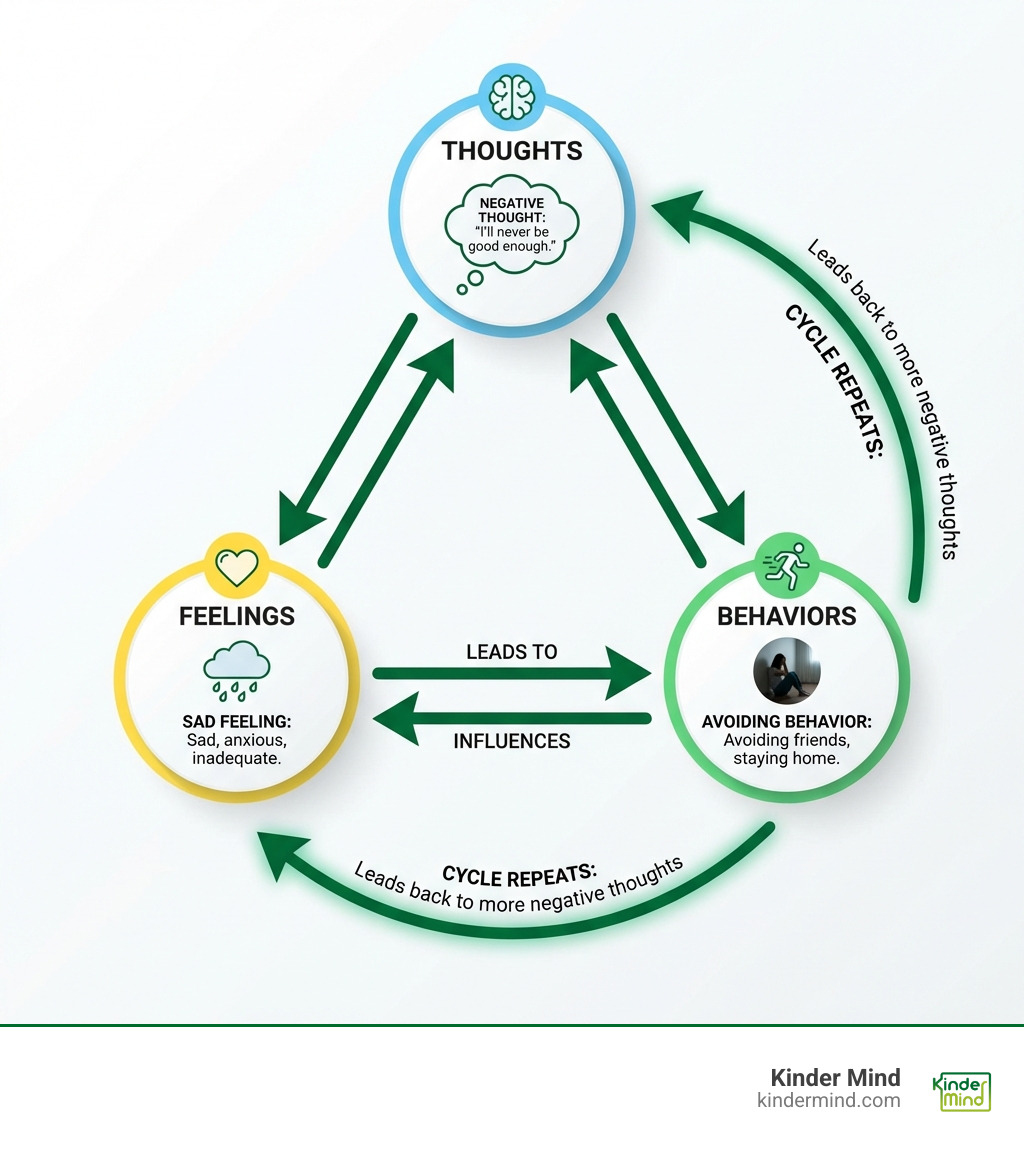
Cognitive behavior is the connection between your thoughts, feelings, and actions—and understanding this relationship can transform your mental health. At its core, cognitive behavior explores how the way you think influences how you feel and what you do.
Quick Answer: Key Facts About Cognitive Behavior
- What it is: The study of how thoughts, emotions, and behaviors interact and influence each other
- Core principle: Changing unhelpful thought patterns can change feelings and behaviors
- Main application: Cognitive Behavioral Therapy (CBT), one of the most researched forms of psychotherapy
- Treats: Depression, anxiety, PTSD, OCD, eating disorders, chronic pain, and more
- Duration: Typically 12-16 weeks with weekly 50-minute sessions
- Effectiveness: As effective as or more effective than medication for many conditions
Since the 1960s, when psychoanalyst Aaron Beck first developed Cognitive Behavioral Therapy, mental health professionals have used this understanding to help millions of people. The research is clear: numerous studies show that CBT leads to significant improvements in functioning and quality of life.
The beauty of cognitive behavior is its practicality. Unlike therapies that focus heavily on the past, this approach zeroes in on current problems and actionable solutions. You learn to spot thinking errors—like catastrophizing or black-and-white thinking—and replace them with more balanced, realistic thoughts.
This isn’t just theory. Brain imaging studies suggest CBT may actually change activity in areas like the prefrontal cortex and precuneus. Your brain can rewire itself when you consistently practice new ways of thinking.
For people struggling with the high cost of therapy or complicated insurance plans, understanding cognitive behavior opens doors. The structured, time-limited nature of CBT makes it more affordable than long-term therapies. Many therapists offer virtual sessions, making consistent care more accessible than ever.
Cognitive behavior glossary:
What is Cognitive Behavioral Therapy?
Cognitive Behavioral Therapy (CBT), often referred to simply as CBT, is a widely recognized and highly effective form of talk therapy or psychotherapy. It’s a structured, goal-oriented approach that helps individuals understand the intricate connections between their thoughts, feelings, and behaviors. The fundamental idea behind CBT is that our thoughts significantly influence our emotions and actions. By identifying and challenging unhelpful thought patterns and learned behaviors, individuals can develop healthier coping mechanisms and improve their overall well-being.
The origins of CBT can be traced back to the 1950s, primarily through the groundbreaking work of Aaron Beck and Albert Ellis. Beck, a psychoanalyst, observed that his patients struggling with depression often experienced characteristic “cognitive distortions”—biased interpretations of events that led to negative emotions. He theorized that depression wasn’t solely a mood disorder but also a cognitive one, driven by these faulty thinking patterns. This insight led to the development of cognitive therapy.
Philosophically, the roots of cognitive behavior therapy extend much further back, even to ancient Stoicism, which emphasized the idea that external events don’t upset us, but rather our interpretations of them do. Some historical accounts even identify Abu Zayd Al-Balkhi, a 9th-century Persian polymath, as a pioneer of cognitive-behavioral principles, noting his work on treating obsessional disorders by encouraging patients to challenge their negative thoughts. This rich historical and philosophical backdrop underscores CBT’s enduring relevance and effectiveness.
Since its inception, CBT has become one of the most well-studied and evidence-based forms of psychotherapy. Its development marked a significant shift in the field of mental health, introducing a rigorous, scientific approach to therapy. Beck’s innovation of combining detailed treatment protocols with outcome research set a new standard for empirically validated psychological treatments, influencing countless subsequent therapies. The extensive research on CBT’s efficacy is a testament to its scientifically supported development. You can dig deeper into the scientific research on its development by clicking this link: Scientific research on the development of CBT.
CBT is often described as a “didactic” therapy because it involves teaching patients specific skills and strategies. It’s not just about talking; it’s about learning and actively applying new ways of thinking and behaving to overcome challenges. This structured approach, combined with its strong evidence base, makes CBT a preferred first-line treatment for many psychological disorders by major health organizations, including the American Psychiatric Association and the American Psychological Association.
Core Principles of Cognitive Behavior
At the heart of cognitive behavior therapy are several core principles that guide the therapeutic process. These principles emphasize a practical, present-focused, and collaborative approach to mental health.
Thoughts, Feelings, and Behaviors are Interconnected: The foundational principle of CBT is the understanding that our thoughts, emotions, and behaviors are inextricably linked. A situation triggers a thought, which then influences a feeling, and that feeling, in turn, drives a behavior. This behavior then feeds back into our thoughts, creating a continuous cycle. For example, if you think, “I’m going to fail this task” (thought), you might feel anxious (feeling), and then avoid starting the task (behavior), which reinforces the initial negative thought.
Psychological Problems Stem from Unhelpful Thoughts and Learned Behaviors: CBT posits that psychological distress often arises from distorted or irrational thinking patterns and maladaptive behaviors learned over time. These unhelpful patterns can lead to a cycle of negative emotions and actions that perpetuate the problem.
Individuals Can Learn Better Ways of Coping: The good news is that these unhelpful patterns are not permanent. A core principle of CBT is that individuals can learn to identify these problematic thoughts and behaviors and replace them with more constructive ones. This process involves acquiring new skills and strategies to manage psychological concerns, relieving symptoms and improving daily life.
Emphasis on the Present: While past experiences might be acknowledged, CBT primarily focuses on “here-and-now” problems and developing solutions for current challenges. The goal is to equip individuals with practical tools they can use immediately to improve their current situation.
Goal-Oriented and Problem-Focused: CBT is a highly practical therapy, centered on specific problems and clear goals. The therapist and client work collaboratively to define these goals and track progress, ensuring the therapy remains focused and efficient.
Collaborative Approach: The relationship between the therapist and client in CBT is a partnership. The therapist acts as a guide, teaching skills and providing support, while the client is an active participant, bringing their experiences and committing to practicing new strategies both inside and outside of sessions.
This collaborative, skill-building approach leads to significant functional improvement and improved quality of life for many individuals. Dr. Zindel Segal, a CBT expert, discusses how CBT works, and his video also features people explaining how CBT helped them deal with various mental health problems, including depression and schizophrenia. You can watch this insightful video here: Video: Dr. Zindel Segal discusses how CBT works.
The Role of Homework in Cognitive Behavior
One of the distinctive features of cognitive behavior therapy is the emphasis on “homework” and active participation outside of therapy sessions. This isn’t your typical school homework; rather, it’s a crucial component that transforms therapy from a weekly conversation into a continuous process of learning and growth.
The therapist and client work collaboratively to understand the client’s problems and develop treatment strategies. This collaborative spirit extends to homework assignments. These assignments are carefully designed to help individuals practice the skills and strategies learned in therapy in their daily lives. For example, someone working on anxiety might be asked to keep a thought journal, noting down anxious thoughts and the situations that triggered them. Another might be encouraged to gradually expose themselves to a feared situation, starting with small, manageable steps.
This active participation and real-world application are vital for several reasons:
- Skill-building: Homework provides opportunities to build and reinforce new cognitive and behavioral skills. Just like learning a musical instrument, consistent practice is essential for mastery.
- Reinforcement: Applying what’s learned in sessions to real-life situations helps solidify new thought patterns and behaviors, making them more automatic over time.
- Self-efficacy: Successfully completing homework assignments builds a sense of confidence and independence, empowering individuals to become their “own therapists.” They learn that they have the tools and capacity to manage their challenges.
- Accelerated progress: Consistent practice between sessions often leads to faster and more sustained therapeutic gains. It allows individuals to test out new ways of thinking and behaving in their natural environment.
Without this active engagement, the impact of therapy sessions would be significantly diminished. Homework is where the rubber meets the road, translating theoretical understanding into practical, lasting change.
Changing Thinking Patterns in Cognitive Behavior
A cornerstone of cognitive behavior therapy is the process of identifying and modifying unhelpful thinking patterns, often referred to as “cognitive distortions.” These are systematic errors in thinking that can lead to negative emotions and maladaptive behaviors. Examples include:
- Catastrophizing: Expecting the worst-case scenario.
- Black-and-white thinking: Seeing things in extremes, with no middle ground.
- Overgeneralization: Drawing a broad, negative conclusion based on a single event.
- Mind reading: Assuming you know what others are thinking without evidence.
- Personalization: Blaming yourself for events you’re not solely responsible for.
In CBT, individuals learn to recognize these distortions in their own thoughts. The therapist guides them through a process of examining the evidence for and against these thoughts, considering alternative perspectives, and ultimately reframing them into more realistic and balanced interpretations. This often involves techniques like Socratic questioning, where the therapist asks open-ended questions to help the client critically evaluate their own thoughts.
This process of changing thinking patterns isn’t just a mental exercise; it can have a tangible impact on the brain. Research, including a 2022 review of brain imaging studies, suggests that CBT may alter activity in key brain regions. Specifically, it has been observed to affect the prefrontal cortex (often called the “personality center”), which is involved in executive functions like planning and decision-making, and the precuneus, associated with memory, self-awareness, and integrating perceptions. This indicates that through consistent practice, CBT can help rewire neural pathways, leading to more adaptive emotional and behavioral responses. For more details on how CBT alters brain activity, you can consult this research: Research on how CBT alters brain activity.
By consciously challenging and reshaping distorted thoughts, individuals can develop a more accurate and helpful perspective on themselves, their experiences, and the future. This shift in perspective is a powerful tool for managing emotions and fostering positive behavioral change.
Mental Health Conditions Effectively Treated by CBT
One of the most compelling aspects of Cognitive Behavioral Therapy is its broad applicability and proven effectiveness across a wide spectrum of mental health conditions. It is not an exaggeration to say that CBT is often considered the “gold standard” of psychological treatment for many disorders, frequently recommended as a first-line intervention.
CBT has been extensively researched and found to be highly effective for:
- Depression: CBT helps individuals identify and challenge negative thought patterns that contribute to feelings of hopelessness and sadness. It also encourages behavioral activation, helping people re-engage in activities that bring them pleasure or a sense of accomplishment.
- Anxiety Disorders: This includes generalized anxiety disorder, social anxiety disorder, panic disorder, and specific phobias. CBT teaches strategies to manage anxious thoughts, reduce physical symptoms of anxiety, and gradually confront feared situations (exposure therapy) to reduce avoidance. For example, for generalized anxiety, it focuses on replacing negative automatic thoughts.
- Obsessive-Compulsive Disorder (OCD): A specific form of CBT called Exposure and Response Prevention (ERP) is a highly effective treatment for OCD, helping individuals confront obsessions without engaging in compulsive behaviors.
- Post-Traumatic Stress Disorder (PTSD): Trauma-focused CBT helps individuals process traumatic memories and reduce symptoms like flashbacks, avoidance, and hyperarousal. There is strong evidence that CBT-exposure therapy can significantly reduce PTSD symptoms and lead to the loss of a PTSD diagnosis. You can find research on CBT for individuals with PTSD here: Research on CBT for individuals with PTSD.
- Eating Disorders: CBT is often the first line of treatment for conditions like bulimia nervosa and non-specific eating disorders, helping individuals address distorted body image, unhealthy eating patterns, and associated thoughts.
- Substance Use Disorders: CBT helps individuals identify triggers for substance use, develop coping mechanisms, and reframe maladaptive thoughts related to addiction. It is effective for various substances, including alcohol, marijuana, cocaine, and methamphetamine.
- Attention-Deficit/Hyperactivity Disorder (ADHD): While often combined with medication, CBT can help adults and adolescents with ADHD develop organizational skills, time management strategies, and em
