Your Guide to Finding a Polyamory-Informed Therapist Online and Near You
Dr. Elizabeth Barlow, LCSW-S · 2/13/2026

Why Finding the Right Support Matters for Your Relationships
A polyamory friendly therapist is a mental health professional who understands and affirms consensual non-monogamous relationship structures without judgment or attempting to change your relationship orientation. Here’s how to find one:
Quick Guide to Finding a Polyamory-Affirming Therapist:
- Search specialized directories – Look for therapists who explicitly list “polyamory,” “ENM,” or “consensual non-monogamy” as specialties
- Ask direct questions – During consultations, ask about their experience with non-traditional relationships and their therapeutic approach
- Look for key qualifications – Seek therapists with training in relationship diversity, kink-aware certifications, or membership in affirming professional organizations
- Verify their stance – Ensure they won’t pathologize your relationship structure or assume it’s the source of your challenges
- Consider accessibility – Explore online therapy options for broader access to specialized care
More people are exploring relationships beyond traditional monogamy. Some estimates suggest as many as 1 in 9 adults in the US have engaged in consensual non-monogamy. Yet many individuals struggle to find therapists who truly understand their relationship structures.
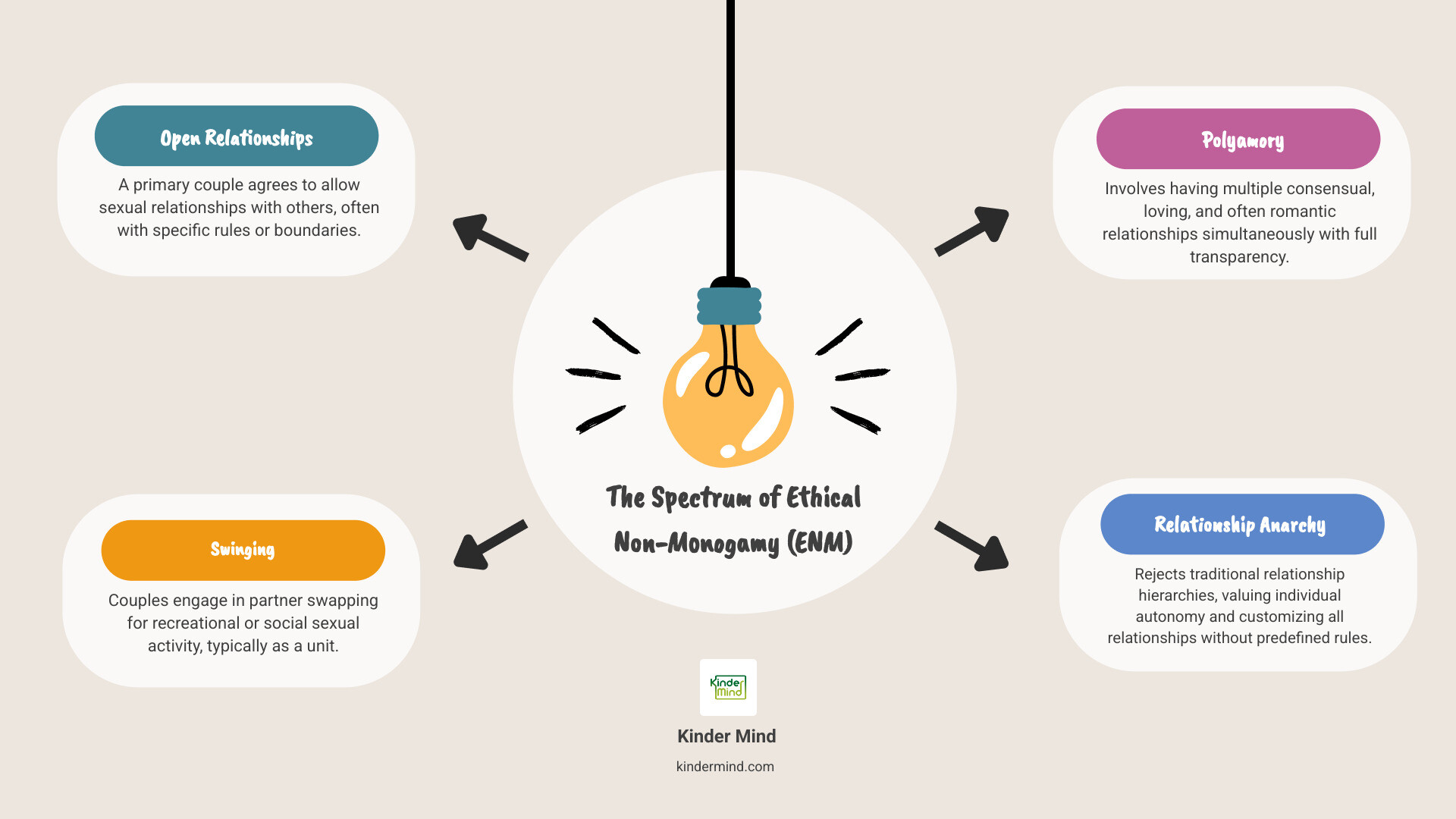
Polyamory involves having multiple consensual romantic relationships with the knowledge and agreement of everyone involved. It’s one form of ethical non-monogamy (ENM), which also includes open relationships, swinging, and relationship anarchy.
The problem? Too many therapists either lack knowledge about these relationship structures or, worse, pathologize them. Clients report experiences where therapists blamed their mental health challenges solely on being polyamorous, assumed their relationships were inherently unstable, or tried to guide them back to monogamy.
You deserve better. You deserve a therapist who sees your relationship structure as valid and focuses on your actual concerns—whether that’s managing jealousy, improving communication, navigating boundaries, or processing societal stigma.
This guide will help you find affirming, knowledgeable support for your unique relationship journey.
What is Ethical Non-Monogamy (ENM) and Polyamory?
Ethical non-monogamy (ENM) serves as an umbrella term for relationship practices where individuals engage in multiple romantic or sexual connections with the full knowledge and consent of all involved parties. This stands in contrast to traditional monogamous relationships, which typically involve two partners committed exclusively to each other. The core principles that unify all forms of ENM are honesty, transparency, consent, and communication. These pillars ensure that all relationships are built on a foundation of respect and mutual understanding.

Within the broad spectrum of ENM, various relationship styles emerge, each with its unique structure and dynamics:
- Polyamory: Derived from the Greek word “poly” (many) and the Latin word “amor” (love), polyamory specifically refers to having multiple consensual romantic relationships. It emphasizes emotional depth, commitment, and love shared among more than two people. Polyamorous relationships can take many forms, including hierarchical (where some relationships are prioritized) or non-hierarchical (where all relationships are considered equally important). People in polyamorous relationships often talk about “polycules” – a network of interconnected relationships.
- Open Relationships: This typically involves a primary couple who agrees to allow sexual relationships with other people outside their main partnership. While sexual openness is key, emotional or romantic attachments with outside partners may or may not be permitted, depending on the specific agreements of the primary couple.
- Swinging: Often centered around recreational sexual activity, swinging usually involves couples engaging in sexual activities with other couples or individuals, either together or separately. The focus is primarily on sexual exploration and pleasure, with emotional attachment often explicitly discouraged.
- Relationship Anarchy: This philosophy rejects all conventional rules and hierarchies in relationships, including the distinction between platonic and romantic love. Relationship anarchists believe that love is abundant and that each relationship should be defined and structured individually by the people involved, free from societal expectations or labels. Autonomy and consent are paramount.
- Solo Polyamory: Individuals practicing solo polyamory do not seek to merge their lives or identities with any partner. Their primary relationship is with themselves, and while they may have multiple romantic or sexual connections, they prioritize their individual autonomy and independence above all else. They might not live with partners, share finances, or follow traditional relationship escalator milestones.
Regardless of the specific structure, a defining characteristic of ENM is the explicit negotiation of boundaries, expectations, and agreements among all participants. This requires a high level of self-awareness and transparent communication, areas where a polyamory friendly therapist can provide invaluable support.
Common Challenges That Polyamory-Affirming Therapy Can Address
Navigating polyamorous and other ENM relationships, while incredibly rewarding, often comes with its own unique set of challenges. These are not signs of inherent dysfunction, but rather complexities that arise when moving beyond societal norms. A polyamory friendly therapist can provide a safe space and effective tools to manage these issues.

- Managing Complex Emotions: Relationships, by their nature, stir deep emotions. In ENM, these can be amplified. Therapy can help individuals develop emotional regulation skills to confidently steer the emotional landscape.
- Jealousy vs. Envy: While often conflated, a therapist can help distinguish between jealousy (fear of losing something you have) and envy (desire for something someone else has). Learning to identify the root causes of these feelings – often stemming from insecurity or unmet needs – is a crucial step in managing them constructively.
- Cultivating Compersion: This beautiful concept, often described as the opposite of jealousy, is the feeling of joy derived from witnessing a partner’s happiness and fulfillment with another partner. Therapy can teach individuals how to cultivate compersion by shifting perspective from scarcity to abundance, exploring underlying fears, and building self-soothing skills. This reframing can turn a potential threat into a source of shared happiness.
- Communication Breakdowns: Effective communication is the bedrock of any successful relationship, but it’s even more critical in ENM. With multiple partners and complex dynamics, miscommunication can quickly lead to misunderstandings and hurt. Therapists help expand communication skills, teaching active listening, assertive expression of needs, and conflict resolution strategies to foster healthy, non-traditional relationships.
- Navigating Polycule Dynamics: A “polycule” refers to the interconnected network of individuals in polyamorous relationships. Managing the dynamics within this larger group, which can include primary partners, secondary partners, metamours (a partner’s partner), and even “nesting partners” (those who live together), requires careful attention. Therapy can facilitate group or multi-partner sessions, improving communication between all parties and helping to steer hierarchies or non-hierarchical structures.
- Time and Energy Management: Juggling the needs, schedules, and emotional investments across multiple partners can be a significant challenge. Therapy can assist with practical strategies for time management, prioritizing commitments, and ensuring that all relationships receive the attention they need without leading to burnout.
- Establishing and Respecting Boundaries: Clear, ethical boundaries and agreements are vital in ENM. Therapy helps individuals and couples define what “openness” means for their unique relationships, negotiate agreements that honor everyone’s needs, and learn how to uphold these boundaries respectfully. This includes addressing instances of boundary violations or breaches of trust.
- Societal Stigma and Judgment: Despite growing awareness, polyamorous individuals often face misunderstanding, judgment, and even discrimination from family, friends, workplaces, and broader society. This can lead to internalized shame or distress. A polyamory friendly therapist provides a validating space, helping clients process this stigma, build resilience, and address fears around judgment, affirming their authentic selves.
- New Relationship Energy (NRE) Management: NRE is the intense excitement, infatuation, and emotional high often experienced at the beginning of a new romantic connection. While exhilarating, NRE can be so intense that it complicates existing relationship dynamics, potentially leading to neglect of established partners or rash decisions. Therapy can help individuals manage the intensity of NRE, ensuring it enriches rather than destabilizes their existing connections.
How to Find the Right Polyamory Friendly Therapist for You
Finding a polyamory friendly therapist is about more than just finding someone who tolerates your relationship style; it’s about finding a professional who actively affirms and understands it. This ensures you receive effective support custom to your unique needs, rather than having your relationship structure pathologized.
A truly polyamory-friendly therapist will demonstrate a non-judgmental stance, using affirming language that respects your choices. They will possess a deep understanding of ENM concepts, recognizing that your relationship structure is not inherently the source of your challenges. Instead, they will focus on your goals, whether that’s improving communication, managing emotions, or navigating complex dynamics, without attempting to change your relationship orientation.
It’s also crucial to be aware of potential microaggressions in therapy. Some therapists might inadvertently make assumptions or offer advice based on mono-normative biases. For instance, a therapist might assume that relationship issues stem directly from your polyamorous orientation, even when that’s not the case. They should never assume your goal is to change your sexual desires or relationship orientation, nor should they try to “cure” your identity. A truly affirming therapist will be aware that distress may stem from internalized cultural bias against polyamory rather than the relationship structure itself.
Furthermore, a skilled polyamory friendly therapist will understand the concept of intersectionality – how various aspects of your identity, such as race, gender, sexual orientation, and cultural background, intersect with your relationship choices and experiences. For BIPOC or LGBTQ+ individuals in polyamorous relationships, navigating systemic oppression and trauma adds layers of complexity that a culturally competent therapist should be equipped to address. They will acknowledge how culture, race, and identity shape your relationships and provide support for managing stigma from family, culture, or community.
Qualifications to Look for in a Polyamory Friendly Therapist
When searching for a polyamory friendly therapist, specific qualifications and indicators can help you identify a truly affirming and knowledgeable professional:
- Specific Training in ENM/Polyamory: Look for therapists who explicitly state they have training or specialization in consensual non-monogamy, polyamory, or diverse relationship structures. This indicates they’ve sought education beyond traditional couples therapy models, which often assume monogamy.
- Kink-Aware Certification: Many individuals in polyamorous relationships also identify within the kink community. A kink-aware therapist understands BDSM and other kink dynamics, distinguishing them from abuse and ensuring a safe space for all aspects of your identity.
- Lived Experience (Optional but a Plus): While not a requirement, some therapists practicing ethical non-monogamy themselves can offer a unique perspective rooted in personal understanding. However, the most important factor remains their professional competence and non-judgmental approach.
- Use of Inclusive Language: Scan their website or profile for inclusive language regarding gender identity, sexual orientation, and relationship diversity. Phrases like “all relationship styles welcome” or “affirming of LGBTQ+ and ENM individuals” are good signs.
- Membership in Affirming Professional Organizations: Some professional organizations or directories specialize in listing therapists who are affirming of non-traditional relationships.
- Questions to Ask a Potential Therapist During a Consultation Call: A brief consultation call is an excellent opportunity to assess a therapist’s fit. Here are some questions:
- “Do you have experience working with clients in polyamorous or ethically non-monogamous relationships?”
- “How do you ensure a non-judgmental and affirming space for non-traditional relationship structures?”
- “What therapeutic approaches do you find particularly helpful for polyamorous clients dealing with issues like jealousy or boundary setting?”
- “Do you believe polyamory is an inherently problematic relationship style, or do you view it as a valid choice?”
- “How do you address issues related to societal stigma or judgment that polyamorous individuals might face?”
What to Expect from Your First Session with a Polyamory Friendly Therapist
Your initial session with a polyamory friendly therapist should feel like a breath of fresh air. You can expect a safe and validating environment where your relationship choices are respected from the outset.
- Safe and Validating Environment: The therapist will create a space where you feel comfortable sharing your experiences without fear of judgment. They understand that distress about your relationship style often stems from internalized cultural bias or external societal pressures, rather than the structure itself. You should feel that your experiences are acknowledged and respected.
- Focus on Your Presenting Issues: Unlike therapists who might inadvertently pathologize non-monogamy, a polyamory-friendly professional will focus on the specific issues you bring to therapy. If you’re seeking help for anxiety, communication problems, or personal growth, they won’t automatically assume your polyamory is the root cause. Your relationship structure will be part of the context, not the sole focus of the problem.