
Therapy for Kids of Divorce: A Guide for Parents
Dr. Elizabeth Barlow, LCSW-S · 2/2/2026

Understanding If Your Child Needs Support During Divorce
Does a child need therapy if parents are divorcing? Not all children require therapy during divorce, but many benefit from professional support—especially if they show significant emotional distress, behavioral changes, or are exposed to high parental conflict. The decision depends on your child’s individual reactions, their existing support systems, and how well parents can shield them from ongoing disputes.
Quick Answer: When to Consider Therapy
- Strongly recommended if your child shows signs of depression, anxiety, regression, declining grades, or withdrawal from friends
- Strongly recommended in high-conflict divorces where children witness or are caught in parental disputes
- Consider waiting if reactions are mild and temporary, divorce is amicable, and strong support systems exist
- Monitor closely during the first 2-3 years, as most adjustment problems resolve but some children develop lasting issues
- Act immediately if you notice self-harm thoughts, dramatic behavioral changes, or risky behaviors in teens
Every year, more than 1 million American children experience their parents’ divorce or separation. If you’re navigating this difficult transition, you’re likely worried about how it will affect your child—and whether professional help is necessary.
Here’s the reassuring truth: research shows that most children are remarkably resilient. Studies consistently indicate that divorce has few lasting effects on children’s mental health or school performance when handled properly. What matters most isn’t the divorce itself, but how parents manage conflict and support their children through the transition.
That said, some children struggle more than others. The more parents fight—before, during, and after divorce—the more psychological problems their children experience. Teenagers whose parents are divorced are 1.5 to 2 times more likely to engage in risky behaviors. And without proper support, children can develop anxiety, depression, or behavioral issues that persist into adulthood.
This guide will help you recognize when your child needs extra support, understand your therapy options, and learn practical ways to help your family steer this change. Whether you’re just beginning the divorce process or managing co-parenting challenges, you’ll find actionable strategies to prioritize your child’s emotional well-being.
We also know that you’re dealing with your own stress during this time. Divorce is painful for everyone involved, and seeking help for your child—or yourself—is a sign of strength, not failure.
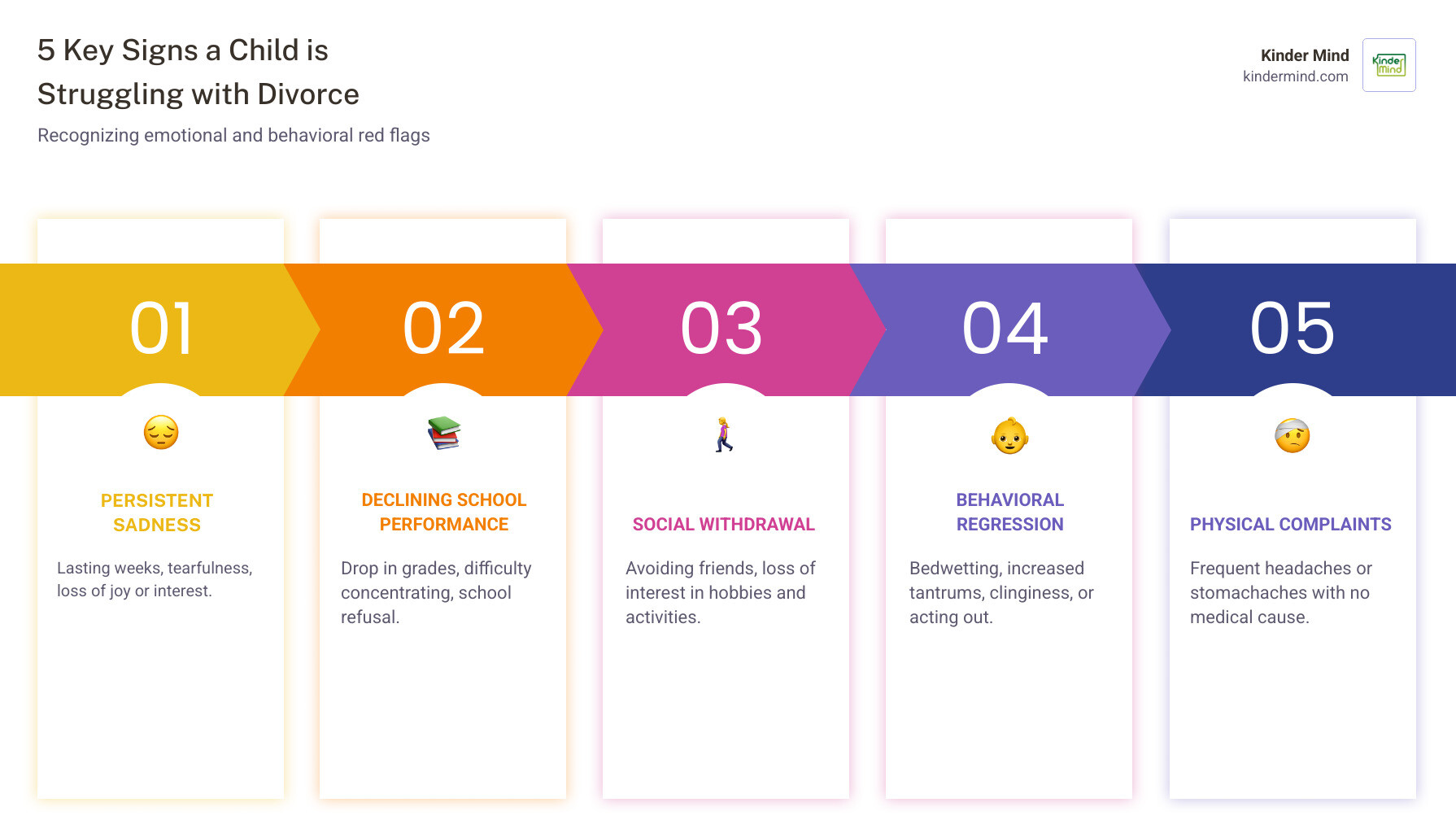
Recognizing Emotional and Behavioral Red Flags
Divorce can shake a child’s world, creating a whirlwind of emotions they may not know how to process. While many children are resilient, it’s crucial for parents to be attuned to signs that their child might be struggling. These signs can manifest emotionally, behaviorally, socially, and academically.

Emotional and Psychological Signs
When parents divorce, children often experience a complex range of emotions. It’s not uncommon to feel anxious about the future, uncertain about living arrangements, or scared of abandonment. Some children might feel guilty, blaming themselves for the separation, or experience intense anger and irritability directed at one or both parents. These feelings can lead to an Emotional Disturbance or manifest as Attachment Issues, where children struggle with trusting others or forming secure bonds.
Look out for:
- Anxiety and Fear: Worry about the unknown, changes in routine, or who will care for them. Younger children, like preschoolers, may fear abandonment, while older kids might worry about practicalities.
- Depression and Sadness: Persistent sadness, loss of interest in activities they once enjoyed, low energy, or frequent crying spells.
- Guilt and Self-Blame: Believing they are responsible for the divorce or that their actions caused their parents to separate.
- Anger and Irritability: Frequent outbursts, defiance, or easily becoming frustrated.
- Fear of Abandonment: Increased clinginess, especially in younger children, or a heightened fear that one parent will leave them too.
Behavioral and Social Signs
Beyond internal emotional struggles, children may exhibit noticeable behavioral and social changes. These can vary significantly depending on their age and developmental stage.
- Regression: Younger children (toddlers and preschoolers) might revert to earlier behaviors, such as bedwetting, thumb-sucking, or demanding extra attention, even after mastering these skills. Infants, sensitive to parental stress, may become fussier, irritable, or listless, experiencing sleep and feeding disturbances.
- Acting Out and Aggression: Increased tantrums, defiance, or aggressive behavior towards siblings, peers, or even parents. School-aged children might act out in class or at home seeking attention.
- Sleep Problems: Difficulty falling asleep, nightmares, or changes in sleep patterns.
- Changes in Eating Habits: Significant increase or decrease in appetite, or disordered eating.
- School Refusal or Drop in Grades: A sudden reluctance to go to school, difficulty concentrating, or a noticeable decline in academic performance.
- Loss of Interest in Activities: Withdrawing from hobbies, sports, or social events they previously enjoyed.
- Peer Relationship Issues: Difficulty making or keeping friends, increased conflict with peers, or social isolation.
- Risky Behaviors (especially in teens): Teenagers whose parents are divorced are 1.5 to 2 times more likely to engage in risky behaviors, including early sexual activity, suicidal thoughts, and attempts. They might also exhibit substance abuse or aggressive delinquent behavior.
For more information on supporting children and teens through emotional challenges, explore More info about Children and Teen Therapy.
So, Does a Child Need Therapy if Parents Are Divorcing?
The question of whether a child needs therapy during a divorce is complex, with no one-size-fits-all answer. While divorce is almost always painful, research consistently highlights the remarkable resilience of most children, who, after a period of readjustment, successfully cope with the challenges. However, certain factors can significantly increase a child’s vulnerability and indicate a greater need for professional support.
One of the most critical factors is parental conflict. Research makes it very clear that the more parents fight with each other—before, during, and after a divorce—the more psychological problems their children experience. This is especially true if children witness or are caught in the middle of these disputes. Scientific research on interparental conflict consistently shows its detrimental effects on child adjustment. If fighting is uncontrolled, children may even do better to see one parent less, simply to be exposed to less conflict.
A child’s temperament also plays a role. Some children are naturally more sensitive or have a harder time adapting to change, making them more susceptible to distress. Conversely, a strong support system—including loving parents (even if separated), extended family, friends, and teachers—can significantly buffer the negative impacts of divorce.
While most children demonstrate resilience, it’s important to differentiate between typical adjustment difficulties and more severe, lasting effects. If a child’s upset is frequently tied to continuing problems in family relationships, professional intervention might be warranted. Understanding the distinction between typical emotional responses and signs of a deeper struggle is key to recognizing when to seek help. This isn’t about diagnosing a Mental Health vs Mental Illness, but rather providing timely support to prevent potential long-term issues.
When Therapy is Strongly Recommended
Therapy is not a sign of failure; it’s a proactive step to equip your child with healthy coping mechanisms and a safe space to process difficult emotions. Consider therapy strongly recommended if:
- High Parental Conflict: If you and your co-parent are engaged in ongoing, unresolved conflict, especially if it’s visible to or involves your child. Children in these situations often feel caught in the middle, leading to increased anxiety and emotional distress.
- Signs of Significant Distress: Your child exhibits persistent emotional or behavioral red flags (as outlined above) that last for more than a few weeks, are intense, or interfere with their daily life at home, school, or with friends. This includes a dramatic drop in school performance, escalating behavioral problems, or significant withdrawal.
- Child Expressing Desire for Help: If your child explicitly states they want to talk to someone, or they ask for help in coping with their feelings.
- History of Anxiety or Depression: Children with pre-existing mental health conditions like Trauma and PTSD or a history of anxiety or depression may be more vulnerable to the stressors of divorce and benefit greatly from professional support. High-conflict divorces, in particular, can be traumatic and increase the likelihood of childhood PTSD.
- Risky Behaviors in Teens: If your teenager begins engaging in risky behaviors such as early sexual activity, substance abuse, or expresses suicidal thoughts, immediate professional help is crucial.
When to consider if a child needs therapy if parents are divorcing
Sometimes, a child’s reactions to divorce are temporary and mild, indicating they’re adjusting well with existing support. In these cases, you might consider monitoring their progress before jumping into therapy. This doesn’t mean ignoring their feelings, but rather providing consistent support and a watchful eye.
You might consider waiting or observing if:
- Observing Adjustment Period: Most children experience an initial period of upset, but many adjust within 2 to 3 years. If reactions are present but not severe and seem to be gradually improving over time, continued parental support might be sufficient.
- Mild or Temporary Reactions: Your child shows some sadness or frustration, but these feelings are not overwhelming, don’t last long, and don’t significantly disrupt their functioning.
- Strong Existing Support Network: Your child has a strong network of supportive adults (grandparents, aunts/uncles, teachers, coaches) and friends with whom they feel comfortable sharing their feelings.
- Low-Conflict Divorce: You and your co-parent are able to steer the divorce amicably, communicate respectfully, and shield your child from conflict. In such situations, the divorce, if handled properly, may not lead to irreversible damage.
- Effective Co-Parenting: You and your co-parent are committed to cooperative co-parenting, maintaining consistent routines, and presenting a united front to your child.
Regardless of whether therapy is immediately necessary, parents must engage in More info about Parenting strategies that prioritize the child’s well-being.
Exploring Effective Therapy Options for Your Child and Family
If you’ve determined that your child could benefit from professional support, congratulations—you’ve taken a brave and important step! The goal of therapy is to provide a safe, neutral space for your child to process their emotions, develop healthy coping skills, and steer the significant life changes that come with divorce.

When looking for a therapist, don’t hesitate to ask questions. A good therapist will be happy to discuss their approach. Here’s a list of questions you might ask:
- What experience do you have working with children of divorced parents?
- What therapeutic approach do you use, and how do you adapt it for children?
- How do you involve parents in the therapy process?
- What are your fees, and do you accept our insurance?
- How do you assess if a child is a good fit for your practice, and what if they aren’t?
- How do you communicate with parents while respecting the child’s confidentiality?
For more information on various therapeutic approaches, visit More info about Child Therapy.
Individual Therapy for Children
Individual therapy focuses directly on your child’s needs, providing a confidential and supportive environment where they can express themselves without fear of judgment.
- Cognitive Behavioral Therapy (CBT): Often adapted for children, CBT helps kids identify and challenge negative thought patterns and behaviors that contribute to distress. For children, this might involve activities like art, play, or music to make the concepts more engaging and age-appropriate. CBT helps older children reframe negative thoughts about the divorce and develop coping mechanisms.
- Play therapy for emotional expression: This is a unique and highly effective approach for younger children who may struggle to verbalize their complex feelings. Using toys, puppets, and storytelling, therapists create a safe space where children can communicate their feelings indirectly, helping them to understand and manage their emotions.
- Art Therapy: Through creative expression like drawing, painting, or sculpting, children can process emotions and experiences related to the divorce that they might not be able to articulate verbally.
- Narrative Therapy: This approach helps children externalize their problems and create new meanings and stories about their lives post-divorce, focusing on their strengths and resilience rather than just the challenges.
These approaches are all forms of Child-Centered Mental Health Support, ensuring the therapy is custom to your child’s unique developmental stage and needs.
Family-Focused Therapies
Sometimes, the entire family system needs support to adjust to the changes brought by divorce. Family Therapy can be incredibly beneficial for repairing bonds, improving communication, and establishing new healthy dynamics.
- Improving Communication: A therapist can facilitate healthy dialogue between parents and children, helping everyone express their needs and feelings r

