
Stepping into Calm: Exploring Virtual Anxiety Treatment
Dr. Elizabeth Barlow, LCSW-S · 1/12/2026

Understanding Virtual Anxiety Treatment Options
Virtual anxiety treatment is a modern, flexible approach to mental health care that uses technology to connect you with licensed professionals through secure digital platforms. It breaks down traditional barriers to therapy, offering a lifeline to those who find in-person care difficult to access. If you’re exploring your options for managing anxiety, understanding the landscape of virtual care is the first step toward finding calm.
Virtual care also fits naturally with Kinder Mind’s mission: to make high-quality care easier to access, more affordable, and less intimidating. Whether you live in a busy city or a quiet rural town, you can connect with a therapist or psychiatrist from home, work, or any private space that feels comfortable to you.
What Virtual Anxiety Treatment Includes
Virtual care isn’t a one-size-fits-all solution. It encompasses a range of services custom to different needs, preferences, and levels of severity. Here are the primary forms of virtual anxiety treatment:
- Virtual Therapy (Psychotherapy): This is the digital equivalent of traditional talk therapy. You’ll have scheduled sessions with a licensed therapist via a secure video call. Therapists help you understand the root of your anxiety and teach evidence-based coping skills to manage your symptoms. Common approaches include Cognitive Behavioral Therapy (CBT), which focuses on identifying and changing negative thought patterns, and Dialectical Behavior Therapy (DBT), which helps with emotional regulation.
- Virtual Psychiatry: For individuals whose anxiety may benefit from medication, virtual psychiatry provides medical evaluation and management. You’ll meet with a licensed psychiatrist or psychiatric nurse practitioner who can diagnose conditions, prescribe appropriate medications (like SSRIs or SNRIs), and monitor your progress through regular follow-up appointments. This service is crucial for creating a holistic treatment plan that addresses both the psychological and biological aspects of anxiety.
- Virtual Reality Exposure Therapy (VRET): A cutting-edge form of treatment, VRET uses immersive virtual simulations to help you safely confront anxiety triggers in a controlled environment. Guided by a therapist, you can gradually face fears—such as public speaking, flying, or heights—without leaving the office, helping to desensitize your fear response over time.
- App-Based Programs: These self-guided tools offer support between therapy sessions or for those with milder symptoms. They often include features like mood trackers, guided meditations, journaling prompts, and structured exercises based on CBT principles. While not a replacement for professional therapy, they are excellent resources for reinforcing skills and promoting daily mental wellness.
- Hybrid Models: Many platforms now offer a combination of services. A hybrid model might include weekly video sessions with a therapist, the ability to message your provider with questions between appointments, and access to a library of digital resources. This integrated approach provides continuous support that fits seamlessly into your life.
At Kinder Mind, hybrid care can also include the option to move between in-person and virtual sessions as your needs change, so you are not locked into a single format. Some people start with virtual therapy to get comfortable and later add in-person visits, while others prefer to stay fully online.
Why Virtual Treatment is Gaining Momentum
Anxiety is the most common mental health concern in the United States, affecting nearly 40 million adults annually. Despite its prevalence, a significant portion of those affected do not receive treatment. Barriers like high costs, lack of available providers in their area, scheduling conflicts with work or family, and the stigma associated with seeking help prevent many from taking the first step. Virtual treatment directly addresses these challenges, making mental healthcare more accessible than ever.
The good news? Accessibility doesn’t mean sacrificing quality. A growing body of research confirms that virtual anxiety treatment can be just as effective as in-person care. For example, research shows therapist-supported internet CBT is highly effective for anxiety, producing significant and lasting reductions in anxiety symptoms. Furthermore, a meta-analysis of online CBT programs found large effect sizes (Cohen’s d = 1.15), a statistical measure indicating a very strong positive impact on patient outcomes. These tailored internet-based treatments show lasting results, demonstrating that the benefits of online therapy are not just temporary.
With virtual care, you can receive expert help from the comfort of your living room, connect with specialists who may be located hundreds of miles away, and often find more affordable options than traditional therapy. All you need is a device with a camera and a stable internet connection. Whether you’re dealing with generalized anxiety, panic attacks, social phobia, or specific fears, virtual treatment offers proven methods delivered in a way that fits your life.
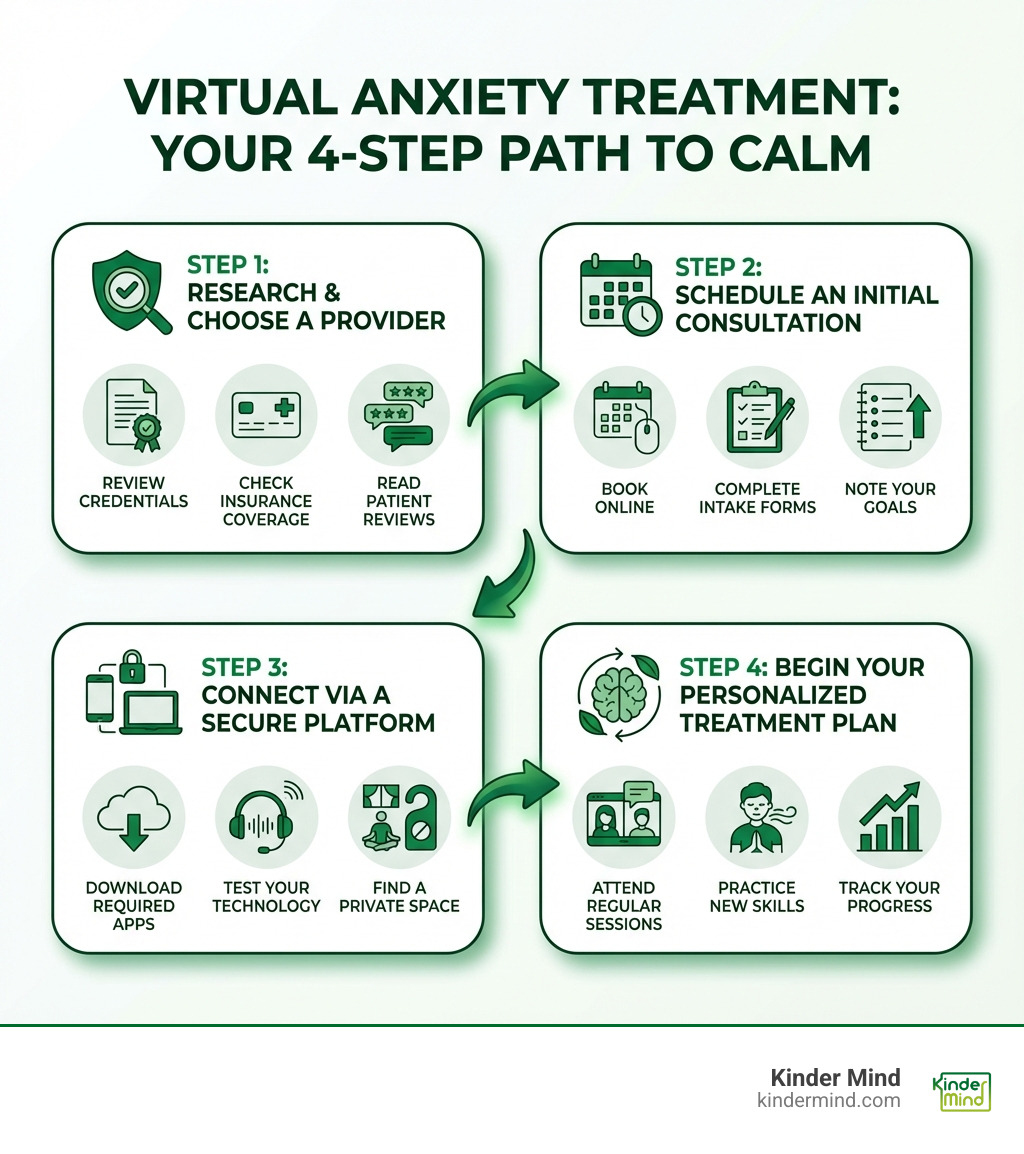
If you live in one of the many states where Kinder Mind is available—from Alabama and Alaska to Washington and Wyoming—you can typically complete your intake forms online, verify your insurance, and schedule your first session in days rather than weeks.
Exploring the Landscape of Virtual Anxiety Treatment
Virtual anxiety treatment is a broad term for mental health services delivered remotely using digital communication technologies. At its core, it’s about making professional mental health support more accessible and convenient. Instead of traveling to an office, individuals can connect with licensed professionals from the comfort and privacy of their own space, whether that’s a quiet corner at home or a discreet location during a lunch break. This approach leverages telehealth and digital platforms, often using secure video conferencing for real-time interactions, but can also include asynchronous messaging, phone calls, and interactive online programs.
Compared to traditional in-person treatment, virtual care offers a fresh perspective, removing many of the logistical problems that often prevent people from seeking help. Imagine not having to battle traffic, find parking, or rearrange your entire day for an appointment. This flexibility is a game-changer for many, especially those juggling busy schedules, living in remote areas, or dealing with mobility challenges.
To better understand the differences, let’s compare the two modalities across several key factors:
| Factor | Virtual Treatment | Traditional In-Person Treatment |
|---|---|---|
| Accessibility | High. Care is available to anyone with an internet connection, overcoming geographical barriers and mobility issues. | Limited. Requires physical travel to a provider’s office, which can be difficult for those in rural areas or with physical limitations. |
| Convenience | Excellent. Sessions can be scheduled flexibly, often outside of standard business hours, with no travel time required. | Moderate. Appointments are typically during business hours and require commuting, adding extra time and stress. |
| Cost | Often more affordable. Many platforms offer subscription models or lower session rates. Eliminates travel and childcare costs. | Can be higher. Standard session fees apply, plus associated costs like transportation, parking, and time off work. |
| Provider Choice | Broader. You can connect with specialists from across your state (or even nationally, depending on licensing laws), increasing your options. | Narrower. Choice is limited to providers within a reasonable commuting distance. |
| Anonymity & Comfort | High. Receiving care from your own private space can reduce stigma and feel less intimidating, especially for social anxiety. | Lower. Requires visiting a public office, which can be a source of anxiety for some individuals. |
The Technology Behind Virtual Care
The engine driving virtual treatment is a suite of secure and user-friendly digital tools designed to replicate and, in some cases, improve the therapeutic experience.
- Secure Video Conferencing: This is the cornerstone of most virtual therapy. Platforms use HIPAA-compliant video software to ensure your sessions are private and confidential, allowing for real-time, face-to-face interaction with your provider. It helps build the crucial therapeutic alliance that is central to effective treatment.
- Asynchronous Messaging: Many virtual care providers offer a secure messaging portal. This allows you to communicate with your therapist or psychiatrist between sessions. You can use it to ask questions, share updates on your progress, or journal your thoughts. This continuous line of communication provides ongoing support that isn’t available in most traditional therapy models.
- Digital Platforms and Apps: The entire experience is often managed through a central patient portal or mobile app. Here, you can schedule appointments, complete intake forms, access billing information, and engage with supplementary resources like worksheets, educational videos, and guided exercises. This centralizes your care and empowers you to be an active participant in your treatment journey.
In many cases, these tools are integrated with reminders and secure document sharing, so you can receive homework assignments, track your symptoms, and review session summaries in one place. For anxious clients, having everything organized in a single portal can reduce overwhelm and make it easier to stay engaged with treatment.
If you are curious about how virtual care for anxiety works in practice, you can explore more details in Online Therapy for Anxiety, which walks through common formats, session structures, and benefits.
By leveraging these technologies, virtual anxiety treatment not only makes care more convenient but also creates a more integrated and continuous support system for individuals working to manage their mental health. For Kinder Mind clients, this can look like combining regular video sessions with secure messaging check-ins, digital worksheets between visits, and the option to transition to in-person care if and when that feels right for you.