
Seeking Imago Therapy? How to Find the Right Practitioner Near Me
Dr. Elizabeth Barlow, LCSW-S · 1/19/2026

Why Finding the Right Imago Therapist Matters
Imago therapy near me is a search many people make when they feel stuck in repeating patterns of conflict with their partner. If you’re reading this, you might be experiencing the same arguments over and over, feeling disconnected even though you’re together, or wondering why intimacy feels so hard to maintain.
Quick Answer: How to Find Imago Therapy Near You
- Search the Kinder Mind directory – Filter by specialty and location to find certified Imago therapists
- Read therapist profiles – Look for specific Imago training and certification
- Consider online options – Virtual therapy expands your access to qualified practitioners
- Explore workshops – Group sessions can complement individual therapy work
- Book a consultation – Connect with a therapist to discuss your specific needs
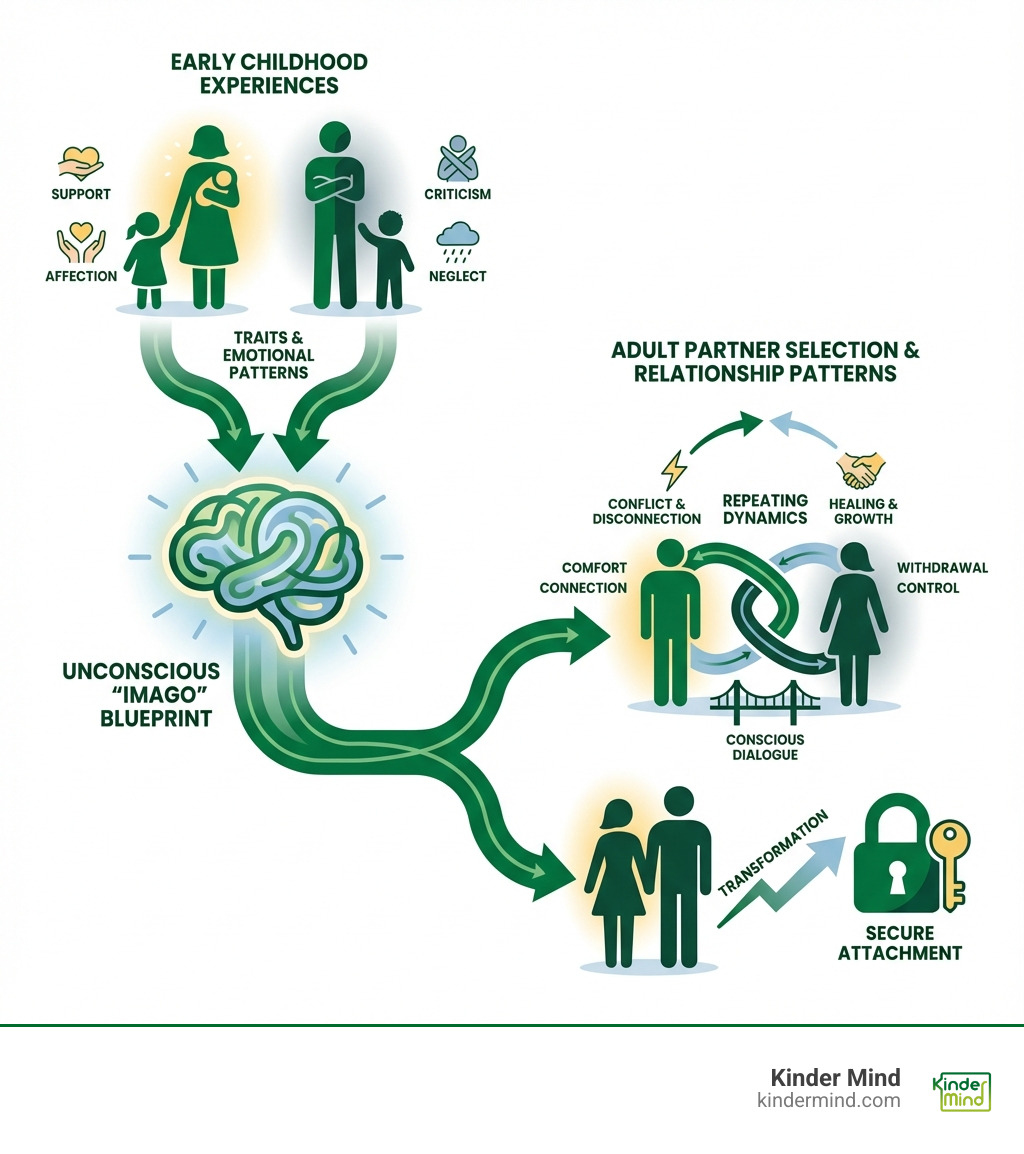
Here’s what you need to know: Imago Relationship Therapy is different from traditional couples counseling. It’s built on the idea that we unconsciously choose partners who mirror traits from our childhood caregivers—both positive and negative. This isn’t a flaw in your judgment. It’s your brain trying to heal old wounds through your current relationship.
The conflict you’re experiencing? It’s not the problem. According to Imago theory, it’s actually an opportunity for growth and healing. But you need the right tools to transform that conflict into connection.
That’s where finding a qualified Imago therapist becomes crucial. Not all relationship counselors are trained in this specific method. The techniques are structured and unique—focusing on dialogue, mirroring, and empathy in very particular ways. A certified Imago therapist knows how to guide you through these processes safely.
This guide will walk you through what Imago therapy actually is, how it works, and most importantly, how to find a qualified practitioner who can help. Whether you’re looking for in-person sessions or online therapy, you’ll learn what to look for and what questions to ask.
What is Imago Relationship Therapy and How Does It Work?

Imago Relationship Therapy is a unique and powerful approach to healing and strengthening relationships, whether romantic, familial, or even with oneself. Developed in the 1980s, it operates on the profound insight that the frustrations and conflicts we experience in our adult relationships often stem from unresolved childhood experiences. Instead of viewing conflict as a sign of incompatibility, Imago therapy re-frames it as a natural opportunity for growth and deeper connection.
At its core, Imago therapy helps individuals and couples understand how their “unconscious image of familiar love”—their Imago—shapes their choice of partners and their relational dynamics. This often leads us to select partners who, in some way, reflect our primary caregivers, creating a dynamic where we unconsciously seek to heal old wounds. The therapy provides structured techniques to steer these dynamics, changing potential conflict into pathways for understanding, healing, and profound connection.
Imago Relationship Therapy is practiced by thousands of therapists in nearly 50 countries, demonstrating its widespread acceptance and impact. It aims to help partners move from cycles of blame and reactivity to honest expression, support, empathy, and deep understanding, ultimately fostering a more conscious and joyful relationship.
More info about our approach to Relationship Issues.
The ‘Imago’: Your Unconscious Blueprint for Love
The term “Imago” is Latin for “image,” and in the context of this therapy, it refers to an unconscious mental image or blueprint of familiar love. This blueprint is formed during our earliest years, based on our interactions and experiences with our primary caregivers. It’s not just about the positive aspects; our Imago also incorporates the unmet needs, frustrations, and emotional dynamics we experienced as children.
Here’s the interesting part: when we enter adult romantic relationships, we often unconsciously seek partners who embody aspects of this Imago. It’s as if our psyche is trying to recreate the conditions of our childhood, hoping to finally get our unmet needs fulfilled or to heal old emotional wounds. This can lead to a phenomenon called “Imago match,” where your partner subconsciously reflects both the positive and negative traits of your childhood caregivers. This dynamic, while sometimes challenging, is seen in Imago therapy as a powerful opportunity for healing and growth. It helps us understand why we might be drawn to certain people and how our current relationships can facilitate the resolution of past emotional experiences.
The Founders and Philosophy
Imago Relationship Therapy was developed by Dr. Harville Hendrix and Dr. Helen LaKelly Hunt in the 1980s. Their journey to create Imago therapy was deeply personal, stemming from their own struggles in their relationship. Through their shared experiences and professional expertise, they developed a therapeutic model that has since transformed countless relationships worldwide.
Dr. Hendrix’s bestselling book, “Getting the Love You Want: A Guide for Couples,” popularized the concepts of Imago therapy, making its insights accessible to a broader audience. The core philosophy is that conflict in relationships is not a sign of disharmony but rather a natural outcome of two individuals with distinct childhood experiences trying to connect. This conflict, when approached with the right tools, becomes a catalyst for profound healing and personal growth. Their work emphasizes the power of relational connection to transform our lives, moving us from unconscious, reactive patterns to conscious, loving interactions.
The Goal: Shifting from Blame to Understanding
The primary goal of Imago Relationship Therapy is to help couples shift from a state of unconscious reactivity and blame to one of conscious understanding and empathy. Instead of merely managing conflict, Imago therapy aims to heal the root causes of relational distress, which often lie in unaddressed childhood wounds and unmet needs.
In Imago therapy, partners learn to view each other not as adversaries, but as allies in a shared journey of healing and growth. The focus is on creating a “conscious relationship” where both individuals feel safe, seen, and deeply connected. This involves fostering an environment where criticism, blame, and shame are replaced with curiosity, compassion, and appreciation. By understanding how past experiences shape present behaviors, couples can transform their relationship into a source of intense happiness, satisfaction, and emotional safety. It’s about moving beyond superficial interactions to cultivate a deep, meaningful connection where both partners feel heard, understood, and loved.
More on improving marital relationships.
Core Principles and Techniques of Imago Therapy

At the heart of Imago Relationship Therapy is a set of core principles and techniques designed to transform communication and foster deeper connection. These methods provide a structured and safe environment for partners to express themselves and truly hear one another, often for the first time. The emphasis is on intentional dialogue, where each partner takes on specific roles of “Sender” and “Receiver,” ensuring that judgment is removed and curiosity and empathy are prioritized. This structured approach helps couples avoid hurtful statements and establish ways to interact based on equal space and power.
Learn more about effective Communication.
The Heart of the Method: The Imago Dialogue
The Imago Dialogue is the cornerstone technique of Imago therapy. It’s a structured communication process that ensures both partners feel heard and understood without interruption, judgment, or rebuttal. It involves three key steps:
- Mirroring: The Receiver’s first task is to simply repeat back, word-for-word, what the Sender has said. This isn’t about agreeing; it’s about accurate listening. An example might be, “So, what I hear you saying is… [repeat partner’s words].” This ensures the Sender feels truly heard and gives the Receiver an opportunity to fully grasp their partner’s message.
- Validation: After mirroring, the Receiver validates their partner’s perspective, acknowledging that their feelings and thoughts make sense from their point of view, even if they don’t personally agree. For example, “That makes sense to me because… [explain why it makes sense from their partner’s perspective]” or “I can see why you would feel that way.” This step fosters understanding and reduces defensiveness.
- Empathy: The final step involves the Receiver imagining what their partner might be feeling and expressing that understanding. For instance, “I can imagine that you must be feeling very [emotion] right now.” This deepens emotional connection and shows genuine care.
This structured dialogue helps couples learn to talk without criticism and listen without judgment, building a skill set to remain connected, curious, and empathic, even when they see things from very different perspectives.
Key Principles in Practice
Beyond the dialogue, Imago therapy incorporates several key principles that guide partners toward a more conscious and fulfilling relationship. Here are five core practices:
- Reimagining your partner as a wounded child: This principle encourages partners to see beyond their partner’s reactive behaviors to the underlying pain or unmet needs from childhood. It fosters compassion and helps depersonalize conflict.
- Re-romanticizing the relationship: This involves consciously bringing back gestures of appreciation, affection, and surprise that were present in the early stages of the relationship. It’s about actively nurturing the connection with thoughtful actions like giving gifts or planning special moments.
- Restructuring frustrations into requests: Instead of complaining or blaming, Imago therapy teaches partners to transform their frustrations into clear, actionable requests for what they need. For example, instead of “You never help around the house!”, it becomes “I would really appreciate it if you could help with [specific task] this week.”
- Resolving anger: Imago therapy provides tools to process and express anger constructively, rather than letting it escalate into destructive patterns. It’s about understanding the message behind the anger and using it as a signal for unmet needs.
- Re-visioning the relationship: This principle encourages partners to envision their relationship as a source of intense happiness, satisfaction, and safety. It’s about consciously creating the kind of relationship they truly desire, moving towards a future built on mutual understanding and love.
These principles, combined with the Imago Dialogue, offer a comprehensive framework for changing relational challenges into opportunities for profound healing and connection.
What to Expect and Who Can Benefit from Imago Therapy
Imago Relationship Therapy offers a unique pathway for couples and individuals seeking to improve their relationships and personal well-being. Whether you’re navigating long-standing conflicts or simply hoping to deepen your connection, understanding what to expect and who can benefit can help you decide if Imago therapy near me is the right choice for you. A 2017 study found that marital satisfaction increased significantly after couples completed 12 sessions of Imago therapy, and remained higher for some time after that, highlighting its potential benefits. Scientific research on marital satisfaction.
What Issues Can Imago Therapy Address?
Imago therapy is particularly effective for a wide range of relationship and individual challenges:
- Communication Breakdown: When partners struggle to truly hear or understand each other, leading to repetitive arguments or emotional distance.
- Constant Conflict: For couples caught in cycles of negativity, where frustration and arguments seem to dominate their interactions.
- Lack of Intimacy: Addressing physical and emotional intimacy issues, helping partners reconnect on a deeper level.
- Trust Issues: Rebuilding trust after breaches, such as Infidelity, by fostering a safe space for vulnerability and understanding.
- Premarital Counseling: Providing a strong foundation for new relationships, helping couples understand their unconscious patterns before they become ingrained. Premarital counseling can help identify potential challenges and build effective communication strategies.
- Blended Family Issues: Navigating the complexities of combining families, fostering understanding and connection between all members.
- Individual Growth: Imago therapy can also aid individuals, even if they aren’t in a relationship. It helps people understand their own relationship patterns, heal past traumas, and prepare for healthier future connections.
- ADHD Benefits: Some research suggests that individuals with ADHD may particularly benefit from the structured communication, self-control, and listening skills that form the basis of Imago techniques.
A Typical Session: For Couples and Individuals
In a couples’ Imago therapy session, partners typically sit facing each other, creating a direct connection. The therapist acts as a facilitator, guiding the Imago Dialogue process. This involves partners taking turns as Sender and Receiver, practicing mirroring, validation, and empathy. The therapist ensures the process remains safe, respectful, and productive, helping couples move through their conflicts with newfound understanding. Sessions for couples typically range from 50 to 110 minutes, depending on the therapist and the couple’s needs.
Homework assignments are a common component of Imago therapy, encouraging partners to practice the learned communication skills and apply the principles in their daily lives. Most couples should expect sessions to extend for months, encompassing at least 12 to 20 sessions to fully integrate the techniques and achieve lasting change.
For individuals, Imago therapy offers a safe and private environment to explore personal relationship patterns and how past experiences influence current behaviors. The focus is on helping individuals understand their “Imago,” heal from past traumas, and identify why they might be attracting certain types of partners or experiencing repetitive relationship challenges. The length of individual sessions varies, custom to individual needs.
