Polyamorous Couples Counseling Terms Demystified
Kinder Mind · 10/25/2025

Understanding Polyamorous Couples Counseling: A Starting Point
Polyamorous couples counseling is specialized therapy for individuals in consensually non-monogamous relationships. It helps partners steer unique challenges and strengthen their connections by addressing communication, boundary setting, jealousy, time management, broken agreements, social stigma, and co-parenting within polyamorous structures.
While approximately 1 in 6 people are interested in polyamory, many lack guidance on making these relationships work. Traditional therapy often assumes a two-person dynamic, failing to address the complexities of relationships involving three or more people. The issue isn’t whether to be polyamorous, but how to do it well.
Polyamorous couples counseling offers affirming support, acknowledging that your relationship structure isn’t the problem. It helps with challenges like New Relationship Energy (NRE), setting clear agreements, and strengthening communication across your polycule.
More therapists are now educated in ethical non-monogamy, adapting models like Emotionally Focused Therapy (EFT) for polyamorous dynamics. Research shows that with the right support, these relationships can thrive, with individuals reporting similar sexual satisfaction levels as those in monogamous relationships.
This guide will explain the terminology, challenges, and therapeutic approaches for polyamorous couples counseling to help you find the right support.
Understanding the Landscape: Key Terms in Ethical Non-Monogamy
Understanding the terminology of non-monogamy can feel overwhelming, but it’s key for effective polyamorous couples counseling. Let’s clarify the main concepts.
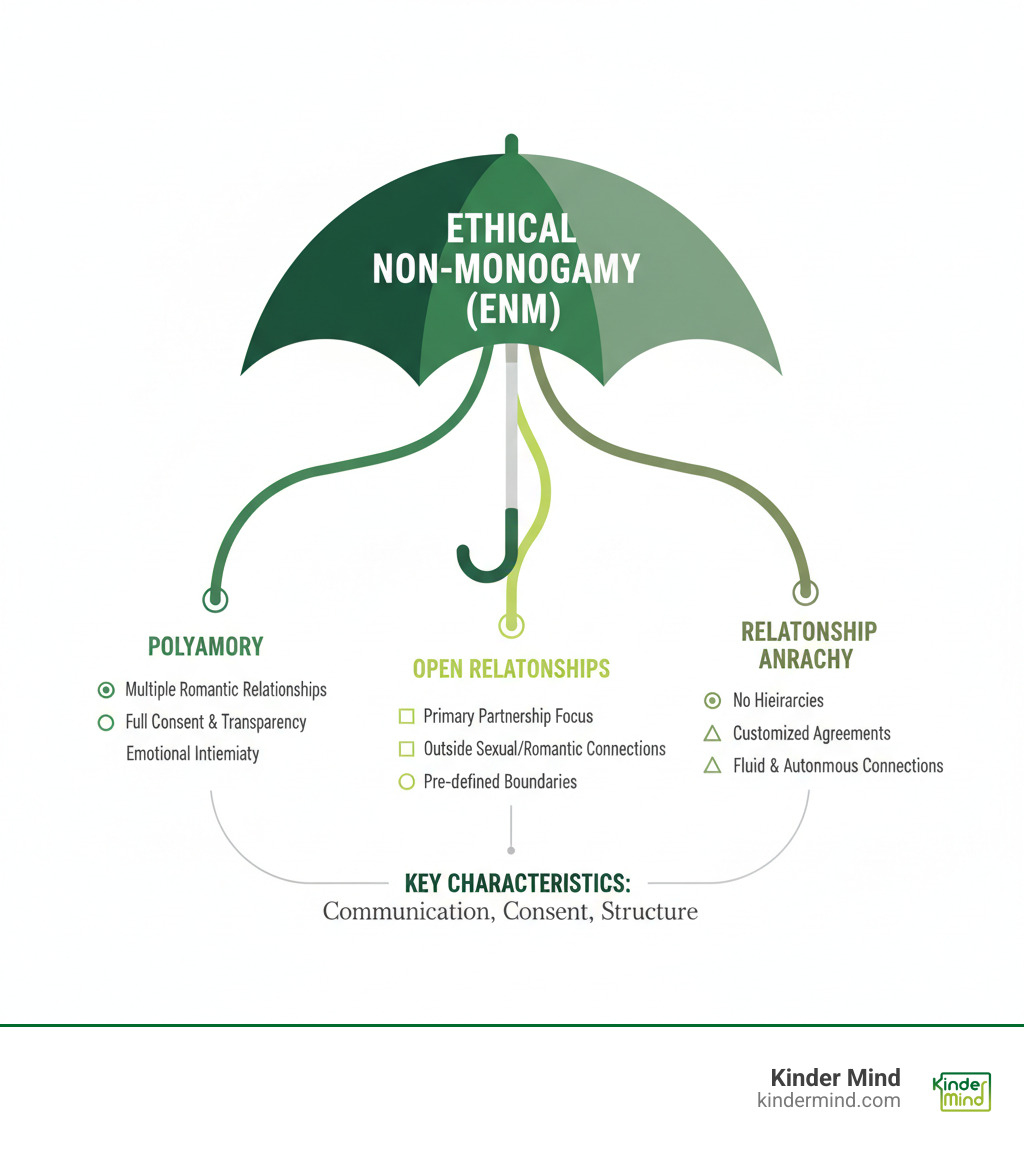
Ethical Non-Monogamy (ENM) and Consensual Non-Monogamy (CNM) are umbrella terms for relationship structures where everyone involved agrees to have romantic or sexual connections with more than one person. Unlike infidelity, ENM is built on honesty, communication, and consent. Ethical non-monogamy requires trust, transparency, and clear agreements.
Within ENM, several styles exist, and knowing yours helps your therapist tailor their approach.
Polyamory means “many loves” and involves having multiple romantic, emotionally intimate relationships simultaneously, with full consent. These relationships can be hierarchical (with a primary partnership) or non-hierarchical (all relationships valued equally). For many, it’s an identity or orientation. You can find helpful Polyamory resources to learn more.
Open relationships typically involve a primary couple who agree to allow outside sexual or romantic connections. The central bond often remains the priority, with external connections focused more on sexual exploration than building multiple deep relationships.
Relationship Anarchy (RA) rejects prescribed rules and hierarchies altogether. Each relationship is unique and defines itself based on the individuals involved, without prioritizing romantic connections over friendships. Autonomy and organic development are key.
Understanding these distinctions is vital for therapy. The challenges of a hierarchical triad differ from those of a relationship anarchist. A good therapist adapts their approach to your specific structure. For more background, see Exploring Ethical Non-Monogamy and Polyamory.
Here’s a quick comparison to help you see how these different relationship styles stack up:
| Aspect | Monogamy | Open Relationships | Polyamory |
|---|---|---|---|
| Emotional Intimacy | Exclusive with one partner | Primary bond often exclusive, others sexual | Deep emotional bonds with multiple partners |
| Sexual Exclusivity | Exclusive with one partner | Non-exclusive, outside sexual connections | Non-exclusive, outside sexual connections |
| Romantic Connection | Exclusive with one partner | Primary bond exclusive, others often casual | Multiple romantic connections |
| Primary Agreements | Exclusivity implied | Explicitly negotiated boundaries for outside sex | Explicitly negotiated boundaries for all relationships |
| Hierarchy | Inherently hierarchical (couple-centric) | Often hierarchical (primary couple) | Can be hierarchical or non-hierarchical |
| Core Philosophy | Love is exclusive and finite | Love is exclusive, sex can be shared | Love is abundant, can be shared |
The bottom line is that no single approach is “right.” What matters is clear communication, genuine consent, and a structure that works for everyone.
Why Seek Therapy? Unique Challenges in Polyamorous Relationships
Polyamorous relationships are rewarding but come with unique complications. Polyamorous couples counseling isn’t about fixing a broken model; it’s about building skills and strengthening bonds within your chosen structure.

Common reasons to seek therapy include communication breakdowns, where a single misunderstanding can ripple through a polycule, and complex boundary setting with multiple partners. Other challenges include time management to prevent partners from feeling neglected, managing New Relationship Energy (NRE) so it doesn’t destabilize existing bonds, and navigating external pressures and social stigma. Some face Family Conflict after coming out. When broken agreements occur, therapy provides a safe space to process the hurt and rebuild trust.
Navigating Complex Emotions
Polyamory can bring up intense emotions, but they are manageable with support.
- Jealousy: Often a secondary emotion masking deeper fears like abandonment or insecurity. Therapy helps you identify these root causes and communicate your needs effectively.
- Insecurity and Fear of Loss: These feelings may stem from past wounds or Attachment Issues. Counseling helps you build a stronger sense of security.
- Compersion: The joy felt for a partner’s happiness with another. While not universal, therapy can help cultivate it by addressing the jealousy that may block it.
- Feelings of Inadequacy: Comparing yourself to metamours is common. Therapy provides a space to build self-esteem independent of comparison.
Managing Relationship Agreements
Polyamory requires explicit agreements, which is both liberating and challenging.
- Creating and Renegotiating Agreements: A therapist can guide conversations about safe sex, time division, and other boundaries. Since needs change, successful polyamorous relationships require regular check-ins to adjust agreements.
- Healing from Broken Agreements: A breach of trust, even if not traditional infidelity, is painful. Therapy helps process the hurt and develop the Communication skills needed to repair the relationship.
Intersecting Life Challenges
Polyamory intersects with all aspects of life, creating unique challenges.
- Co-parenting: A polycule can offer more love and support for children, but it requires careful coordination of parenting styles and authority. Therapy can help create a stable environment, and specific Parenting support can be beneficial.
- Coming Out and Social Life: Deciding who to tell about your relationships carries risks. A therapist can help you prepare for these conversations and develop strategies for navigating a mononormative world.
- Intersection with LGBTQ+ Identity: For many, polyamory intersects with LGBTQ+ identity, adding layers of marginalization. An affirming therapist who understands these intersections provides essential support.
The Therapeutic Journey: What to Expect from Polyamorous Couples Counseling
Polyamorous couples counseling differs from traditional therapy by affirming your relationship structure as valid, not something to be fixed. A skilled therapist understands your entire relationship system (the “polycule”) and creates a non-judgmental space to explore complex feelings and dynamics safely.

Goals and Structure of Polyamorous Couples Counseling
Your journey begins with an initial assessment for the therapist to understand your unique relationship landscape. This is followed by collaborative goal setting, where you define what success looks like, whether it’s improving Communication, managing time, or rebuilding trust.
Sessions are flexible. You might attend as a dyad (two partners), a triad or quad, or in individual sessions to explore personal feelings. This flexibility allows you to address issues at every level of your polycule. Building trust with your therapist is foundational, as they act as a neutral guide through complex Relationship Issues.
Common Therapeutic Approaches
Therapists adapt various models for polyamorous relationships:
- Emotionally Focused Therapy (EFT): One of the most popular approaches, EFT helps identify and break negative emotional cycles, fostering secure attachment bonds among multiple partners.
- The Gottman Method: Provides practical tools for strengthening friendship, managing conflict, and creating shared meaning within your relationships.
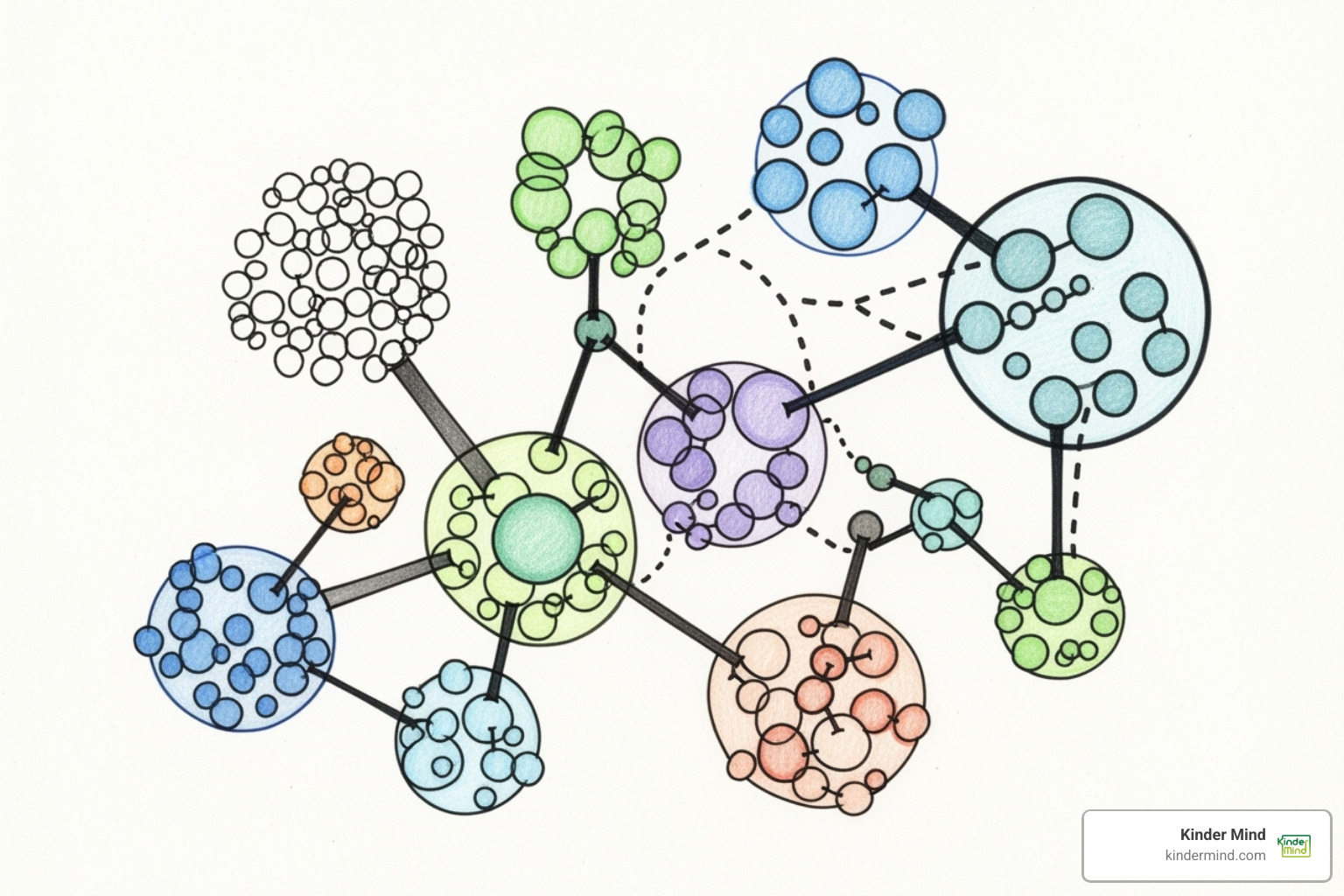
- Systems Theory: Views the polycule as an interconnected system, helping you understand how changes in one relationship can ripple through the entire network.
- Narrative Therapy: Helps you challenge and rewrite internalized negative stories about polyamory, creating more empowering personal narratives.
- Sex Therapy: Often integrated to address complex sexual dynamics, including safe-sex practices and differing desire levels among partners.
Adapting Models like EFT for Polyamory
EFT is particularly effective because it focuses on emotional bonds and attachment, which can be securely formed with multiple people. Therapists are applying EFT to polyamorous relationships by expanding the concept of attachment bonds beyond a dyad.
This involves de-escalating negative cycles within the polycule, which can be more complex than in a two-person relationship. A therapist helps identify these patterns and the underlying fears driving them. The EFT Tango with multiple partners is a key intervention where the therapist orchestrates conversations to ensure everyone feels heard, fostering secure attachments across the entire polycule. Research on adapting EFT for polyamory confirms these multi-partner enactments are powerful catalysts for change.
At Kinder Mind, our therapists use these adapted approaches to support you in creating the relationships that work for your unique situation.
Finding the Right Support: How to Choose a Poly-Friendly Therapist
Finding a therapist who understands your relationship structure is crucial for successful polyamorous couples counseling. Many therapists lack training in consensual non-monogamy, so know what to look for.
Aim for a poly-affirmative therapist over one who is m