
Navigating Non-Monogamy: Why Open Relationship Counseling Helps
Kinder Mind · 11/17/2025

Why More Couples Are Seeking Support for Non-Traditional Relationships
Open relationship counseling is specialized therapy that helps individuals and couples steer consensual non-monogamy (CNM) with honesty, clear communication, and healthy boundaries. This support is for anyone considering or practicing ethical non-monogamy, including polyamorous individuals and those in multiple intimate relationships.
What Open Relationship Counseling Provides:
- A safe space to explore non-monogamous dynamics
- Tools for establishing clear agreements and boundaries
- Strategies to manage jealousy, insecurity, and time
- Support for improving communication between all partners
- Guidance on sexual and emotional safety
- Help navigating societal stigma
Interest in open relationships is growing as more people question if traditional monogamy is the only path to a fulfilling partnership. Reasons range from differing sex drives and a need for autonomy to the belief that one can love more than one person.
However, open relationships require more clarity and communication than monogamous ones, not less. Without a cultural script, you must create your own agreements to steer jealousy, time management, and societal judgment—all while maintaining trust.
That’s where specialized counseling makes a difference. A therapist experienced in CNM can help you build a strong foundation, whether you’re just starting to explore this path or have been practicing for years.
Understanding the Landscape of Ethical Non-Monogamy
At its core, an open relationship is a form of consensual non-monogamy (CNM), where everyone involved agrees that romantic or sexual connections outside the primary relationship are permissible. This contrasts with traditional monogamy, which expects exclusivity between two people.
While monogamy has long been the default, many are now asking: Is this the only way? This growing interest reflects a desire for relationships that feel more authentic. People explore CNM for many reasons, including individual autonomy, navigating sexual compatibility challenges, or the belief in expanded love—the capacity for deep connections with multiple people.
This is not about an inability to commit; it’s about intentionally creating relationships based on honesty and respect. Whether you’re curious about polyamory or the broader landscape, the goal is finding what works for you and your partners.
The Spectrum of Relationship Structures
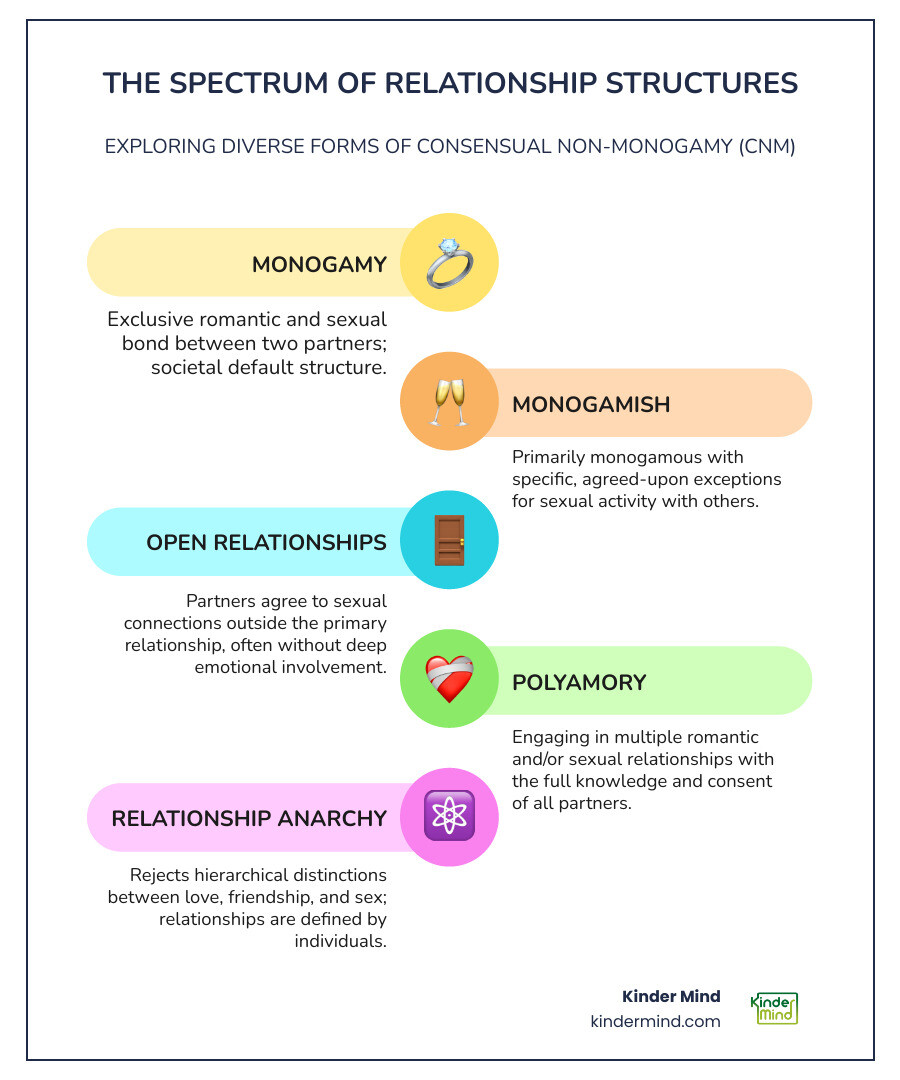
“Open relationship” is an umbrella term for various styles, each with unique dynamics:
- Open relationships: Typically involves two primary partners who agree to have sexual experiences with others, with emotional bonds often remaining exclusive to the primary pair.
- Swinging: Focuses on recreational sex, where couples engage in sexual activity with other couples or individuals, often at social events.
- Polyamory: Involves having multiple romantic, emotional, and sexual relationships simultaneously, with the full knowledge and consent of everyone involved. These relationships emphasize deep emotional connections.
- Monogamish: Describes relationships that are mostly monogamous but allow for occasional, clearly defined exceptions for sexual exploration.
- Relationship anarchy: Rejects traditional labels and hierarchies, viewing each connection as a unique agreement. It doesn’t distinguish between romantic partners and friends.
- Hybrid relationships: Occur when one partner is monogamous and the other is non-monogamous, requiring exceptional communication and trust.
For a deeper dive, you can find more info on relationship configurations.
Why It’s Not the Same as Cheating
Ethical non-monogamy is not cheating. The fundamental difference is consent.
Cheating is based on deception and breaking promises. It’s a betrayal of trust. Ethical non-monogamy is the opposite—it’s built on honesty and transparency. All parties have given explicit, informed consent, meaning outside connections are an agreed-upon part of the relationship, not a secret betrayal.
Understanding what is consent? is crucial. It must be informed, freely given, and ongoing. While often confused, CNM is about expanding connection within a framework of integrity, not deceiving a partner. It’s about exploring different forms of love while maintaining trust, a clear distinction from infidelity and CNM.
Building a Foundation for a Healthy Open Relationship

Open relationships don’t come with an instruction manual. Unlike monogamy, ethical non-monogamy requires you to write your own playbook. This is a strength, allowing you to design a relationship that truly works for you, but it requires intentional effort.
A healthy open relationship needs rock-solid communication, clear agreements, defined boundaries, and a foundation of trust and emotional intimacy. Think of these as the pillars supporting your relationship. Open relationship counseling can help you build these skills. You can find additional support with More info about Communication.
The Art of Setting Boundaries and Agreements
Boundaries are not walls; they are safety nets that allow everyone to explore while feeling secure. Setting them is an ongoing conversation. Key areas to discuss include:
- Negotiating rules: What types of connections are okay? Are you comfortable with casual sex, or are deeper romantic bonds permissible?
- Sexual health protocols: Be transparent about safer sex practices, STI testing schedules, and how you’ll communicate with all partners about health.
- Emotional boundaries: How much detail do you want to hear about other relationships? Do you want to meet metamours (your partner’s other partners)?
- Time management: Juggling multiple relationships requires careful planning to ensure everyone feels valued and your primary bond remains strong.
- Revisiting agreements: People and circumstances change. Plan to review your agreements regularly to ensure they still work for everyone. As noted in this guide to setting better boundaries, healthy boundaries are about mutual respect.
Communication: The Most Crucial Element
Communication is the lifeblood of an open relationship. Without genuine, vulnerable dialogue, even the best agreements will fail.
- Active listening: Truly absorb what your partner is saying without interrupting or planning your defense. Sometimes, just saying “I hear you” is the most powerful response.
- Expressing needs and fears: Be vulnerable enough to admit when you feel insecure or jealous. Ask for what you need, whether it’s reassurance or more quality time.
- Navigating difficult conversations: Don’t avoid tension or misunderstandings. Approach difficult topics with compassion and a desire to understand each other.
- Regular check-ins: Scheduled conversations, like a weekly check-in, can create a dedicated space to discuss how things are going and prevent small issues from escalating.
Open relationships bring up unique challenges. Support from specialists in more info about Relationship Issues can be invaluable. A therapist can teach you communication techniques custom to the complexities of non-monogamy, helping you build a relationship that grows stronger through transparency.
Common Challenges and How Open Relationship Counseling Helps

Open relationships are not always easy. They involve work, vulnerability, and facing uncomfortable feelings. Common challenges include jealousy, insecurity, societal stigma, and time management stress. These bumps are normal and represent opportunities for growth.
Even with the best intentions, communication breakdowns can happen. A boundary might be misunderstood, or unspoken fears can create friction. This is where open relationship counseling provides a crucial, non-judgmental space to unpack these complexities and build the skills to thrive. A therapist who understands CNM can help you work through these issues constructively. For those navigating multiple partners, more info about Polyamorous Couples Therapy offers specialized insights.
Navigating Jealousy and Insecurity with Open Relationship Counseling
Feeling jealous doesn’t mean you’re failing at non-monogamy; it’s a normal human emotion. Counseling helps you look beneath the surface of jealousy to understand its roots, which might be a fear of abandonment, feeling left out, or low self-esteem.
A therapist can help you:
- Differentiate between jealousy and envy to address the real issue.
- Develop practical coping strategies, like mindfulness or self-soothing techniques.
- Build genuine self-worth, which makes your partner’s other connections feel less threatening.
- Strengthen your primary bond, as reconnecting with your partner is often the best antidote to jealousy.
When you feel secure in yourself and your relationship, it’s easier to feel generous about your partner’s other connections.
Improving Communication and Resolving Conflict with Open Relationship Counseling
With multiple people’s feelings and schedules involved, clear communication is essential. Counseling treats communication as a learnable skill, with your therapist acting as a relationship coach.
In counseling, you can:
- Benefit from a neutral mediator who ensures everyone feels heard during disagreements.
- Identify and change negative patterns, such as shutting down or deflecting during difficult conversations.
- Learn concrete conflict resolution techniques, like using “I” statements and practicing active listening.
- Establish a framework for accountability and repair when boundaries are crossed. This includes learning how to apologize genuinely and rebuild trust.
This process doesn’t just solve immediate problems; it gives you a toolkit for navigating future challenges, ensuring your relationships remain strong and grounded in respect. This work is vital for preventing issues that could lead to more serious consequences, including those discussed in more info about Divorce prevention.
Finding the Right Therapist for Your Journey
Navigating an open relationship is often uncharted territory, and finding the right professional support is key. This means seeking CNM-affirming care from a therapist who has a non-judgmental attitude and genuine therapist expertise in ethical non-monogamy. Since many therapists lack this specific training, it’s important to be proactive in your search.
What to Look For in a CNM-Friendly Therapist
When searching for a therapist for open relationship counseling, prioritize someone who understands and respects your choices. Look for:
- Experience with Polyamory/ENM: They should explicitly state their comfort with diverse relationship structures.
- LGBTQ+ Affirming: An affirming therapist creates a safe space for all aspects of your identity.
- Kink-Aware: A kink-positive therapist will understand these dynamics without judgment.
- Training in Couples Therapy: This background indicates an understanding of relationship dynamics and conflict resolution.
- Non-judgmental Approach: You need a therapist who will support you in making your relationship healthy, not pathologize it.
To help you find the best fit, here are some questions to ask a potential therapist during an initial consultation:
- “What is your experience working with clients in open relationships or polyamorous structures?”
- “What is your general philosophy or perspective on ethical non-monogamy?”
- “Have you received any specific training in CNM or LGBTQ+ affirmative therapy?”
- “How do you approach issues like jealousy or time management in non-monogamous relationships?”
- “Do you typically see individuals, couples, or entire relationship constellations?”
- “Are you kink-aware/positive?”
The most important factor is a strong, trusting bond between you and your therapist. Kinder Mind is co
